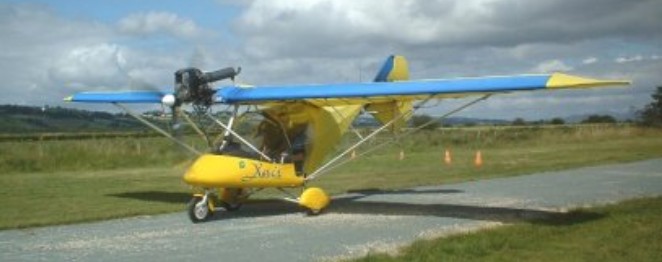
The French designed, Indian manufactured X-Air is a fully featured, affordable light aircraft, developed over several years and there are over 1,000 flying world-wide in 2014. The X-air is a high wing, 2 seat, side by side, conventionally controlled, microlight/ultralight aircraft, with full dual controls, toe brakes, and elevator trim. The fuel tank capacity of just over 59 liters gives a comfortable endurance of at least 3 hours at normal cruise with a 1/2 hour reserve and there was an optional 80 L fuel tank. The fuel tanks are filled at the side of the fuselage. The X-air’s layout consists of a high mounted tractor engine set up, tricycle undercarriage, and a maximum all up weight of 450kg.
The X-air is manufactured in India, and was supplied in kit form, which comes very complete. Only the choice of Engine/Prop & Instruments are required to finish it, ready for flight.
Nearly all of the exposed tubing, comes White Epoxy painted for long life, and some components come pre-assembled, e.g. Tailplanes & Elevators, and all the required nuts & bolts are in their relevant place’s, to speed up assembly.
The X-air is fitted with full Dual controls, i.e. two sticks, two throttles. Both the pilot and the passenger have their own control stick which is located between the legs. The advantage of the left seat is the use of the independant toe operated drumbrakes, fitted to the top of the Rudder pedals.
The standard and flap model X-AIR were available with three engines from Rotax-Bombardier of Austria, the Australian produced Jabiru engine and the HKS from Japan. Rotax options being the 52 HP “503” or the 65 HP “582” and the 80HP “912” with carbon fiber Brolga ground adjustable props.

The recommended engine selection is the Rotax 582. The 582 engine bolts to the X-Air without modification, it is economical, has good performance (up to 1200 ft/min climb one up, 900 to 1000 ft/min climb two up). The Rotax 503 producing 52 HP offers good performance and economy but with two heavy pilots the climb performance is about 600 ft/min. The Jabiru 2.2 and Rotax 912 engines both need to modify the engine mounts.
The seats are fitted with headrests. The cockpit floor is solid wood, lexan windscreen, and there is an optional door kit. Each wheel has its own shock absorbing system. The suspension design is similar to shock absorbers on a motorcycle and can handle all the bumps and potholes on grass and bush strips with ease. The front wheel has dual shock suspension with trailing link design steering; the trailing link design straightens up immediately on touch down, so even landing in cross wind is relatively easy in the X-Air. Steerable nose wheel, linked to rudder pedals. The shock absorber design used on the X-Air offers rebound dampening. The undercarriage is rated to 9 g’s.
The X-Air can be pulled down in about 15 minutes. Firstly, the Velcro attached wing nappy is removed, the wing skin tensioning belts are released, the aileron cable is detached and with the assistance of a helper the wing struts are removed and finally, the wings are detached from the main fuse tube. All the wing removal can be done without tools. The wing can be reattached in about 25 minutes.
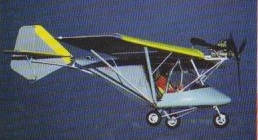
The X-air came in a range of 15 different colour combinations.
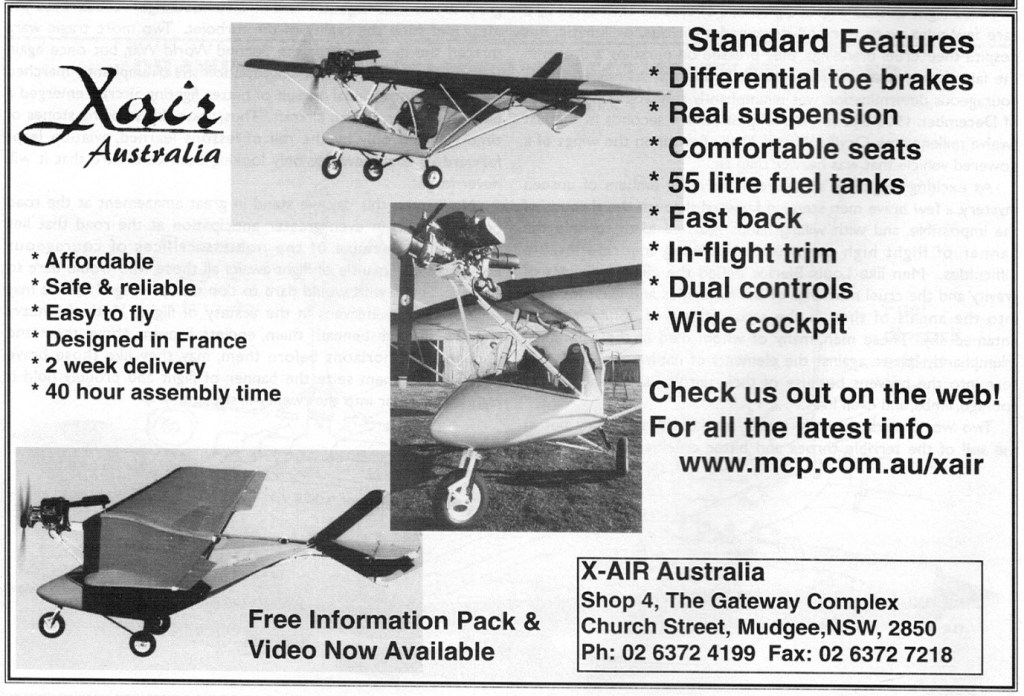
In 2012 the X-Air LS was still priced at US$59,995.
General Configuration
Two seater, side by side
3 Axis; Ailerons, elevator and rudder
Full dual control – two sticks, two throttles
High wing, high mounted engine
Tricycle Gear, with independant shock absorbers
Steerable nose wheel, linked to rudder pedals
Toe operated differential brakes
Enclosed cockpit, lexan windscreen
Elevator trim
Two 27L Tanks
Polyester Sail Cloth
G loading +6 -3
6061 T6 Alluminium
Tubing epoxy/polyurethane painted
Length: 5.70 m / 18 ft 8 ins
Wing span: 9.80 m / 32 ft
Max height: 2.55 m / 8 ft 4 ins
Wheel track: 1.60 m / 63 ins
Wing area: 16.00 sq.m
Wing loading: 28.13 Kg/sq.m
Wheel size: 500 mm/16 ins
Wheel base: 1.45m/57 ins
Empty weight 503: 226 kg / 498 lbs
Empty weight 582 232 kg / 510 lbs
Empty weight 618: 242 kg
Empty weight fully optioned 503: 251 kg
Empty weight fully optioned 582: 270 kg
Empty weight fully optioned 618: 279 kg
MTOW Weight: 450 kg / 992 lbs (Australia 490 kgs)
Roll rate: 3.5sec – 45deg left to right
Stall: 26 kt / 30 mph / 48 kmh
Cruise: 61 kt / 70 mph / 113 kmh
VNE: 83 kt / 95 mph / 153 kmh
Climb Rate: 900 ft/min / 5 m/s
Glide Ratio: 1:7
Take-off distance (50ft obstacle): 880 ft / 269 m
Landing distance (50ft obstacle): 750 ft / 230 m
Engine: Rotax 503, 52 hp
Wing span: 9.80 m
Wing area: 16 sq.m
MAUW: 450 kg
Empty weight: 230 kg
Fuel capacity: 50 lt
Max speed: 110 kph
Cruise speed: 85 kph
Minimum speed: 48 kph
Climb rate: 3 m/s
Fuel consumption: 10 lt/hr
Seats: 2
Kit price (1998): 78 500 Fttc


 All Aero