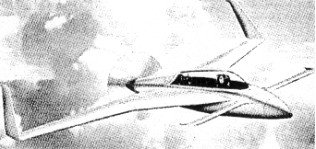
Infinity Aerospace Infinity 1

Engine options include Subaru, 225-300 hp or 1000 lb thrust jet.

Engine: Lycoming TIO-360, 210 hp.
HP range: 210-300.
Speed max: 316 mph.
Cruise: 285 mph.
Range: 1349 sm.
Stall: 58 mph.
ROC: 3600 fpm.
Take-off dist: 949 ft.
Landing dist: 930 ft.
Service ceiling: 30,000 ft.
Fuel cap: 70+ USG.
Weight empty: 900 lbs.
Gross: 2000 lbs.
Height: 7.7 ft.
Length: 17.68 ft.
Wing span: 26.83 ft.
Wing area: 112.1 sq.ft.
Seats: 2/3.
Landing gear: retractable nose wheel.

Industrial Electric Indiana Flyer

Single plane, shoulder wing, cockpit enclosed, twin booms/rudders, pusher. POWERPLANT: Lloyd twin-cylinder, electric starter. LANDING GEAR: Tricycle, steerable nosewheel.

Wingspan 32 ft
Wing area 160 sq.ft.
Aspect ratio 6.5:1.
Length 179”.
Empty weight 233 lbs.
Payload 225 lbs.
Wing loading 2.25 lbs/sq.ft.
Cruise speed 42 mph.
Stall speed 30 mph.
Vmax 55 mph.
Takeoff run 300’.
Landing roll 150’.
Climb rate 300+ fpm.
Fuel capacity 2.2 USG.
Engine displacement 400cc.
Rated hp 22.

Indraero Aero 110

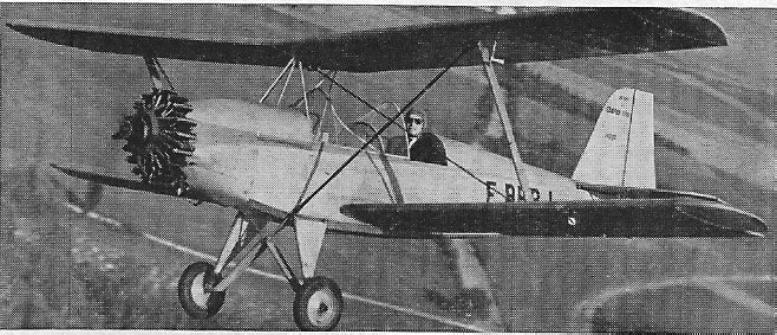
The Aero 110 fuselage has a fabric covered steel-tube framework and powered by a 45 hp Salmson 9ADB radial air-cooled engine.

A Single-bay staggered biplane, upper and lower wings are of equal span and chord. A hinged panel in the upper wing provides access to the front cockpit. Full dual controls are fitted.

Produced by the Societe Indraero and flown for the first time on 1 May 1950, the Aero 110 was produced for the Service de l’Aviation Legre et Sportive (S.A.L.S.).

Engine: 45 hp Salmson 9ADB
Wing span: 24 ft 11 in
Length: 18 ft 4 in
Empty weight: 594 lb
Loaded weight: 1000 lb
Max speed: 81 mph
Cruise: 71.4 mph

Indraero Aero 101

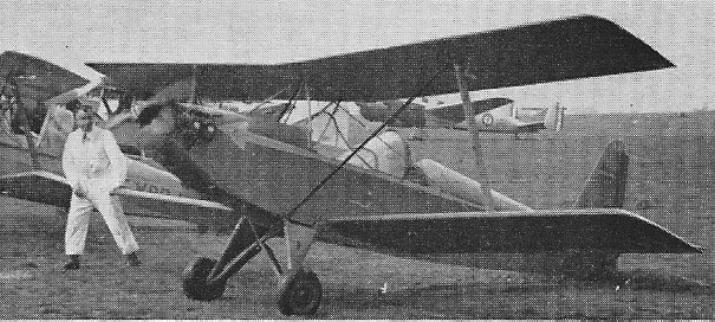
Developed by the Societe Indraero and first flown in 1953, the Aero 101 was designed by MM. Chapeau and Blanchet as a light tandem two-seat training biplane for the Service de l’Aviation Legre et Sportive (S.A.L.S.), and an initial production batch of thirteen was built.

Derived from the Aero 110, it differs by being all-wood construction, a tail wheel and brakes. Powered by a 75 hp Minie 4 DC-32 engine, the tandem open cockpits are fitted with dual controls.

Engine: 75 hp Minie 4 DC-32
Wing span: 24 ft 11 in
Length: 18 ft 4 in
Max speed: 108.6 mph
Cruise: 93 mph
ROC: 630 fpm

Indian Helicopters The Indian

A small helicopter, it can be stored in a single car garage, can be built in any home workshop with simple tools.
It has full cyclic, full collective, tail rotor pedals, twist grip throttle and is capable of vertical take-off and landing – a VTOL helicopter. The Indian is capable of hovering, forward, backward with sideward flight and autorotation.
A homebuilt helicopter using “off-the-shelf components” it can be built as an ultralight helicopter.
It is constructed with bolt together 4130 chromoly steel tubing frame (and 6061-T6 aluminum tubing) and could be built for under $8,000 including engine using off-the-shelf components. The build time was estimated at 300-800 hours depending on ability.

Dual carb, dual CDI 50-65 hp engine, 2 cycle, two cylinder inline, fan cooled
Compact Radial, Rotax or Hirth aircraft engines – recommended
A 55hp+ motorcycle engine with mount or other engine may be used
Main rotor blades are NACA 0012 – 21′ x 8″ 425 RPM
Tail rotor blades are NACA 0012 – 36″ x 3.5″ 3000 RPM
Empty weight – 254 lbs
Gross weight – 525 lbs
Useful payload – 273 lbs
Length – 15′ 9″
Width – 7′
Height – 7′ 6″
Cruise speed – 63 mph
Top speed – 75 mph
Ceiling – 9000′
Fuel – 5 gallons/1.25 hrs
Range – 100 miles

Impulse Aircraft Impulse

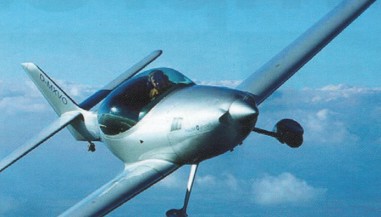
The Impulse 100 took three development and 1600 hours of flight testing (the prototype completing 1200 hours)
Tested safe load factors were +-5,6G with a safety margin of 1,725.
Kit quality control is achieved by vacuum bagging every individual composite piece.
The cockpit has adjustable seats and unobstructed view through the canopy.
Power is by a Jabiru 3300 engine consuming automotive fuel.

The Carbon Fibre, German Kit Plane comes with dual controls & brakes, landing light, wingtip strobes, and electric flaps.

Gallery

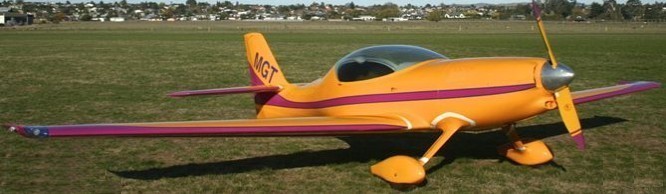
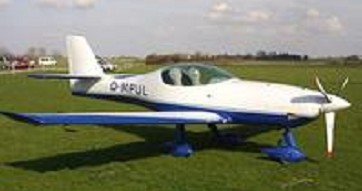
Impulse 100 td
Engine: Jabiru 3300, 120hp
Propeller: GT fixed pitch
Wingspan 8.74m
Empty Weight: 280 kg / 617 lbs
MTOW Weight: 472 kg / 1041 lbs
Usable fuel: 100 litre
Stall 30 degree flap: 33 kt / 39 mph / 62 kmh
Cruise 75% power at 2000 ft: 130 kt / 149 mph / 240 kmh
Vne: 225 knots
Climb Rate: 1600 ft/min / 8 m/s
Maneuvering speed: 220 km/h
Take-off distance (50ft obstacle): 520 ft / 160 m
Landing distance (50ft obstacle): 850 ft / 260 m
Fuel burn: 22 lt/hr @ cruise.
Range: 500 nm or 4 hours
Seats: 2

IMPA Tu-Sa / LF-1

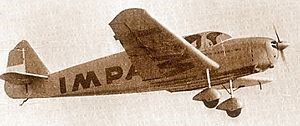
The IMPA Tu-Sa, (IMPA – Industrias Metalúrgicas y Plasticas Argentinas S.A.), or Impa Tu-Sa-O, was a civil trainer developed in Argentina in the 1940s for aeroclub use. It was a conventional, low-wing monoplane with wide-track fixed tailwheel undercarriage. Frst flown on 17 April 1943, approximately 25 were built as LF-1 during 1943-1944. Derived directly from the RR-11, the Tu-Sa (or Tu-Sa-O) initially had the same 65hp Lycoming O-145-B2 engine but that was later upgraded to a 80hp Continental.

In service, the aircraft demonstrated a number of serious and fundamental design flaws that led to a series of accidents and pilots joking that Tu-Sa stood for Todo Un Sarcófago Aéreo (“Altogether an aerial coffin”). When it became apparent that the defects could not be corrected without a complete redesign of the aircraft, they were withdrawn from use.

IMPA RR-11

IMPA products included a prototype RR-11 two-seat cantilever low-wing cabin monoplane. The sole example of this was built in 1942 by its designer Alfredo Davinz Ferrer.

The initiative had come from the founder of IMPA, Eng. Jose Mario Sueiro, who amidst the backdrop of the Second World War, decided to enter the aviation industry. Davins Alfredo Ferrer designed the RR-1 and oversaw its construction that took place in the 4th floor of the factory

IMPA workers not only developed the body of the plane, but the instruments: speedometers, tachometers, compasses, etc. It was noted that there was no way out to the street, a neighbor recalling they even broke one of the walls of the factory to remove.

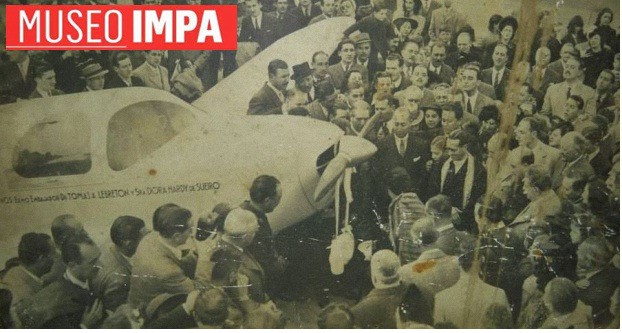
Sueiro made the maiden flight of July 25, 1942 at the airfield of Pacheco, accompanied by sr. Ciro Comi, which made headlines in major Argentine newspapers. The event was attended by members of the company; national authorities, as the director of Military Industries, Colonel Savio and the director of Civil Aviation, Dr. Samuel Bosch; and the president of the UIA, Luis Colombo.

Lycoming O-145-B2, 65 hp
Wingspan: 11.05 m
Length: 7.42 m
Wing area: 13 m²
Maximum ceiling: 5,000 m
Maximum speed 162 km / h
Power performance speed: 155 km / h
Cruising speed: 143 km / h
Endurance: 5 hr