Junkers L5 / L 55 / L 8 / L 88

Junkers L5

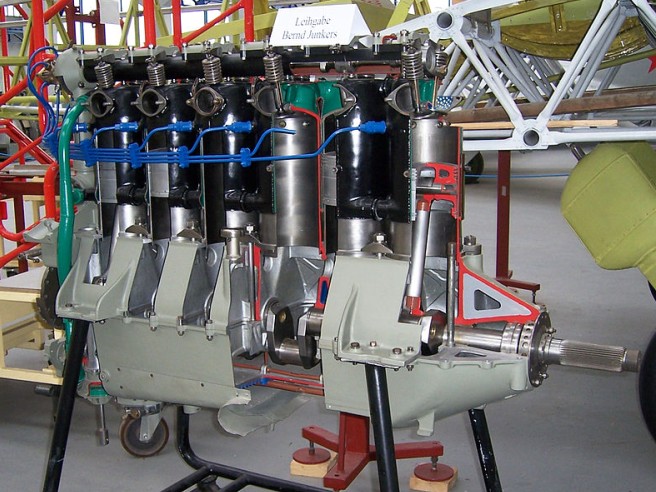
The Junkers L5 was a development of Junkers’ first water-cooled engine, the L2, but at four times the swept volume was a much more powerful engine. It was a water-cooled upright inline 6-cylinder unit, four-stroke and petrol-fuelled, with a capacity of nearly 23 litres. It adopted some of the L2 features, having twin exhaust and inlet valves in each cylinder driven by an overhead camshaft, twin spark plugs and twin magnetos. The splash component of the L2’s lubrication was abandoned in favour of a completely forced recirculating system. The twin carburettors of the L2 were replaced with a single float chamber, dual-venturi model. Like the L2, the L5 was a direct drive engine. First run in 1925, it was a much enlarged development of the Junkers L2, in turn a licensed development of the BMW IV.

The compression ratio of the standard version was 5.5:1, but variants had other ratios to cope with fuels with octane ratings between 76 and 95. The G series introduced carburettor heating together with an hydraulically damped mounting system. There were also choices of starting system, from inertial or compressed air systems to the traditional hand swinging.

The L5 proved to be reliable and became the engine of choice for most Junkers aircraft in the mid-1920s as well as powering aircraft from other German manufacturers. Many of these powered the Junkers F.13 and its derivatives like the W 33, which dominated world air transport in the mid-1920s.
The best demonstration of the reliability of the L5 was given by the unit which powered the single-engined W 33 Bremen in the first fixed wing east to west crossing of the Atlantic in April 1928. For this flight the compression ratio was raised to 7:1 to provide sufficient power for the heavily fuelled aircraft at take off. In July 1925 a W 33 powered by a L5 stayed aloft for 65 h 25 min, with a fuel consumption of 35.6 kg/h.

Overall, less than 1000 were built.

The Junkers L55 was Junkers’ first V-12 engine, appearing in 1927. The L5 was used in 1927 as the basis of the 665 hp L55, which had two banks of six cylinders aligned at 60°. These banks had the same bore, stroke, camshaft operated twin pairs of valves per cylinder, watercooling etc. as the L5, driving new a common crankshaft in a revised crankcase. A supercharger was added after a year to improve high altitude power.

The L55 is only known to have powered two aircraft for certain, the Junkers G 38 early in its career and the Junkers A 32. The first G 38 originally had two L55s inboard plus two L8 engines. The high altitude research Junkers Ju 49 may have used the L55 at the start of its flight programme. The L55 was rapidly replaced by the L88 in both the G 38 and Ju 49.

Variants:

L5 many variants including a variety of on compression ratios, powers and starting systems.

L55 an upright V-12 built from two L5s on a common crankshaft.

L8 a significant 1929 development with the same swept volume but cruising at 2,100 rpm and delivering 354 hp; take off power was 413 hp. The output was geared down at ratios between 2.47:1 and 1.44:1 to enhance propeller efficiency. Only a few were produced, powering early configurations of the Junkers G 38 as outer engines, with two L55s inboard.

L88 an upright V-12 built from two L8s on a common crankshaft.

Applications – L5
Albatros L 73
Albatros L 75
Focke-Wulf A 32
Heinkel HD 42
Heinkel He 50
Junkers F 13
Junkers A 20
Junkers A 35
Junkers G 23
Junkers G 24
Junkers K 30
Junkers G 31
Junkers W 33
Messerschmitt M 24
Rohrbach Ro.VIII

Applications – L55
Junkers A 32
Junkers G 38
Junkers Ju 49, possibly

Specifications:

L 5
Type: 6-cylinder liquid-cooled inline
Bore: 160 mm (6.30 in)
Stroke: 190 mm (7.48 in)
Displacement: 22.92 l (1,398.66 cu in)
Length: 1,750 mm (Bad rounding here5.7 ft)
Width: 650 mm (Bad rounding here2.1 ft)
Height: 1,265 mm (49.80 in)
Dry weight: 334 kg (736.34 lb) dry
Valvetrain: large twin exhaust and twin inlet valves driven by a single overhead camshaft shaft and gear driven from the crankshaft
Supercharger: none
Fuel system: single float, dual venturi carburettor; twin plugs per cylinder, twin magnetos
Fuel type: 95 octane (dependent on compression ratio)
Oil system: forced
Cooling system: liquid
Power output: Take-off – 260 kW (348.7 hp) at 1,450 rpm
Cruise – 208.8 kW (280 hp)
Compression ratio: 7:1
Fuel consumption: 61.6 kg/h (136 lb/hr)
Power-to-weight ratio: 1.22 kg/kW (2.01 lb/hp) @ cruise rpm
Junkers L2

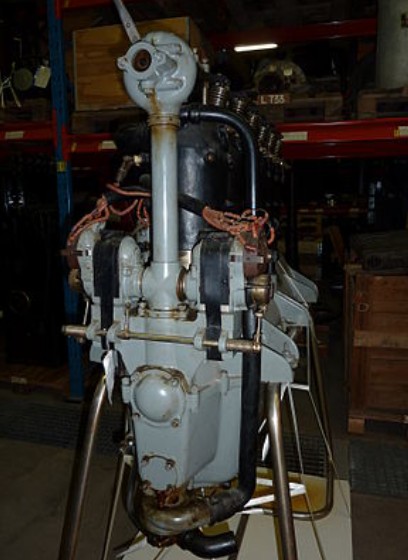
The Junkers L2 was Junkers’ first water-cooled four-stroke engine and the first to be built on a production line, though only 58 were made. First run in 1925, it was a 4-stroke six-cylinder water-cooled inline engine and powered many Junkers aircraft until replaced by the more powerful L5.

The Junkers L2 (the L signifying a four-stroke petrol engine rather than a two-stroke diesel) had some features in common with their first petrol engine, the L1, both six-cylinder upright direct drive inline engines with four overhead camshaft driven valves per cylinder, but was water-cooled rather than air-cooled and had a much greater swept volume. It initially developed a cruise power of 195 horsepower (hp) (145 kW) at 1,550 rpm but was developed to 220 hp (164 kW).

The L2 powered early versions of several Junkers aircraft. It was soon replaced in these models by the more powerful Junkers L5 and only 58 L2s were built.

Variants:
L2 initial version.
L2a refined L2, 230 hp.

Applications:
Early versions of:
Junkers F 13
Junkers A 20
Junkers G 23
Junkers G 24
Junkers W 33
Re-engined:
Junkers Ju 21

Specifications:
L2
Type: 6-cylinder upright water-cooled inline 4-stroke piston engine
Bore: 150 mm (5.906 in)
Stroke: 180 mm (7.09 in)
Displacement: 19.1 L (1,166 cu in)
Length: 1.58 m (5 ft 2¾ in)
Width: 0.555 m (1 ft 9¾ in)
Height: 1.085 m (3ft 6¾ in)
Dry weight: 310 kg (684 lb)
Valvetrain: Two inlet and two exhaust valves per cylinder, overhead camshaft operated
Fuel system: Twin carburettors
Fuel type: Petrol
Oil system: Combined splash and pressure
Cooling system: Water-cooled
Reduction gear: Direct drive
Power output: cruise 195 hp (145 kW) at 1,550 rpm, take-off 230 hp (171 kW)
Fuel consumption: 31.82 kg/hr (70.16 lb/hr)

Junkers L1

The Junkers L1 was the first engine from that company to fly. First run in 1921, it was an aircooled, upright 6-cylinder inline 4-stroke petrol engine only produced in small numbers and largely used for research, but led to the successful L5 and its V-12 development, the L55.

Hugo Junkers’ early engineering experience was with stationary opposed-piston two-stroke diesel engines for industrial applications and this arrangement was eventually adapted for aircraft use. Nonetheless, his company’s first aero engine was a petrol-fuelled four-stroke, the 6-cylinder inline aircooled L1. L was Junkers’ notation for petrol engines from the L1 to the L10, which became the Jumo 210 in 1931. It first ran in 1921 and was the subject of much static testing, but the intention was always to produce a flight engine. The first aircraft to test fly the L1 was the Junkers T 19; this aircraft first flew in 1922, but the date of its first flight with the L1 is uncertain.

Notable features were the four large valves per cylinder, two inlet and two exhaust; the ball race main bearings; and the double ignition system, with twin magnetos and two sparking plugs per cylinder.

The L1 was largely an experimental engine, but a small production line was set up in 1925. Reliability was not high, however and only a few aircraft, themselves built only in small numbers, used the L1 and its variants. The large diameter, circular blower fitted to the L1a resulted in a flat fronted, circular cross section cowling, particularly noticeable on the Junkers T 19 and 26.

Variants:
L1
Original version.

L1a
Larger bore diameter and a large circular blower, gear driven, mounted at the front of the engine to enhance high altitude power.

L1b

Applications:
Focke-Wulf A 16b
Junkers T 19
Junkers T 26
Junkers J 29

Specifications:

L1a
Type: 6-cylinder air-cooled upright 4-stroke
Bore: 100 mm (3.94 in)
Stroke: 120 mm (4.72 in)
Displacement: 5.65 L (345 cu in)
Length: 1.115 m (3 ft 8 in)
Width: 700 mm ( 2 ft 3 in)
Height: 790 mm (2 ft 7 in)
Dry weight: 128 kg (282 lb)
Valvetrain: two large inlet and two large exhaust valves per cylinder, operated by overhead camshaft
Fuel type: petrol
Cooling system: air-cooled; finned cylinder heads
Reduction gear: none:direct drive
Ignition system: twin magnetos and two sparking plugs per cylinder
Power output: cruise 75 hp (56 kW); take-off 85 hp (63 kW)
Fuel consumption: 26 kg/hr (44 lb/hr)

Juge & Rolland Ornithoptère

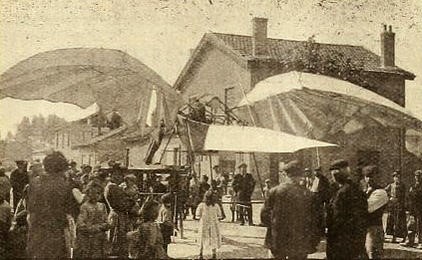
Thr Ornithopter of Jean-Baptiste Juge and Paul Rolland was designed and realized during 1907 through 1909. In a January 1909 magazine article written by Paul Rolland in “L’Aérophile” about the machine, Rolland begins with a plea to the editor of “L’Aérophile” for a more powerful engine (40 hp), as the one available had insufficient power. In the last paragraph he mentions that the first tests were made without any publicity given. Additionally, he states that the first wing flaps or “coups d’ailes” rather, “have given us every satisfaction.” Jean-Baptiste Juge had filed a French patent on September 28, 1907 (published November 28, 1908) for an “Aviateur”, which is remarkably similar to the finished model. That this patent has only Juge as inventor, gives the impression at least, that he was the driving intellectual force behind the design of the machine.

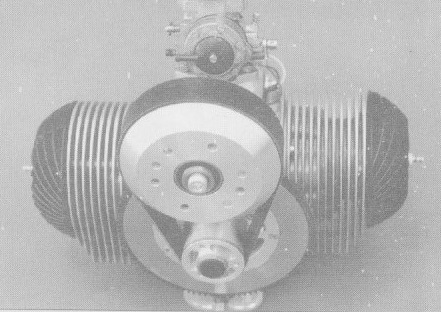
JPX 4T X 75A

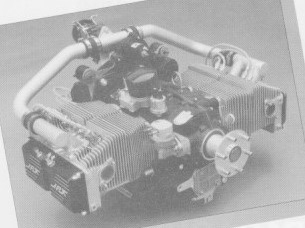
The 85 hp 4TX75/A engine is JAR certified and came with a 2 years or 1000 hr warranty. The magnetos fitted were Bendix.

4T X 75A
Cycle: 4 stroke
No cylinders: Flat 4
Bore: 95 mm
Stroke: 82 mm
Compression: 8.7
Displacement: 2325 cc
Cooling: Air
Ignition: Double magneto
Reduction: optional
Dimension: 755 x 680 x 520 mm
Weight: 78 kg
Max pwr: 85 hp at 3000 rpm
Max torque: 202 at 2900 rpm
Fuel consumption: 190/220 G/hp/hr
Price 1998: 70 940 Fttc