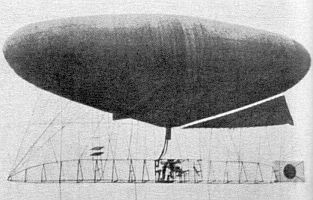
Built 1909/10, the Yamada No.1 was a Japanese airship of 1600 cu.m capacity and powered by one 14 hp automobile engine.

It was distinguishable from the No.2 by the larger under-fin.
Built 1909/10, the Yamada No.1 was a Japanese airship of 1600 cu.m capacity and powered by one 14 hp automobile engine.
It was distinguishable from the No.2 by the larger under-fin.
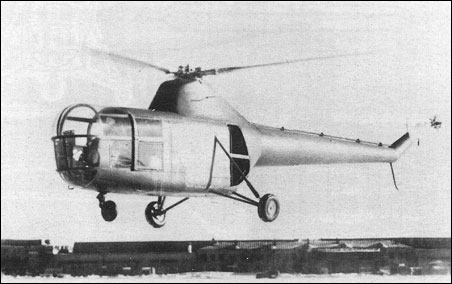
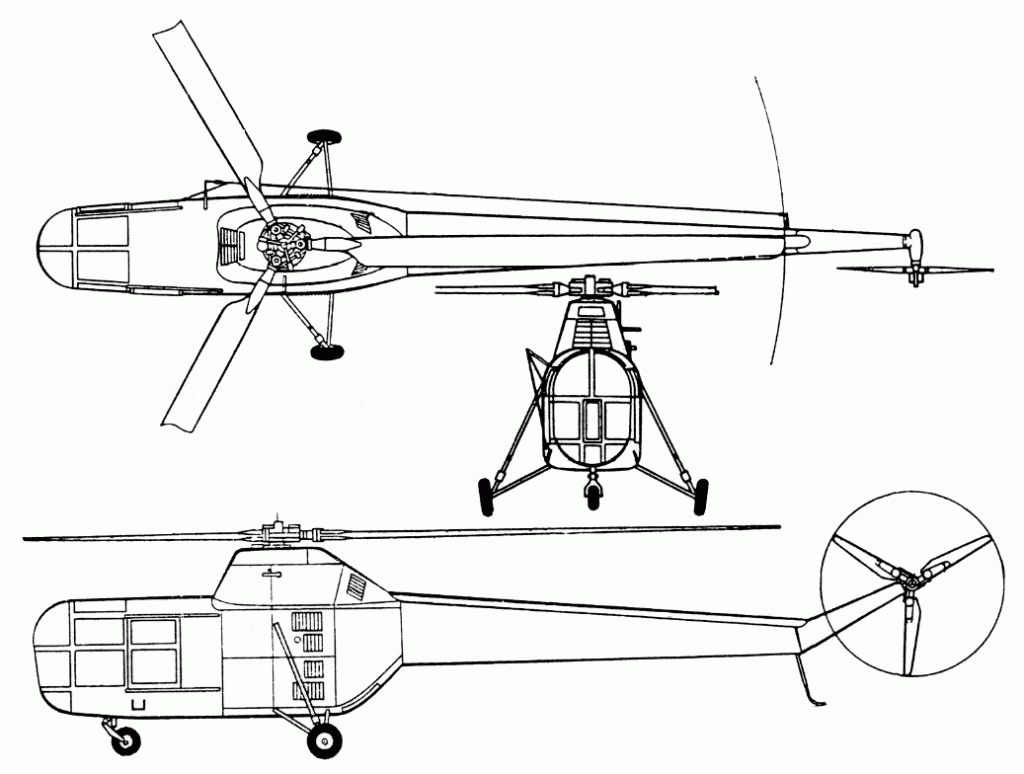
Yakolev ordered the development of a practical helicopter capable of being built in two forms, as a transport carrying a pilot and two passengers, or equivalent cargo, and as a two-seat, dual-control trainer. Design began in June 1947, this machine being one of several which were given out-of-sequence type numbers. The Yak-100 was externally similar to the Sikorsky S-51. The OKB team, under Erlikh, designed this single-rotor machine retaining similar dynamic parts the to EG. The drive and hub mechanism with damped flapping, feathering and drag hinges and hydraulic-dashpot control via swashplate were similar with three main blades of hardwood and pine as before, with ply skin and glued fabric overall. Root of each blade in upper/lower halves of bolted D1, steel hub. Main change in engine installation was vertical engine mount with several changes to enable engine to run in this attitude. Cooling fan, clutch/freewheel and reduction gear and angle box for tail rotor were more Sikorsky than scaled-up EG, though pilot controls and control system retained OKB belief in spring and oil vibration dampers (this time with pilot adjustment) and in spring-loaded actuation of pitch into autorotation following loss of drive torque. Pedal control of tail-rotor pitch. Airframe based on welded steel-tube frame carrying landing gear, seats, rotor hub and engine. Skin riveted D1, and cranked tailboom D1 monocoque. Basic design completed late 1947 as tandem trainer or as transport with single pilot in front and two-seat divan or other payload behind.
The engine was Ivchyenko’s AI-26 seven-cylinder radial, the version chosen being the 575hp AI-26GRFL designed to operate with crankshaft vertical. This drove via a cooling fan and centrifugal clutch to a main gearbox which turned the single main rotor at 232 (not 233) rpm, with a bevel drive to a shaft carried on external trunnions along the top of the long tail boom to a 2.6m three-blade tail rotor. The latter counteracted the main-rotor drive torque and provided yaw (directional) control, driven by pedals. Both rotors were again of fabric-skinned wood laminates, the main rotor having manual control via swash-plates, with spring-loaded automatic autorotative control following loss of drive torque.
The fuselage was again based on a welded-tube truss, with unstressed D1 skin, but the tail boom was a D1 semi-monocoque. The main gearbox was housed in a large mast fairing above the engine compartment, with a front air inlet for the fan-assisted oil cooler. Again the undercarriage was a simple tricycle, with a castoring levered-suspension nosewheel and triangular-braced main units with oleo shock struts pinned to the upper longerons. Track was 3m and wheelbase 2.865m. The entire front of the fuselage was transparent, with sliding doors on the right for the pilot and on the left for the backseater (who had dual control in the first prototype). The transport version was to have a two-seat divan at the rear.
Two prototypes built, first with VVS funds and bearing VVS insignia. The first prototype was tested from November 1948. Initially suffering from severe vibration and apparent blade flutter, the lades given ground-adjustable TE tabs and eventually modified with CG further aft, behind flexural axis. These blades first fitted to No.2 Yak-100, which began test July 1949. Gradually problems with vibration and flutter were solved, and a second prototype was built with modified blades with the cg behind the flexural axis which greatly improved behaviour without complicated damper systems. This dubler, first flown in July 1949, had a more-fully enclosed engine bay with grilled panels and an internally mounted tail-rotor drive shaft. NII-VVS testing took place in the second half of 1950.
Factory test complete June 1950 and NII tests successfully accomplished later same year, but Mi-1 already adopted and Yak-100 project was lost dropped.
Yak-100
Total length: 13.91m
Main rotor diameter: 14.50m
Tail rotor diameter: 2.60m
Empty mass: 1805kg
Max take-off weight: 2180kg
Max. speed: 170km/h
Static ceiling: 2720m
Dynamic ceiling: 5250m
Range: 325km
Crew: 1-2

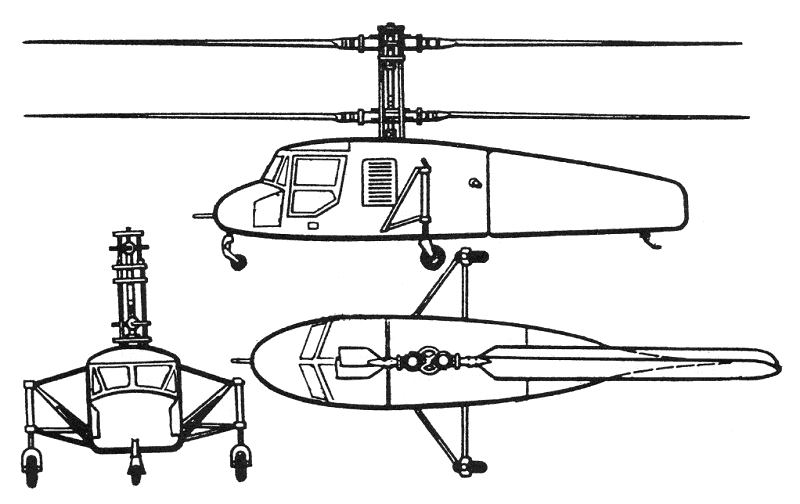
The Yakolev OKB started development of helicopters after the war and designed an experimental machine in 1946, the Yak-EG (Eksperimentalnyi Gelikopter) with a coaxial rotor system, and widely known as the Yak-M11FR-1.
The chief engineer was S.A.Bemov, assisted by I.A.Erlikh. From the outset it was planned as the smallest practical machine to solve basic problems. The engine was a 140hp M-11FR-1 mounted in the normal attitude with the drive taken through a cooling fan and centrifugal clutch to a 90deg bevel gearbox to co-axial vertical shafts. These turned two-blade rotors in opposite directions, at 233 rpm. After studying the possible use of pilot controlled tabs or auxiliary surfaces behind the blade tips the choice was a fully articulated hub with swashplates giving collective and cyclic pitch control. A unique feature was a spring-loaded hydraulic coupling which, upon failure of the drive torque, automatically moved the collective linkage to autorotative pitch.
The rotor blades were laminated pine and hardwood, covered in glued fabric, held in a hub of steel and duralumin. The fuselage was a simple truss of welded steel tube, with Dl skin as far back as the rear of the engine compartment, where an aft-facing gap allowed fan-induced cooling air to escape. The fuel tank was under the main gearbox and the oil tank next to the engine. For better stability in cruising flight a light fabric-covered rear fuselage with twin fins and a tailskid was added behind this point. The welded truss was extended at the front and sides to three vertical shock struts with single wheels, the nose unit having levered suspension. Track was 2.8m and wheelbase 2.68m. The side-by-side cockpit had a door on each side and the largest possible window area.
The Sh was completed in early 1947. The chief pilot was V.V.Tezavrovskii, who with others made forty tethered tests (total 5hr) followed by seventy-five free flights (total 15hr). Ground resonance, then little known, was avoided by pure chance. The centre of gravity was clearly too far aft, so the tail (and for a time the tail-skid) were removed and the oil tank relocated behind the cockpit bulkhead.
Eventually the Sh hovered under good control, but as soon as forward speed exceeded about 30km/h vibration and progressive loss of control were encountered. Following testing it was decided that the coaxial rotor layout should be developed by the Kamov bureau, and Yakolev moved on to other helicopter configurations.
EG
Engine: M-11FR-1 5-cylinder air cooled piston, 140 hp
Rotor diameter: 10.0m
Length: 6.53m
Max take-off weight: 1020kg
Empty weight: 878kg
Payload: 142kg
Fuel: 50kg
Max speed at sea level: 150km/h
Max speed reached: 70km/h
Hovering ceiling: 250m
Service ceiling: 2700m
Service ceiling reached: 180m
Range: 235km
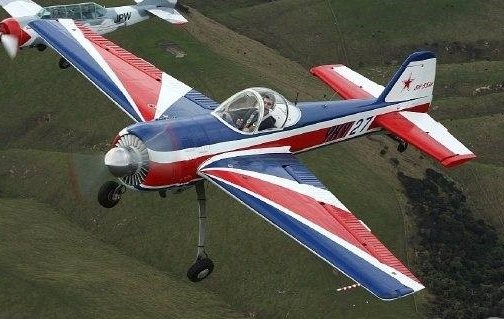
A single-seat aerobatic aircraft (first flown 1989).
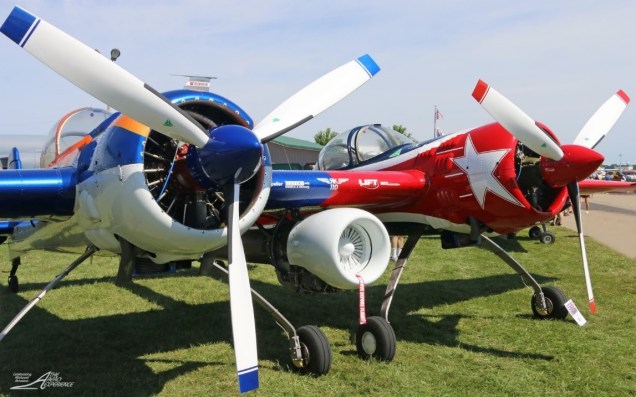
A team from Arizona led by mechanic and restorer Dall Koller and aerobatic flight champion Jeff Buerbon built two Yak-55M as Siamese twins.

As well as two M-14P engines of 360 hp, a TRD GE J-85 (in the variant GE CJ610) was installed.
For the first time it took to the air in June 2018, still without a jet, and flew normally. By October it flew with three engines. It flew and flew well.
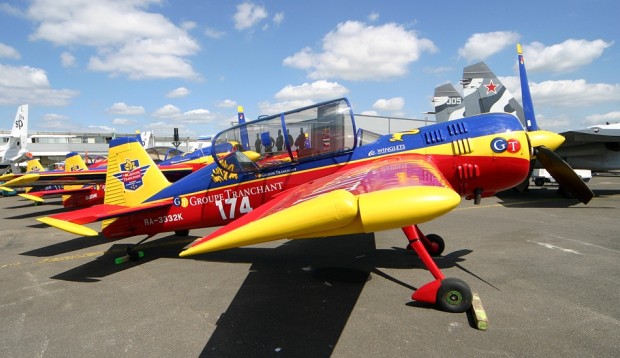
The Yak-54 was designed in the 1990s as an improved two seat version of the Yak-55. Featuring a new landing gear that is raked forward, three blade propeller, and larger tail surfaces, the Yak-54 was first flown in December 1993. The airframe is built to 7G.
Publicy introduced at the 1994 Paris Air Show, manufacture came to a stop, after one production aircraft, in 1998, pending certification. Some modifications were made to improve stability, aerodynamics and aerobatic performance, plus the M-14 engine was not certified.
The production aircraft was purchased by Jim Bourke and after two years of inactivity was restored to flight in 1996.
The Yak-54 did eventually receive full certification and a series of five was under construction.
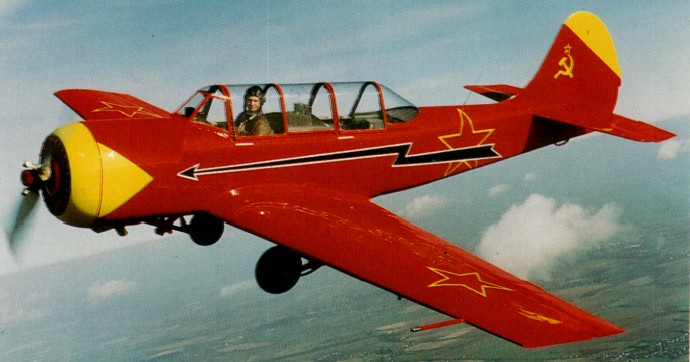
The Yakolev Yak-52 is a two-seater tandem low wing civil and military aerobatic trainer aircraft with semi-retractable tricycled landinggear. Development of the Yakolev Yak-52, originally known Yak-50U, started in 1973 as a successor of the Yakolev Yak-18 training aircraft. The Yakolev 52 was designed by the Yakolev Design Bureau as a trainer version of the single-seat Yak-50. The prototype was flown first in 1974. Production was initiated in 1976 at the Intreprinderea de Avioane Bacau factory in Bacau, Romania and production of the Yak-52 started in 1977.
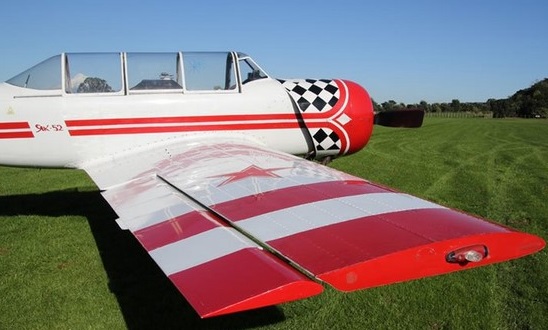
The Romanian prototype Yak-52 was flown first in May 1978 and deliveries started the same year. The IAK-52 airplane is equipped with a 360 hp Ivchenko Vedeneyev M-14P nine cylinder, air-cooled radial piston engine. The 400 hp M14PF can also be fitted. The Yak is all-metal, fully aerobatic machine with an inverted fuel system, and features semi retractable tricycle landing gear. As an aircraft with excellent performance and +7/-5 G limits with two pilots and full fuel, the Yak-52 enables training from basic to unlimited level.
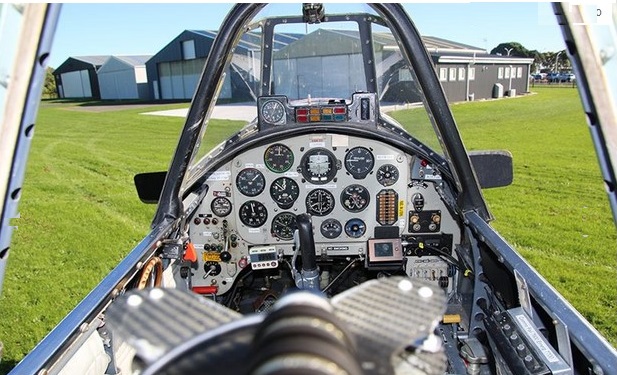
The Yak-52 was used in the Soviet Union as a basic military trainer as well as primary and advanced aerobatic trainer. A vast majority is in use with the Russian DOSAAF Clubs. The I.Av. Bacau was renamed Aerostar S.A. in 1991. Over 1800 have been produced starting with series-production in 1979. At the peak of production 150 aircraft were manufactured per year. Aerostar in Bacau, Romania as of 2009, was still producing the Yak-52 in limited numbers on request. The models were the Yak-52W, an upgraded derivative with Western instruments, radio, electrical etc. and the tail wheel version Yak-52TW.
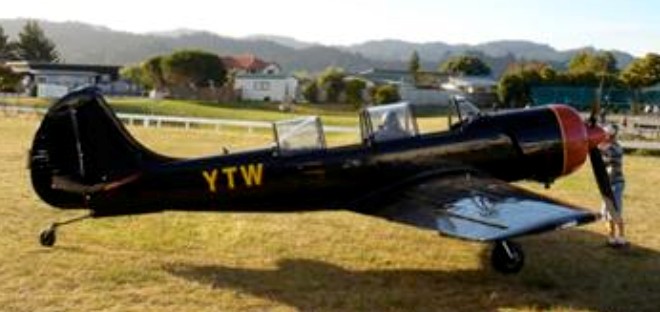
The 2025 developed Yak-52B2 variant is tailored for counter-drone operations. It features a 90 kg payload capacity under each wing. One pylon mounts a circular-view radar capable of air-to-air, air-to-ground, and weather tracking. The other currently carries a 12-gauge semi-automatic carbine.
The aircraft is further equipped with a weapon aiming subsystem and modern flight control and navigation systems, enabling reliable operations in all weather conditions.
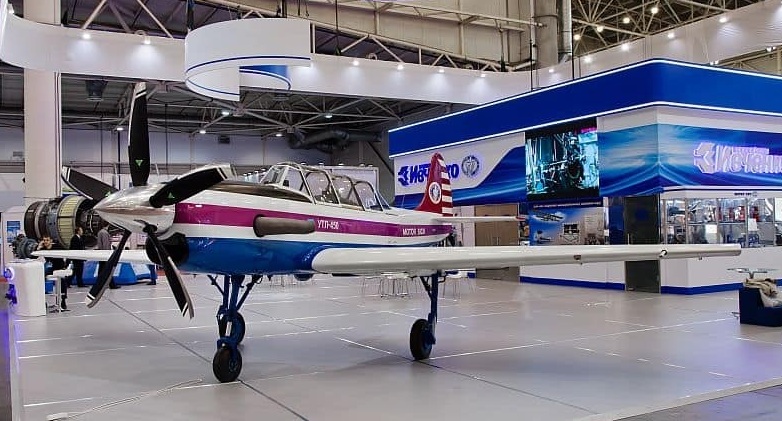
Motor-Sich developed an upgraded version of this aircraft, which received a AІ-450S turboprop engine with 5-blade variable-pitch propeller MTV-5, as well as a number of other new systems. Also, the upgraded version received a new instrument panel with liquid crystal indicators.
Engine: Vedeneyev Ivchyenko M-14P, 360 hp
Crew: 2
Height: 2.7 m
Length: 7.745 m
Wing span: 9.3 m
Wing area: 15 sq. m
Dihedral: 2 degrees
Wing incidence: 2 degrees
Propeller diameter: 2.4 m (V530TA-D35 constant speed propeller)
Wheel track: 2.715 m
Dry weight: 1035 kg
Maximum takeoff weight: 1315 kg
Maximum landing weight: 1315 kg
Weight of crew with parachutes: 180 kg
Fuel weight: 90 kg
Oil weight: 10 kg
Maximum fuel load: 120 L
Maximum oil load: 16 L
C of G limits (%): 17.5 – 27.0
Maximum level airspeed (at altitude 1000 m): 270 km/h
Range (10% fuel reserve at 190 km/h): 465 km (2 h 30 min)
Takeoff roll: 180 – 200 m
Landing roll: 330 m
Stall speed, engine at idle – erect flight, clean: 120 km/h
Stall speed, engine at idle – flaps, gear down: 110 km/h
Stall speed, engine at idle – inverted: 150 km/h
Approach speed: 160 km/h
Cruise 70%: 130 kt / 60 lt/hr.
Touchdown speed: 115 – 120 km/h
Takeoff speed: 120 km/h
Climb speed: 170 km/h
ROC: 1800 fpm.
Never exceed speed (VNE): 420 km/h
Maximum manoeuvring speed: 360 km/h
G limits: +7/-5
Maximum gear extended speed: 200 km/h
Maximum flaps extended speed: 170 km/h
Minimum fuel qty for aerobatics: 24 L
Maximum inverted flight time: 2 min (followed by at least 3 min of erect flight)
Maximum oil load for cross-country: 16 L
Maximum oil load for aerobatics: 10 L
Minimum oil load: 8 L
Yak 52TW
Engine: 400 HP
Prop: MTV-9-B/260-29
Motor-Sich UTL-450
Engine: AІ-450S turboprop
Propeller: MTV-5 5-blade variable-pitch
Empty aircraft weight: 900 kg
Maximum take-off weight: 1315/1500 kg (pilot/multi-purpose category)
Maximum horizontal flight speed: 350 km/h
Maximum flight range with 10% fuel reserve: 650 km
Maximum flight range with additional fuel reserve: 2890 km
Practical ceiling: 9000 m

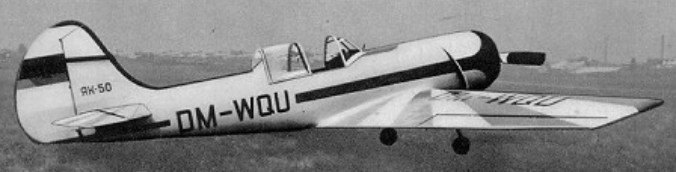
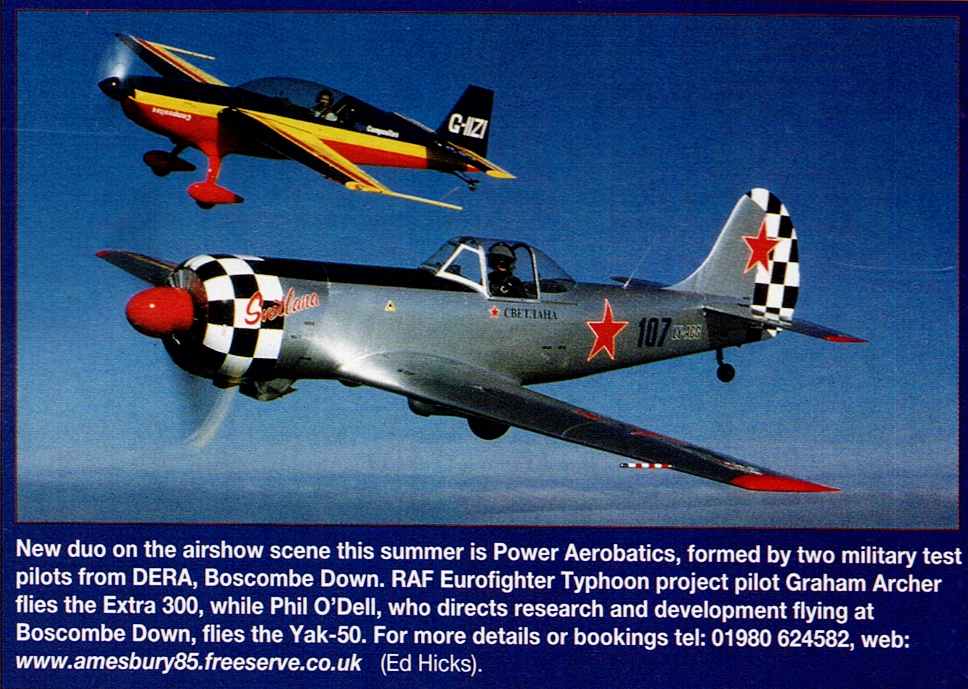
The Yakolev Yak-50 is a single-seater aerobatic low wing monoplane with retractable landing gear with tail wheel. Development of the Yakolev Yak-50 started in 1972 based on the single-seat Yak-18PS. With a new wing planform and more power, the Yakolev Yak 50 provides more performance than its predecessor.
The center spar box appeared to have been removed and the wing panels, with squared tips, now join the fuselage directly, with very little dihedral. Both the 18PM and 18PC had 300 hp Ivchenko AI14RF engines, whereas the 50 uses a 360 hp M 14P radial that looks quite similar as it is installed; it drives two large, constant speed, paddle like propeller blades that are geared down.
Gross weight of 900 kg or 1,980 pounds and the span is down, from 10.6 meters to 9.5, which means they’ve clipped between a foot and a half and two feet from each wing, and the wing area is correspondingly reduced nearly 12 percent. The airplane is also shorter than the 18s by a bit less than a meter. Its gear is fully retractable. The pilot sits near the trailing edge of the wing, which affords a fairly good view of the ground in vertical maneuvers, when such views are most needed.
The first of two prototypes built was flown first in 1972. After a series of modifications and a considerable amount of testing the Yak-50 was put into production at Arsenyiev in the Russian Federation as a duraluminium skinned semi monocoque airframe and deliveries started early 1975.
The Yak-50 proved its aerobatic versatility and worth at the 8th World Aerobatic Championships in 1976. Yak-50’s ended first, second and third in the men’s championships, took the top five places in the women’s competition and the overall men’s and women’s team prizes. The Yak-50 airplane is equipped with a 360 hp Ivchenko Vedeneyev M-14P nine cylinder, air-cooled radial piston engine.
When production ended in 1985 a total of 312 were built, of which the vast majority were for the Russian DOSAAF Clubs. With the introduction of the Yak-55, Moscow instructed all DOSAAF Clubs to scrap the Yak–50s and return the logbooks to Moscow, with the result that there are less than sixty Yak-50s left in the world.
Engine: Vedeneyev Ivchyenko M-14P radial, 360hp / 265kW
Max take-off weight: 900 kg / 1984 lb
Empty weight: 765 kg / 1687 lb
Wingspan: 9.5 m / 31 ft 2 in
Length: 7.8 m / 26 ft 7 in
Height: 3.2 m / 11 ft 6 in
Wing area: 15.0 sq.m / 161.46 sq ft
Max. speed: 320 km/h / 199 mph
Cruise speed: 240 km/h / 149 mph
Ceiling: 6000 m / 19700 ft
Range: 550 km / 342 miles
Crew: 1

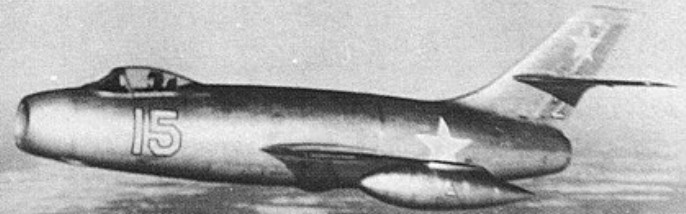
Developed in parallel with the Yak-23, the similarly-powered Yak-25 was conceptually more advanced and derived from the Yak-19. By comparison with the earlier fighter, the Yak-25 employed the higher-speed TsAGI S-9S-9 laminar section at the wing root translating to a KV-4-9 section at the tip with a constant thickness of 9% throughout. Despite the greater diameter of the 1625kg RD-500 (Rolls-Royce Derwent) – similar to that installed in the Yak-23 prototypes – than the RD-10F of the Yak-19, the diameter of the fuselage of the Yak-25 was unchanged. Sweptback horizontal tail surfaces were adopted, provision was made for two 200-litre drop tanks under the wing tips and armament comprised three 23mm NR-23 cannon. The first of two prototypes was flown on 31 October 1947, but, although the subsequent flight test programme was allegedly successful, no production contract was issued for the Yak-25. One of the prototypes was utilised during 1948 for (fixed) tandem-wheel undercarriage trials as part of the Yak-50 development programme.
Max take-off weight: 3235 kg / 7132 lb
Empty weight: 2285 kg / 5038 lb
Wingspan: 8.88 m / 29 ft 2 in
Length: 8.65 m / 28 ft 5 in
Wing area: 14.00 sq.m / 150.69 sq ft
Max. speed: 972 km/h / 604 mph
Range: 1445 km / 898 miles


Soviet rotorcraft development was suspended during World War 2, and it was not until late summer 1952 that the USSR made its first major effort to close the design gap between itself and the USA in regard to large transport helicopters. In response to order of Stalin at a Kremlin meeting autumn 1951, two basic projects were selected, the first, for a 12-passenger machine of single main rotor configuration, being assigned to the Mil design bureau. The second, entrusted to the bureau headed by Aleksandir S. Yakolev, was for a twin-engined, tandem-rotor machine capable of seating 24 passengers. Prototype flights of both types were required to take place within one year.
Mil had already prepared suitable design, and Yak gained permission to use essentially same main rotor and drive from similar engine, merely doubling up to use two engine rotor systems at ends of boxcar fuselage. Yak assembled a large team including Erlikh, veteran helicopter man N.Skrzhinskii, P.D.Samsonov (famed flying-boat designer who had long managed Yak prototype dept), L.Shekhter, L.S.Vil’dgrub and many other well-known engineers. The plan was to build four four Yak-24, already called LV (Letayushchii Vagon, flying wagon), two for static and resonance test and two for flight. Yakolev was promised “unlimited support” for the rush programme.
A S Yakolev has described how, in autumn 1951, he and other designers were called to the Kremlin and told by Stalin to create two helicopters, one to carry a useful load of 1,200kg or twelve armed infantry and the other just twice as much, prototypes to be ready in one year. It was to be a ‘crash programme’, with ‘unlimited support’ from the national research institutes. Nobody was eager, but eventually Mikhail L Mil agreed to tackle the smaller machine and Yakolev the larger, Yakolev having the idea of simply using tandem rotors based on those of the Mil’ design.
Designing the Yak-24 started in December 1951. Though the first prototype was built extremely quickly, this programme was to prove more protracted than any previous endeavour by the OKB. Including later versions the chief engineers comprised I A Erlikh (the original leader) and P P Brylin, Yu I Orlov, V P Lashkov, G I Rumyantsev and G I Ogarkov.
Mil, with CIAM, CAHI and other organizations, including Shvetsov’s engine KB, developed the rotor and its drive system. The engine was the ASh-82V, a special helicopter version of the fourteen-cylinder radial used in some Yak fighter prototypes. Rated at l,430hp, and with 1,700hp available for takeoff, it was developed with a cooling fan and centrifugal clutch and cleared to operate in any attitude. It was decided to install the front engine between the cockpit and cabin at an angle of 60deg to drive the gearbox under the front rotor. The rear engine was installed in the normal attitude in the base of an enormous rear fin which formed the pylon for the rear rotor, driving through a 90deg bevel gearbox.
The rotors had fully articulated hubs made of D16 and steel, with drag and flapping hinges and friction dampers. In fact, the rotor was not identical to that of the Mi-4, and indeed later Mil enlarged his rotor by using Yakolev’s longer blades. The four blades were tapered, with NACA-230 profile, based on a 30KhGSA spar with ply ribs and skin covered in varnished fabric, with tracking adjusted by a tab on the trailing edge near the tip. The fabric was replaced by a steel rotor with a metal skin on the production models. The rotors turned at 178 rpm in opposite directions, the rear rotor being a mirror image of the front rotor which it over-sailed. The gearboxes were linked by a torque shaft so that flight could just be maintained on one engine. Each engine was geared to drive one or both rotors. Unfortunately this arrangement, although intended as a precaution against failure of either engine, created the problem of ‘sympathetic’ vibration. From the outset, vibration hampered the Yak-24’s development.
The boxcar fuselage was based on a truss of welded KhGS A tube, originally fabric-covered, then skinned with unstressed Dl panels covering the engine bays, rotor pylons and fin, and by fabric elsewhere. Each engine was housed in a fire-resistant bay with large apartures for cooling air, those for the rear engine being forward-facing open inlets beside the fin leading edge. Each engine had its own fuel tank. At the front was the fully glazed cockpit for two pilots and a radio operator/engineer, with a sliding door on each side and a rear door to the engine compartment, through which a narrow passage led to the main cabin. Aluminium plank cargo floor with full-section access via rear ramp/door; passenger door forward on left side.
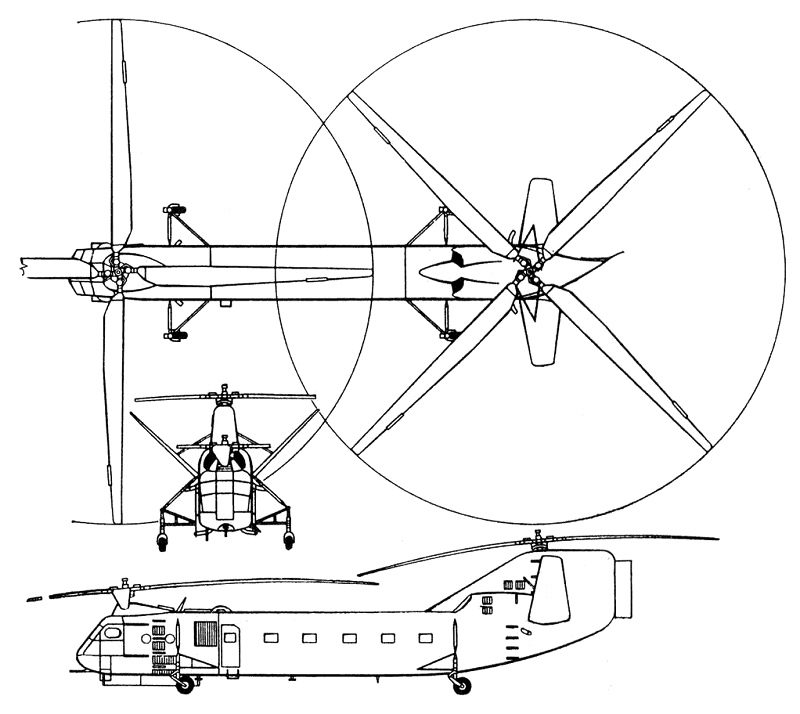
Rear rotor mounted on top of vertical fin (TE curved to right to give side-thrust to left in flight) with drive from engine installed in normal horizontal attitude at base of fin, with open cooling-air inlets each side of fin and clearance under engine for vehicles and other cargo on ramp. High-speed connecting shaft to front rotor, mirror-image with rotation anti-clockwise seen from above, driven by engine at 60° angle between cockpit and cabin. Nose cockpit for two pilots, radio-operator and engineer, entirely glazed with aft-sliding door each side and sliding door(s) at rear giving restricted access past engine to main compartment. This measured 10m long, the cross section being 2m square with intended accommodation for up to 40 troops on canvas wall seats or light vehicles or 4t cargo, with crane operation using central hook on underside of fuselage. There were six windows on each side, one being in a door, and at the back was a full-width ramp door through which shallow loads such as a GAZ-69 ‘Jeep’ could be moved under the rear engine on to the floor of aluminium planks. Four similar levered-suspension wheel landing gears, each normally castoring +/-30 deg, on rigid welded steel-tube outriggers. The track was 5m.
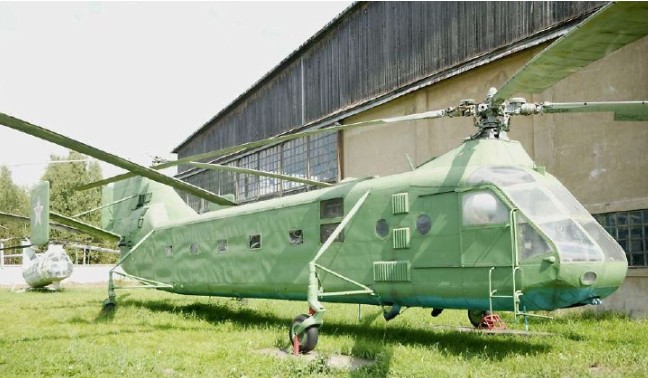
Two flying prototypes completed, and two others were built for static and dynamic testing. While numerous establishments tested complete engine/rotor rigs, blade fatigue and truss structure of fuselage, first flight article readied spring 1952 and began 300 hr endurance test with wheels tied down. Vibration in evidence from start, and usually severe. With greater experience OKB might have recognised a fundamental N1 main-rotor mode and altered critical dimension. As it was, at 178th hour, rear engine tore free from fatigued mounts, machine being destroyed by fire. Second flying article, ie, 4th airframe, finally began tethered flight piloted by Sergei Brovtsev and Yegor Milyutchyev 3 July 1952. Hops at partial power were followed by full-power flights, when vibration reared its head dangerously. Five months by every available expert found no cure; then Yakolev personally ordered 0.5m cut off each main-rotor blade, reducing diameter from 21m to 20m. This effected immediate great improvement. No.4 aircraft delivered for NII test Oct 1953, but destroyed when tethers snapped during ground running. OKB delivered improved aircraft with numerous mods including modified tail with no fins but braced tailplanes with dihedral 45°. This finally passed NII April 1955 and production began at GAZ in Leningrad.
With official tests completed on later prototypes, production began in April 1955, and only four months later evaluation aircraft were demonstrated at Tushino airport during the Soviet Aviation Day display. The first four pre-series Yak-24 (visibly not all identical) flew at Tushino, Aug 1955.
Final development work on the aircraft was extremely long and complex and full-scale production for the armed forces began in 1955, about 30 months behind schedule.
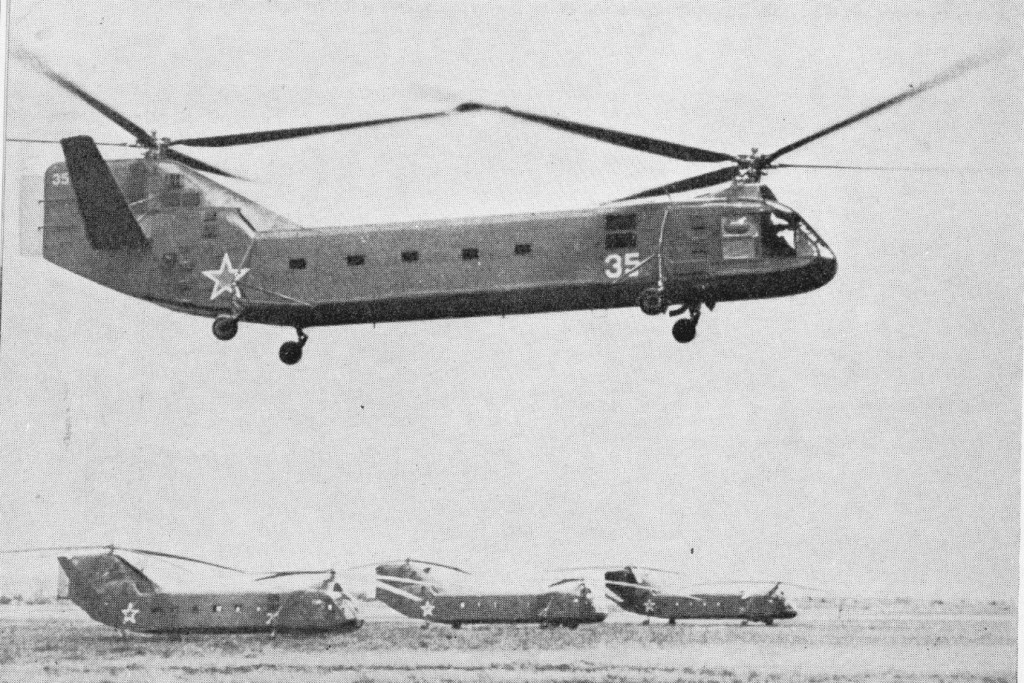
Series version had strengthened floor with tracks for vehicles, tie-down rings, attachments for pillars carrying 18
stretchers, full radio and night equipment and facilities for field servicing. Normal max load 20 armed troops or 3t.
The early Yak-24’s featured a Vee tailplane, but later production examples had rectangular endplate fins on a horizontal tailplane, and both have been seen with and without a narrow auxiliary rudder.
Production was ordered at a Leningrad factory, where thirty-five were built for the VVS in 1956-58. These were painted in dark green camouflage, and except for the first few had larger tailplanes with dihedral reduced to 20deg carrying large endplate fins set at an angle of 3deg 30′ to give the required thrust to the left in cruising flight, the tail end no longer being curved to the right. They had full equipment for loading and securing vehicles and other cargo up to a maximum of 3,000kg. Canvas wall seats were provided for twenty troops, with racks for weapons and equipment, with pillar sockets for eighteen stretchers accompanied by an attendant. A three-tonne load could also be slung from a central hook, but on 17 December 1955 Milyutichev carried an overload of four tonnes to 2,092m. On the same day G A Tinyakov set a second world record in the same prototype by taking 2,000kg to 5,032m.
At an air display in Moscow in July 1956 the Yak 24 made its first appearance.

Yak-24U (Uluchshennyi, improved) flew Dec 1957 with numerous mods resulting from prolonged research. Rotor blade length unchanged but diameter restored by adding long tubular tie at root. Side-thrust at tail reduced by canting axes of rotors 2°30′ (front to right,, rear to left), so curved rear of fin removed. Fuselage frame strengthened, metal skinned throughout and cabin increased in width 0.4m. Flight-control system fitted with two-axis autostab and autopilot of limited authority, developed within OKB. External slung load attached to winch in roof of cabin with large door in floor. Rear landing gear oleos changed in rate to eliminate last vestiges of ground resonance, and other minor changes including revised fuel system.
In production GAZ-33 early 1959, though halted at No 40. This variant could at last lift 40 troops or 3.5t and at least some production machines had tailplane dihedral 0°.
In January 1958 a complete three-axis autostabilization system was cleared for service and retrofitted to each helicopter. This dramatically improved stability and control, making hands off hovering possible. The USAF called this helicopter ‘Type 38’, later replaced by the ASCC name ‘Horse’.
Initial Yak-24 production was undertaken on behalf of the Aviatsya Vozdushno-Desantnich Voisk (Aviation of the Airborne Troops), in which configuration the aircraft could accommodate up to 40 fully-equipped troops according to range. Other typical loads of the “Letayuchiy Vagon” (Flying Wagon), as it was quickly dubbed, include 18 casualty litters, 2 anti-tank guns, 2 GAZ-69 command vehicles or 3 M-20 staff cars. In 1958 the Yak-24U became the standard military model, with all-metal rotor blades and fuselage skin, the revised tail configuration already mentioned, and the rotors restored to the original 21.00m diameter.
Yak-24U This Uluchskennyi (improved) helicopter was completed in December 1957, and tested from January 1958. The rotor blade spars were connected to the hub by oval-section steel tie rods at the root, restoring rotor diameter to the original design value. The axes of the rotors were canted 2deg 30′, the front hub tilted to the right and the rear to the left, so that the entire tail could be redesigned for minimum drag without the need to generate side thrust. Avionics included a two-axis autostabilization system and limited-authority autopilot developed mainly within the OKB. The fuselage truss was strengthened and increased in width by 0.4m and made slightly higher, and metal-skinned throughout. The external slung load rating was increased to 3,500kg, and the cable passed through a large floor hatch to a winch in the roof of the cabin. The rear landing oleos were modified to eliminate any tendency to resonance (now a better understood phenomenon), and later the fuel system was improved and the capacity significantly increased. This prototype could carry thirty-seven armed troops, but its main use was as a crane, putting roof trusses on the Pushkin (Ekaterinskii) palace and carrying gas pipes from Serpukhov to Leningrad over impassable marsh.
One example built by 1960 of Yak-24A (designation from Aeroliniya, airline) similar to late Yak-24U with horizontal tailplane and latest avionics but with comfortable civil interior for 30 passenger seated 2+1. Continious glazing down sides of fuselage, compartment for 300kg baggage and the rear freight door eliminated. Appeared in Aeroflot markings though never in service. The passenger door on the left was fitted with fold-down steps, and the cabin was fitted with larger windows.
Aeroflot (the Russian state airline) evaluated the Yak-24A commercial version, but turned it down. The Yak-24A can also be operated as a freighter or flying crane, being able to lift an external sling load of 5000kg. It also rejected the 1960 Yak-24K deluxe short fuselage version for 8-9 passengers. The fuselage was shortened, fitted with even bigger windows, improved soundproofing and heating and an electrically-operated airstairs, and luxuriously furnished for nine passengers. The Yak-24P for 39 passengers, with two 1500shp Isotov turbines mounted above the cabin was never built.
The Yak-24UB, flown in December 1957, included many design improvements and was placed in production from 1959, about 50 being delivered; this version could carry 40 fully equipped troops or up to 3500kg of cargo.

Yak-24
Engine: 2 x ASh-82V radial, 1268kW
Rotor diameter: 20.0m
Fuselage length: 21.34m
Max take-off weight: 16800kg
Empty weight: 11000kg
Max speed: 175km/h
Service ceiling: 4200m
Range: 266km
Crew: 3
Passengers: 30-40
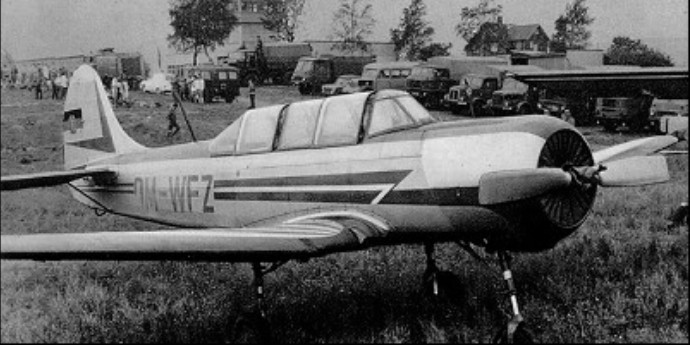
Development of the Yakolev Yak-18 by Aleksandr Sergei Yakolev started during the Second World War. During the closing stages of the War, the Yak-18 tandem two-seat primary trainer appeared, entering service with Soviet training elements in 1946. Since the Yak-18 has been progressively developed and has remained in continuous production for over forty years.
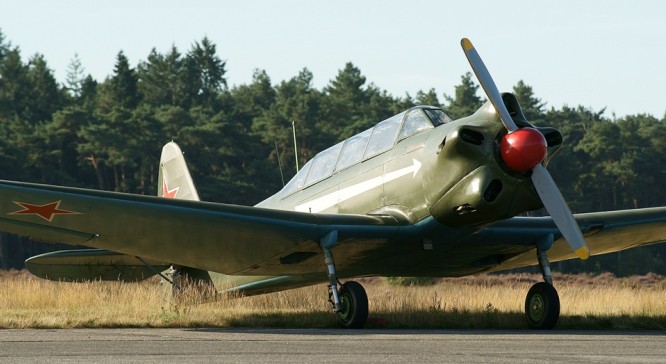
The initial Yak-18 tandem two-seat version was powered by the 160 hp M-11 engine in a “helmeted” cowling and tailwheel landing gear.
The Yak-18U featured a tricycle landing gear (the main units which retracted forward) and a lengthened front fuselage.
The Yak-18A was a development of the Yak-18U with a 260 hp AI-14R (later 300 hp AI-14RF) engine, NACA-type cowling, enlarged canopy, and dorsal fin extension.
The Yak-18P single seat development of the -18A was built in two versions. One with the cockpit aft of the wing and forward retracting main wheels. The other with the cockpit over the wing and inward retracting main wheels. There was a fuel system for 5 minutes of inverted flight and longer span ailerons.
The Yak-18PM single seat aerobatic version was produced for the 1966 World Aerobatic Championships was powered by an AI-14RF engine and featured reduced dihedral, and the cockpit further aft than the -18P.

The Yak-18PS was similar to the -18PM but with tailwheel landing gear.
Evolved from Yak-18, the Yak-18T has an extensively redesigned cabin, a new fuselage centre section, and a new wing centre section and an increased wing span. The aircraft was designed by the Yakolev Design Bureauas as a multi-role light transport aircraft. The Yak-18T was noticed first in 1967 and over 200 aircraft were built. Production initially ceased in 1989, but was resumed by the Smolensk Aircraft Factory in 1993. While primarily used for training Aeroflot pilots, the Yak-18T was widely used for more generalised flight training, air ambulance and light transport. The Yak-18T is equipped with a 269kW / 300 hp Ivchenko Vedeneyev AI-14RF nine cylinder, air-cooled engine. The 400 hp Vedeneyev M-14P 9-cylinder air-cooled radial engine can also be fitted.
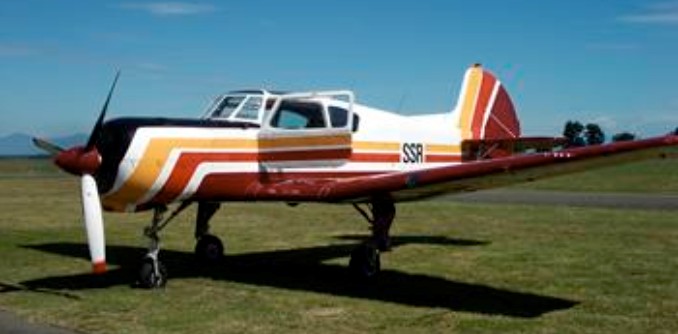
NATO code name ‘Max’, both the 18PM and 18PC had 300 hp Ivchenko AI14RF engines. The Yakolev Yak-18T is aerobatic-capable, with an inward retractable tricycle landing gear.
Yak-18
Engine: M-11FR, 160 hp / 118kW
Max take-off weight: 1112 kg / 2452 lb
Empty weight: 810 kg / 1786 lb
Wingspan: 10.6 m / 35 ft 9 in
Length: 8.0 m / 26 ft 3 in
Height: 2.2 m / 7 ft 3 in
Wing area: 17.0 sq.m / 182.99 sq ft
Max. speed: 248 km/h / 154 mph
Ceiling: 4000 m / 13100 ft
Range: 1015 km / 631 miles
Crew: 2
Yak-18U
Seats: 2
Yak-18A
Engine: 260 hp AI-14R
Seats: 2
Yak-18A
Engine: 300 hp AI-14RF
Seats: 2
Yak-18P
Seats: 1
Yak-18PM
Engine: Ivchenko AI-14RF, 300 hp
Wingspan: 34 ft 9.25 in / 10.60 m
Length: 27 ft 4.75 in / 8.35 m
MTOW: 2425 lb / 1100 kg
Max level speed: 173 kt / 199 mph / 320 kph
ROC SL: 970 fpm / 600 m/min
Range max fuel: 217 nm / 250 mi / 400 km
Seats: 1
Yak-18T
Engine: 300 hp AI-14RF
Seats: 4
Yak-18T
Engine: 400 hp Vedeneyev M-14P
Seats: 4

 All Aero