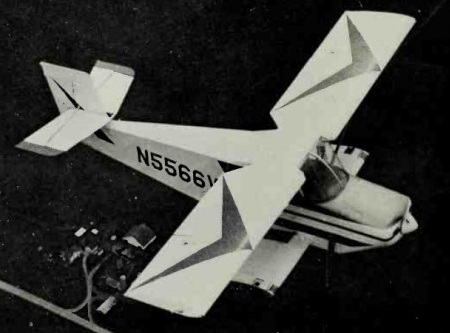
Designed by FAA employee Edward Young of Erie, Colorada, USA, the Young Eddyo F-2 was a two-seat side-by-side light aircraft and took three years of spare-time activity to complete at a cost of $2,500.
The Eddyo F-2 was a sesquiplane and had Vee-braced upper wings, which carried the ailerons, and cantilever lower stubwings which contained the fuel tanks. It had full span trailing-edge flaps. Construction was conventional, with wooden wings and a steel-tube fuselage and tail unit, all fabric-covered. The design featured tail-wheel landing gear which utilised cantilever spring steel main legs. The engine was a Lycoming O-290-D2 four-cylinder 135 hp horizontally-opposed air-cooled which drove a two-blade fixed-pitch propeller.
The sole aircraft, registered N55566V, first flew on November 4, 1963.
The aircraft registration was finally cancelled on 12 December 1983.
Powerplant: Lycoming O-290-D2, 135 hp Wing span (upper): 23 ft 1 in (7.04 m) Constant chord: 3 ft 10 in (1.17 m) Length: 19 ft 5 in (5.92 in) Height: 6 ft 0 in (1.83 m) Empty weight: 997 lb (452 kg) Maximum take-off weight: 1,525 lb (692 kg) Maximum level speed at sea level at MTOW: 145 mph (233 km/h) Cruising speed: 130 mph (209 km/h) Landing speed: 70 mph (ll3 km/h) Service ceiling: 8,000 ft (550 m) Range with maximum fuel: 425 miles (685 km) Accommodation: 2 seats
The 1954 June Bug built by Leon York was a home-built designed for “cow pasture operation.” An open cockpit, low wing monoplane, it first flew in November 1954.
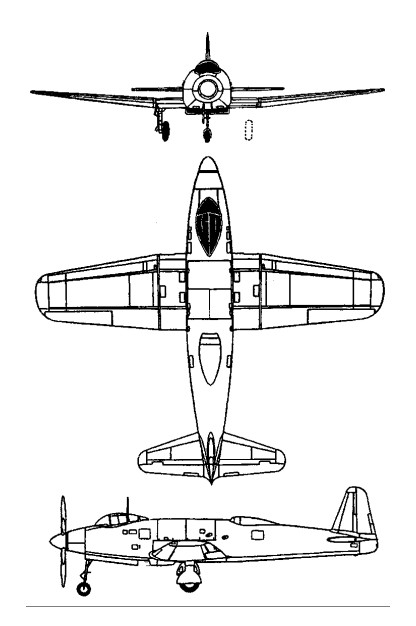
Inspired by the Heinkel He 119, Yokosuka began to design an aircraft of a similar layout, known as the Y-40, in 1943. Headed by Commander Shiro Otsuki, the aircraft project was a pressurized, two-seat, unarmed, high-speed, reconnaissance aircraft of all-metal construction that featured tricycle retractable gear. The Japanese Navy decided to take advantage of this work, and issued an 18-Shi specification built around the Y-40. The design was approved, and the Y-40 officially became known as the R2Y1 Keiun (Beautiful Cloud). The construction of two prototypes was ordered.
Commissioned for the Imperial Japanese Navy after the R1Y design was cancelled due to its disappointing performance estimates, the R2Y used coupled engines driving a single propeller and also featured a tricycle undercarriage. The Yokosuka R2Y Keiun (景雲 – “Cirrus Cloud”) was a prototype reconnaissance aircraft.
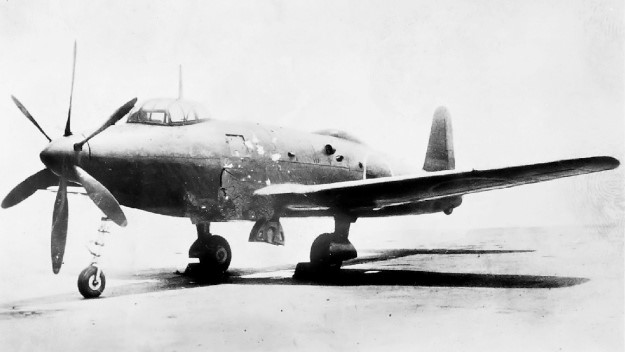
The Keiun was powered by two 60-degree, inverted V-12 Aichi Atsuta 30 series engines, licensed-built versions of the Daimler-Benz DB 601. The engines were coupled together by a common gear reduction in a similar fashion as the DB 606. The resulting 24-cylinder power unit was known as the Aichi [Ha-70]. With a 5.91 in (150 mm) bore and 6.30 in (160 mm) stroke, the engine displaced 4,141 cu in (67.8 L) and was installed behind the cockpit and above the wings. The Aichi [Ha-70] engine was to be turbocharged and rated at 3,400 hp (2,535 kW) for takeoff and 3,000 hp (2,237 kW) at 26,247 ft (8,000 m). Without the turbocharger, the engine was rated at 3,100 hp (2,312 kW) for takeoff and 3,060 hp (2,282 kW) at 9,843 ft (3,000 m). The engine drove a 12.47 ft (3.8 m), six-blade propeller via a 12.8 ft (3.9 m) long extension shaft that ran under the cockpit. Engine cooling was achieved by radiators under the fuselage and inlets for oil coolers in the wing roots. A ventral air scoop was located behind the engine to provide induction air for the turbocharger and air for the intercooler. Speculation suggests the first scoop on the side of the aircraft provided cooling air for the engine’s internal exhaust baffling, the second, larger scoop provided induction air for the normally aspirated Aichi [Ha-70] engine installed in the prototype, and the final two ports were for the engine’s exhaust.
The pilot sat under a raised bubble-style canopy that was toward the extreme front of the aircraft. The radio operator/navigator occupied an area in the fuselage just behind and a little below the pilot.
By the fall of 1944, the direction of the war had changed, and Japan no longer needed a high-speed reconnaissance aircraft. The R2Y1 Keiun was all but cancelled when the design team suggested the aircraft could easily be made into a fast attack bomber. In addition, the Aichi Ha-70 power plant would be discarded, and one 2,910 lb (1,320 kg) thrust Mitsubishi Ne 330 jet engine would be installed under each wing. A fuel tank would be installed in the space made available by the removal of the piston engine. The bomber version would carry a single 1,764lb bomb under the fuselage, and carry cannons in the nose. This jet-powered attack bomber had an estimated top speed of 495 mph (797 km/h). The Japanese Navy decided to accept the modified design. Yokosuka were given permission to produce one R2Y1 piston-engined prototype to test out the aerodynamics of the design, while also working on the jet-powered R2Y2 Keiun Kai. It did not enter construction before the end of the war.
The decision was made to finish the nearly completed R2Y1 airframe and use it as a flight demonstrator to assess the flying characteristics of the aircraft. With pressurization, the turbocharger, and the intercooler omitted, the R2Y1 prototype was completed in April 1945 and transferred to Kisarazu Air Field for tests. Ground tests revealed that the aircraft suffered from nose-wheel shimmy and engine overheating.
Adjustments were made to overcome the issues, and the Keiun took to the air on 29 May 1945 (date varies by source and is often cited as 8 May 1945), piloted by Lt. Commander Kitajima. The flight proved to be very short because the engine quickly overheated, and a fire broke out in the engine bay. Lt. Commander Kitajima quickly returned to the field, and the R2Y1 suffered surprisingly little damage.
On 31 May during a ground run to test revised cooling, the engine was mistakenly run at high power for too long and overheated. The engine was removed from the aircraft to repair the damage. The R2Y1 sat awaiting repair for some time before it was destroyed by Japanese Naval personnel to prevent its capture by American forces (some say it was destroyed in an Allied bombing raid).
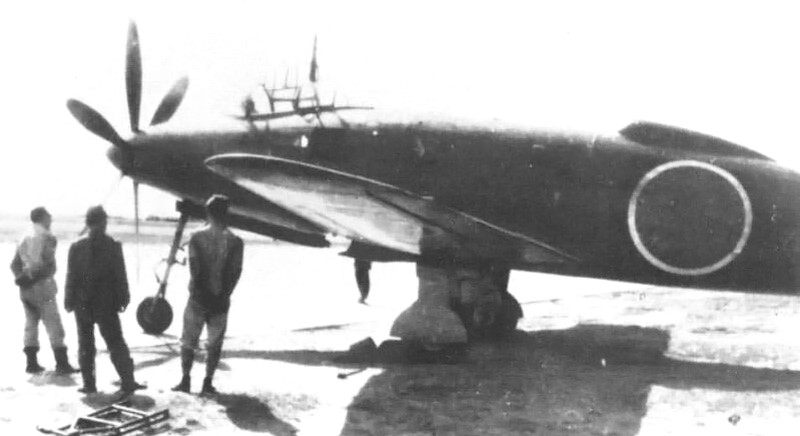
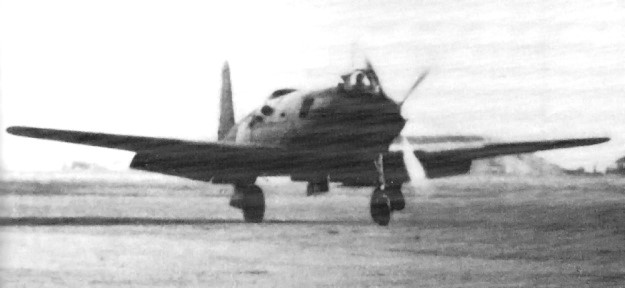
The R2Y1 Keiun undergoing taxi tests in May 1945.
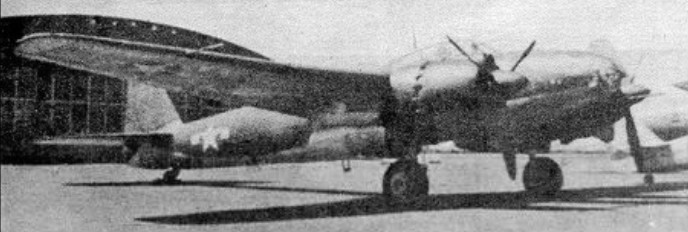
Because of the end of the War, the second R2Y1 prototype was never completed nor was the design work for the R2Y2.
The unfinished second R2Y1 prototype as seen at the end of WWII.
Three were built, but only one was completed.
R2Y1 Engine: 2 x Aichi-10 Ha-70, 2550kW (3,400 hp / 3,100hp at 9,845ft) Propeller: 6-bladed constant-speed metal Wingspan: 14.0 m / 45 ft 11 in Length: 13.05 m / 43 ft 10 in Height: 4.24 m / 13 ft 11 in Wing area: 34.0 sq.m / 365.97 sq ft Max take-off weight: 8100-9400 kg / 17858 – 20724 lb Empty weight: 6015 kg / 13261 lb Fuel capacity: 1,555 l (411 US gal; 342 imp gal) Max. speed: 715 km/h / 444 mph at 10,000 m (32,808 ft) Cruise speed: 460 km/h / 286 mph at 4,000 m (13,123 ft) Landing speed: 166 km/h (103 mph; 90 kn) Ferry range: 3,611 km (2,244 mi, 1,950 nmi) Service ceiling: 11,700 m (38,400 ft) Time to altitude: 10,000 m (32,808 ft) in 21 minutes Crew: 2
R2Y2 Engine: Two Ne-330 axial-flow turbojets Power: 2,910lb thrust each Crew: 2 (pilot and radio operator/ navigator)Span: Armament: Forward firing cannon Bomb load: One 1,764lb bomb
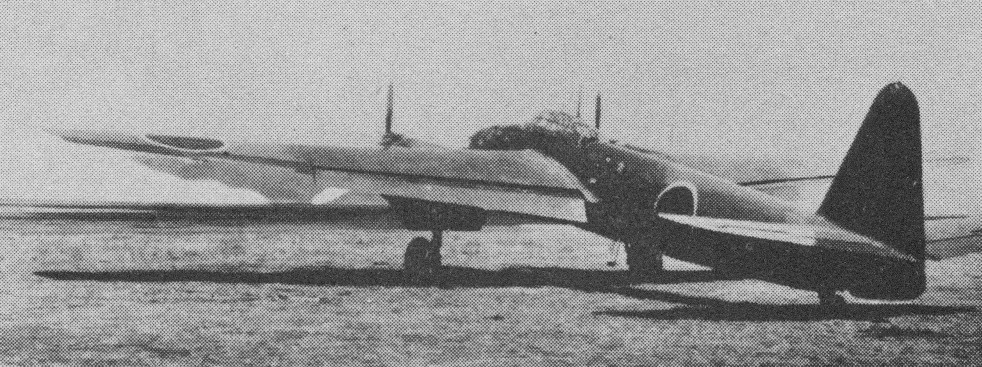
Requiring a fast medium bomber for dive-bombing, low-altitude bombing or torpedo attack, the Imperial Japanese Navy instructed the Yokosuka First Naval Air Technical Arsenal in 1940 to begin design of such an aircraft. The resulting Yokosuka P1Y prototype flown in August 1943 was a mid-wing, all-metal monoplane, powered by two Nakajima NK9B Homare 11 radial engines. Its performance was satisfactory, but the P1Y suffered from maintenance problems that plagued its service life.
The entry into service of the P1Y1 Navy Bomber Ginga Model 11 was in 1943.
As the war neared its end, Japan required defensive fighters and steps were taken to produce a night fighter version of the Ginga.
The contract for this was awarded to Kawanishi, who’s P1Y2-S Kyokko (Aurora) utilised the less troublesome 1850 hp Kasei 25 engines, was fitted with an AI radar ad three 30mm cannon. Only 97 P1Y2-S were completed before VJ day, although a few P1Y1-S conversions from Nakajima-built bombers saw limited operational service.
P1Y1-S
Production totalled 1098, built by Kawanishi (96) and Nakajima (1002), and if there had been adequate manpower to service these aircraft before each operational sortie they would have proved formidable adversaries. This was not possible and as a result the Ginga (Milky Way), allocated the Allied codename ‘Francis’, was tried unsuccessfully in a variety of alternative roles; its brief operational life of only six months was terminated by the end of the Pacific war.
P1Y1 Engines: 2 x Nakajima Homare-21, 1370kW Max take-off weight: 10500 kg / 23149 lb Empty weight: 7265 kg / 16017 lb Wingspan: 20.0 m / 66 ft 7 in Length: 15.0 m / 49 ft 3 in Height: 4.3 m / 14 ft 1 in Wing area: 55.0 sq.m / 592.01 sq ft Max. speed: 550 km/h / 342 mph Cruise speed: 380 km/h / 236 mph Ceiling: 9400 m / 30850 ft Range w/max.fuel: 4650 km / 2889 miles Range w/max.payload: 1900 km / 1181 miles Crew: 3 Armament: 2 x 20mm cannons Bombload: 1000kg
P1Y1 Engines: 2 x Nakajima Homare-11, 1820 hp Wingspan: 65 ft 7 in Length: 49 ft 3 in Height: 14 ft 1 in Empty weight: 14748 lb Loaded weight: 10500 kg / 23149 lb Max speed: 345 mph at 19,260 ft Service ceiling: 33,530 ft Max range: 1600 mi Armament: 1 x 20mm cannons / 1 x 13.2mm mg Bombload: 1760 lb or 1 x 1875 lb torpedo (externally Crew: 3
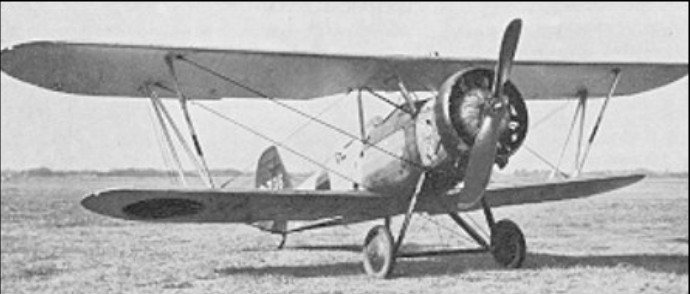
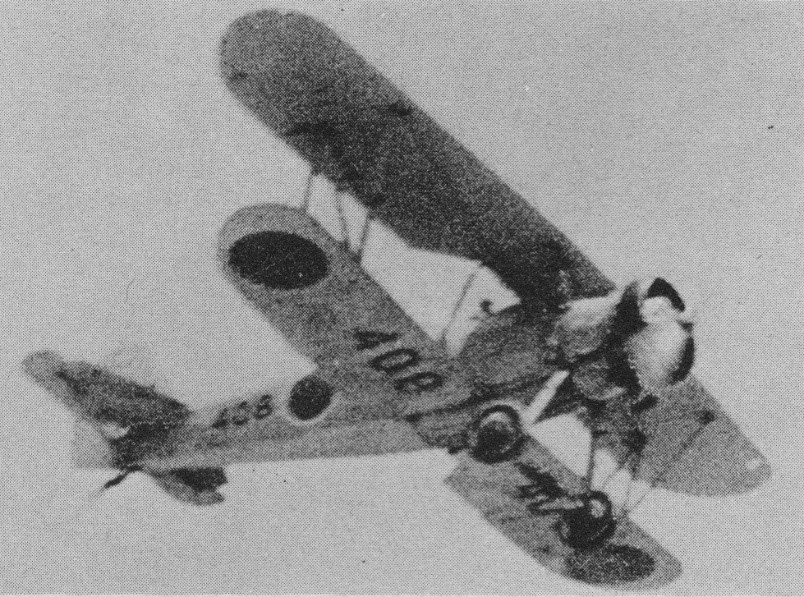
The most important of the Yokosuka-designed trainers, was the Yokosuka K5Y1, first flown during December 1933. Adopted in January 1934 as the Navy Type 93 Intermediate Trainer, it was built to a total of 5,770 by the end of the Pacific war, being allocated the Allied codename ‘Willow’. Built in three versions, with float and wheel landing gear, the 11.00m span K5Y1 with a 254kW Hitachi Amakaze radial engine had a maximum speed of 212km/h.
Produced by seven different manufacturers over 12 years the K5Y was called Akatombo or Red Dragon by the Japanese as the Type 93 basic trainers were painted bright red-orange.
K5Y1 Engine: 1 x Hitachi Amakaze-11, 255kW Max take-off weight: 1500 kg / 3307 lb Empty weight: 1000 kg / 2205 lb Wingspan: 11.0 m / 36 ft 1 in Length: 8.05 m / 26 ft 5 in Height: 3.2 m / 11 ft 6 in Wing area: 27.7 sq.m / 298.16 sq ft Max. speed: 212 km/h / 132 mph Cruise speed: 140 km/h / 87 mph Ceiling: 5700 m / 18700 ft Range: 1020 km / 634 miles Crew: 2 Armament: 2 x 7.7mm machine-guns Bombload: 2 x 30-kg and 10 x 10-kg
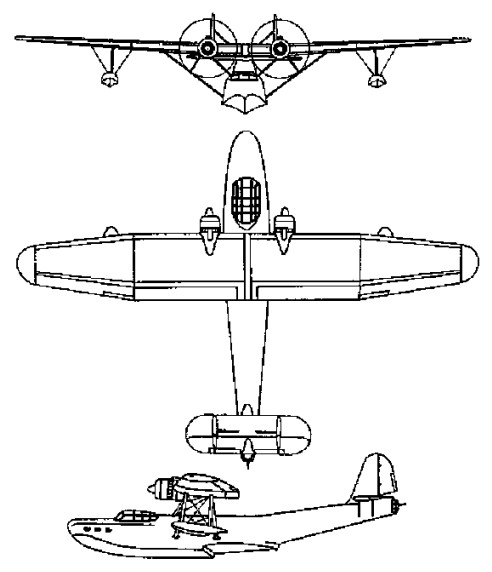
In 1934 the staff of the Yokosuka Navy Arsenal turned their hand to the design of a twin-engined flying-boat, the Yokosuka H5Y powered by two 895kW Mitsubishi Shinten 21 radial engines. Although built to a total of 20 during 1936-40 as the Navy Type 99 Flying-Boat, its performance was disappointing and, consequently, was deployed only on second-line duties.
Early in the war an unidentified twin-engined flying boat was spotted on non-combat duty around Japanese Naval bases. The allied code name ‘Cherry’ permitted identification before the manufacturer’s name and designation was discovered through prisoner interrogation over a year later.
H5Y1 Engine: 2 x Mitsubishi Shinten-21, 895kW Max take-off weight: 12500 kg / 27558 lb Wingspan: 31.57 m / 104 ft 7 in Length: 20.52 m / 67 ft 4 in Max. speed: 305 km/h / 190 mph Ceiling: 5200 m / 17050 ft Range: 4700 km / 2921 miles Crew: 6 Armament: 3 x 7.9mm machine-guns Bombload: 500kg
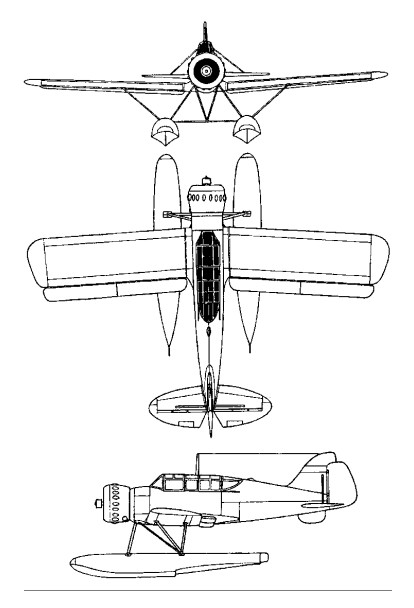
The Yokosuka E14Y1 was built to a total of 126 as the Navy Type 0 Small Reconnaissance Seaplane. Used aboard ocean-going submarines of the Japanese fleet, these aircraft made some notable flights: one from the submarine 1-7 made a post-attack assessment of damage at Pearl Harbor.
On 9 September 1942, launched from the Japanese submarine I-25 under Frigate Captain Meija Tagami, Naval pilot N.Fujita used a Yokosuka E14Y1 seaplane to bomb forests in Oregan, USA. The first raid on the United States of America. On 29 September a second raid was made at the same spot, 50 miles west of Cape Blanco. This was the last raid made on the USA.
E14Y1 Engine: 1 x Hitachi Tempu-12, 255kW Max take-off weight: 1450 kg / 3197 lb Empty weight: 1119 kg / 2467 lb Wingspan: 11.0 m / 36 ft 1 in Length: 8.54 m / 28 ft 0 in Height: 3.8 m / 12 ft 6 in Wing area: 19.0 sq.m / 204.51 sq ft Max. speed: 245 km/h / 152 mph Cruise speed: 165 km/h / 103 mph Ceiling: 5420 m / 17800 ft Range: 880 km / 547 miles Crew: 2 Armament: 7.7mm machine-guns, 60kg of bombs












 All Aero