Let L-200 Morava / L-201 / L-200 / Ceskoslovenske Zavody A Letecke, Narodni Podnik L-200 Morava

Let L-200D Morava

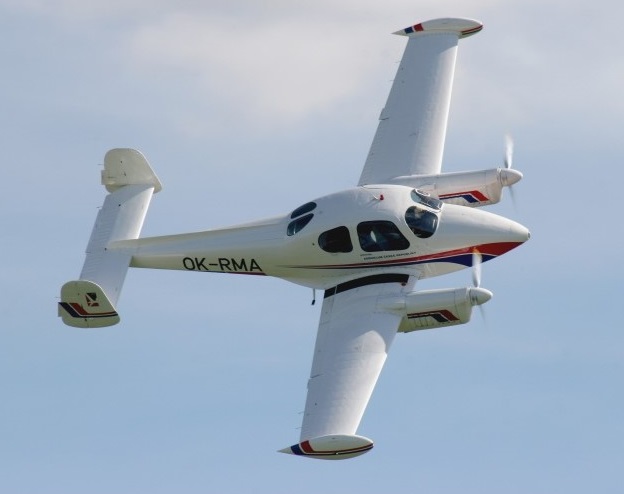
The Let L-200 Morava light twin-engine transport was preceded in production at the Let factory by the license-built Aero Ae 45. In 1955 the newly created design team led by Ladislav Smrcek of the Czechoslovak State Aircraft Factory decided to proceed with a proprietary design for a more modern twin with seating capacity of five and powered by a pair of then new 210 hp Avia M 337 engines, but as they were not yet available, the prototype made do with the less powerful Walter Minor 6-III engines of 160 hp each. While maintaining similar characteristics of western twin engine aircraft of the time, updated features of the Morava included twin tails, standard thermal wing de-icing equipment and inverted inline engines.
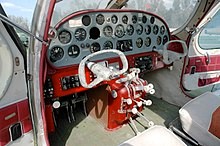
L-200D Morava

Three prototypes were built. The first, designated XL-200 (OK-LNA) made its maiden flight on 9 April 1957. It was followed in flight testing by the second prototype (OK-LNB) while the third was used for static testing. The aircraft sported clean, elegant lines. During the same year the factory built a run of 10 pre-production L-200s, one of these aircraft undergoing government flight testing in 1958. The program was successful, and the airplane was ordered into full-scale production. One L-200 was converted into a prototype of the M-337-powered production model L-200A. This aircraft incorporated minor changes, consisting mostly of new two-blade V-410 propellers, a cockpit lowered by 43mm, a modified tailfin design as well as longer engine nacelles. It was completed in 1959 and shown at the Paris Air Show in July of that year. The aircraft underwent government trials in the fall of 1959, having been fitted with M-337 engines. The trials once again proved successful and were completed the following July. The first production L-200A took to the skies in February 1960.

L-200B and C models were not produced. The second production variant was the L-200D, modified according to Soviet Aeroflot demands. It was fitted with new three-blade propellers V-506 of a smaller diameter and some minor improvements, such as dust filters. It also received more comprehensive navigation equipment. The prototype (OK-NIA) was converted from the L-200A prototype in 1960 and tested in 1961-1963.

In all, 367 L-200s were built by 1964, including 3 prototypes and 197 L-200D (eight L-200A and the L-200A prototype were converted to L-200D as well). 5 aircraft were manufactured from parts by Libis in Yugoslavia.

A further development was 6-place L-210 (also known as L-201; registration OK-PHB), converted from one L-200D in 1966, powered with 245 hp M-338 engines, but it was not ordered by the airlines and was not produced.

The pre-series aircraft L-200 were distributed for testing: 5 to the Czechoslovak airline Agrolet (OK-MEA – MEE), 2 to the Czechoslovak Air Force and 2 to Aeroflot in the USSR.

Aeroflot, who used them as air taxis, was the largest single user of Moravas – 68 L-200A and 113 L-200D, final deliveries taking place in 1966. In the 1970s however, the Soviet Union sold or withdrew its aircraft from use, in favour of indigenous designs.
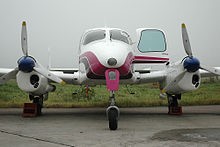
Let L-200D Morava

About 100 Moravas were used for civilian purposes in Czechoslovakia by aeroclubs Svazarm (about 50), the airlines Agrolet (from 1969 Slov-Air) and Czechoslovak Airlines (45) and by businesses, such as Škoda. 20 were used by the Czechoslovak Air Force (16 of which L-200A), among others, for training. About 50 were sold to Poland, where they were used mostly as air ambulances and in aeroclubs. Some other countries had smaller fleets of Moravas.

During the Cold War Era, not many light aircraft were exported from behind the Iron Curtain. 144 L-200A were exported to 15 countries. They were used in Australia, Argentina, Cuba, Hungary, West Germany, Great Britain, Egypt, India, Italy, Poland, South Africa, USSR and Yugoslavia. L-200D were exported to Bulgaria, Cuba, Egypt, France, Hungary, GDR, Great Britain, India, Indonesia, Italy, Poland, Switzerland, Sweden, USSR and Yugoslavia.

Small number of Moravas are still used (as of 2008), mainly in Czech Republic, Slovakia Poland and Ukraine.

Gallery

L-200
Engines: 2 x Walter Minor 6-III, 160 hp

L 200A
Number built: 160

L 200D
Engines: 2 × Walter M337, 160 kW (210 hp) each
Propellers: 3-bladed Type V506 constant-speed, 1.75 m (5 ft 9 in) diameter
Wingspan: 12.31 m (40 ft 5 in)
Wing area: 17.28 m2 (186.0 sq ft)
Length: 8.61 m (28 ft 3 in)
Height: 2.25 m (7 ft 5 in)
Empty weight: 1,330 kg (2,932 lb)
Max takeoff weight: 1,950 kg (4,299 lb)
Fuel capacity: 420 L (110 US gal; 92 imp gal)
Maximum speed: 290 km/h (180 mph, 160 kn) at sea level
Cruise speed: 256 km/h (159 mph, 138 kn) at 2,500 m (8,200 ft) (econ cruise)
Range: 1,710 km (1,060 mi, 920 nmi)
Service ceiling: 5,700 m (18,700 ft)
Rate of climb: 6.4 m/s (1,260 ft/min)
Takeoff distance to 15 m (50 ft): 390 m (1,280 ft)
Landing distance from 15 m (50 ft): 480 m (1,570 ft)
Baggage capacity: 297 lb / 135 kg
Crew: 1
Capacity: 4 passengers
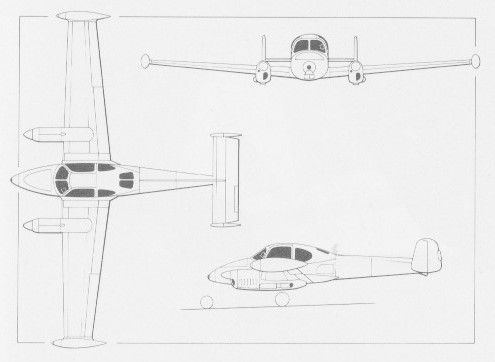
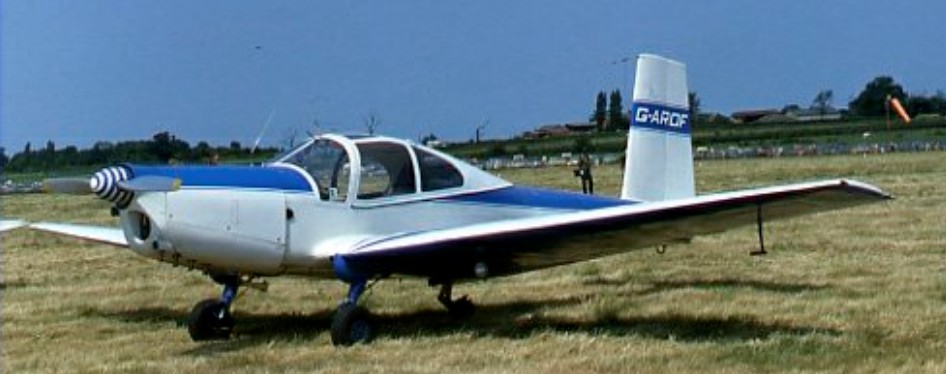
Let L-40 Meta-Sokol

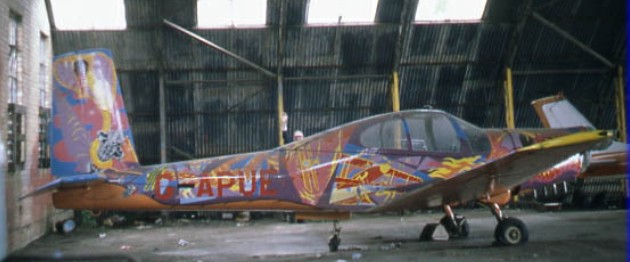
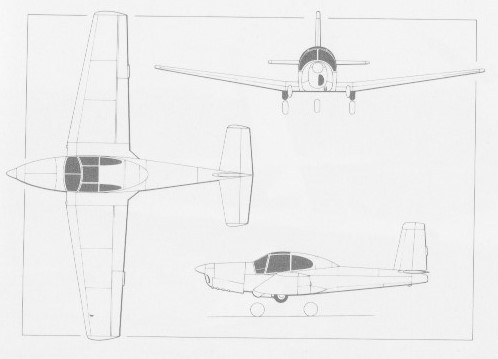
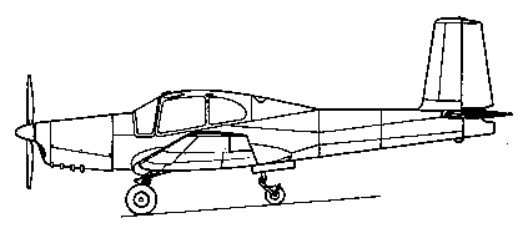
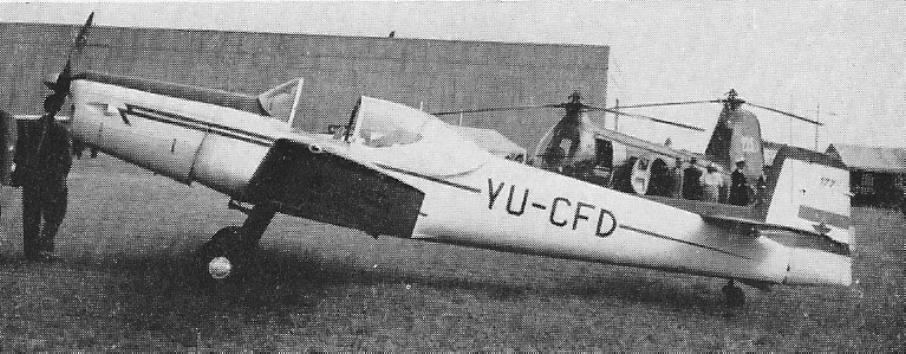
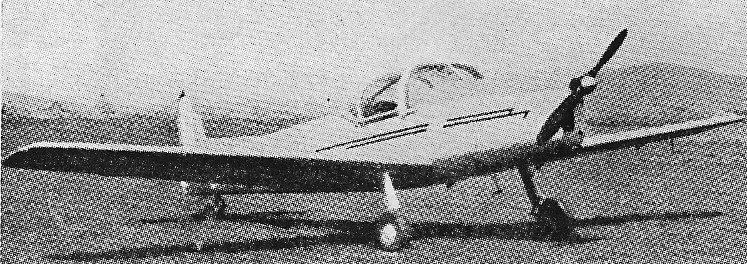
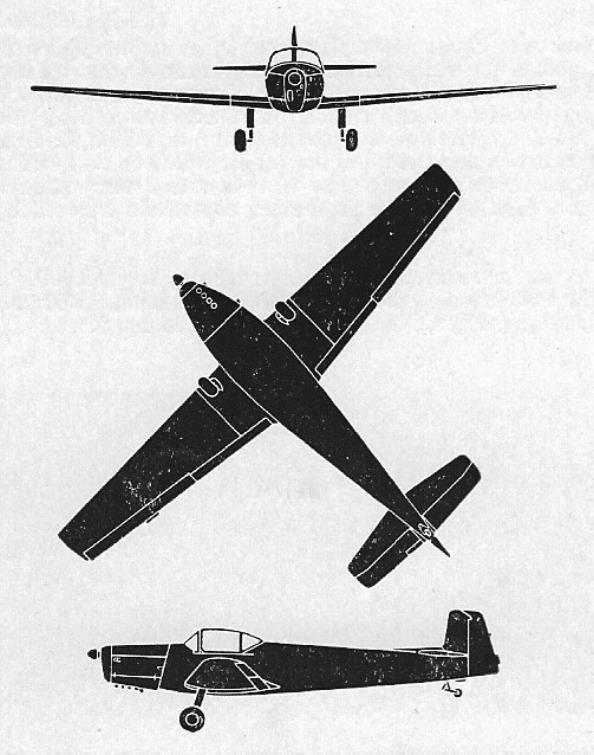
First flying in 1954 the Omnipol L-40 Meta-Sokol originated from Czechoslovakia. The initial version was a three-seater with either a 105 hp Walter Minor 4-III or 115/140 hp M 332 engine.

The four-seater is powered by a 110hp Let M-332 four-cylinder inline engine. Its retractable undercarriage is a reverse tricycle, though the technique is just the same as a normal taildragger.

LET L-40 Meta-Sokol Air Test

Late production aircraft had provision for wingtip auxiliary fuel tanks.

Gallery

Engine: M 332, 110 hp / 140hp supercharged
Wingspan: 32 ft 9 in / 10.00 m
Length: 24 ft 9 in / 7.54 m
Wing area: 157.154 sq.ft / 14.6 sq.m
Weight empty: 1177.5 lb / 534.0 kg
Max take-off weight: 2028 lb / 920 kg
Max. speed: 130 kts / 240 km/h
Cruising speed: 111 kts / 205 km/h / 129 mph
Initial climb rate: 630 ft/min / 192 m/min
Service ceiling: 14,765 ft / 4500 m
Wing load: 13.12 lb/sq.ft / 64.00 kg/sq.m
Range: 458 nm / 8500 km / 528 mi
Crew: 1
Payload: 2-3 Pax

LKB KB-6 Matajur / Letov KB-6 Matajur

Designed by an amateur design group. The Konstrukeijski Letalskt Zveze Slovenije, comprising students of the Ljubljana Technical High School, the KB-6 Matajur flew for the first time on 4 June 1952.

The first prototype Matajur was powered by a 136 hp Regnier 4 L00 engine, but the second prototype and production aircraft have been powered by the 160 hp Walter Minor engine.

It was produced in quantity by the Letov factory at Ljubljana.

Engine: Regnier 4L00, 136 hp
Wing span: 34 ft 9 in
Length: 27 ft 5 in
Height: 7 ft 1 in
Empty weight: 1453 lb
Loaded weight: 2159 lb
Max speed: 138 mph at SL
Cruise: 124 mph
ROC: 689 fpm
Service ceiling: 14,800 ft
Seats: 2

Engine: 160 hp Walter Minor 6-III
Wing span: 34 ft 9 in
Wing area: 150.7 sq.ft
Length: 27 ft 5 in
Height: 7 ft 1 in
Empty weight: 1453 lb
Loaded weight: 2185 lb
Max speed: 138 mph at SL
Cruise: 114 mph
ROC: 699 fpm
Range: 441 mi
Seats: 2

Leisure Sports S.5 / Airborne Designs Supermarine S.5

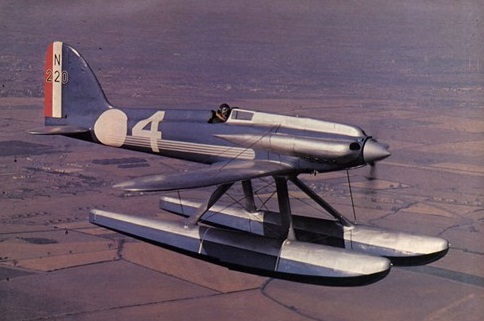
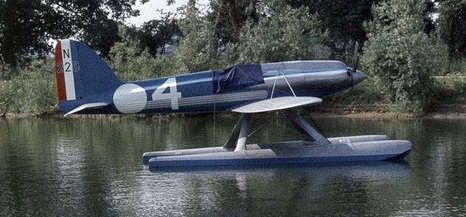
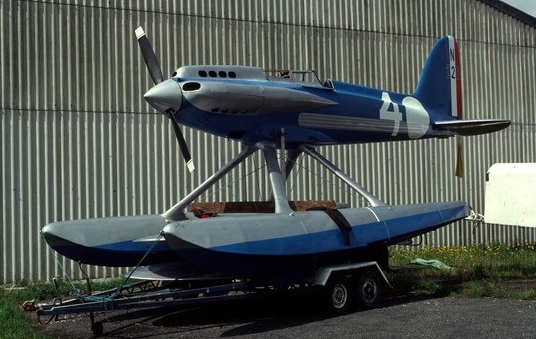
Ray Hilborne of Leisure Sports designed and built a full-scale S.5 replica, G-BDFF. Construction by Aviation Design Bureau under J.Hall took place at Thruxton Airport, Hampshire, over a 2.5 year period, and registered G-BDFF cn ADB-1 on June 13, 1975 the aircraft began preliminary water taxiing tests at Thorpe Water Park, Surrey, the same day.

The seaplane was not a true replica, although externally resembling the original S-5 it was basically an entirely different aircraft, while 50 % lighter than the original. The all-wood construction, loadings, systems and performance were different; other differences included a different wing section, smaller floats, water rudders, and a slightly wider cockpit and fuselage. Powerplant was a 210 hp Rolls-Royce Continental engine, driving a two-blade variable-pitch propeller. The replica had an overall weight reduction to an all-up weight of just 1,500 lb, less than 1/2 that of the original.
The first flight was made on Southampton Water, near Calshot, Hampshire by Captain Keith Sissons on August 28, 1975 and lasted 14 minutes.

The aircraft was wrecked on September 23, 1982, when due to an engine failure on takeoff it crashed into Thorpe Water Park, the wings and float supporting structure were destroyed. The remains were acquired by hotelier William ‘Bill’ Hosie of Newquay, Cornwall, who rebuilt the aircraft at Bodmin using only the rear fuselage of the original, and on April 17, 1985 the aircraft was registered to the Hosie family. Bill Hosie was killed May 23, 1987 near Falmouth when the rudder separated shortly after takeoff, followed by the tail surfaces.

Gallery

Lesher Teal

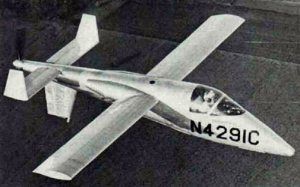
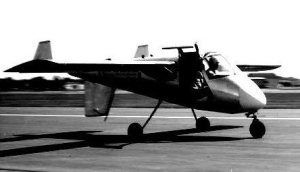
The Lesher Teal, registered N4291C, was explicitly designed to break records in the Fédération Aéronautique Internationale Class C1a, for propeller-driven aircraft of less than 500-kg (1102-lb.) gross weight.

The Teal retained the Nomad’s Continental O-200A power and all-aluminum pusher configuration, this time in a single-seat layout. Its wingspan is a diminutive 23 ft. 10 in. (by contrast, a Piper J3’s span is 35 ft. 3 in.).

At one point of the Teal’s design, Ed, who weighed well over 200 lb., considered using a jockey pilot. Instead, not wanting to miss the fun, he decided this was a good incentive to lose some weight.

The Teal first flew in April 1965.

In August 1965, Lesher piloted it to the EAA Fly-In in Rockford, Illinois, where he was honored for his achievements. Then he began attacking the FAI records.

In 1967, Lesher and his Teal set a Class C1a speed record for a 500-km closed course at 181.55 mph. Later that year, he flew the Teal at 169.20 mph for a new 1000-km closed-course record. Before the year ended, Lesher and the Teal averaged 141.84 mph for a new closed-course record of 2000 km.

In 1968, a loss of power brought the Teal to an emergency landing, and considerable damage, in a Michigan field. After a rebuild, Lesher and his Teal set another FAI record in 1970, this one for a closed-circuit distance of 1554.29 miles. In 1973, he and the Teal set a 3-km speed record of 173.101 mph as well as a 15-25-km record of 169.134 mph. Finally, the pair set an FAI C1a record for straight-line distance, officially 1835.459 miles, by traveling from Florida to Arizona.

For these record-breaking achievements, Lesher earned the FAI’s Louis Blériot Medal four times, in 1967, 1970, 1973 and 1975. He was inducted into the Michigan Aviation Hall of Fame in 1988.

The Lesher Teal has resided in the EAA Adventure Museum since 2002.

Lesher SN-1 Nomad

The 1946 Stinson 106 Skycoach, one of Stinson’s products during Lesher’s time with this Wayne, Michigan, company. The Skycoach’s pusher propulsion, though, intrigued Lesher and he incorporated this feature into his home-built aircraft.

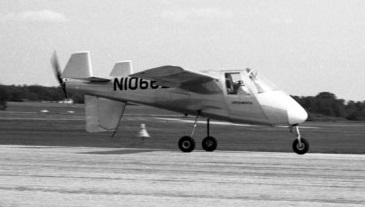
The Nomad was an all-aluminum side-by-side two-place pusher. Powered by a 100-hp Continental O-200A air-cooled flat-four placed immediately behind the cockpit, fed with air intakes at the wing roots, the Nomad made innovative use of a Dodge Flexidyne Coupling to dampen torsional vibration.

The wing was built as a single assembly with a very simple profile and no dihedral. The vee-tailed empennage and vertical fin in low position was meant to impair the Hartzell propeller’s efficiency as little as possible, while the vertical fin placed below helped to keep the propeller clear from the ground.

Construction began in 1959 and the Nomad, registered N1066Z, flew in October 1961 after 5000 hours of construction. Lesher and the plane took Grand Prize at the 1964 AC Spark Plug Rally.

The Nomad was followed by the better-known Lesher Teal, which also remained a prototype.

Lesher SN-1 Nomad N1066Z

Lescarts N’Deke Mwaope

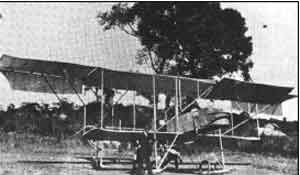
In April 1912 Fernand Lescarts, with the financial help of King Albert, travelled from Belgium to the Congo bringing with him a Farman biplane. The Farman was destroyed during the journey whereupon Lescarts designed and built a new biplane, and named it N’Deke Mwaope (White Bird), which flew pretty well until a violent windstorm wrote an end to the story.