Light Miniature Aircraft LM-1

LM-1A

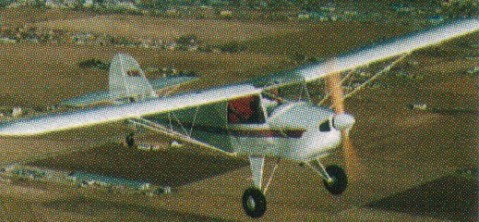
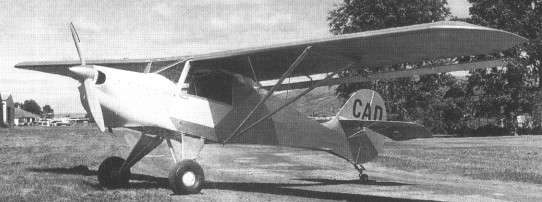
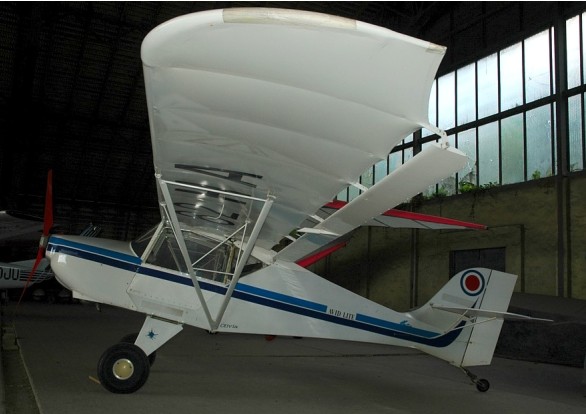
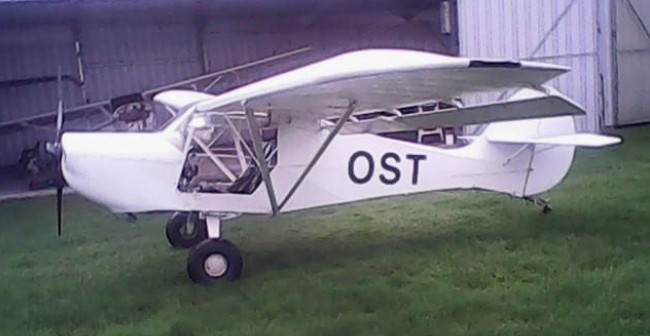
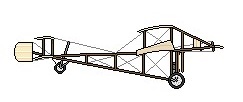
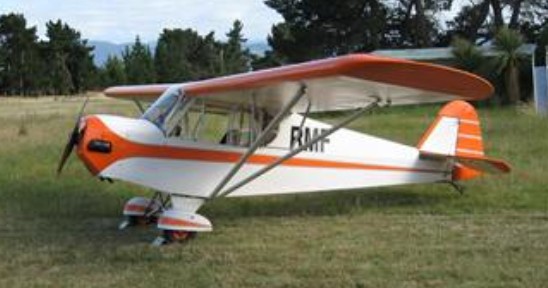
A three quarter scale Piper J/3 Cub look alike by Fred McCallum and Fred Latulip of Opa Locka, Florida. When first shown at Oshkosh in 1983 the all wood design of +5 -4.5G wing was too heavy for the US ultralight category but several years later the construction was altered to aluminium alloy tube to over-come this problem. Power comes from a 28hp Rotax 277 engine.

All of the Light Miniature Aircraft Manuals, are approximately 200 pages. Each manual has step-by-step instructions, for each section of the plane, as well as figures, drawings and full size templates to guide the builder through the building process. Each manual also comes with a complete set of full size plans for the fuselage and tail feathers as well as full size templates for the wing ribs, landing gear and items such as the wind shield.
The wooden planes are constructed in the same manner.
Plans and manuals are still available for our metal planes, however, due to rising aluminum costs and availability problems, Light Miniature Aircraft no longer supply kits for the air frames of the metal planes. Some partial kits, for items like the controls or landing gear were available.

Gallery

LM-1
Engine: Rotax 503
Wing span: 29 6″
Stall: 26 knots
Climb: 40 knots
Cruise: 55-65 knots
VNE: 78 Knots
Range: 200 miles

LM-1A
Scale: 85%.
Engine: Zenoah, 45 hp.
HP range: 45-52.
Speed max: 90 mph.
Cruise: 80 mph.
Range: 200 sm.
Stall: 26 mph.
ROC: 650 fpm.
Take-off dist: 175 ft.
Landing dist: 300 ft.
Fuel cap: 9 USG.
Weight empty: 350 lbs.
Gross: 600 lbs.
Height: 5.9 ft.
Length: 19 ft.
Wing span: 27 ft.
Wing area: 120 sq.ft.
Seats: 1.
Landing gear: tail wheel.

LM-1A
Engine: Rotax 503, 45 hp
HP range: 45-52
Top speed: 90 mph
Cruise: 80 mph
Stall: 26 mph
Range: 200 sm
Rate of climb: 650 fpm
Takeoff dist: 175 ft
Landing dist: 300 ft
Fuel capacity: 9 USG
Empty weight: 350 lb
Gross weight: 600 lb
Height: 5.9 ft
Length: 19 ft
Wing span: 27 ft
Wing area: 120 sq.ft
Seats: 1
Landing gear: tailwheel

LM-1U
Scale: ¾.
Empty wt. lbs: 250
Max wt. lbs: 500
Wing span: 30ft
Wing area sq.ft.: 120
Wing loading lbs/sq.ft: 4.17
Power loading lbs/hp: 17.86
Engine: Rotax 277
Max speed: 63 mph
Cruise: 55 mph
Stall: 24 mph
Vne: 85 mph
Seats: 1

LM-1X
Scale: 75%.
Engine: Rotax 447, 40 hp.
HP range: 35-52.
Speed max: 75 mph.
Cruise: 65 mph.
Range: 150 sm.
Stall: 26 mph.
ROC: 550 fpm.
Take-off dist: 100 ft.
Landing dist: 300 ft.
Fuel cap: 5 USG.
Weight empty: 325 lbs.
Gross: 600 lbs.
Height: 5.6 ft.
Length: 17.7 ft.
Wing span: 30 ft.
Wing area: 120 sq.ft.
Seats: 1.
Landing gear: tail wheel.

LM-1
Engine: Rotax 503 SCSI.
Prop: Tennessee 64/34
VNE: 80mph
Cruise: 65/75mph 5000/5500rpm
Stall: 30mph
Climb: 45mph
Approach: 45mph
Steerable tail wheel
Max weight: 600 lb
Empty weight: 335lb
Fuel cap: 37 lt.
Endurance: 2.5hrs with res.
Seats: 1

Light Manufacturing & Foundry Brownback Tiger C-400

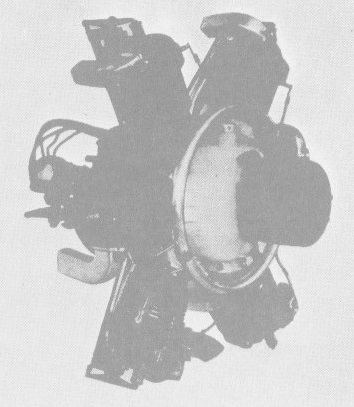
The Brownback Tiger C-400 features overhead valves through rockers and push rods. The cylinder heads are aluminium alloy with cast iron barrels, and one Silchrome inlet and exhaust valve per cylinder

A single piece crankshaft of nickel-chrome steel with double throw design reduces counterbalance weight.

Avialbe at extra cost was any 5 inch standard starter, and exhaust manifold stacks option.

Type: 6 cylnder, double row radial, air cooled, 4 stroke
Dept of Commerce Certificate No.33
Rating: 90 hp at 1700 rpm
Displacement: 397 cu.in
Compression ratio: 4.8-1
Bore: 4.13 in
Stroke: 4.93 in
Length: 29 3/16 in
Diameter: 37 in
Weight: 275 lb
Fuel consumption: not more than .56 lb/hp/hr
Oil consumption: not more than .011 lb/hp/hr
Lubrication: Dry sump, force feed
Ignition: 2 Bosch magneto
Carburation: 1 Stromgerg
Spark plugs: 2 per cylinder Champion
Price: $1840

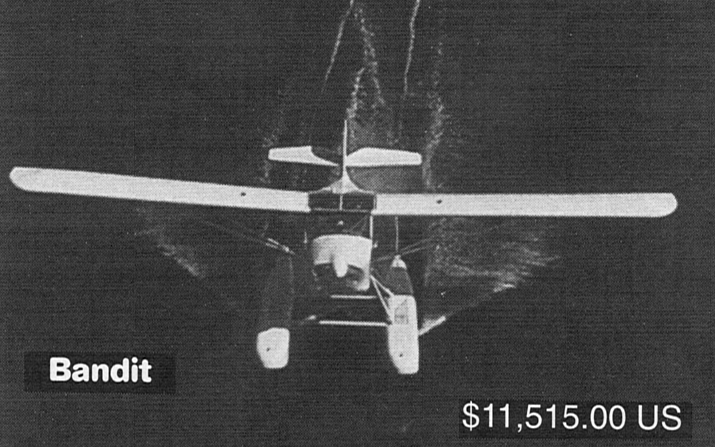
Light Aero Bandit / Avid Bandit

Folding wings. Designed by Dean Wilson.

March 1999

Engine: Rotax 503, 53 hp
HP range: 53-100
Speed max: 95 mph
Cruise: 80 mph
Range: 350 sm
Stall: 30 mph
ROC: 1000 fpm
Take-off dist: 150 ft
Landing dist: 200 ft
Service ceiling: 12,500 ft
Fuel cap: 14 USG
Weight empty: 425 lbs
Gross: 1000 lbs
Height: 5.91 ft
Length: 17 ft
Wing span: 29.67 ft
Wing area: 122.5 sq.ft
Seats: 2
Landing gear: nose or tail wheel

Light Aero Avid Flyer

Light Aero Avid Flyer

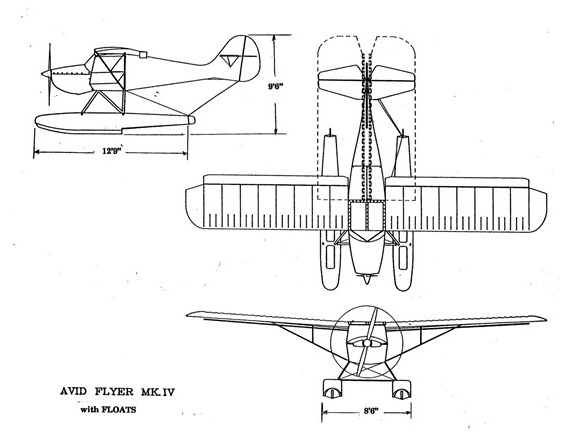
Designed by Dean Wilson and introduced at Oshkosh ’83 with a gear reduction Cuyuna, the Avid Flyer is an easy-to-build kit taildrag¬ger or trike gear high-wing monoplane, with wings that fold for towing. Front wing spar pins are removable, and the rear spar and the bottom of the struts are on the same vertical line, so after quick removal of a light sheet metal centre section cover, all that’s necessary is the pulling of two pins and both wings pivot aft, without disconnecting any controls, to sit alongside the fuselage. In this condition it is narrow enough to be towed and, since the gear is based on bike wheels and brakes, it takes nothing more than a steel bar that clamps the bottom of the tail to a rear bumper, as it rolls on its own wheels.

Most of the gear components are the same on the tail dragger version which can be converted back and forth in a few hours.

The wing has full-span flaperons.

Light Aero Avid Light

The Avid Lite is in the microlight category. The fuselage is a welded steel spaceframe and the wings consist of two tubular spars linked by plywood ribs. Recommended power is a Rotax 582 as flight qualities suffer with higher power.

The 1983 Avid Flyer prototype N99AF cruised at 80 mpg with a 43 hp Cuyuna 430 engine and the kit cost $8496.

1983 Avid Flyer

The Avid Litephib uses the same configuration as the Avid Lite, and allows water operation.

Avid Flyer IV
Avid Flyer IV

Gallery

Engine: Rotax 532.
Empty wt.: 380 lbs
Max wt.: 911 lbs
Wing span: 29ft 10.5 in
Length: 17’.
Wing area: 122.46 sq.ft
Wing loading: 6.94 lbs/sq.ft
Power loading: 14.23 lbs/hp
Max speed: 90 mph
Cruise: 85 mph
Stall: 25 mph
Vne: 90 mph
Seats: 2

Engine Cuyuna 430, 43 hp.
Cruise 80 mph
Stall 25 mph
Climb rate 1400 fpm
Service ceiling 19,000 ft
Takeoff run 75 ft
Landing roll 100 ft

Airdale Avid Plus
Engine: Rotax 582, 65 hp
Hp range: 65-110
Cruise: 90 mph
Stall: 35 mph
Range: 350 sm
ROC: 890 fpm
To dist: 630 ft
Ldg dist: 500 ft
Empty wt: 450 lb
Gross wt: 1200 lb
Length: 18.3 ft
Wingspan: 29 ft
Wing area: 122.5 sq.ft
Cockpit width: 43 in
Seats: 2
Landing gear: tail or nose wheel.

Avid Lite
Empty weight: 180 kg
Wing span: 9.10 m
Wing area: 13.5 sq.m
Fuel capacity: 53 lt
Certification: Vz
Engine: Rotax 503, 52 hp
MAUW: 431 kg
Seats: 2
Max speed: 145 kph
Cruise speed: 130 kph
Minimum speed: 56 kph
Climb rate: 5 m/s
Fuel consumption: 17 lt/hr
Kit price (1998): 130 750 Fttc

Avid Litephib
Empty weight: 272 kg
Wing span: 11 m
Wing area: 16.6 sq.m
Fuel capacity: 66 lt
Engine: Rotax 618, 74 hp
MAUW: 344 kg
Seats: 2
Max speed: 160 kph
Cruise speed: 120 kph
Minimum speed: 57 kph
Climb rate: 2.5 m/s
Fuel consumption: 17 lt/hr
Kit price (1998): 192 200 Fttc

Liberty L-8/ Packard Liberty L-8 / Packard 1A-1100 / Allison Liberty L-8

Liberty L-8 – the first one built

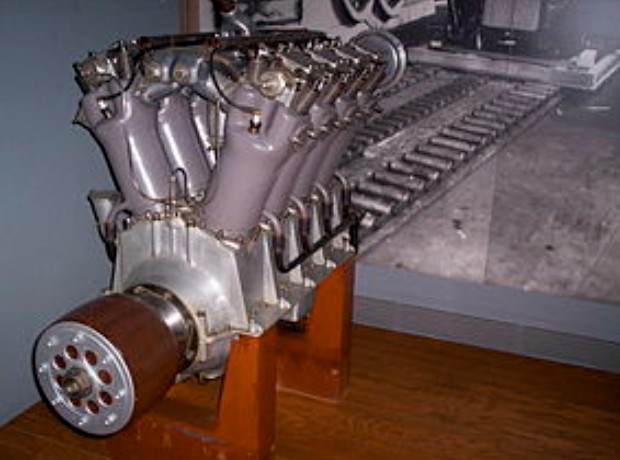
The Liberty L-8, aka Packard 1A-1100 engine was a prototype of the Liberty L-12 engine, designed by Jesse G. Vincent and Elbert J. Hall, and manufactured by Packard Motor Car Company in Detroit, Michigan around 1917. Although it did not see mass production several were built. The first of them built now resides in the National Air and Space Museum in Washington, DC.

Liberty L-8
Type: 8-cylinder, liquid-cooled Vee aircraft piston engine
Bore: 5 in (127 mm)
Stroke: 7 in (178 mm)
Displacement: 1,099.6 cubic inches (18.0 lt)
Length: 57 inches (1,448 mm)
Dry weight: 575 pounds (260.8 kg)
Valvetrain: One intake and one exhaust valves per cylinder actuated via a single overhead camshaft per cylinder bank.
Cooling system: Liquid-cooled
Power output: 290 hp (216 kW) at 1,700 rpm
Specific power: 0.26 hp/cu.in (11.9 kW/lt)
Power-to-weight ratio: 0.45 hp/lb (0.74 kW/kg)

Liberty L-4

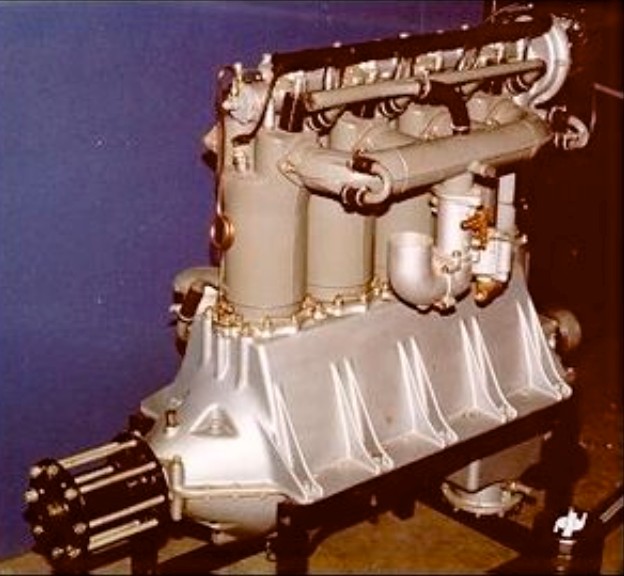
The Liberty L-4 was a four-cylinder, water-cooled, inline engine for aircraft developed in the United States during World War I. Designed by Jesse G. Vincent and Elbert J. Hall, the Liberty L-4 was an experimental engine of 102 hp, built by the Hudson Motor Co. and intended primarily for use in training airplanes. Only two were produced since other types of engines were available and already in production. It is unknown if the L-4 was ever test-flown.

Specifications:
Type: Four-cylinder inline piston engine
Bore: 5 in. (127mm)
Stroke: 7 in. (177.8mm)
Displacement: 549.8 cuin (9.0 L)
Cooling system: Water-cooled
Power output: 102 hp

Liberty Aircraft XL-2

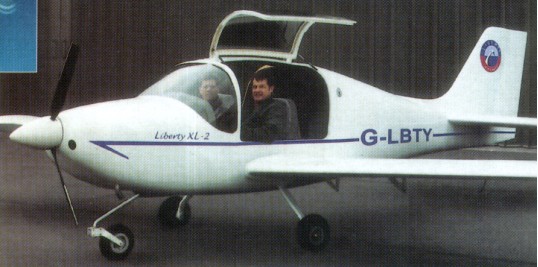
The Liberty XL-2 two-seat touring airplane. The XL-2 was designed by the same team that created the Europa kitplane. The tri-gear Liberty features a composite fuselage and bonded aluminum wing. Fuel is carried in a fuselage tank behind the cockpit. Liberty will certify the XL-2 in the normal category with ap-proval for night and IFR flight.

The XL2 is constructed using the same Toray composites used for the Boeing 787, providing both light weight and exceptional durability and performance. Our fuselage weighs only 70 pounds, but is stronger than a comparable aluminum fuselage, contributing to the exceptional performance and fuel efficiency of the XL2.

The XL2 has three major components – the fuselage, a rolling chasis, and the wings, that come together to efficiently manufacture a high technology aircraft. The wings of the aircraft are removable in about 10 minutes by a licensed mechanic, enabling multiple aircraft to be stored in a small hangar footprint for flight schools in the event of severe weather.

The wing can be folded by one person in about a minute, allowing the airplane to be trailercd to and from the airport and to he stored in a one-car garage. That wing, however, will not be on the first XL-2s, because of cerfi¬fication delays such a feature might cre¬ate. The Liberty XL2 first flew on April 2, 2001.

Scaled Technology Works of Mon¬trose, Colorado, was to do much of the manufacturing and assembly of the air¬plane.

Using a carbon fiber fuselage, advanced FADEC equipped engine to optimize performance, and advanced avionics, the Liberty XL-2 was awarded FAA Part 23 IFR type certification on February 19, 2004

This two-seater was the first aircraft to be certified with FADEC, or Full Authority Digital Engine Control. A single lever combines throttle and mixture allowing a computer to control ignition and fuel injection, as well as other vital engine parameters. The aircraft owes much of its design history to the Europa kit plane, though the metal winged, all-composite fuselage XL2 has evolved considerably.

In 2007, Liberty signed a contract with Anyang Angel Aero in Beijing, Peoples Republic of China to produce 600 Liberty XL-2 aircraft under license.

On February 27th, 2008, the 100th Liberty XL-2 was delivered.

In April 2008, the Vanguard Edition XL-2 was introduced, with increased gross weight, a 420 lb. useful load with full fuel, and toe, rather than finger brakes. All aircraft after serial #120 will be Vanguard Edition aircraft.
The undercarriage is fixed tricycle with a spring steel nose gear with castoring wheel. The spring aluminum main gear has differential brakes

Liberty XL2
Engine: Rotax 912S, 100 hp.
Fuel cap: 20 USG.
Cruise: 120 kts.
Range: 500 sm.

Liberty XL2
Seats 2
Gross wt. 1,653 lb
Empty wt. 1,065 lb
Fuel capacity 29.5 USG
Engine 125-hp Continental IOF 240-B (FADEC)
Top Cruise 132 kts
Stall 43 kts
Initial climb rate 682 fpm
Range 500 nm
Takeoff roll 822 ft
Landing roll 841 ft

2006 Liberty XL-2
Base price 2009: $159,900
Engine: Continental IOF-240, 125 hp
TBO: 2000 hr
Fuel type: 100/100LL
Propeller: 2-blade, FP Sensenich
Landing gear: Tri./Fixed
Max ramp weight: 1653 lb
Gross weight: 1653 lb
Landing weight: 1653 lb
Empty weight, std: 1065 lb
Useful load, std: 588 lb
Payload, full std. fuel: 420 lb
Useful fuel, std: 28 USgal
Wingspan: 28 ft. 9 in
Overall length: 20 ft. 4 in
Height: 7 ft. 5 in
Wing area: 112 sq. ft
Wing loading: 14.8 lbs./sq. ft
Power loading: 13.3 lbs./hp
Seating capacity: 2
Cabin doors: 2
Cabin width: 48 in
Cabin height: 46 in
Wheel track: 70.3 in
Wheel base: 57.2 in
Baggage capacity: 100 lb
Cruise speed 75% power: 132 kt
Cruise speed 60% power: 120 kt
Max range 75% power: 450 nm
Max range 55% power: 500 nm
Fuel consumption 75% power: 6.0 USgph
Fuel consumption 60% power: 5.3 USgph
Stall speed (flaps up): 50 kt
Stall speed (flaps down): 43 kt
Best rate of climb (SL): 682 fpm
Service ceiling (ft.): 14,000
Takeoff ground roll: 750 ft
Takeoff over 50-ft. obstacle: 1250 ft
Landing ground roll: 750 ft

Vanguard
Engine: Teledyne Continental IOF-240-B: 125 hp at 2,800 RPM
Propeller: 2-Blade MT Propeller 69″ / 1.75 m diameter, Fixed Pitch
Overall Height (max) : 7′ 5″ / 2.26 m
Overall Length : 20′ 3.8″ / 6.19 m
Wing Span (overall): 29 ‘ / 8.76 m
Area: 112 ft / 10.41 sq.m
Aspect Ratio: 7:1
Cabin Height (max): 34″ / 0.86 m
Cabin Length (firewall to aft baggage area): 91.9″ / 2.33 m
Cabin Width: 48″ / 1.22 m
Fuel: AvGas 100LL / 100
Fuel Capacity: 29.5 US Gal / 111 L
Total usable fuel: 28 US Gal / 106 L
Baggage Allowance : 100 lbs / 45 Kg
Standard Empty Weight : 1165 lbs / 529 Kg
Max. T/O Weight: 1750 lbs / 794 Kg
Useful Load : 588 lbs / 265 Kg
Landing Weight: 1750 lbs / 794 Kg
Full Fuel Payload: 417 lbs / 189 Kg
Ground roll: 1472 ft / 448 m
Total distance over 50 ft obstacle: 2,564 ft / 781 m
Landing Ground roll: 708 ft / 215 m
Total distance over 50 ft obstacle: 1,453 ft / 442 m
Rate of Climb, Sea Level: 669 ft/min
Best Rate of Climb: 76 kts / 87 mph / 141 kph
Best Angle of Climb: 69 kts / 79 mph / 127 kph
Maximum Operating Maneuvering Speed: 103 kts / 119 mph / 191 kph
Maximum Flap Extended Speed: 86 kts / 99 mph / 59 kph
Maximum Takeoff Flap Extended Speed: 90 kts / 104 mph / 167 kph
Maximum Structural Cruising Speed: 122kts / 140 mph / 226 kph
Never Exceed Speed: 157 kts / 180 mph / 291 kph
Stall Speed, IAS Flaps up / Vs / Clean: 50 kts / 58 mph / 93 kph
Stall Speed, IAS Flaps down / Vso / Dirty: 44 kts / 51 mph / 81 kph
Cruise Range (30 min Res – 65% Power): 505 nm / 935 km
Maximum Range (55% Power): 588 nm / 1,089 km
Max Cruise at Sea Level: 125 kts / 144 mph / 152 kph
Economy Cruise – 55% Power: 105 kts / 121 mph / 194 kph
Economy Cruise – 55% Power: 5.1 hrs
Economy Cruise – 55% Power Range: 535 nm / 990 km
Cruise – 65% power: 113 kts / 130 mph / 222 kph
Cruise – 65% power: 4.4 hrs
Cruise – 65% power Range: 497 nm / 920 km
Cruise – 75% power: 120 kts / 138 mph / 240 kph
Cruise – 75% power: 3.7 hrs
Cruise – 75% power Range: 444 nm / 822 km
Fuel consumption @ 55% Power: 4.7 US gph / 18.9 lph
Fuel consumption @ 65% Power: 5.5 US gph / 20.8 lph
Fuel consumption @ 75% Power: 6.5 US gph / 23.5 lph
Power Loading: 14.00 lb/hp
Service Ceiling : 12,500 ft / 3,350 m
Max. Demo Crosswind: 15 kts / 17 mph / 28 kph
Wing Loading: 15.63 lb/sq.ft

2009 Liberty XL-2 Vanguard Edition
Base/Used Price: 2009 $188,000 (includes standard IFR with Garmin 430 and SL 40)
Price with Aspen Evolution Pro PFD and Garmin 530 upgrade: 2009 $212,000
Engine: 4-cylinder TCM IOF-240-B with FADEC
Horsepower: 125 hp@2800 rpm
Fuel type: 100/100LL
Propeller type/diameter: 2-blade, fixed-pitch, 69-inch MT propeller wood/composite core
Landing gear type: Tri./Fixed
Max ramp weight: 1750 lb
Max takeoff weight: 1750 lb
Landing weight: 1750 lb
Empty weight, std: 1165 lb
Useful load, std: 588 lb
Usable fuel, std: 28 USgal
Payload, full std. fuel: 420 lb
Wingspan (ft): 29
Overall length: 20 ft. 3.8 in.
Overall Height: 7 ft. 5 in
Wing area: 112 sq. ft
Wing loading: 15.63 lbs./sq. ft
Seating capacity: 2
Cabin width: 48 in
Baggage capacity: 100 lb
Cruise speed 75% power: 120 kt/138 mph
Cruise speed 65% power: 113 kt/130 mph
Cruise speed 55% power: 105 kt/121 mph
Fuel consumption 75% power: 6.5 USgph
Fuel consumption 65% power: 5.5 USgph
Fuel consumption 55% power: 4.7 USgph
Max range 75% power: 444 nm
Max range 65% power: 497 nm
Max range 55% power: 535 nm
Vso: 44 kt
Best rate of climb, SL: 669 fpm
Service ceiling: 12,500 ft
Takeoff ground roll: 1472 ft
Landing ground roll: 708 ft
Max demo crosswind: 15kt
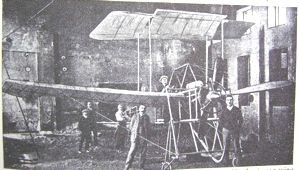
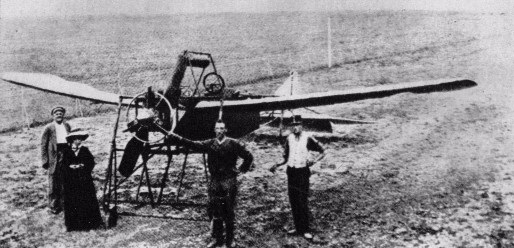
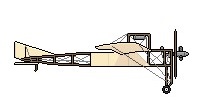
Libański Jaskółka

In the workshop at Lwów (Lemberg)

In 1910 Edmund Libański of Lwów (then under Austrian rule, presently in Ukraine) designed an aircraft that was supposed to have advantages of both mono- and biplane through use of lift areas of different size (with upper plane much smaller than the lower one). The 1911 Polish Libański Jaskółka featured a 3-cylinder Delfose rotary engine placed ahead of its propeller. During the take-off to first flight the engine exploded leading to crash. Designer dropped the idea of rebuilding the plane and instead designed a year later a much more succesful two-seat airplane named Jaskółka (Swallow). It was later transported to Vienna where it made many succesful flights. The Jaskółka (Swallow) never flew with the additional upper wing, although it did fly in August 1911 as a monoplane at Wiener Neustadt – without its proven-to-be-impractical top plane.

Span: 34’9″
Length: 25’11”
Weight empty: 530 lb

Libański Monobiplan

In 1910 Edmund Libański of Lwów (then under Austrian rule, presently in Ukraine) designed an aircraft that was supposed to have advantages of both mono- and biplane through use of lift areas of different size (with upper plane much smaller than the lower one).

The mono-biplane was built by Libansky and W. Rumbowicz.

During the take-off to first flight the engine exploded leading to crash. Designer dropped the idea of rebuilding the plane and instead designed a year later a much more successful two-seat airplane named Jaskółka (Swallow).