The original Lockheed Com¬pany built the moulded-plywood monocoque fuselage S-1 sports plane in 1916. Far ahead of its day, it could not compete with cheap war-surplus aircraft, and the company suspended manufac¬ture in 1920.
A commercial flop in spite of its innovative monocoque fuselage and folding wings.
Allan and Malcolm Loughead built the F-1 twin-engined flying-boat in 1918. With the help of designer Jack Northrop, Lockheed built the F1, but it was turned down by the Navy.
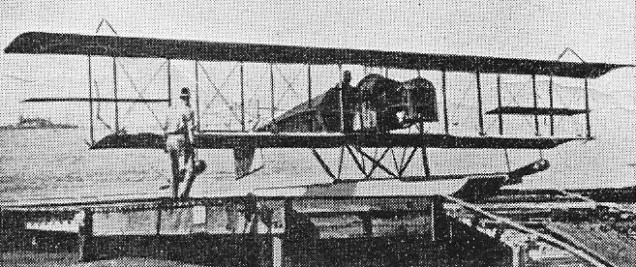
Allan and Malcolm Loughead built their first aircraft, the seaplane, in 1913. A wood and fabric covered three-seat seaplane with flat bottom floats. The aircraft featured ailerons mounted midway between the unequal-span mainplanes.
The Model G was test flown by the Loughead brothers at Santa Barbara, California.
The Model G was a main attraction at the Panama Pacific International Exposition held at San Francisco. Hundreds of visitors to the exhibition had their first experience of air travel in the Model G.
Engine: Curtiss O Span upper: 46 ft Span lower: 36 ft Length: 30 ft Height: 10 ft AUW: 2200 lb Useful load: 584 lb Max speed: 63 mpg at SL Seats: 3
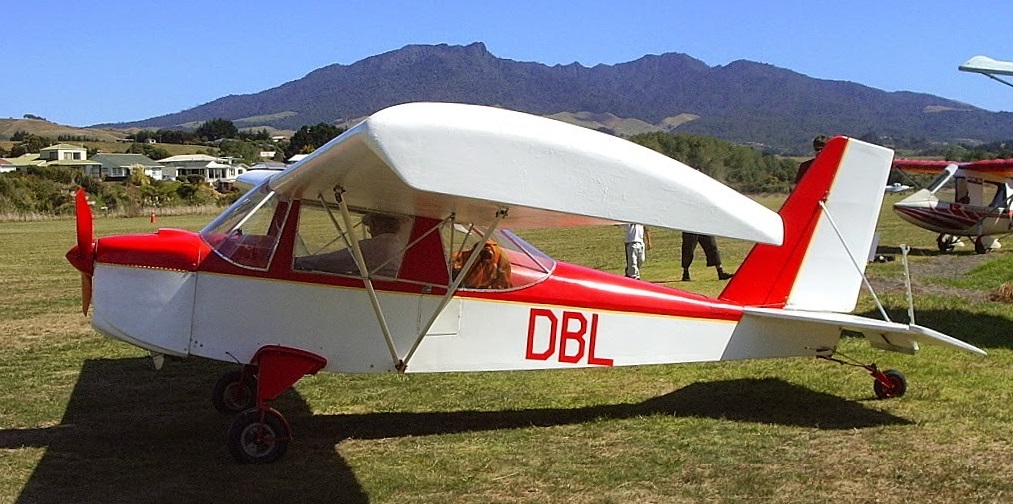
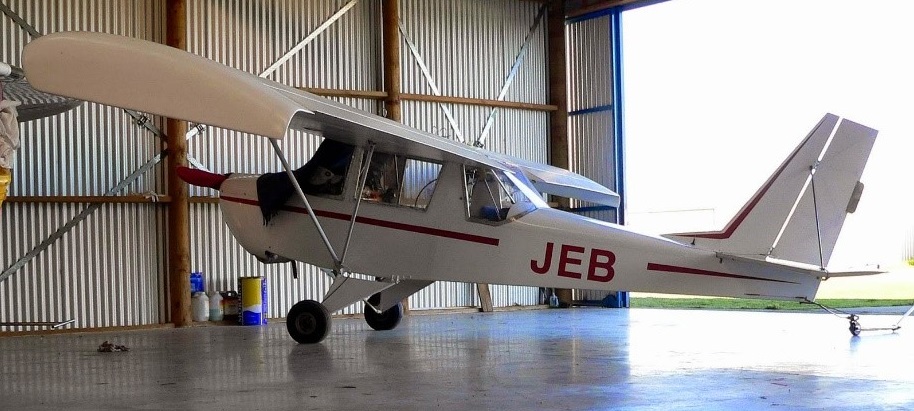
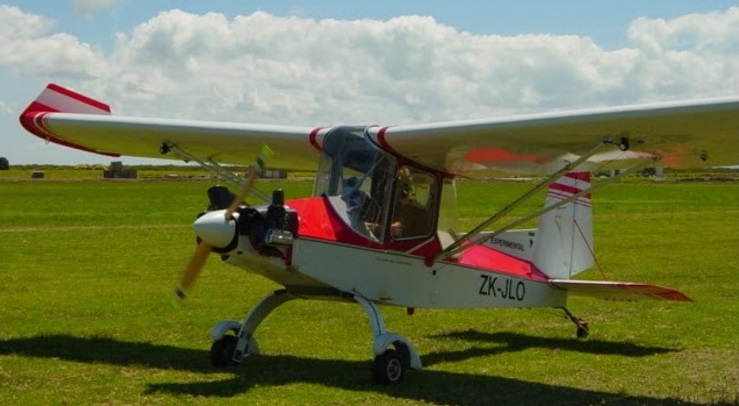
The two- seat Mini-twin was developed from the TEAM “Z” Hi-Max which was a single seater, with the width and wingspan both increased.
First registered ZK-JEB in 13 May 1996, David Locke test flew the aircraft in May 1996. ZK-JEB (c/n DBL 3) is officially a David Boehm Locke Hi Max Minitwin, and it took 1500 hours to construct over a period of 2 years. Powered by a 45 HP Zenoah engine it has a cruise of 65 mph. MAUW is 660 pound (299 Kg). It was a good aeroplane but not really fast enough for cross country flying so Dave Locke turned his attention to the Minitwin Mk II. On 15/1/01 ownership transferred to B StC C McKenzie of Auckland, then on 25/6/02 to S A Hyde, also of Auckland. It then headed to the South Island, to C G L Pennell of Rangiora with whom it had a forced landing following power loss on 8/12/05. It then went to A C Reid of Fairlie and finally to J D Simpson of Karamea.
ZK-DBL (c/n DBL 4) is officially a D Locke Mintwin II. It took 2500 hours to construct and it is powered by a 63 HP 3 cylinder 657cc DOHC water cooled engine from a Suzuki Cappucino sports car. It has a 3:1 reduction gearbox that Dave designed and built himself. Cruise is around 85 to 90mph. Empty weight is 630 pounds (287 Kg) and MAUW is 1,070 pounds (485 Kg). It is still owned by Dave Locke.
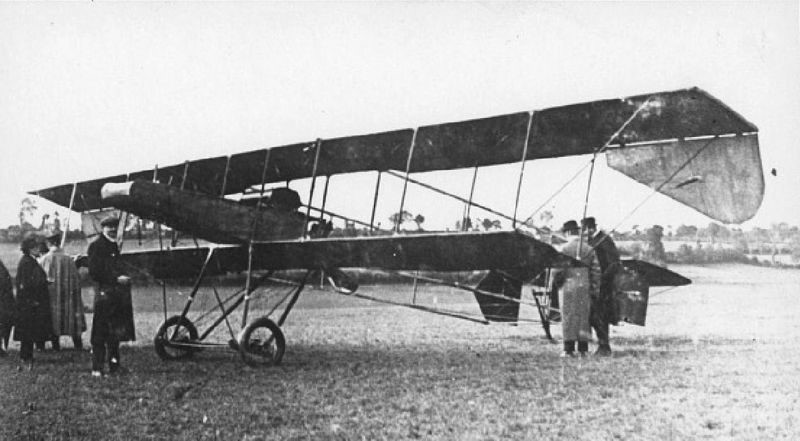
This 1912 Gnôme-engined pusher biplane was also known as the Lochner Rennzweidecker. It was built by Weyl in Germany with financing from Lochner, and was flown by Weyl.
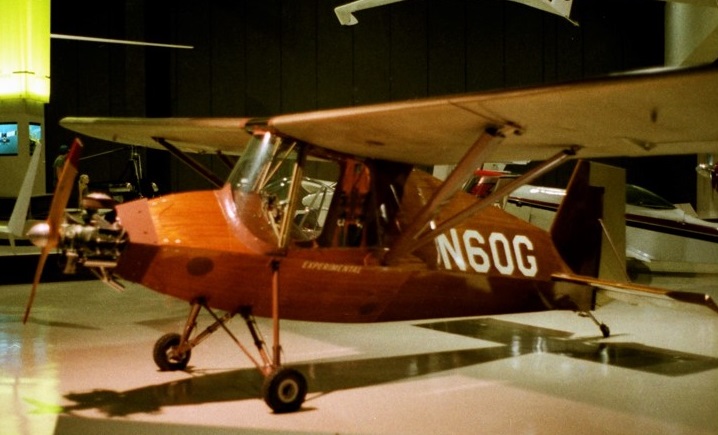
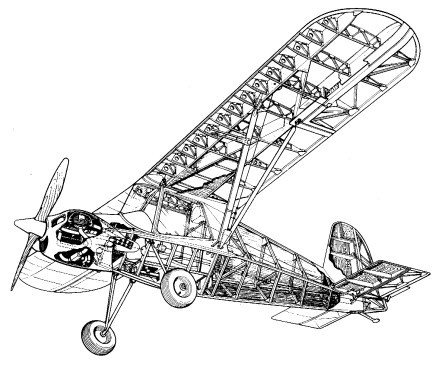
Of all wood construction the first Gangobie was designed and built by two brothers, William and James Lobet, in 1953. The result of intensive wind tunnel testing, the prototype got airborne behind a l6hp Clerget engine. Since built in small numbers in North America, and achieved kitset production status as a peanut scale 13” wing span balsa model.
Grounded after 30 hours of flight time by the failure of the nearly 50 year old engine, the Ganagobie concept was given a new lease of life by a Canadian engineer, Mr George Jacquemin. Mr Jacquemin, an aerospace engineer with Lockheed in California, suggested the modification of the design to accommodate the large numbers of war surplus target drone engines available in the mid fifties. The fuselage was given a boost in size to fit a larger framed pilot and a second prototype begun in Toronto, Canada, by an Experimental Aircraft Chapter. Completed by a Mr Pierre Descamps, the American Ganagobie was engined by a 1934 French-built Poinsard 35hp flat four. A subsequent flight report by De Havilland Canada’s chief test pilot gave the design a boost and some ten Ganagobie 03 projects were begun, largely in the United States and Canada. The original Canadian built Ganagobie was later re-engined with a Volkswagen 1200cc engine, standard fare for a number of homebuilts, and led to the latest in the family, the Lobet Ganagobie 05. The one and only Ganagobie 05, begun in Australia in 1974 after James Lobet migrated there, was shipped to New Zealand in 1982.
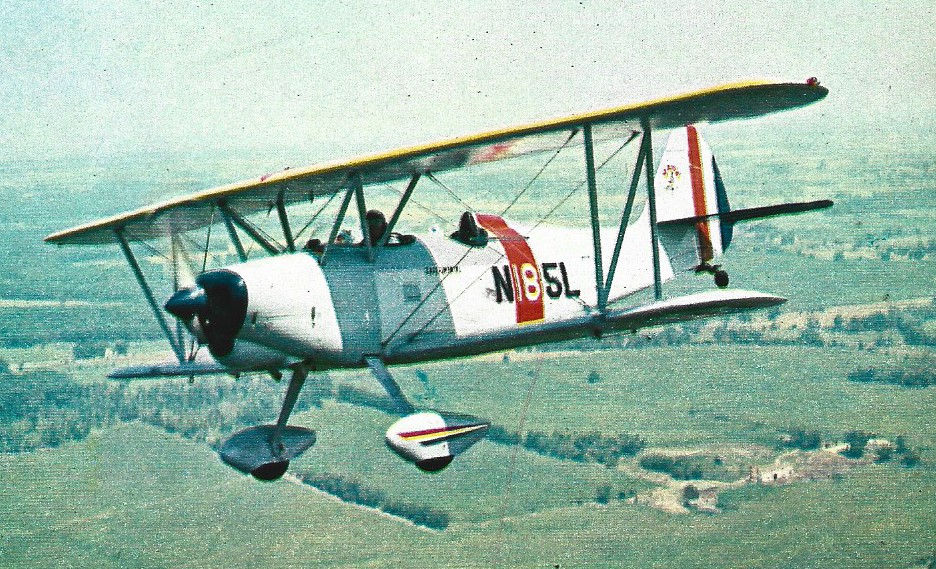
An original design of O.N. Lloyd, a 47 yr old construction engineer of Mesa, Arizona, USA, the two-seat Liberty Sport A, registered N185L, has wing with spruce spars and metal ribs. The fuselage and tail surfaces are 4130 tubing, and Ceconite covering is used throughout. Ailerons are fitted to the top wing only.
Cost of construction was about $4000 over four years.
Engine: Lycoming O-320, 150 hp Wingspan: 28 ft / 8.53 m Length: 22 ft 4 in / 8.81 m Height: 8 ft / 2.44 m Wing chord: 4 ft / 1.22 m Empty weight: 1325 lb / 601 kg MAUW: 2000 lb / 907 kg Max speed: 120 mph / 193 kph Cruise: 105 mph / 169 kph Landing speed: 50 mph / 80 kph ROC: 900 fpm / 4.58 m/sec TO to 50 ft / 15.2m: 1000 ft / 304 m Service ceiling: 15,000 ft / 4572 m Range: 375 mi / 604 km