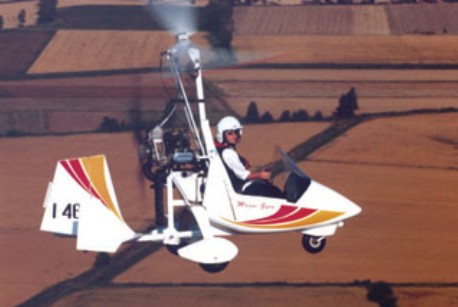
Magni M18 Spartan / VPM M-18 Spartan

Magni M-18 Spartan 2000

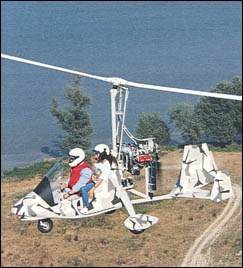
The 1998 version of the M-18 Spartan had an airframe of welded square-section 4130 steel tube. The fairing was optional.
Simpler to build than the other models, the M-18 is a single-seat autogyro made of the same steel airframe from the other models. Its smaller, 65-hp Rotax 582 engine delivers only a slightly reduced top speed of 105 mph. Available open or partially enclosed.

The millennium model M-18 is provided with the Rotax 582 engine (65hp) with standard dual carburetors, “E” gearbox electric start and exhaust silencer. Other standard equipment includes altimeter, airspeed indicator, rotor tachometer, engine tachometer, hobbs hour meter, water temperature gauge, prerotator, rotor brake, wheel brakes, landing light, wheel pants, manual cockpit trim control and 30 litres fuel capacity. Sold as Kit or Fully-Assembled.

M-18 Spartan
Engine: 65hp Arrow 500cc.
Prop: 65” VPM composite, 3 blade ground adjustable.
Rotor blades: 24’ x 8.7” VPM composite.
Min speed: 20 mph.
Cruise: 80 mph.
Top speed: 95 mph.
Empty wt: 353 lbs.
Useful load: 308 lb
Gross wt: 661 lb
Width: 5’3”
Height: 6’5”
Length: 11’6”

M-18 Spartan 2000
Engine: 65 hp Rotax 582, “C” gearbox with Electric Start
Propeller: 63″ 3-blade, ground adjustable
Rotor Blades: 24′ x 8.7″ composite (fiberglass & carbon fiber)
Overall length: 2.98m / 9’9″
Overall width: 1.78m / 5’10”
Overall height: 2.34m / 7’8″
Weight empty: 167kg / 368 lb
Max take-off weight: 350kg / 771 lb
Useful Load 403 lb
Max speed: 170km/h / 105 mph
Min Speed 20 mph
Cruising speed: 110km/h / 70 mph
Service ceiling: 3500m
Rate of climb: 3.5m/s
Range, no reserves: 170km
Endurance: 1.5 hr
Magni M16 / VPM M-16 Tandem Trainer

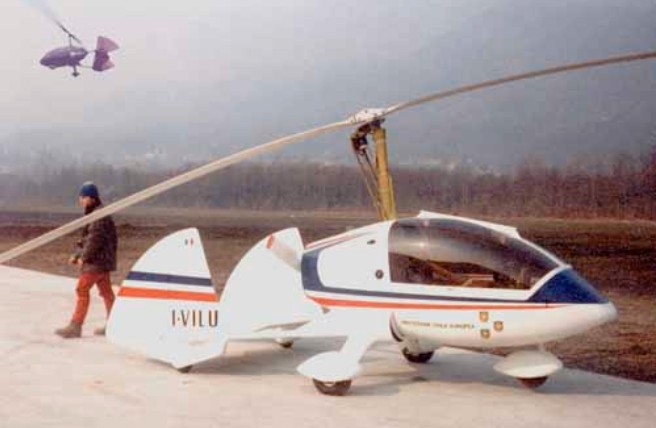
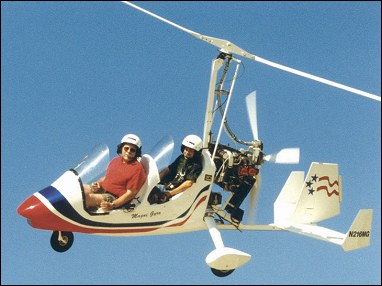
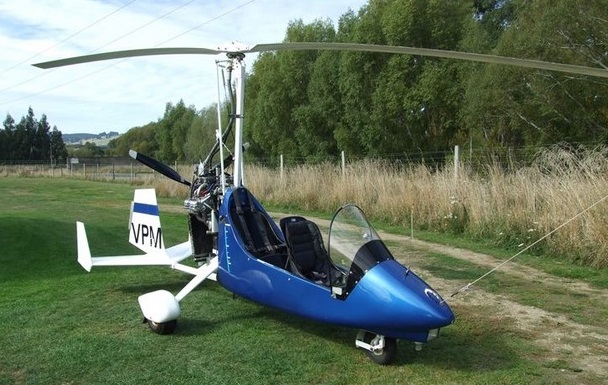
Designed by Gil Cazumba Cardoso, the M-16 is the Big Mercedes of Magni’s models with a wider cabin and more knee room in the front seat, the partially enclosed, the M-16 includes dual controls, a large instrument panel and standard electric trim. Both the M-16 and M-14 have engine options of a 115-hp Rotax 914 or a 100-hp Rotax 912 ULS. The top speed for both is 115 mph. Crop dusting is also possible in the M-16 with an optional 150 litre agricultural spray gear.

The Magni is constructed from chrome alloy steel with fibreglass panels, wheel spats and instrument panel and powered by a water cooled Rotax 914 Turbo 4 engine delivering 115 hp and driving a ground-adjustable 1.7-m, three bladed carbon Arplast pusher propeller. The 8.5-m two bladed rotor manufactured by Magni, is composite and has a mechanical pre-rotator and rotor brake. Maximum cruise is 115 mph, while normal cruise is 90 mph and the aircraft’s service ceiling is 3,500 m. Fuel in integral cockpit seat/tank of epoxy/glass fibre, capacity 50 litres.

The Magni Gyro M16-2000T is of Italian origin, coming from just outside of Milan, and is a tandem-seat and dual-control aircraft with a semi-enclosed streamlined composite cockpit built around a chrome-alloy 4130 steel tube welded airframe. This gyro comes almost fully equipped, requiring only a compass, radio and intercom to be complete. A tandem two-seat design with full dual controls, wheel pants, leaf-spring and tail planes, an optional rear windscreen was available.

The M 16-2000T was one aircraft (c/n 022074) supplied by manufacturer in September 2003 and modified to United Kingdom BCAR Section T standards for ‘Golden Eagle’ world circumnavigation expedition, then due to begin in February 2004.

M-16 Tandem Trainer
Engine: 120 hp Arrow 1000cc.
Prop: 67” VPM composite, 3 blade ground adjustable.
Rotor blades: 28’ x 8.7” VPM composite.
Min speed: 20 mph.
Cruise: 80 mph.
Top speed: 115 mph.
Gross wt: 1432 lbs.
Width: 5’11”.
Height: 8’6”.
Length: 15’3”.

Magni M 16 Tandem Trainer
Rotor diameter: 8.23m
Overall length: 4.65m
Overall width: 1.80m
Overall height: 2.60m
Propeller diameter: 1.70m
Weight empty: 270kg
Max take-off weight: 450kg
Max level speed: 185km/h
Cruising speed: 145km/h
Rate of climb at sea level: 300m/min
Service ceiling: 3500m
Take-off run: 50m
Landing run: up to 30m
Range, no reserves: 481km
Endurance: 3 hr

M16-2000T
Engine: Rotax 914.
Prop: ground-adjustable 1.7-m, three-blade Airplast pusher.
Rotor dia: 8.5-m
Cruise: 90 mph
Max speed: 125 mph
Seats: 2.

Magni M-16 Tandem Trainer 2000
Engines: 115 hp Rotax 914UL, 100 hp Rotax 912 ULS
Propeller: 67″ composite 3-blade ground adjustable
Rotor Blades: 27′ composite (fiberglass and carbon fiber)
Specifications: 914 or 912UL
Min Speed 20 mph
Cruise 90 mph
Top Speed 115 mph
Empty Weight 595 lbs / 585 lbs
Useful Load 617 lbs / 627 lbs
Gross Weight 1,212 lbs
Width 5’11”
Height 8’6″
Length 15’3″

Magni M14 Scout / VPM M-14 Scout

Nearly identical, performance-wise, to the M-16 is the sporty M-14 model. More compact, the M-14 delivers the utility of tandem seating with aerodynamic performance. It has a slightly higher useful load of 648 pounds, versus the M-16‘s 617 pounds and retains a lot of the standard features, such as electric trim.

Streamlined composite and 4130 steel airframe, including wheel pants, spring landing gear, prerotator, fin/rudder with two outrigger tail fins. Sold as Kit or Fully-Assembled.

The Scout 2000 millennium model of the M-14 was standard with electric trim, Flydat or EIS engine monitor, altimeter, airspeed indicator, rotor tachometer, prerotator, rotor brake, wheel brakes, landing light, and wheel pants.

Two different engines were available: Rotax 914 turbo (115hp) or Rotax 912 ULS (100hp). With the Rotax 912 ULS, carburetor heat and temperature gauge is standard.
The M14 Scout, with compact seating and aerodynamic design, afford good performance and two-seat. The M14 is Magni’s sporting model, but two seats.

M-14 Scout
Engine: 120 hp Arrow 1000cc.
Prop: 67” VPM composite, 3 blade ground adjustable.
Rotor blades: 27’ or 28’ x 8.7” VPM composite.
Min speed: 20 mph.
Cruise: 80 mph.
Top speed: 100 mph.
Gross wt: 1432 lbs.
Width: 5’3”.
Height: 8’2”.
Length: 13’.

M-14 Scout
Engines: 115 hp Rotax 914, 100 hp Rotax 912ULS
Propeller: 67″ VPM composite, 3-blade ground adjustable
Rotor Blades: 27′ composite (fiberglass and carbon fiber)
Min Speed 20 mph
Cruise 90 mph
Top Speed 115 mph
Empty Weight 547 lbs / 538 lbs
Useful Load 665 lbs / 674 lbs
Gross Weight 1,212 lbs
Width 5’11”
Height 8’2″
Length 12’11”

Magni M-14 Scout 2000
Rotor diameter: 8.23m
Overall length: 3.95m
Overall width: 1.80m
Overall height: 2.50m
Propeller diameter: 1.70m
Weight empty: 248kg
Max take-off weight: 550kg
Max level speed: 185km/h
Cruising speed: 145km/h
Rate of climb at sea level: 5m/s
Service ceiling: 3500m
Take-off run: 70m
Landing run: 0-30m
Range, no reserves: 305km
Endurance: 2.1 hr

Magni M-13 Duck / VPM M-13 Duck

A single seat partially enclosed autogyro. Composite and aluminium airframe, stream lined including wheel pants. Spring landing gear, pre-rotator, fin-rudder with two out rigger tail fins.

Engine: 65 hp Arrow 500cc.
Prop: 65” VPM composite, 3 blade ground adjustable.
Rotor blades: 24’ x 8.7” VPM composite.
Min speed: 20 mph.
Cruise: 80 mph.
Top speed: 95 mph.
Empty wt: 353 lbs.
Useful load: 308 lbs.
Gross wt: 661 lbs.
Width: 5’3”.
Height: 6’5”.
Length: 11’6”.

Magni MT-7 / VPM S-2

In 1980 Vittorio Magni of Italy had designed a new, two-seat autogyro with a 150 hp Lycoming engine. The machine got the project name MT-7 (Magni-Tervamaki). Vittorio later redesignated the machine as VPM S-2.

The calculations and general design blueprints were delivered to Vittorio, who was responsible for all the detail design. He also built the machine together with his son. The machine was completed in 1985, and it also flew well.

Some years later the machine was lost in an accident in France. The control rods had been bent in road transport by a truck.

Magni continued the development of autogyros and has designed a series of gyros which all seem to have the rotor head and blade design of JT-5 and MT-7.

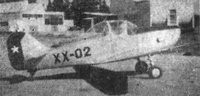
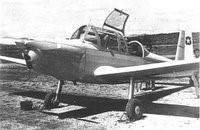
Maestranza Central De Aviacion H.F.XX-02

Designed by Hugo Fuentes (hence the HF in the designation), the HF XX-02 trainer was a conventional, low-wing cantilever monoplane of mixed construction with fixed tailwheel undercarriage. The pilot and instructor sat side by side.

Two prototypes were constructed at El Bosque Air Base, designated XX-02 and XX-02B, and the first flew in 1954. Development was abandoned due to difficulties maneuvering at lower altitudes, which in one case, led to a crash in which the instructor was killed while attempting to land after a tight turn at low altitude.

The design was subsequently refined by Francisco Bravo and an improved version, the HFB XX-02 flew in 1958 powered by a Continental O-470 engine in place of the Ranger L-440 that powered the original. Only the two were ever built.

HFB XX-02
Engine: 1 × Continental O-470-B, 168 kW (225 hp)
Wingspan: 10.10 m (33 ft 2 in)
Length: 6.60 m (21 ft 8 in)
Height: 2.15 m (7 ft 1 in)
Wing area: 16.0 m2 (172 ft2)
Empty weight: 760 kg (1,675 lb)
Gross weight: 1,060 kg (2,337 lb)
Maximum speed: 195 km/h (121 mph)
Range: 800 km (500 miles)
Service ceiling: 4,570 m (15,000 ft)
Crew: Two, pilot and instructor

Maestranza Central De Aviacion Triciclo-Experimental / XX-01

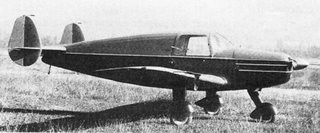
In 1947, the Maestranza Central de Aviación, the Central Workshops of the Chilean Air Force designed and built the first Chilean-designed aircraft, the Triciclo-Experimental (also designated XX-01), unveiled in May 1947. The Triciclo, designed by Alfredo D. Ferrer, was a low-winged monoplane of wooden construction with a fixed tricycle landing gear and a twin tail. The crew of two sat side-by-side in an enclosed cockpit, and were provided with dual flight controls.

Built with indigenous materials, Ferrer received tuition in the XX-01.

Only one was built.

Engine: 1 × Franklin, 75 kW (100 hp)
Propeller: two-blade
Length: 6.50 m (21 ft 4 in)
Wingspan: 11.0 m (36 ft 1 in)
Height: 1.80 m (5 ft 11 in)
Wing area: 13 m2 (140 sq ft)
Empty weight: 355 kg (783 lb)
Gross weight: 600 kg (1,323 lb)
Maximum speed: 180 km/h (112 mph; 97 kn)
Cruising speed: 160 km/h (99 mph; 86 kn)
Range: 1,000 km (621 mi; 540 nmi)
Service ceiling: 5,500 m (18,045 ft)
Crew: 2

Maer The Egg / The Fly

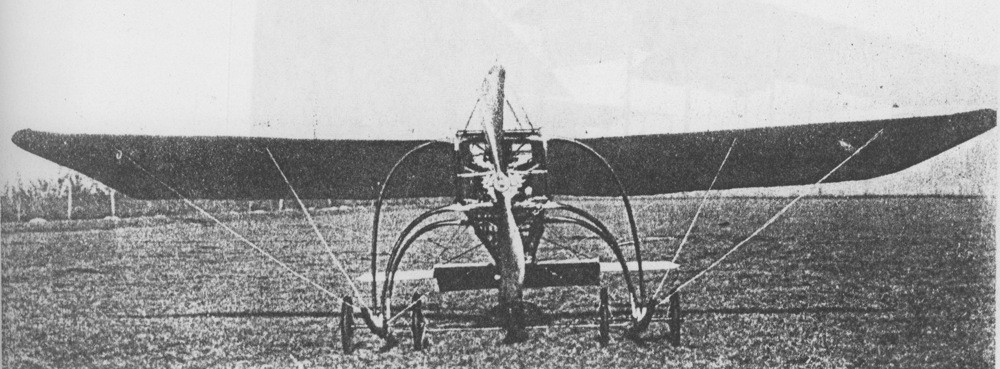
A machine built around 1924, consisting of an egg-shaped fuselage with an underslung gondola and extra-long landing gear that could be found at Stinson Field at the time. A mid-wing monoplane, the 90hp Curtiss OX-5 engine was mounted in a cowl that looked much like a NACA cowl, not then invented, and its radiator was mounted on the outside of the cowl.

The ship was said to be the brainchild of a German inventor, and one named Maer was known to be working at Stinson Field, but other sources credit it to a Prof Warner, who also designed an ornithopter.

An Air Service Newsletter lists the plane as “The Fly,” designed and constructed by a Lt D B Phillips, assisted by members of the 3rd Attack Group.

Reportedly was Charles Lindbergh who labeled it “The Egg” when he saw it.