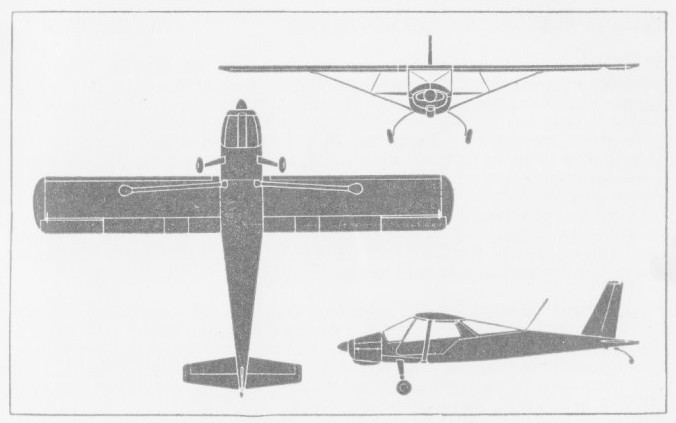
Employing formed honeycomb skins to carry virtually all structural loads in the external surface iof the airframe, the Vipan (Peewit) has no wing spar as such and features a continuous, one-piece cantilever undercarriage of glass-fibre reinforced plastic.
A four-seat cabin monoplane, the first prototype, powered by a 160 hp Lycoming O-320-B2B engine, flew on 25 February 1961.
Two further prototypes, with 180 hp Lycoming O-360 engines, were produced under a Swedish Army contract, the first flying on 27 June 1962.
MFI-10B Engine: 180 hp Lycoming O-360-A1D Wingspan: 35 ft 1.5 in Length: 26 ft 1 in Height: 6 ft 5 in Wing area: 168.993 sq.ft Empty weight: 1433 lb Normal loaded weight: 2280 lb MTOW: 2590 lb Max speed: 142 mph at 7500 ft ROC: 950 fpm Range: 620 mi at 130 mph
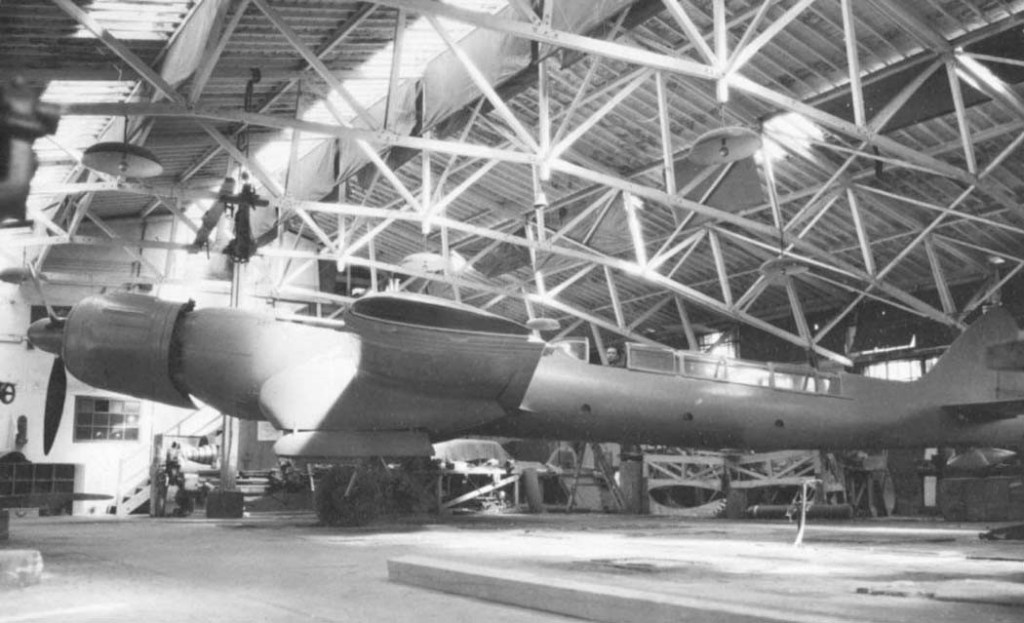
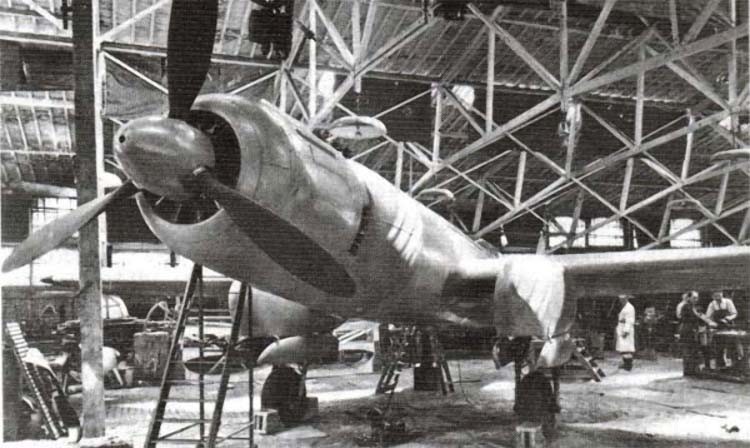
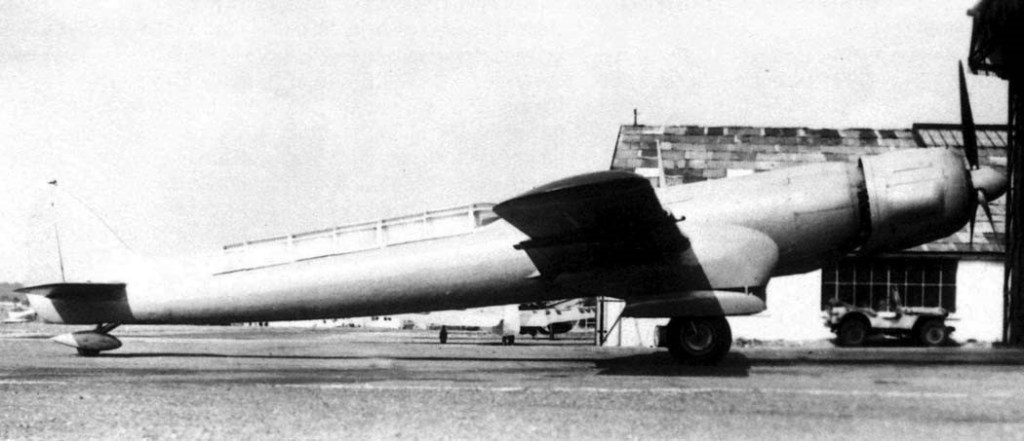
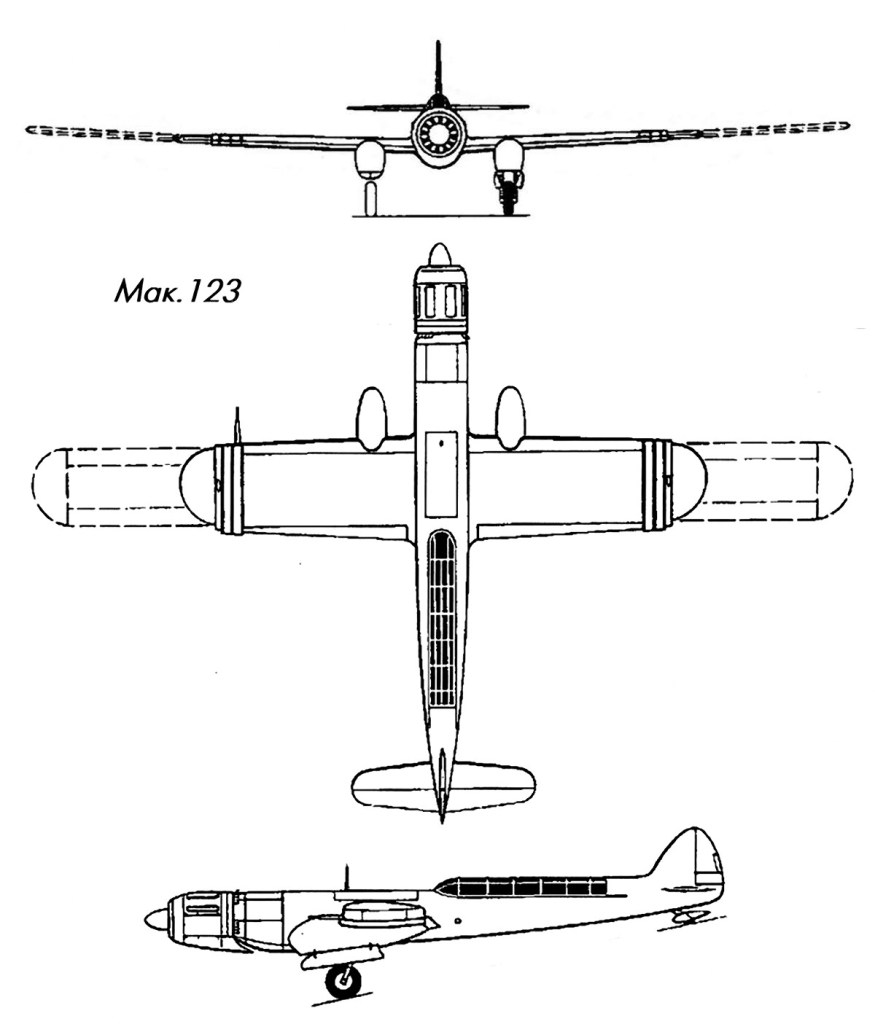
At the end of the war, Ivan Ivanovich Makhonin, with the support of the French Aviation Ministry, built in 1947 a 4-seat Mak.123 aircraft based on the same principles as his predecessors Mak.10 and Mak.101.
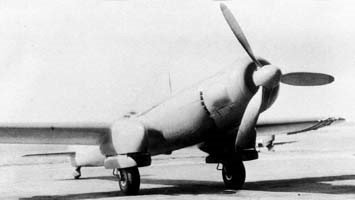
A device with a variable wing length (the wing length varied from 13 to 21 m, and the area from 20 to 36 sq.m) and a captured BMW 801 engine with a power of 1800 hp. tested in the same year.
First flying in 1947, the original feature of the aircraft was the cabin with a tandem landing (one behind the other) of all four crew members.
It was assumed that Mak.123 could become the base model for a promising reconnaissance aircraft, but the inventor failed to continue research and the project was terminated after it crashed and not re-built.
Engine: BMW 801, 1800 hp Wingspan: 13.00 – 21.00 m Wing area: 20.00 – 36.00 sq.m Empty weight: 7000 kg Normal take-off weight: 10,000 kg Maximum speed: 300 km/h Practical ceiling: 5500 m Seats: 4
In the early 1930s several designers became interested in the possibility of changing the configuration of wings between take off and fast flight. Two routes were explored, the first primarily involving camber and hence lift coefficient reduction and the other a decrease of wing area by span reduction at high speed. The Makhonine Mak-10 of the second.
The Makhonine Mak-10, was a variable geometry research aircraft, built to investigate variable area / telescopic wings during 1931 in France. Details of the Mak-10 are sparse but its novel feature was a telescopic wing which increased the span for take-off by 8 m (26 ft 3 in) or 60% of its high-speed configuration. The outer panels retracted into the central ones, their inner ends supported on bearings rolling along one or more spars. The ends of the centre section were reinforced with cuffs. The wing apart, it was a conventional cantilever low wing monoplane, with twin open cockpits, the rear one sometimes faired in, and faired, fixed landing gear. It was powered by a 480 kW (644 hp), three bank, W-configuration, twelve-cylinder Lorraine 12Eb engine.
Mak-10 with wings almost completely retracted
The first flight of the Mak-10 was on 11 August 1931 During four years of development the Mak-10 was re-engined with a 600 kW (800 hp) Gnome-Rhône 14K Mistral Major fourteen cylinder, two row radial engine which gave it a top speed of 380 km/h (240 mph) and the new designation Mak-101.
Mak-10 Engine: Lorraine 12Eb, 480 kW (644 hp) Propeller: 2-blade Wingspan: 13 m (42 ft 8 in) retracted 21 m (69 ft) extended Wing area: 33 sq.m (230 sq ft) retracted 33 m2 (360 sq ft) extended Gross weight: 5,000 kg (11,023 lb) Maximum speed: 300 km/h (190 mph, 160 kn) Crew: 2
Mak-101 Engine: Gnome-Rhône 14K Mistral Major, 600 kW (800 hp) Propeller: 2-blade Wingspan: 13 m (42 ft 8 in) retracted 21 m (69 ft) extended Wing area: 21 m2 (230 sq ft) retracted 33 m2 (360 sq ft) extended Top speed 380 km/h (240 mph)
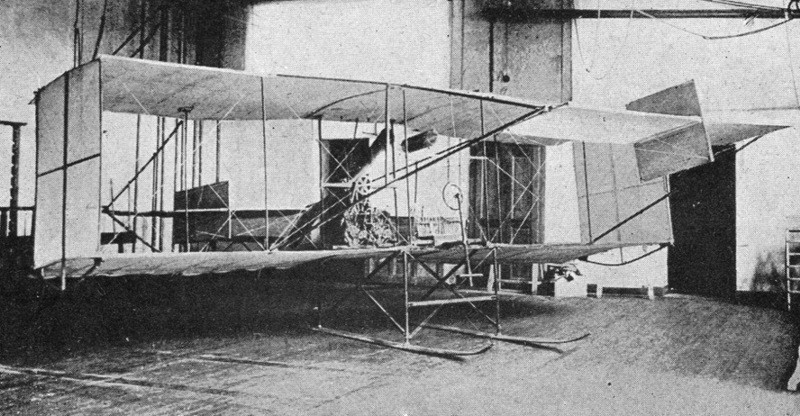
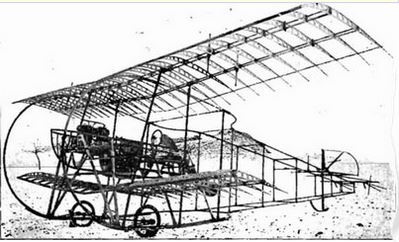
Mr. Maire and Mr. Perrin built in 1909 a biplane in Lausanne (Switzerland) powered by a 20 hp engine driving a pusher propeller. As the tests were to be performed on the snowy fields of Lausanne, skis were mounted as an undercarriage. There is no information about the flying capabilities of the machine.
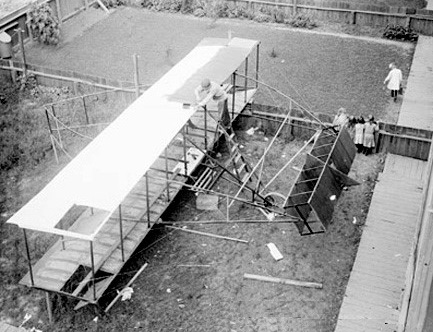
The Mainz Motor School airplane, known as the “One and a Half Decker” was built at the German Motor School at Mainz, Germany. The upper wing of this two-decker had 10 m span, the lower deck 7 m. The 50 hp Argus engine was placed in the front of the fuselage and drove the pusher propeller by means of a transmission. In the gondola-like cockpit there was space for the pilot and two passengers. Radiators were fixed on both sides of the fuselage.
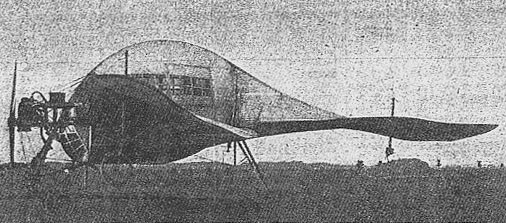
The Henri Mainguet La Dorade / Sea-bream of 1910 was intended to hold ten passengers in an enclosed cabin. Distinctive for its bulbous fuselage and lack of a stabilizing vertical tail fin, the pilot was seated outside, at the nose of the all-covered fuselage, the engine set out above him.
The passengers sat in the enclosed cabin with mica windows which made up the bulk of the streamlined guppy fuselage; aft, it tapered down to a long sweeping horizontal tail. No vertical surface appears to have been fitted. The oval somewhat drooping wings were mounted at a very high angle of attack, and had wheels set below the tips; the whole machine was resting on a long skid with two trailing wheels forward and one under the rear of the cabin. The engine seems to have been a 40 hp 3-cylinder Anzani. With a higher-powered engine, Mainguet at first succeeded at first only in running into the trees, and later in some prolonged hops.
Henri Mainguet built this tractor monoplane, in 1910 at Chartres: it appeared for the first time on 21 May.
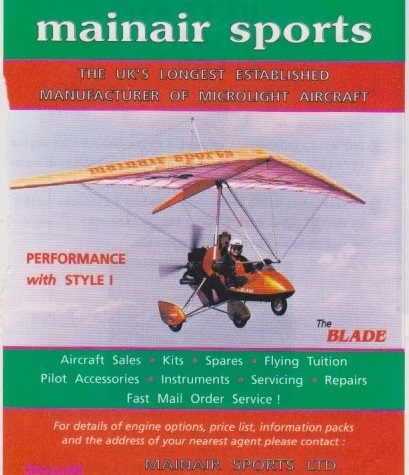
Mainair marketed the Blade tandem two-seat flex-wing microlight in assembled form to BCAR S.
Blade 582
By 1998 the 582 was the mainstream model, with a 462 or 503 available. The Rotax 912 was available on the most expensive model. The model includes carb heat, and was originally available as an export only, before being made available for the UK market.
Blade 912
1998
Max speed: 75 mph Cruise: 55 mph Range: 200 sm Rate of climb: 550 fpm Takeoff dist: 220 ft Landing dist: 200 ft Service ceiling: 10,000 ft Engine: Rotax 503, 46 hp hp range: 46-65 Fuel capacity: 11.6 USG Empty weight: 330 lb Gross weight: 814 lb Wing span: 36 ft Wing area: 167 sq.ft Seats: 2
Blade 582 Empty weight: 173 kg Wing span: 10.4 m Wing area: 15.6 sq.m Fuel capacity: 44 lt Certification: BCAR S Engine: Rotax 582, 64 hp MAUW: 390 kg Seats: 2 Max speed: 140 kph Cruise speed: 106 kph Minimum speed: 48 kph Climb rate: 4.2 m/s Fuel consumption: 10 lt/hr Price (1998): £12,340
Blade 912 Empty Weight: 195 kg / 430 lbs Wing span: 10.60 m Wing area: 15.6 sq.m Fuel capacity: 44 lt Certification: BCAR S Engine: Rotax 912 UL, 80 hp MTOW Weight: 390 kg / 860 lbs Seats: 2 VNE: 88 kt / 101 mph / 163 kmh Max speed: 145 kph Cruise: 59 kt / 68 mph / 109 kmh Minimum speed: 26 kt / 30 mph / 48 kph Climb rate: 1000 ft/min / 5 m/s Take-off distance (50ft obstacle): 460 ft / 140 m Landing distance (50ft obstacle): 640 ft / 195 m Fuel consumption: 9 lt/hr Price (1998): £19,618
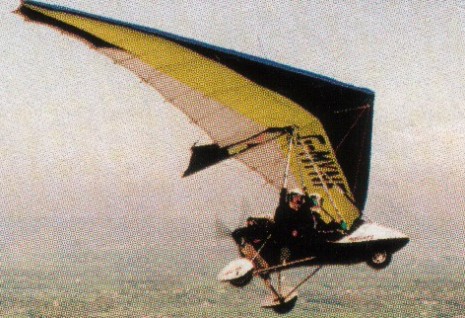
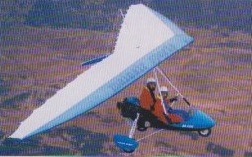
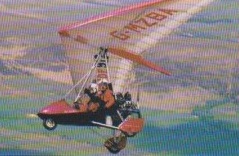
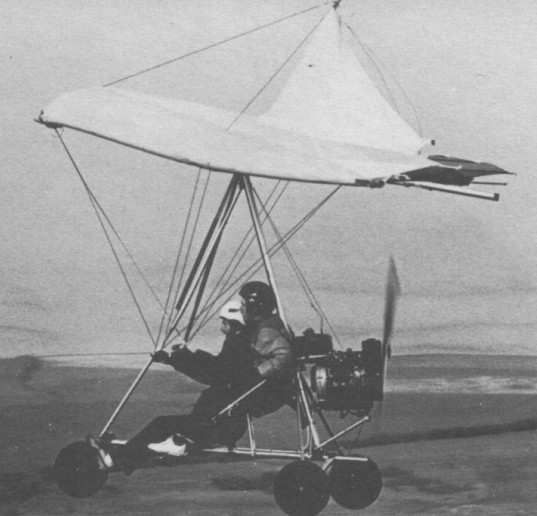
The Mainair/ Southdown Sailwings Puma MS is a tandem two seat single engined flex wing aircraft with weight shift control. Rogallo wing with fin. Pilot suspended below wing in trike unit, using bar to control pitch and yaw/roll by altering relative positions of trike unit and wing. Wing braced from above by kingpost and cables, from below by cables; floating cross tube construction with >75% double surface enclosing cross tube; pre-formed ribs. Undercarriage has three wheels in tricycle formation; no suspension on any wheels. Push right go left nosewheel steering independent from yaw control. Brake on nosewheel. Aluminium tube trike unit, with optional pod. Engine mounted below wing driving pusher propeller. All airframe tubing is bright anodised drawn seamless aluminium to British HT30TF specification. All bolts are aircraft quality AN series. The Puma MS uses an identical trike unit to the Tri Flyer Two Seater/Dual Striker, but instead of the Flexiform wing a Southdown Sailwings Lightning DS is used. The Puma Sprint MS is the same as the Puma MS except a 70% double-surface wing.
Puma MS Engine: Robin EC44, 50 hp at 6800 rpm. Propeller diameter and pitch 62 x 27 inch, 1.58 x 0.70 m. Toothed belt reduction, ratio 2.3/1. Max static thrust 275 lb, 125 kg. Power per unit area 0.26 hp/sq.ft, 2.8 hp/sq.m. Fuel capacity 2.6 US gal, 2.2 Imp gal, 10.0 litre. Length overall 11.2ft, 3.41m. Height overall 10.0ft, 3.05m. Wing span 34.5ft, 10.52m. Chord at root 8.0ft, 2.44 m. Chord at tip 3.5 ft, 1.07 m. Anhedral 1.5 deg. Nose angle 130 deg. Fin height 3.3ft, 1.01m. Total wing area 195 sq.ft, 18.1 sq.m. Wing aspect ratio 6.3/1. Wheel track 6.0 ft, 1.83 m. Wheelbase 6.0 ft, 1.83m. Nosewheel diameter overall 16 inch, 406mm. Main wheels diameter overall 16 inch, 406mm. Empty weight 310 lb, 141kg. Max take off weight 560 lb, 254kg. Payload 250 lb, 113kg. Max wing loading 2.87 lb/sq.ft, 14.0 kg/sq.m. Max power loading 11.2 lb/hp, 5.0kg/hp. Load factors +4, 2 design; +6, 3 ultimate. Max level speed 50mph, 80kph. Never exceed speed 60mph, 97kph. Max cruising speed 50mph, 80kph. Economic cruising speed 43mph, 69kph. Stalling speed 25 mph, 40 kph. Max climb rate at sea level 600 ft/min, 3.0 m/s.
Puma Sprint MS Engine: Robin EC44, 50 hp at 6800 rpm. Propeller diameter and pitch 62 x 27 inch, 1.58 x 0.70 m. Toothed belt reduction, ratio 2.3/1. Max static thrust 275 lb, 125 kg. Power per unit area 0.28 hp/sq.ft, 3.1 hp/sq.m. Fuel capacity 2.6 US gal, 2.2 Imp gal, 10.0 litre. Length overall 11.2ft, 3.41m. Wing span 34.5ft, 10.52m. Chord at root 8.0ft, 2.44 m. Chord at tip 3.5 ft, 1.07 m. Anhedral 1.5 deg. Nose angle 130 deg. Fin height 3.3ft, 1.01m. Total wing area 195 sq.ft, 18.1 sq.m. Wing aspect ratio 6.3/1. Wheel track 6.0 ft, 1.83 m. Wheelbase 6.0 ft, 1.83m. Nosewheel diameter overall 16 inch, 406mm. Main wheels diameter overall 16 inch, 406mm. Empty weight 310 lb, 141 kg. Max wing loading 1.72 lb/sq.ft, 8.4 kg/sq.m. Max power loading 11.2 lb/hp, 5.0kg/hp. Load factors: >+6.0, 3.0 ultimate.