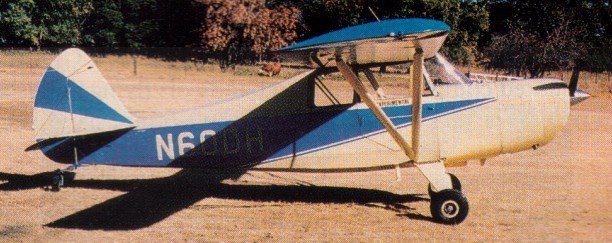
Single seat single engined high wing mono¬plane. Wing has unswept leading and trailing edges, and constant chord; cruciforin tail. Undercarriage has three wheels in tricycle formation. Aluminium tube framework. En¬gine mounted below wing driving pusher propeller. Other details depend on builder’s specifications. Lyle Mathews sells sets of plans of ultralights for homebuilders and this machine which he has designed himself leaves the choice of weight¬shift, hybrid or conventional control system to the constructor, depending on how he or she builds the control surfaces. Lyle Mathews’ CCC (Cross Country Cruiser) can be described as a high wing monoplane with a rectangular wing form and a cruciform tail with tricycle undercarriage; it uses ‘tradition¬al’ tube and fabric construction. It is intended to receive 15 to 30 hp range engines in pusher configuration, mounted on the rear tubes of the pilot frame. The plans are sold in the USA and Canada for $15 and in other countries for $20 in 1982. The data for each CCC depend on how the constructor has chosen to build the aircraft.
Engine: Lloyd, 22 hp Wing span 34.0ft, 10.36m Constant chord 5.0 ft, 1.52 m Sweepback 0 degs Total wing area 165 sq.ft, 15.3 sq.m Wing aspect ratio 7.0/1 Empty weight 1691b, 77kg Max level speed 52 mph, 83 kph Cruising speed 35 mph, 56 kph Stalling speed 22 mph, 35 kph Max climb rate at sea level 350 ft/min, 1.7 m/s Take off distance 90 ft, 27 m.
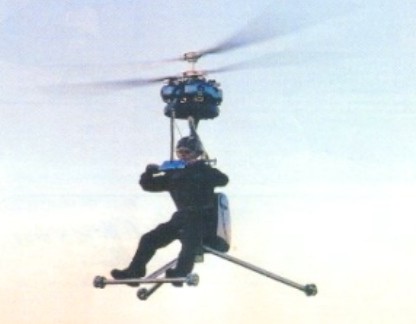
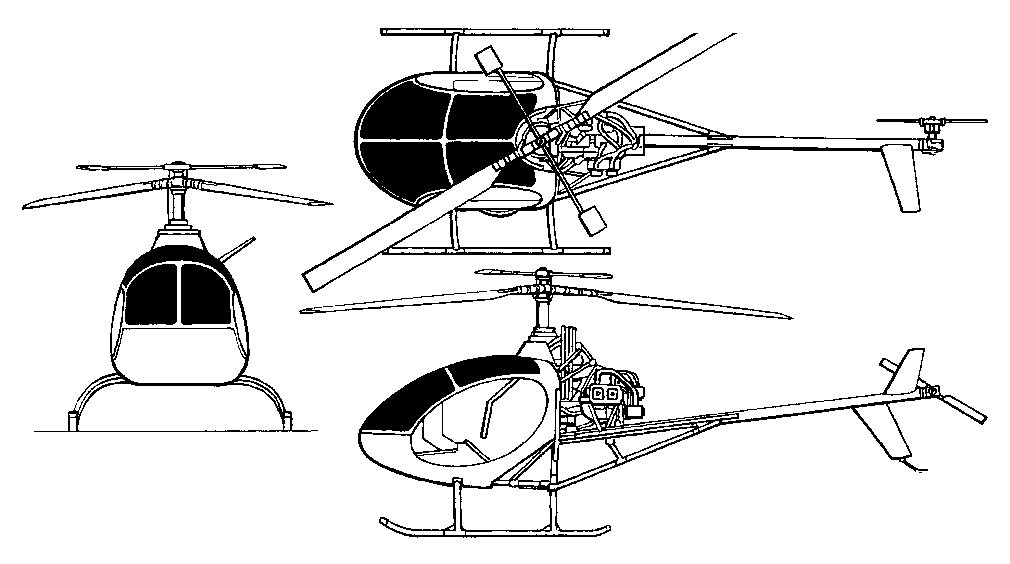
A single-seat strap-on helicopter. Complete helicopter fitted with one five-USG fuel tank and flown in the ultralight category. Gen H-4 should take 30-40 hours to assemble. Kit: $36,000 in 2009.
The sole Master Aircraft Greyhound of 1929 was registered N819H c/n B-1. The owner reported to CAA that the plane was “very unsatisfactory and never used again” and the registration expired on 1 September 1935.
Engine: Velie M-5 Wingspan: 32 ft 0 in Length: 21 ft 0 in
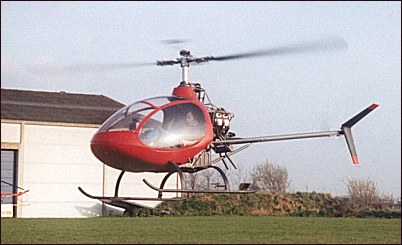
The Masquito Aircraft company was established in Belgium to produce the Masquito M80 ultralight helicopter and design started in November 1994.
Construction of the prototype began in December 1995, with the first flight (G-MASZ) in May 1996. 25 hours of test flying was completed by April 1997. P
The prototype was reconfigured as the M80 with a Jabiru engine and began ground trials in late 1997. The M80 was displayed unflown at the PFA International Air Rally at Cranfield in July 1999. By late 2002, over 120 hours of running time had been accumulated, including 20 within a limited hovering and slow flight envelope.
A CAA go-ahead for ground running of the fourth prototype (also marked G-MASZ) was given in mid-2001. This completed on 26 April 2002, confirming engine integrity.
The UK CAA requires Masquito aircraft to obtain a Design Organisation Approval before starting the flight-test programme for BCAR-VLII; this procedure started in 2003.
Conforms to FAR Pt 27 crashworthiness requirements. Two-blade, teetering main rotor and two-blade tail rotor; main rotor carbon composites blades with 9deg linear twist. Hiller servo rotor for increased stability in hover. Main rotor speed 690 rpm; 2kg lead weight in each tip to increase inertia and decrease rotor speed decay in event of engine failure. Tail rotor 3,200 rpm. Ventral fin offset 2degs. Composites “virtual hinge” main rotor head with elastomeric collective pitch thrust bearings. Prototype had Rotax gearbox for primary reduction and powerdrive toothed aramid fibre belts tor secondary reduction; production version employs toothed drivebelt, centrifugal clutch and flywheel as primary transmission, with flexible driveshaft for tail rotor.
Controls are conventional and manual, with Hiller servo rotor for cyclic pitch control. Primary structure of Ti3A12, 5V alloy; tailboom of 8.9cm carbon fibre tube. Main rotor blades have unidirectional composites spar with PVC foam trailing-edge core and bidirectional composites skin. Two fixed skids of 6061 alloy mounted on unidirectional carbon fibre supports.
Production aircraft to have an 89.5kW Masquito M2.6L four-cylinder, four-stroke air-cooled engine derated to 59.7kW at sea level, equipped with dual electronic ignition, electronic multipoint fuel injection, pressure and temperature compensation and dual variable timing ignition with max rpm limiter. Fuel capacity 67 litres of which 60 litres usable.
Production deliveries were due to begin in early 2004.
Masquito M 58
M58 Engine: 47.7kW Rotax 582
M58 Engine: Jabiru, 80 hp Rotor span: 4.60 m MAUW: 390 kg Empty weight: 170 kg Fuel capacity: 52 lt Max speed: 180 kph Cruise speed: 150 kph Minimum speed: 0 kph Climb rate: 9.6 m/s Seats: 2 Fuel consumption: 12 lt/hr Kit price (1998): £30,000
M80 Engine: Masquito M2.6L, 89.5kW Main rotor diameter: 5.52m Tail rotor diameter: 1.00m Overall length, rotors turning: 6.22m Fuselage length: 4.85m Height overall: 2.25m Max. take-off weight: 450kg Empty weight, equipped: 230kg Never-exceed speed: 180km/h Max cruising speed: 148km/h Max rate of climb at sea level: 335m/min Hovering ceiling IGE: 2,000m Range with max internal fuel: 600km Endurance: 4h
Engine: Jabiru, 80 hp Rotor span: 4.60 m MAUW: 390 kg Empty weight: 170 kg Fuel capacity: 52 lt Max speed: 180 kph Cruise speed: 150 kph Minimum speed: 0 kph Climb rate: 9.6 m/s Seats: 2 Fuel consumption: 12 lt/hr Kit price (1998): £30,000
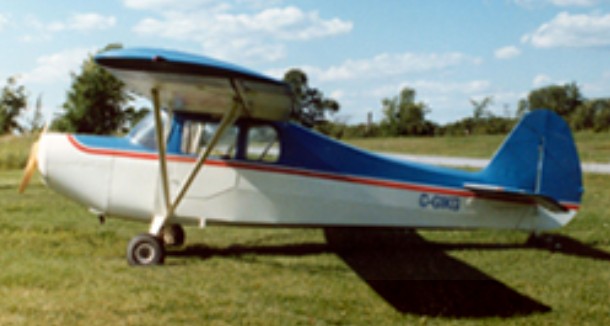
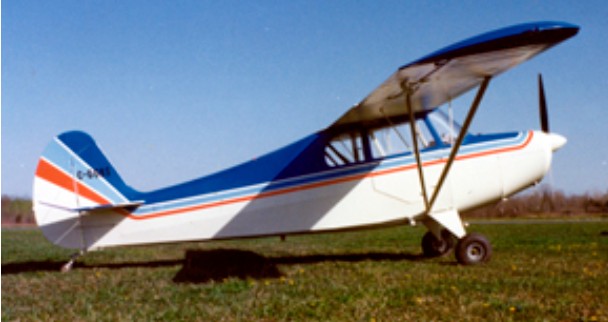
Christavia was designed by Ron Mason around the classic lightplane lines of yesteryear, but with updated performance. It was specifically designed with missionary flying in mind. Mason describes it as a con-ventional, high-wing, strut-braced monoplane easily converted from wheels to floats or skis. All materials are standard off-the-shelf or easily obtainable. Industrial mild steel tubing in the fuselage keeps costs at a minimum; all parts can be made in a small workshop with just hand tools and a welder. No machining is required.
The Christavia was designed in 1982 as a mission field workhorse. Design requirements were short take-off and landing, small engine (low fuel consumption), low stall speed, good cruise speed and rate of climb, large cabin area, low maintenance and high safety factor. The Christavia is easy to fly, and the Iarge cabin makes long flights very comfortable.
Christavia Mk.2
Over 1000 sets of the plans have been sold for the MK1 (two place tandem), MK2 (two place side-by-side), and Christavia MK4 (four place).
For the MK-2 side by side seating version of the MK-1, increase all crossmembers in the fuselage by 35% for approximate materials requirements. No separate materials list is available for the MK-2.
Christavia Mk.4
Aircraft Spruce & Specialty Co. has acquired the design rights to the popular Christavia MK1, Christavia MK2, and Christavia MK4 homebuilt aircraft from the designer, Ron Mason of Elmwood Aviation in Canada.
Mk.1 Engine: Continental, 65 hp HP range: 65-100 Height: 7 ft Length: 21 ft Wing span: 32.5 ft Wing area: 146.2 sq.ft Weight empty: 720 lbs Gross: 1500 lbs Fuel cap: 19 Imp.G Speed max: 118 mph Cruise: 105 mph Range: 315 sm Stall: 40 mph ROC: 900 fpm Take-off dist: 300 ft Landing dist: 600 ft Service ceiling: 14,000 ft Seats: 2 tandem Landing gear: tail wheel.
Mk.2 Seats: 2 Side by Side
Mk.4 Engine: Lycoming, 150 hp Height: 7 ft Length: 22 ft Wing span: 35.5 ft Wing area: 177.5 sq.ft Weight empty: 1100 lbs Gross: 2150 lbs Fuel cap: 37 Imp.G Speed max: 128 mph Cruise: 118 mph Range: 400 sm Stall: 40 mph ROC: 800 fpm Take-off dist: 450 ft Landing dist: 800 ft Service ceiling: 19,000 ft Seats: 4 Landing gear: tail wheel.
Maryland Pressed Steel built two designs of Joseph Bellanca, who in 1919 developed single-seat CD biplane powered by 35 hp Anzani engine, and the CE two-seat biplane. With the conclusion of WWI, Maryland Pressed Steel’s contracts were cancelled and the company entered into receivership.
Maryland Pressed Steel built two designs of Joseph Bellanca, who in 1919 developed single-seat CD biplane powered by 35 hp Anzani engine, and the CE two-seat biplane. With the conclusion of WWI, Maryland Pressed Steel’s contracts were cancelled and the company entered into receivership.