The Militi M.B.2 Leonardo is an Italian single-seat powered flying-boat glider version of Militi’s M.B.1 flying-boat glider, designed and built by Bruno Militi.
The Leonardo is a parasol-wing monoplane with a two-step hull and a fuselage of aluminium alloy, wood and fibreglass. The mixed construction wing is supported by two N-struts in the centre and a vee-strut outboard on each side, it has plain ailerons but no flaps. The pilot has an open cockpit with a small windscreen. The 42 hp (31 kW) modified Panhard motor car engine is strut-mounted above the wing centre section and drives a two-bladed fixted-pitch laminated wood pusher propeller.
The aircraft was first flown on 21 June 1970 and was exhibited at the 1972 Turin Air Show.
Engine: 1 × Modified Panhard two-cylinder four-stroke air-cooled motor car engine, 31 kW (42 hp) Wingspan: 8.14 m (26 ft 8½ in) Length: 5.91 m (19 ft 4¾ in) Width: 0.90 m (2 ft 11½½ in) Height: 2.20 m (7 ft 2½ in) Wing area: 11.40 m2 (122.7 ft2) Aspect ratio: 5.7 Empty weight: 145 kg (319 lb) Gross weight: 250 kg (551 lb) Maximum speed: 116 km/h (73 mph) Cruising speed: 80 km/h (50 mph) Stall speed: 55 km/h (34.5 mph) Range: 200 km (124 miles) Endurance: 2 hours 30 min Climb rate: 580 ft/min Service ceiling: 4000 m (13125 ft) Crew: 1
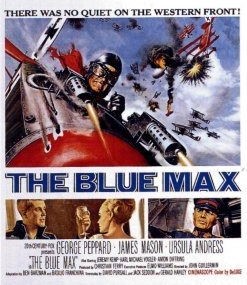
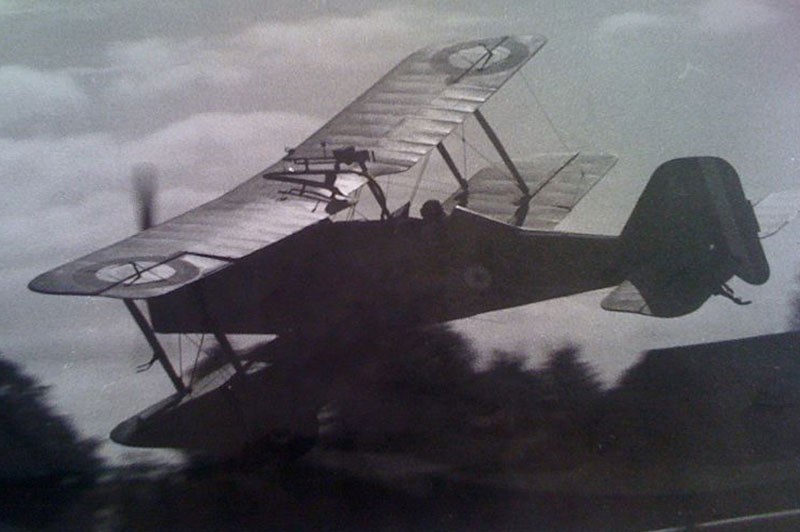
20th Century Fox purchased the film rights of Jack D Hunter’s “The Blue Max” and the film was to be a multi-million dollar production, and the stars were to be the full sized reproductions of World War I fighters constructed for the film- two Pfalz D.III biplanes, two Fokker Dr.I triplanes, two S.E.5a scouts and three Fokker D.VII biplanes.
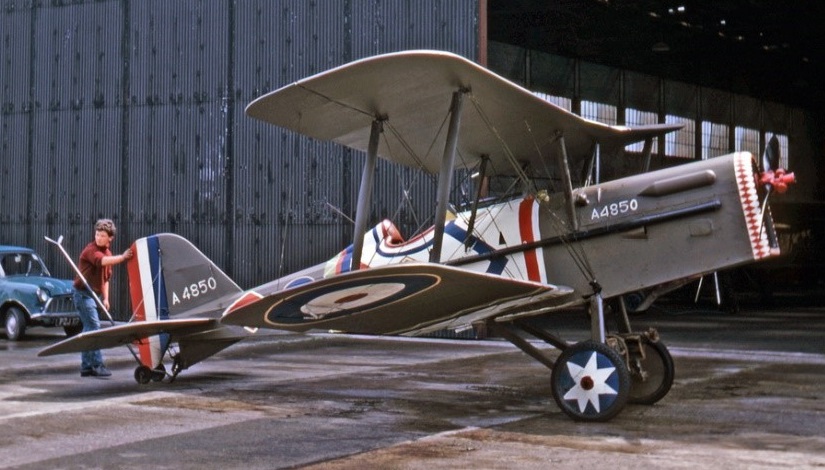
The reproductions had to be built in a hurry to meet the time frame for shooting and were constructed in different locations. Miles Marine and Structural Plastics Ltd of Shorham, constructed the steel tube fuselage S.E.5a reproductions in 1965. With a 200 hp De Havilland Gypsy Queen 3 engine installed, they were very manoeuvrable and reportedly easy to fly.
The two full-scale replica S.E.5a aircraft were transferred to the Irish civil aircraft register in 1967 while the two were employed in flying scenes for the 1966 war movie The Blue Max.
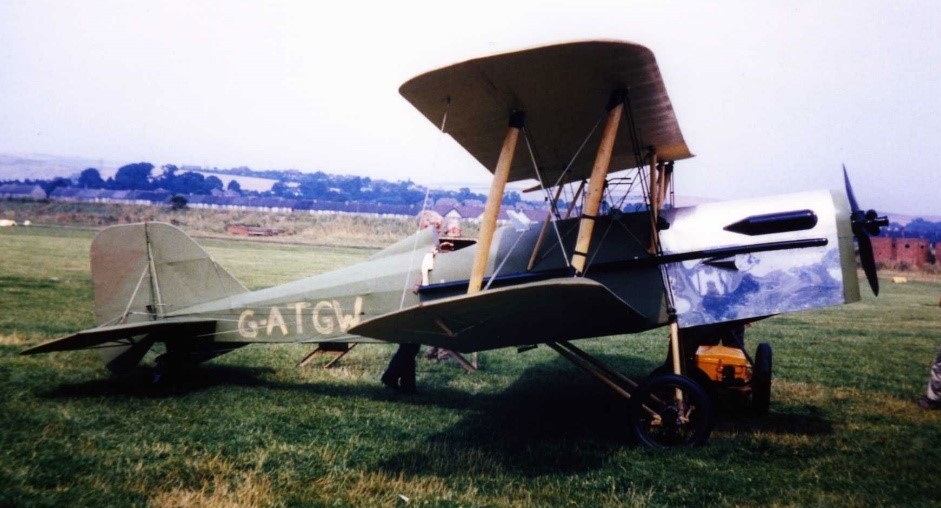
The SE.5 replicas built by Miles Marine and Structural Plastics Ltd, G-ATGV and G-ATGW, were both written off within a month of each other in 1970.
On August 18, 1970, while filming Zeppelin over the Irish Sea, SE.5 G-ATGW (shown here under construction at Shoreham) rammed the Aérospatiale Alouette II camera helicopter, the same one used to film The Blue Max. Both aircraft were destroyed and all crew members killed.
On September 15, 1970, while performing a low-level maneuver during the filming of von Richthofen and Brown at Weston, Charles Boddington struck the ground in SE.5 G-ATGV and was killed. Aircraft written off.
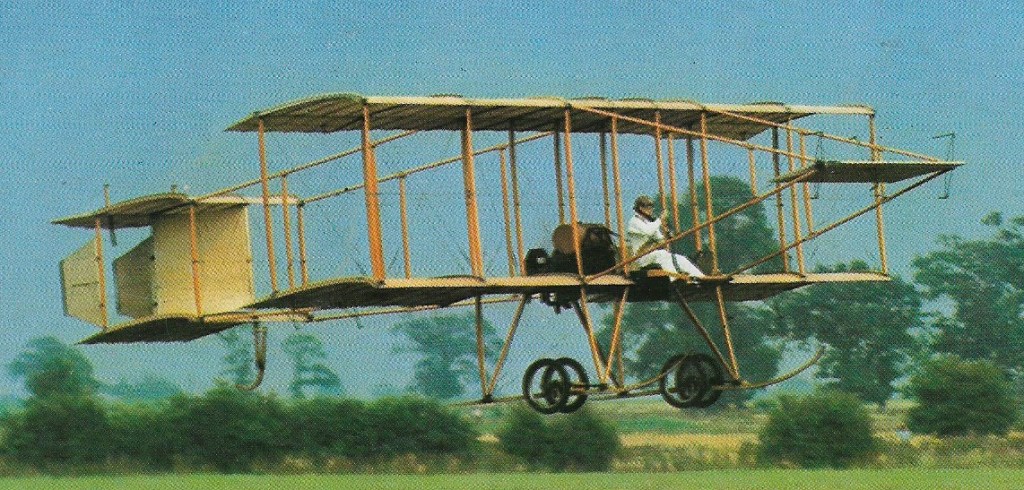
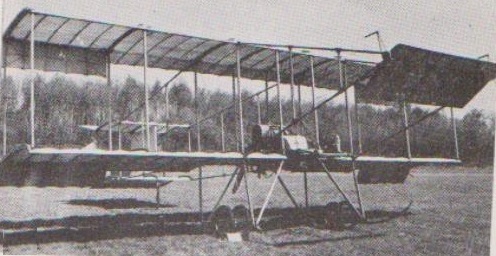
No original Bristol Boxkites aeroplanes survive today, although three authentic flyable reproductions were built by the F.G. Miles group for the film Those Magnificent Men in Their Flying Machines. Of 20 types built in 1964 at £5,000 pounds each, six could fly, flown by six stunt pilots and maintained by 14 mechanics.
The Phoenix Flyer Bristol Boxkite built by F.G. Miles Engineering Co. at Ford, Sussex, representing Curtiss biplane of 1910. Annakin had apparently expressed a desire to have a Wright Flyer in the film. The Bristol (a British derivative of the French 1909 Farman biplane) was chosen instead because it shared a common general layout with a Wright or Curtiss pusher biplane of the era, and had an excellent reputation for tractability. For the impersonation, the replica had “The Phoenix Flyer” painted on its outer rudder surfaces and was also called a “Gruber-Newton Flyer” adding the name of its primary backer to the nomenclature; although the American pilot character, Orvil Newton inaccurately describes his aircraft to Patricia Rawnsley as a “Curtiss with an Anzani engine.”
These were initially powered by a 65 hp (48 kW) Rolls-Royce Continental A65 air-cooled flat four, but this produced insufficient power, due to the shorter-stroke, higher-RPM mid-20th century engine, driving a small-diameter modern propeller, being inefficient at the low airspeed achieved by the Boxkite, which originally used the slower-revving Gnome Omega 50 hp seven-cylinder rotary engine.
F G Miles, chiefly responsible for its design and manufacture, built the replica Bristol Boxkite with the original standard twin rudder installation and powered the replica with a 65 hp Rolls-Royce A65. In the course of testing, Air Commodore Wheeler had a third rudder inserted between the other two (as did some original Boxkites) to improve directional control, and replaced the first engine with a Rolls-Royce C90 that barely delivered the power of the original 50 hp Gnome rotary, and provided a 45 mph top speed. The Boxkite was tractable and the scene in the story when the aircraft loses a pair of main wheels just after takeoff but lands smoothly was repeated 20 times for the cameras. In the penultimate flying scene, a stuntman was carried in the Boxkite’s undercarriage and carried out a fall and roll (the stunt had to be repeated to match the principal actor’s roll and revival). Slapstick stunts on the ground and in the air were a major element and often the directors requested repeated stunts; the stuntmen were more than accommodating – it meant more pay.
This resulted in the replacement of the 65 hp flat-four by a 90 hp (67 kW) Continental O-200-B engine. These proved flyable enough to be used for cross-country flights between filming locations. Another tribute to the soundness of the design is that the calculations made for the purpose of granting the necessary Certificates of Airworthiness found that the stressing of the design was very close to modern requirements.
Box 1 c/n BM.7279 RR/Continental A65, first flown April 1964 at Ford Re-engined with a RR/Continental C90. Flew in the film ‘The Phoenix Flyer’. Refurbished and presented to the Shuttleworth Trust in Bedfordshire, where it is still flown during flying displays when the weather permits. Allocated BAPC.2.
Box 2 c/n BM.7280 A65 then C90. Donated to Museum of Australian Army Flying in Queensland after filming.
Box 3 c/n BM.7281 Retained A65 as it was only used for studio shots and crash scenes. Refurbished after the film and donated to Bristol City Museum and Art Gallery, allocated BAPC.40.
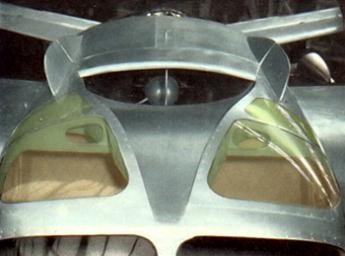
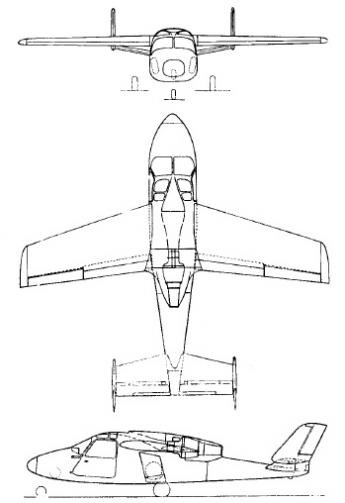
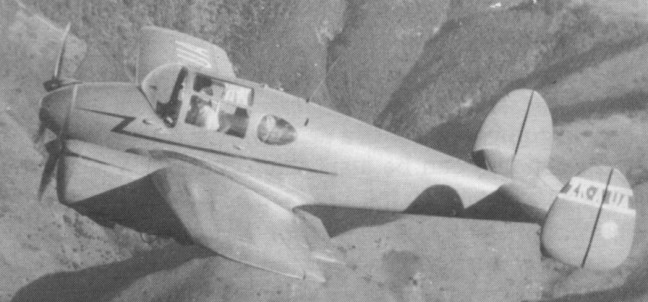
The Miles M.100 Student was built as a lightweight trainer as a private venture by F.G. and George Miles with development starting in 1953. In designing the M.100 the two brothers and their small team set out to produce an aircraft to do the same job as the Jet Provost for ab initio and flying instruction, but in a generally smaller design, to minimise acquisition and operatings costs.
With its accent on economy, the two-seat side-by-side all-metal M.100 was designed round a single Marboré IIA turbojet of only 880lb thrust for take-off, or little more than half the output of the initial Jet Provost’s 1640lb Viper ASV.5.
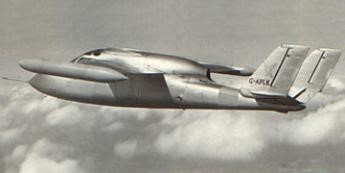
The Student flew on 15 May 1957, with the B Condition indentity G-35-4 on its fins, in hand of George Miles, its chief designer, at Shoreham. Maximum level speeds were just under 300 mph and 330 mph, respectively.
One of the main design features was the NACA-type flush intake above the wing centre-section for the Marboré centrifugal turbojet (for which Blackburn had a production licence). This intake’s location and shape minimised the possibilities of foreign object ingestion on the ground and in the air, at the expense of some loss in installed thrust.
To prevent overspill at high angles of attack, fences had been added each side after the first flight, to prevent overspill.
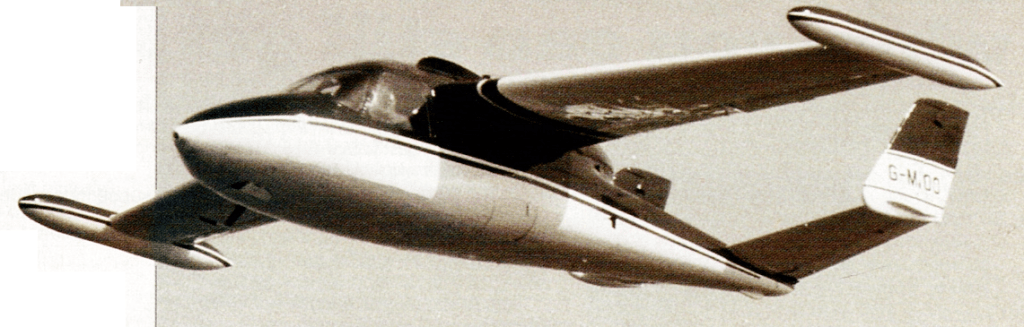
An uneventful flight development programme over the next few months, mostly by F.G. Miles Ltd test pilot ex-Sqn Ldr Duncan McIntosh, necessited non significant changes, and allowed the Student’s inclusion in the Farnborough programme in September 1957. At Farnborough 1957 the M.100 had the wing tips tanks removed. Miles had hoped to secure an RAF order, which in the event went to the Jet Provost, and the Student did not go into production. The Student was subsequently proposed for several training orders, but without success.
By 1958 the civil identity was G-APLK.
Early in 1964, the prototype Student was modified to the Mk. 2 version, incorporating a Marbore VI F turbojet giving 20 per cent greater thrust, interchangeable underwing pods for a variety of weapons, improved brakes and cockpit ventilation. In this guise, basic production price was £25,000. It was flight tested by George Miles on 22 April, 1964.
Student Mk.2
After taking off from Duxford in 1985 it suffered a catastrophic engine turbine failure and was seriously damaged in the forced landing.
In May 2000, after a long period of storage, members of the Museum of Berkshire Aviation at Woodley began rebuilding M.100 Student G-APLK/G-MIOO to static display.
Miles Student Engines: 1 x Blackburn Turbomeca Marbore 2 or 2 x Palas 600 Span: 29.2 ft (8.90 m) Length: 30.9 ft (9.38 m) Height: 6.3 ft (1.90 m) Empty, equipped: 2300 lb (1043 kg) Weight loaded: 3100 lb (1406 kg) Max loaded: 3600 lb (1630 kg) Max.wing loading: 26 lb/sq.ft (127 kg/m²) Max speed at S/L at 3100 lb: 290 mph (467 km/h) Max speed at 20000 ft at 3100 lb: 302 mph (486 km/h) Cruising speed at S/L at 3100 lb: 254 mph (409 km/h) Cruising speed at 20000 ft at 3100 lb: 268 mph (431 km/h) Landing speed at 3100 lb: 69 mph (111 km/h) Rate of climb at S/L at 3100 lb: 2050 ft./min (650 m/min) Time to 10 000 ft at 3100 lb: 5.7 min Time to 20 000 ft at 3100 lb: 14 min Take-off distance (50 ft) at 3100 lb: 1740 ft (530 m) Landing distance (50 ft) at 3100 lb: 1710 ft (520 m) Range: 476 miles (767 km)
In August 1947 Miles flew the M.71 Merchantman with four 186kW de Havilland Gipsy Queen 30 engines and a modified Marathon wing. Configuration was similar to that of the Aerovan, but the aircraft was of metal construction. The Merchantman could carry 2268kg of freight or 20 passengers over 1367km. The design was unable to proceed because of the firm’s collapse.
The Miles M.68 Boxcar, flown on 22 August 1947, had four 75kW Blackburn Cirrus Minor II engines and was basically of Aerovan layout, except that the centre section of the fuselage was designed to mount a detachable container 1.37m square and 3.05m long, the idea being that freight containers could be pre-loaded and the aircraft could be flown with or without the container attached.
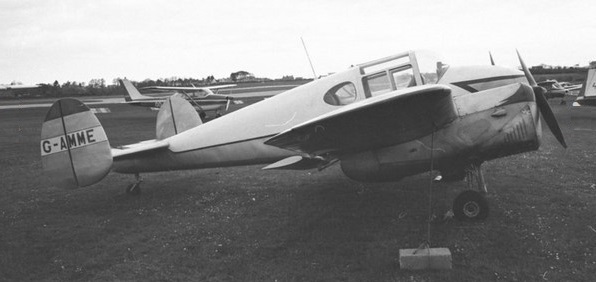
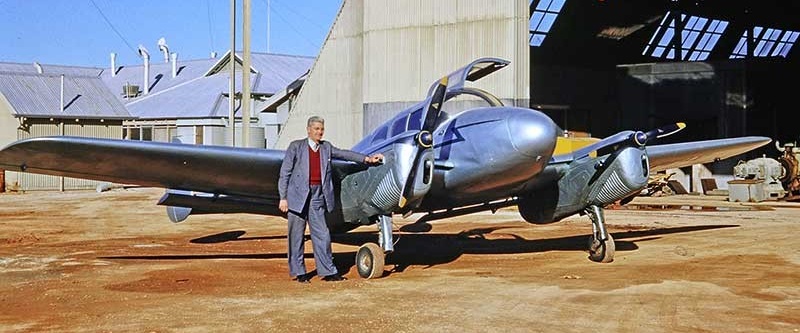
Conceived as a twin-engine retractable landing gear version of the Messenger, the Miles M.65 Gemini flew first on 26 October 1945 and was an immediate success. It was the last Miles aircraft to enter quantity production and in its Gemini Mk 1A initial form was powered by 75kW Blackburn Cirrus engines, and had non-retractable auxiliary trailing-edge flaps. About 150 were built in the first year of production.
One Gemini Mk 1B was built with retractable flaps.
The single Gemini Mk 2 was created by installing 93kW Continental engines, while production Gemini Mk 3A aircraft had 108kW de Havilland Gipsy Major 10s. There were several sub-variants with detail differences, but the most powerful version with two 116kW Blackburn Cirrus Major III engines, a strengthened structure and larger fins and rudders, was deemed sufficiently different to be designated M.75 Aries.
M.75 Aries
A total of 170 Geminis and two Aries were built, around two-thirds of them being exported, before the company collapsed in 1947.
Miles Gemini VH-AKV flown by Perth businessman Mr.O. Odegaard during a stop at Forrest, Australia, in 1955
M.65 Gemini Engines: 2 x 100 hp Blackburn Cirrus Minor Wing span: 11.02 m / 36.1 ft Length: 6.78 m / 22.25 ft Weight empty 1,900 lb / 860 kg Cruise speed: 125 mph / 200 kph Ceiling: 13,500 ft / 4,100 m Range: 820 miles / 1,320 km Seats: 4
M.75 Aries Engines: 2 x 116kW Blackburn Cirrus Major III
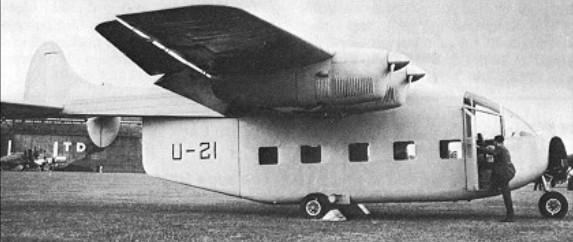
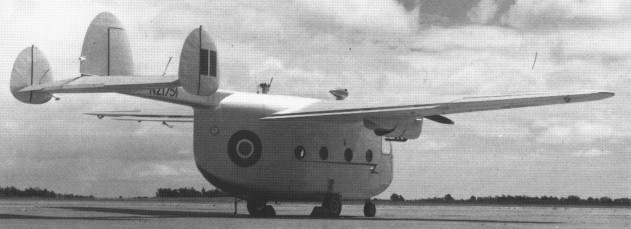
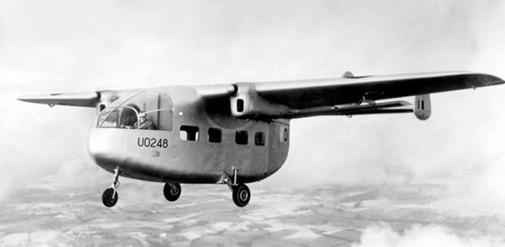
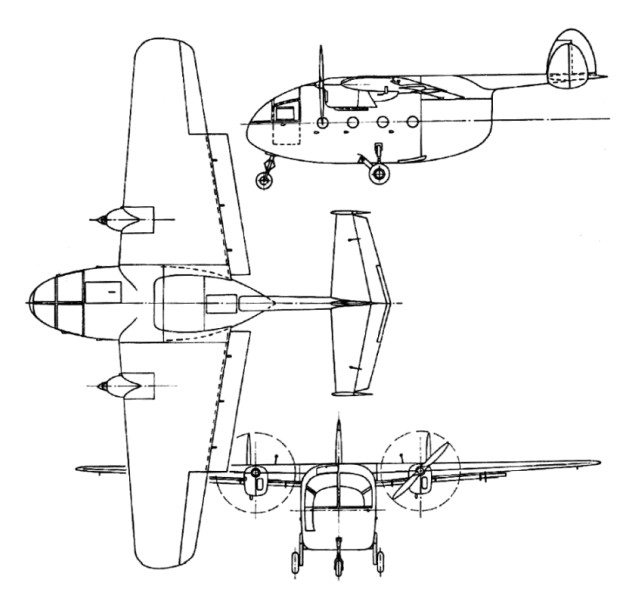
One unusual design was the Miles M.57 Aerovan, a twin-engine light freighter which flew first in January 1945. The wings and tail unit were similar to those of the Messenger, but larger, while the fuselage was of pod and boom layout.
A number of UK and overseas orders were placed and the Aerovan entered production with a longer pod than the prototype, which was designated Aerovan Mk I, and the second prototype the Aerovan Mk II.
The first Aerovan Mk III production model was similar to the Mk II, and seven were built with 112kW Blackburn Cirrus Major III engines, the standard Aerovan powerplant. The next version, the Aerovan Mk IV, differed in detail and 40 were built. One Aerovan Mk V with 108kW de Havilland Gipsy Major 10 engines and two Aerovan Mk VI aircraft with 145kW Avco Lycoming O-435-4A engines were built; one of the latter was fitted with an experimental Hurel-Dubois high aspect ratio wing in 1957 when it became known as the HDM.105. The last known surviving Aerovan was the first Mk VI, operating in Italy in 1968, although a pair of uncompleted airframes were around for some years.
The only military operators of the type were the Israeli Air Force and Royal New Zealand Air Force.
Variation: Hurel-Dubois HDM.105
Aerovan IV Engines 2 x 155 h.p Blackburn Cirrus Major III 155hp Length 36 ft 0 in / 10.97 m Wing span 50 ft 0 in / 15.24 m Height: 13 ft 6 in Weight empty 3,410 lb / 1,546 kg MAUW: 5800 lb Max speed: 127 mph @ SL Max cruise: 110 mph / 180 kph Ceiling 13,000 ft / 4,000 km fully loaded Range 450 miles / 720 km Pax cap: 8 / or 2,000 lb / 900 kg freight Crew: 2
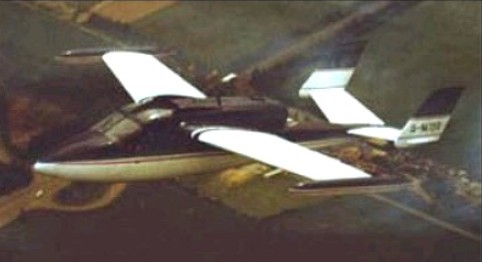
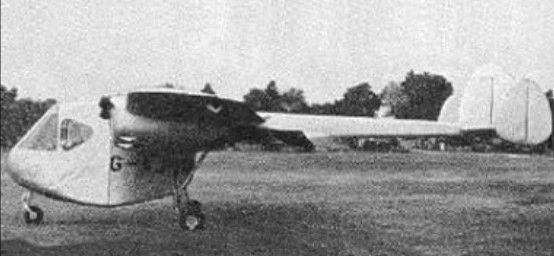
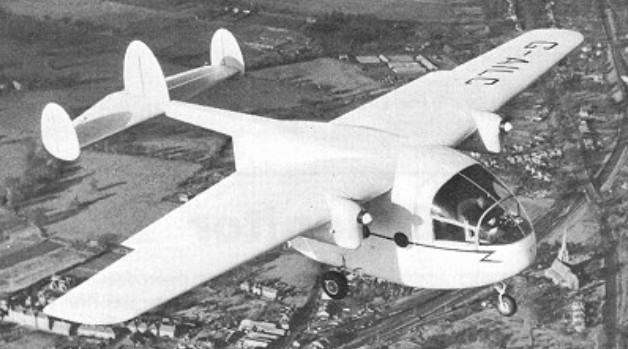
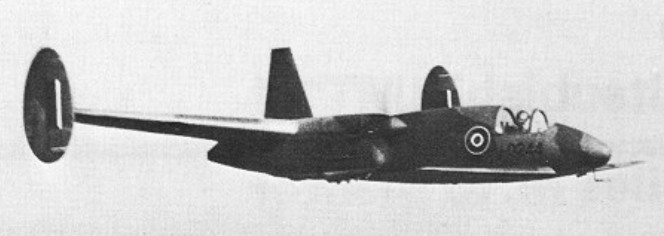
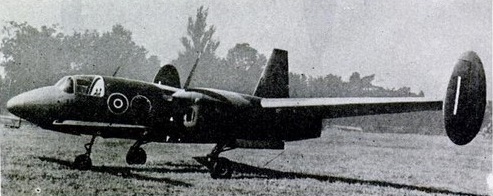
The M.35 was completed and flown in six weeks but proved to be unstable. Wind tunnel tests showed the problems to be curable and George Miles conceived a heavy bomber, the M.39, to be powered by three turbojet engines, or in its initial form with two high-altitude Rolls-Royce Merlin 60s or Bristol Hercules VIIIs.
A five-eighths scale model of the bomber was built and designated M.39B, flying for the first time on 22 July 1943 and proving to be aerodynamically stable. Flight trials were initially on a private basis, but in 1944 the M.39B went to the Royal Aircraft Establishment at Farnborough, where it suffered two accidents. After extensive repairs the work ended.
M.39B Libellula Engines: 2 x de Havilland Gipsy Major 1C, 104kW Wingspan: 11.43 m / 37 ft 6 in Length: 6.76 m / 22 ft 2 in Height: 2.82 m / 9 ft 3 in Wing area: 23.15 sq.m / 249.18 sq ft Max take-off weight: 1270 kg / 2800 lb Empty weight: 1091 kg / 2405 lb Max. speed: 264 km/h / 164 mph