Zlin Z-37 Cmelak / OK-60 / Bumble Bee / Z-237

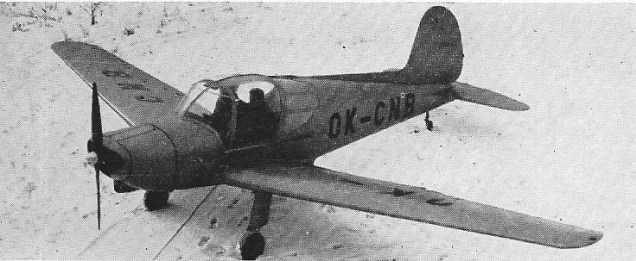
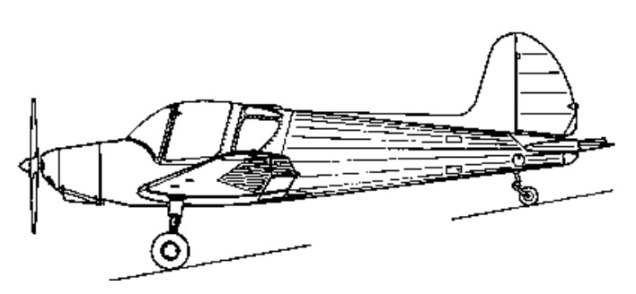
The XZ-37 was first flown as OK-60 on 29 June 1963. Powered by a 310 hp Ivchenko Al-14VF, the aircraft went into production as a joint venture between Moravan and SPP at Kunovice in 1966. The Zlin Z-37 Cmelak was fitted with a 315 hp Walter M-462RF radial, a licence-built version of the Ivchenko AI-14.

Zlin Z-37 Brochure

Z-37

In 1967, the first Z-37s were exported to East Germany and Yugoslavia. The Z-37A was an improved version from 1971 with stronger and more corrosion-resistant airframe and other changes. Both featured an auxiliary seat behind the hopper.

As in the West, the swing to turbines was noticed by Moravan and a new aircraft, the XZ-37T, was built at Otrokovice and made its maiden flight on 6 September 1981. It was powered by a 691-shp Walter M-60lB. Two more prototypes were completed in 1983, these powered by a 483-shp M-601Z turbine. Certification under BCAR (British Civil Air Regulations) was received in 1984 and production was started in 1985 as the Z-37T Agro Turbo. Two Z-37T-2 two-seat trainers were completed in 1987. An upgrade of the Z-37 with increased engine power followed and, although the aircraft was designated the Z-137T, the same type certificate is used. A total of 713 piston engined aircraft were built with the last being 25-40.

Z-37
Engine: M 462 RF, 315 hp
Span: 40’ 01” / 12.22 m
Length: 28’ 0.5” / 8.55 m
Height: 9’ 10”
Wing area, 256 sq.ft
Empty weight 2,295 lb / 1043 kg
MTOW normal: 3,855 lb / 1750 kg
Cruise 4920 ft / 1500 m: 99 kt / 114 mph / 183 kph
ROC SL: 925 fpm / 282 m/min
Service ceiling: 13,125 ft / 4000 m
Range w/1 hr +10% res: 345 nm / 398 mi / 640 km
Seats: 1 crew + 1 pax

Z-37 Ag
Engine: M 462 RF, 315 hp
Span: 40’ 01” / 12.22 m
Length: 28’ 0.5” / 8.55 m
Height: 9’ 10”
Wing area, 256 sq.ft
Empty weight 2,295 lb / 1043 kg
MTOW: 4089 lb / 1850 kg
Cruise 4920 ft / 1500 m: 92 kt / 106 mph / 170 kph
ROC SL: 728 fpm / 222 m/min
Hopper capacity: 143 Imp.Gal / 650 lt / 1323 lb / 600 kg
Hopper / cargo volume: 63.5 cu.ft / 1.8 cu.m

Let Z 37 A Cmelak
Engine : Avia M 462 RF, 306 hp
Length : 28.215 ft / 8.6 m
Height : 9.514 ft / 2.9 m
Wingspan : 40.026 ft / 12.2 m
Wing area : 256.183 sqft / 23.800 sq.m
Max take off weight : 4079.3 lb / 1850.0 kg
Max. speed : 108 kts / 200 km/h
Cruising speed : 100 kts / 185 km/h
Initial climb rate : 787.40 ft/min / 4.00 m/s
Service ceiling : 13287 ft / 4050 m
Wing load : 15.99 lb/sq.ft / 78.00 kg/sq.m
Range : 346 nm / 640 km
Crew : 1-2

Z-37T
Engine : Walter M 601 Z, 360-483 shp
Length: 34.449 ft / 10.5 m
Height: 11.483 ft / 3.5 m
Wingspan : 44.619 ft / 13.6 m
Wing area : 287.399 sqft / 26.7 qm
Max take off weight : 5567.6 lb / 2525.0 kg
Weight empty : 2756.3 lb / 1250.0 kg
Max. weight carried : 2811.4 lbs / 1275.0 kg
Max. speed : 118 kts / 218 km/h
Landing speed : 42 kts / 77 km/h
Cruising speed : 103 kts / 190 km/h
Initial climb rate : 826.77 ft/min / 4.20 m/s
Wing load : 19.48 lb/sq.ft / 95.00 kg/sq.m
Range : 189 nm / 350 km
Crew : 1

Z-37T-2
Seats: 2

Z-237

Zlin Z-26 Trener / Z-126 / Z-226 / Z-326 Trener-Master / Z-526 / Z-726

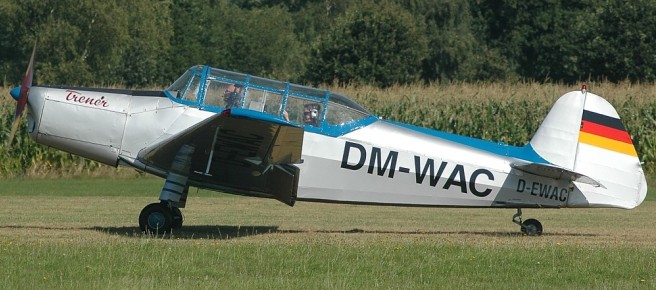
Zlin 326 Trener-Master

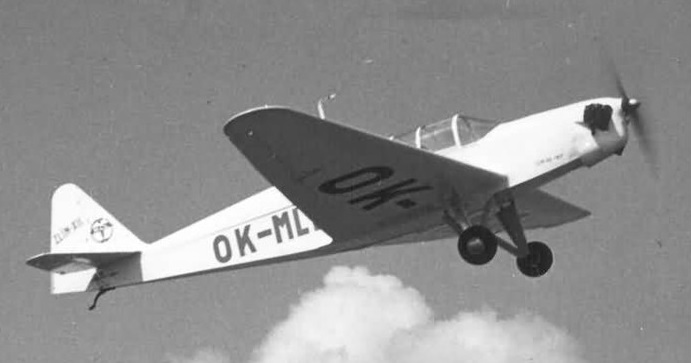
Designed and built in 1947, the Zlin 26 all-wood two-seat tandem trainer was superseded by the metal Zlin 126 Trener, which went into production in 1953.

Z-26 Trener prototype with pilot L.Šváb

The basic design was developed subsequently through Z 226, Z 326 Trener Master in 1957.

The Zlin 26 all-wood two-seat tandem trainer was superseded by the metal Zlin 126 Trener, which went into production in 1953.

Zlin Z-126 Trenér 2
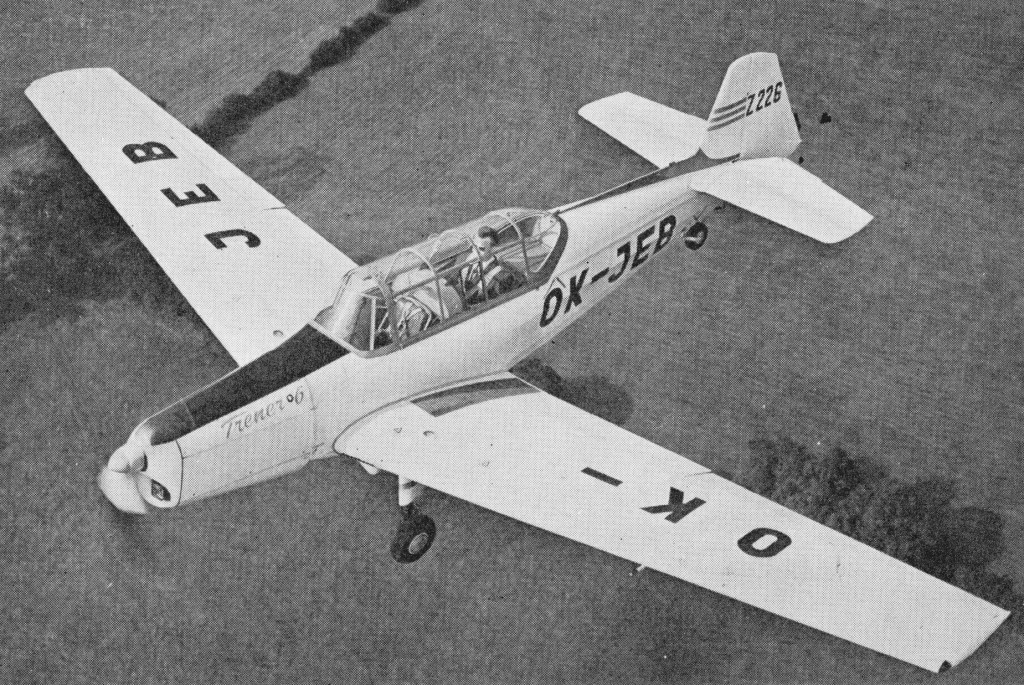
Zlin 226 Trener
Z-326 Trener Master

Zlin built 433 Z-326s.

Zlin developed the Z 526 in 1965, and Z 726 models in both Trener (two-seat) and Akrobat (single-seat competition aircraft) variants with retractable landing gear and a variety of engines. 330 Z-526s were built.

Z-526

Production included the Z 726 trainer development of the Z-526.

As one of the world’s foremost aerobatic aircraft, the Zlin was also widely exported outside the Eastern bloc.

Gallery

Variants:

Z-26
Initial wood version

Z-126 Trener
Metal version of Z-26

Z-226A Akrobat
Fully Aerobatic version of Z-22T
Seats: 1

Z-226AS Akrobat Special
Fully Aerobatic version of Z-22T
Seats: 1

Z-226B Bohatyr
Glider towing version of Z-226T

Z-226T Trener-6
Development of Z-126

Z-326
Engine: Walter Minor 6-III, 116 hp
Wingspan: 34.777 ft / 10.6 m
Wing area: 166.304 sq.ft / 15.450 sq.m
Length: 25.656 ft / 7.82 m
Height: 6.759 ft / 2.06 m
Max take off weight: 1984.5 lb / 900.0 kg
Weight empty: 1404.6 lb / 637.0 kg
Max speed: 132 kt / 245 km/h
Cruising speed: 116 kt / 215 km/h
Initial climb rate: 866.14 ft/min / 4.4 m/s
Service ceiling: 15748 ft / 4800 m
Wing load: 11.89 lb/sq.ft / 58.0 kg/sq.m
Range: 313 nm / 580 km
Normal crew: 2
Aerobatic crew: 1

Z-326A Akrobat
Fully aerobatic version of Z-326

Z-526 Trener-Master
Development of Z-326
Pilot at rear
Prop: constant speed

Z-526A Akrobat
Fully aerobatic version of Z-526
Engine: Walter Minor 6-III K, 158 hp

Z-526AS Akrobat Special
Fully aerobatic version of Z-526

Z-526L
Engine: 1 x Lycoming AIO-360-B1B, 200 hp
Gross wt: 2175 lb
Empty wt: 1489 lb
Fuel cap: 151/262 lb
Equipped useful load: 585 lb
Payload max fuel: 323 lb
Wing loading: 12.5 lb/sq.ft
Pwr loading: 10.9 lb/hp
Range max fuel/75% pwr: 556nm/3.3hr
Service ceiling: 18,000 ft
75% cruise: 139 kt
Stall: 46-53 kt
1.3 Vso: 60 kt
ROC: 1380 fpm
Min field length: 1050 ft
Seats: 2

Z-526 AFS Akrobat
Single seat version of Z-526F
Engine: Walter Minor 6-III M-137, 130 hp
Wingspan: 29.003 ft / 8.84 m
Wing area: 148.651 sq.ft / 13.81 sq.m
Length: 25.361 ft / 7.73 m
Max take off weight: 1631.7 lb / 740.0 kg
Weight empty: 1334.0 lb / 605.0 kg
Max. speed: 132 kt / 245 km/h
Cruising speed: 116 kt / 215 km/h
Initial climb rate: 1574.8 ft/min / 8.0 m/s
Service ceiling: 16732 ft / 5100 m
Wing load: 11.07 lb/sq.ft / 54.0 kg/sq.m
Range: 421 nm / 780 km
Crew: 1

Z-526 F Trener
Engine: Avia M 137 A, 180 hp
Wingspan: 34 ft 9 in / 10.60 m
Wingspan over tip tanks: 35 ft 11.5 in / 10.96 m
Length: 26 ft 3 in / 8.00 m
Empty weight: 1465 lb / 665 kg
MTOW Aerobatic: 2072 lb / 940 kg
MTOW normal: 2150 lb / 975 kg
Max cruise max norm TOW: 113 kt / 130 mph / 210 kph
ROC SL max norm TOW: 1181 fpm / 360 m/min
Service ceiling max norm TOW: 17,060 ft / 5200 m
Max range std fuel max norm TOW: 255 nm / 295 mi / 480 km
Max range w/tiptanks max norm TOW: 450 nm / 520 mi / 840 km
Seats: 2 tandem
Glider tow option

Z-726 Universal
Similar to Z-526F, shorter wing span
Engine: M 137 AZ, 180 hp

Zlin 526 AFS

Zlin Z-22 Junak / Z-122

Zlin 22

The Zlin 22 appeared in 1947 as a two-seat trainer, powered by a Zlin Persy III engine of 57 hp.

When production of the Persy engine was discontinued, the Zlin 22 was re-engined with a 75 hp Praga D as the Zlin 22D, and a 105 hp Walter Minor 4-III as the three seat Zlin 22M.

Two prototypes of the Zlin 122 version were produced. Three/four seat, they were powered by a 105 hp Zlin Toma 4 engine.

Zlin 22
Engine: Zlin Persy III, 57 hp
Wingspan: 34 ft 9 in
Length: 23 ft 9 in
Height: 6 ft 5 in
Wing area: 157.7 sq,ft
Seats: 2

Zlin 22D
Engine: Praga D, 75 hp
Wingspan: 34 ft 9 in / 10.6 m
Length: 23 ft 9 in / 7.25 m
Height: 6 ft 5 in
Wing area: 157.7 sq,ft / 14.6 sq.m
Empty weight: 804 lb / 365.0 kg
Loaded weight: 1399 lb
Wing load: 8.2 lb/sq.ft / 40.0 kg/sq.m
Max speed: 112 mph / 95 kts / 176 km/h
Cruise: 100 mph / 84 kts / 155 km/h
Service ceiling: 13,780 ft / 4200 m
Range: 435 mi / 270 nm / 500 km
Seats: 2

Zlin 22M
Engine: Walter Minor 4-III, 105 hp
Wingspan: 34 ft 9 in
Length: 23 ft 9 in
Height: 6 ft 5 in
Wing area: 157.7 sq,ft
Empty weight: 926 lb
Loaded weight: 1588 lb
Max speed: 133.5 mph
Cruise: 121 mph
Ceiling: 18,040 ft
Range: 620 mi
Seats: 3

Zlin 122
Engine: Zlin Toma 4, 105 hp
Seats: 3-4

Zlin Z 22 Junak

Zlin Z-XII / Z-212 Tourist

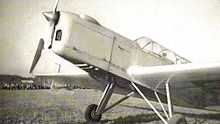
The Zlín Z-XII was a Czechoslovak twin-seat sports aircraft and the first major design success by the Zlínská Letecká Akciová Společnost (Zlín) aircraft manufacturing company after its founding in Otrokovice after the takeover by the Bata Group.

The low-wing all-wooden aircraft was designed by Jaroslav Lonek. Two prototypes, with different engines, were presented in April 1935. These were subjected to an extensive test program.

The Z-XII, equipped with a 33 kW (44 hp) ZLAS or 47 kW (63 hp) Zlin Persy II engine emerged as the winner from the tests. The Z-212 was an improved version, equipped with a Walter Mikron engine. The aircraft could also come with an open cockpit or with a cockpit hood.

Zlin XII with open cockpit.

It was a very popular aircraft and it was exported to many countries including Czechoslovakia, Egypt, France, Hungary, Japan, Italy, Romania, Sweden, and South Africa.

Production of the Z-212 ran under German supervision after the occupation of Czechoslovakia. The German Luftwaffe operated Z-XIIs and Z-212s until 1943, and about 20 Z-XIIs went to Slovakia with Slovenské vzdušné zbrane. One aircraft was impressed into Yugoslav Royal Air Force military service in April 1940. The Czechoslovak Air Force operated this type post war under designation K-72. One Zlin 212 Tourist was impressed into service in India in 1942.

Zlín XII, aerodrom Zlín

One Z-212 was captured by the Americans at the end of World War II. It was later used for sightseeing flights. Another Z-XII survived the war, being disassembled into parts in Otrokovice. It was later rebuilt and flew with the registration OK-ZJD.

Zlin 212
Z-XII

A total of 201 Z-XII and 58 (other sources mention 51) Z-212 were built. Replicas of Z-XII and Z-212 have been built.

Z-XII
Engine: 1 × Zlin Persy II, 45 kW (61PS, 60hp)
Length: 7.80 m (25.59 ft)
Wingspan: 10.00 m (33 ft)
Wing area: 12 m²
Empty weight: 290 kg (639 lbs)
Loaded weight: 520 kg (1,146.40 lbs)
Maximum speed: 155 km/h (96 mph)
Cruise speed: 135 km/h (84 mph)
Range: 300 km (186 mi)
Service ceiling: 3,800 m (12,467 ft)
Rate of climb: 3 min to 270 m
Crew: 2

Zivko Aeronautics Edge 540

Carbon fibre is the material of choice for Zivko Aeronautics. The cowl, the fairings, the instrument panel and even the wheel pants are all carbon fibre, as is the canopy frame which has the perspex moulded into it. Traditional tubular steel is used for the fuselage, engine mount and empennage. The Edge 540 has balancing spades on its large ailerons, which run almost three-quarters the length of the wing. These essentially take the load of the ailerons (off the stick) so it doesn’t matter what speed you’re flying, you can get full aileron with relative ease. The generous ailerons give the aircraft a roll-rate of about 420 deg a second. Weights and performance vary from aeroplane to aeroplane.

First flying in 1996, eight had been sold by the end of 1997 at $177,407.

Two versions were available, the Edge 540 (single place) and Edge 540-T (two place).

Gallery

Engine: Lycoming 350 hp
Prop: Hartzell
Loading: +10
Empty wt: 1200 lbs
ROC: 3700 fpm

Zipfel No. 1

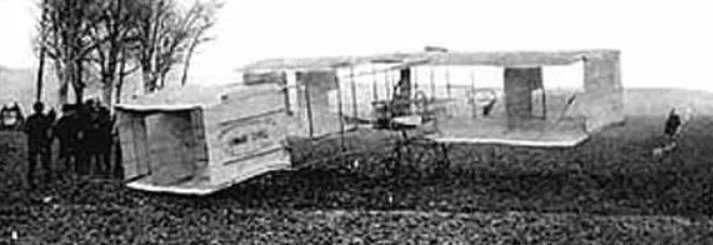
Armand Zipfel was a neighbour and youth friend of the Voisin brothers. After witnessing the flights of Henry Farman he decided in early 1908 to build a motorized airplane. He started the “Ateliers d’Aviation de Sud Est” and was allowed to use the drawings of the Voisin plane. He made his first flights at Villeurbaine, east of Lyon, in November 1908, becoming the sixth Frenchman to fly. He then toured Europe displaying the machine during 1909, visiting Berlin, Constantinople and Lisbon, also making an unsuccessful appearance at the Vichy Aviation meeting. After another visit to Germany in early 1910 he appears to have stopped flying in public.

Zimmerman Flying Pancake

Wind tunnel testing (NACA)

The 1935 single place low-aspect-ratio “flying pancake” developed in off-times by C H Zimmerman, John McKellar, and Richard Noyes, then with NACA, for design competition with Ercoupe and Stearman- Hammond. US patent #2,108,093 was issued to Zimmerman in 1938. Although rejected by NACA at too radical, despite its potential as a stall-proof airplane, elements of the design surfaced later in Vought V-173 and Vought-Sikorsky XF5U-1.

Unable to synchronize the motors, rather than risk an accident the project was abandoned and it never flew.

Engines: 2 x 25hp Cleone
Wingspan: 7’0″
Seats: 1