Montgomerie Merlin / Layzell Merlin

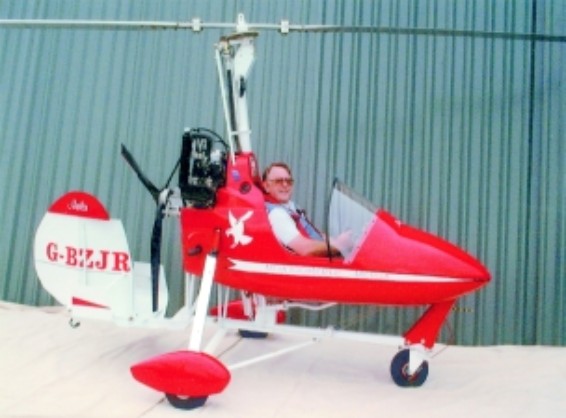
Bensen’s Gyrocopter is the design-ancestor to the Merlin’s bolted 2×2 aluminum tube frame and streamlining is the modern Merlin’s anthem. Two fuel tanks are foamed in place behind the pilot and together hold 11 US gal. Partially enclosed, it has capacity for one. Sprung main wheel suspension struts w/intergral gas shock absorbers.

2001 Kit price without engine, rotors, propeller or instruments: approximately $5338.98 (U.S. dollars). Kits were supplied to the US market less rotors, gimbal head, engine, propeller and instruments.
Jim Montgomery’s design was produced by Layzell Gyroplanes of Quedgeley, Gloucester. The aircraft was supplied as a kit for amateur construction. After taking over Montgomery’s design, company owner Gary Layzell expressed an interest in further developing the Merlin, but initially produced it unchanged.

The aircraft fuselage is made from bolted-together square aluminum tubing. Its 7.01 m (23.0 ft) diameter Rotor Flight Dynamics rotor has a chord of 18 cm (7.1 in).
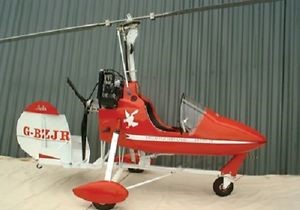
The type remained in production by Layzell through 2011, although by July 2012 the company website had been removed from the internet. The unit cost in 2011 was £12,761.

By January 2013, 28 examples had been registered in the United Kingdom with the CAA as Montgomerie-Bensen B8MR.

Engine: 65 hp Rotax 582
Prop: 60” GSC 3 blade ground adjustable / 60″ Ivoprop 3-blade ground adjustable
Rotor blades: 23’ Rotordyne bonded aluminium
Width: 6’7”
Height: 7’3”
Length: 12’6”
Width 6′ 7″
Empty Weight 298 lbs
Useful Load 352 lbs
Gross Weight 650 lbs
Min Speed 20 mph
Cruise 80 mph
Top Speed 100 mph

Engine: Rotax 582, 64 hp
Rotor span: 7.05 m
Blade area: 0.203 sq.m
MAUW: 300 kg
Empty weight: 174 kg
Fuel capacity: 30 lt
Max speed: 140 kph
Cruise speed: 90 kph
Seats: 1
Fuel consumption: 15 lt/hr
Kit price (1998): £11,721

Layzell Merlin GTS
Engine: 1 × Rotax 582, 48 kW (64 hp)
Propeller: 3-bladed composite
Main rotor diameter: 7.01 m (23 ft 0 in)
Empty weight: 145 kg (320 lb)
Gross weight: 295 kg (650 lb)
Fuel capacity: 50 litres (11 imp gal; 13 US gal)
Useful load: 150 kg (331 lb)
Cruise speed: 120 km/h (75 mph; 65 kn)
Rate of climb: 4.5 m/s (890 ft/min)
Crew: one
Montana Coyote Mountain Eagle

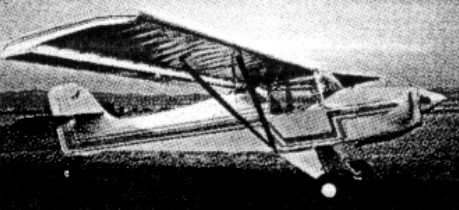
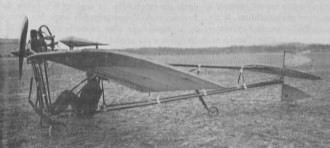
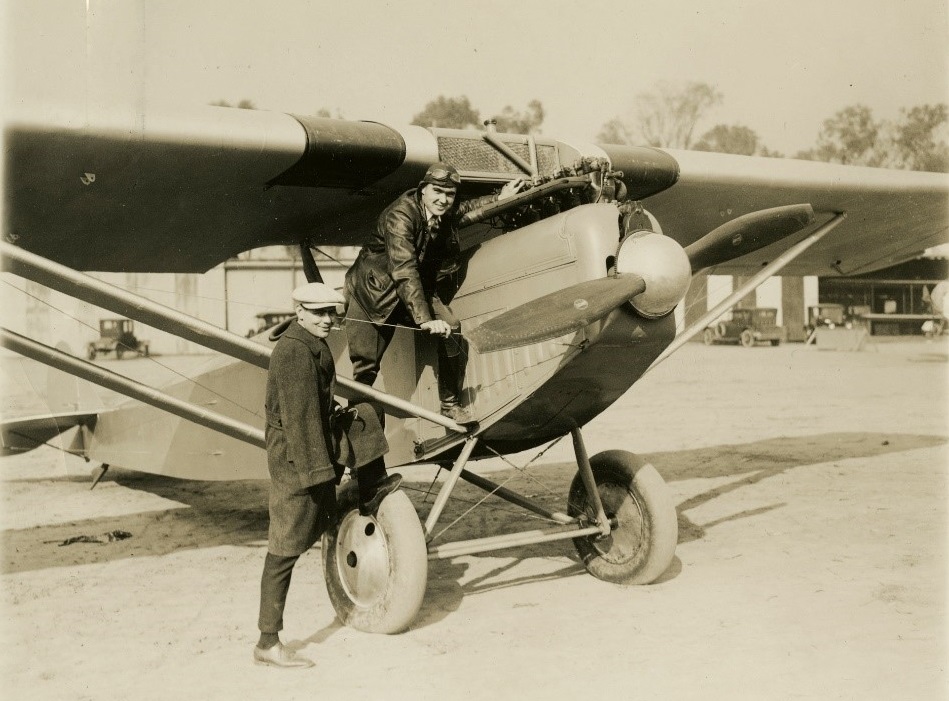
A 1994 two-seat cabin monoplane, revision of the 1991 Montana Coyote design.

Engine: Lycoming O-320, 150 hp
Height: 6 ft
Length: 25 ft
Wing span: 37 ft
Wing area: 137 sq.ft
Weight empty: 1100 lbs
Gross: 2000 lbs
Fuel cap: 40 USG
Speed max: 125 mph
Cruise: 105 mph
Range: 450 sm
Stall: 35 mph
ROC: 1250 fpm
Take-off dist: 350 ft
Landing dist: 300 ft
Service ceiling: 15,000 ft
Seats: 2
Landing gear: tail wheel

Monsted-Vincent Starflight

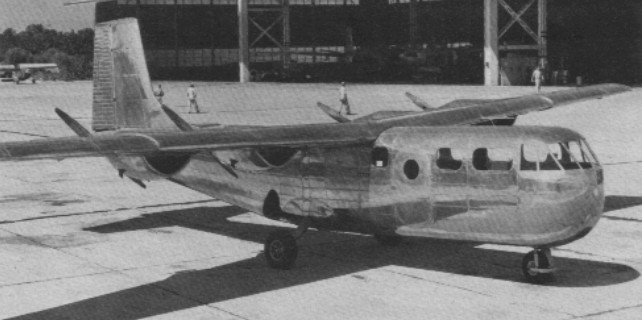
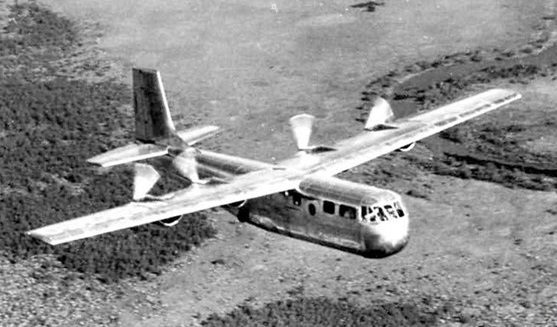
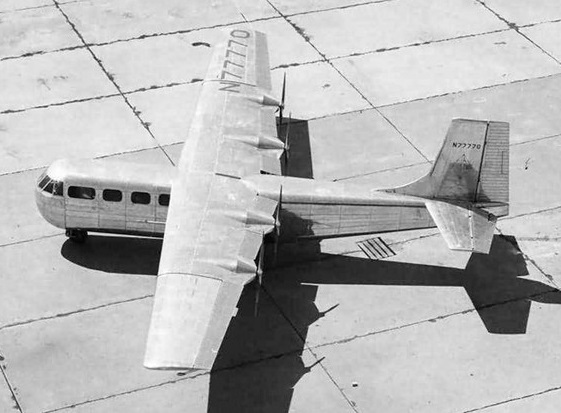
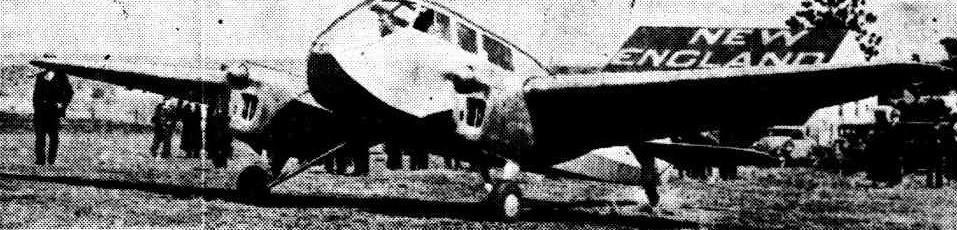
The 1949 Monsted Vincent Starflight featured four 85 horsepower Continental C85s driving two position pusher props. It had room for a pilot, four passengers. Gross weight was 5,000 pounds with a 130 knot cruise and 1,050 nautical mile range. It was built in New Orleans.

The all-aluminum Monsted–Vincent MV-1 Starflight pusher airplane was the only four-engined aircraft ever to be built in Louisiana. It was to be an executive/business aircraft, designed by former Lockheed designer Art Turner “to give businessmen the same dependability and flying range that airlines give to their passengers.”

The only Starflight flew for the first time in October 1948. Despite having four engines, the Starflight could only carry 5 passengers and the pilot. It had a range of 1,200 miles at 145 mph, making it a terrible aircraft for businessmen who are looking for speedy travel.

The only copy ended up at the Wedell Williams Memorial Aviation Museum in Patterson, Louisiana, USA, where, in 1992, it was heavily damaged by Hurricane Andrew. The wreck was moved to a storage hangar, where in 2005, it was destroyed by Hurricane Rita.

Monowing Arup

In a chiropodist’s surgery in the town of South Bend, Indiana, on a spring day in 1926, Doctor Cloyd Snyder casually flipped a felt heel support across his office and marvelled at the way in which it skimmed through the air. Inspired by that most mundane of objects, he began to experiment with heel¬shaped model aircraft wings and, like Lee and Richards before him, discovered that circular and semicircular wing sections possessed interesting properties. Not only did his models remain stable at extreme angles of attack, but they could even be made to pitch end over end and recover in level flight.

Snyder soon had visions of a huge 30.5 m (100 ft) span ‘heel’ plane, with a wing 4.57 m (15 ft) thick in which passengers would sit viewing the world through a clear plastic leading edge. He joined forces with woodwork students at a local high school to build a full size glider prototype which one observer described as ‘a mussel with a man in it’. The heel shaped glider made its first flight in 1932 with a South Bend policeman at the controls and Snyder’s family automobile towing it on the end of a 61 m (200 ft) rope. The local officer’s role as test pilot lasted for just one flight, whereupon Glen Doolittle, cousin of Jimmy Doolittle, took over and flew the weird craft regularly throughout that summer.

Snyder needed two things to proceed with further development of his idea: an engine and money. A Henderson Heath aero engine solved the first problem, though its meagre 26 hp was barely adequate. To help with finance Snyder set up a stock company, the Monowing Corporation, and immediately laid plans for a second aircraft, which he called Arup a phonetic combination of ‘air’ and ‘up’ which he hoped would convey the machine’s potential.

The second Arup was powered by a 36 hp Continental A 40 engine and had a 4.88 m (16 ft) span wing. To get aboard the aircraft its pilot had to clamber through a trap door let into the underside and crawl up into his seat, from where in flight he could look into the interior of the wing. This Arup flew very well, and its appearance coincided with a search by the US aviation authorities for a cheap ‘flying flivver’ to do for aviation what Henry Ford ‘ s Model T had done for automobiles. Snyder and Doolittle went off to Washington with the Arup and demonstrated it to the CAA, the National Advisory Committee for Aeronautics, the Army Air Force, the Navy Air Arm, even over the Washington Monument for the benefit of newsreel cameras.

A two seater followed, with an 80 hp engine and a tricycle undercarriage. Doolittle flew it just once before a series of sabotage attempts cut short the test programme, culminating in a deliberately started fire at the company’s new Indianapolis hangar which destroyed the aircraft and most of the corporation’s assets.
It looked like the end for Snyder’s dream until a young flier from Detroit ordered an Arup and placed a substantial cash deposit. Though the money ran out when the aircraft was half completed, the corporation persuaded suppliers to donate parts and materials. Number four was finished just in time to see its new owner go bankrupt, but its performance was impressive and on 25 May 1935 Doctor Snyder finally got to fly in one of his creations. As he and his new test pilot, Wilfred Brown, flew back towards the field the inexperienced doctor handed control over to Brown. At least, he thought he did, but when each man congratulated the other on his landing it transpired that the Arup had greased itself on to the runway. The big heel shaped wing trapped air beneath it, enabling the aircraft to float along in ground effect, even at steep pitch angles, and then land itself.. The fourth Arup served its days as a flying billboard for the Sears Roebuck company, for which purpose the Arup’s generous wing area provided plenty of advertising space, and was used to carry publicity conscious politicians during the 1935 Presidential campaign. Snyder’s corporation collapsed during the Great Depression, and the two surviving flying saucers went for scrap during World War II.

Monospar ST.25 Jubilee

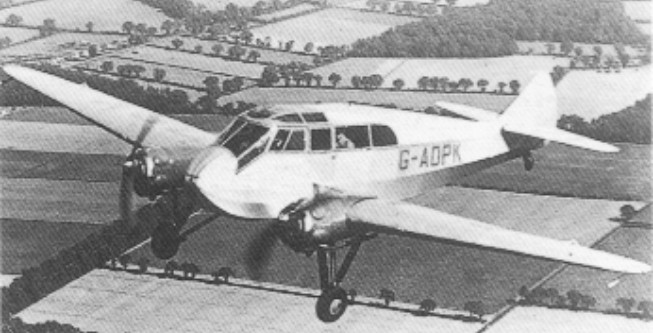
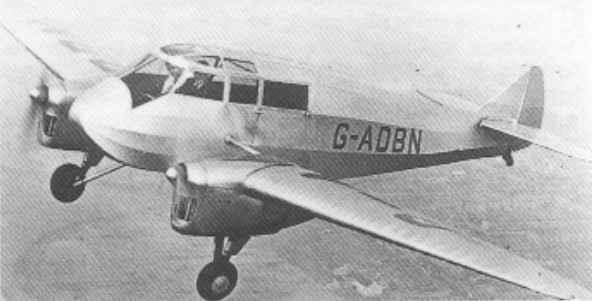
Under the guidance of F F Crocombe, the ST 10 was improved and in 1935 was relaunched as the ST 25 Jubilee. The year witnessed King George V’s Silver Jubilee and the mark numbers were ‘shunted’ on accordingly.

The two designers. Messrs J.H. Steiger and F.F. Crocombe, were responsible for the wing design that gave this aircraft its name — Monospar, or single spar. In the wing, a single transverse spar carries a number of main ribs spaced apart. The spar is braced to resist torsion, or twisting effect, by means of rigid struts on wire arranged in pyramid fashion. “Former” ribs are provided between the main ribs in order to strengthen the fabric when the wing is covered. The use of a fabric covering makes it easy and economical to maintain the wing in good condition, and provides a quick access to the framework for overhaul and repairs. As only one spar is used there is a considerable weight saving in the wing structure, which allows a greater payload. The same principle can be applied to the fuselage.

An improved Jubilee, the ST 25 de Luxe, appeared in 1936 with Niagara III engines. The 90hp Niagara III cruised at 3,000rpm with Rotax rotating armature ignition, turning wooden two blade 6.67 ft diameter fixed pitch mahogony Aircrew propellers through offset 2:1 reduction gears. Initial climb rate was 710ft/min and potential maximum ceiling some 16,000 feet. Sustained climb was nonetheless relatively slow, and it took up to an hour to reach 12,000 feet. Rudder and elevators were fitted with controllable trim tabs, and directional stability was improved with increased fin area. This could not cope with the asymmetric loads of single engine operation and a new twin tail unit was fitted to correct this problem. The resulting design was called the ST 25 Universal. Twenty nine Universals were built. Slightly heavier at 1,818 lb tare than the Jubilee, they were also slightly slower with a maximum speed of 131 mph. Overall dimensions and all up weight remained the same.

Two engine choices were offered. The 88 hp Pobjoy had a better power-to weight ratio than the low revving 90hp Cirrus alternative, giving a much shorter take off run. With an effective 88hp per motor and an all up aircraft weight of 2,750 lb, single engine performance was marginal.

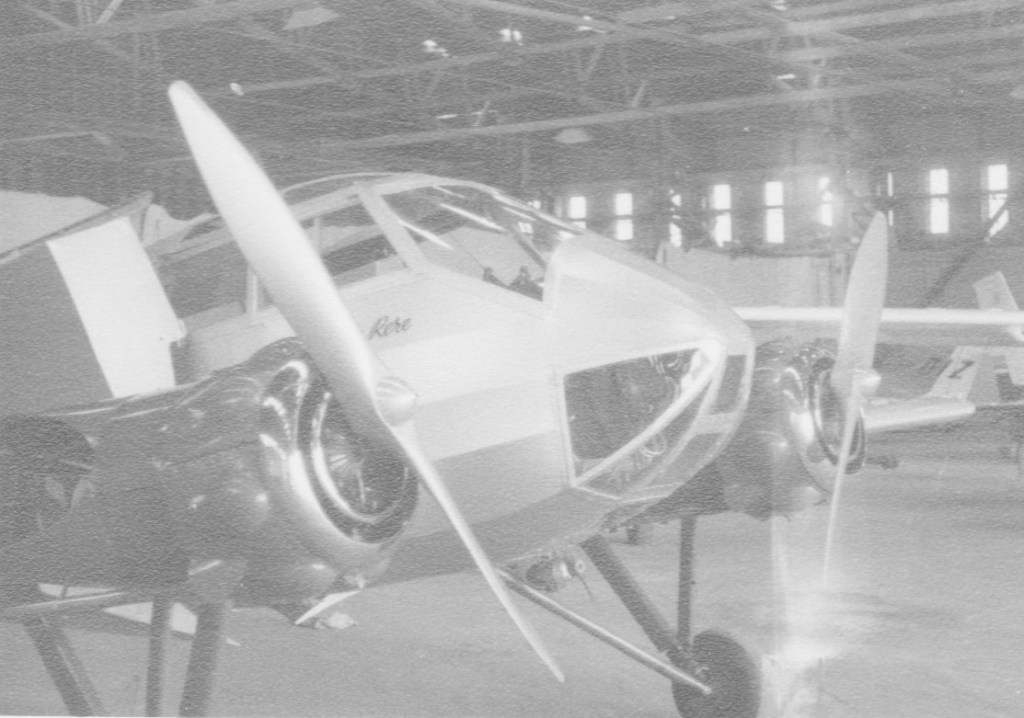
With 9 degrees of dihedral the wings are fabric-cover¬ed, and fold back flat along the fuselage. The seven cylinder radial engines have aluminium cowlings held in place by a single clip at the bottom of the cowl. A 2:1 reduction gear off-sets the propeller drive by about six inches from the centre. The twin exhaust pipes are chromium plated, which greatly enhance the general appearance of the aircraft. The fuel tank filling point is in the starboard side; the 44 gallon tank is situated below the two pilot’s seats. Provision is also made for an additional 12 gallon internal tank. The fixed undercarriage has three tubular legs extending from the nacelle to the axle. There are two rudders with the elevator extending the full width between them. The tailwheel has a large heavy duty spring to reduce landing shocks. Entry to the aircraft is by a door on the port side, and access to the two front seats is made easier by a hatch in the roof.

A total of 59 were produced circa 1936.

The STL.25 T42 was fitted with an experimental tricycle undercarriage.

Monospar ST-25 Tricycle Article

Gallery

Engine: 2 x Pobjoy Niagara 88 hp
Wing span: 40 ft 2 in
Weight: 2650 lb
Max speed: 120 mph
Wing loading: 16 lbs/sq.ft
Range: 650 sm
Undercarriage: fixed
Seats: 4

Monospar ST.18 Croydon

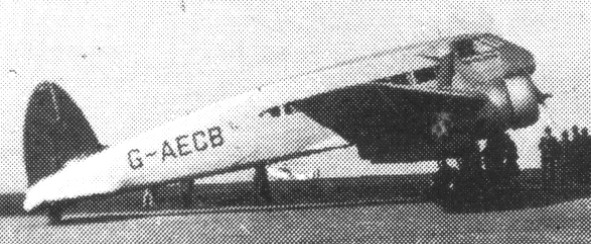
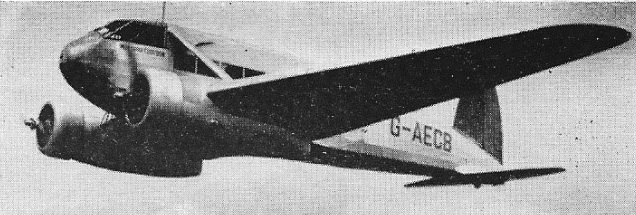
G-AECB was a General Aircraft Monospar ST-18 Croydon built at Hanworth in the UK in 1935 and flown out to Australia in July 1936. The 10 passenger seat aircraft, the only one of the type built, was abandoned on the Seringapatam Reef 175 miles north of Australia when it failed to make landfall across the Timor sea due to compass error on its return flight in October 1936.

ST.18 G-AECB had c/n 201

Monospar ST.12

The design of the ST-12 dates back to the mid-1920s with the development of a single-spar wing. In 1931 GAL was formed to develop the patented Monospar Co wing design. The ST-12 was a fixed undercarriage variant of the ST-10, re-engined with two 120 hp Gipsy Majors.

Monospar ST.12 Article

A production run of ten ST 12s (reverting to fixed undercarriage) was undertaken.

Airlines of Australia Monospar

Engine: 2 x Gipsy Major, 130 hp
Wingspan: 40 ft 2 in
Length: 26 ft 4 in
AUW: 2875 lb
Max speed: 158 mph
Undercarriage: fixed