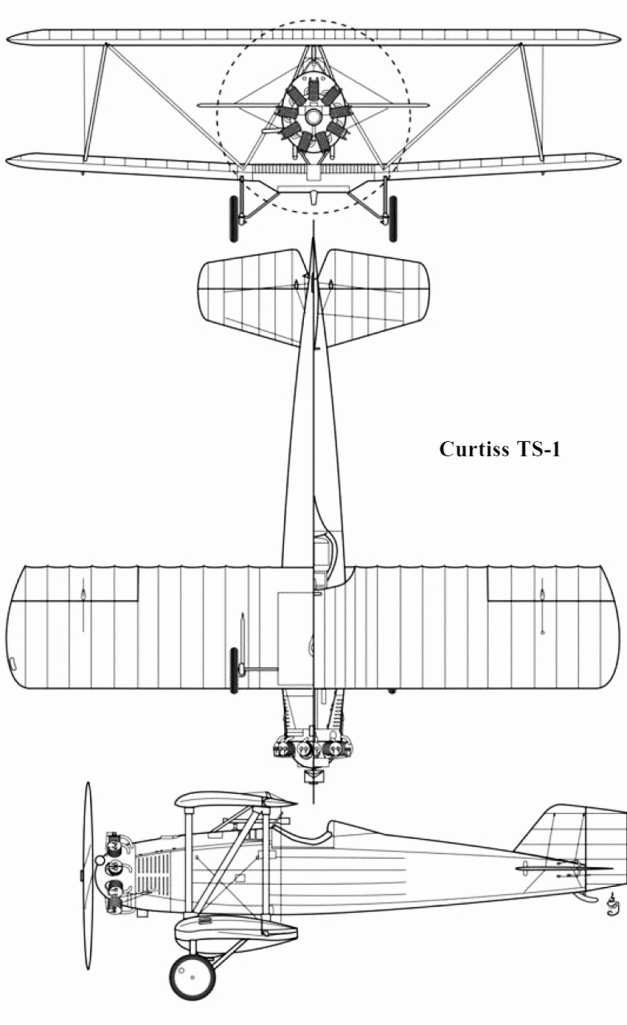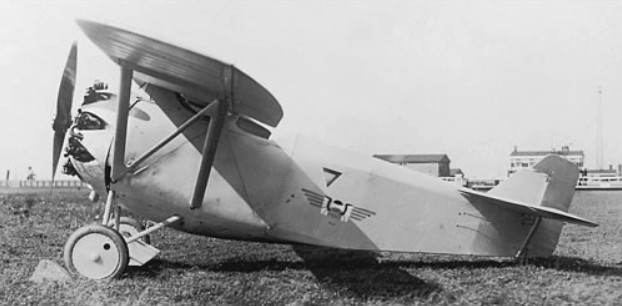
Rex Buren Beisel of the Naval Aircraft Factory desiggned a simple fighter powered by a 200 hp (150 kW) Lawrance J-1 air-cooled radial engine. Its boxy fuselage was suspended between the upper and lower wings (essentially having both dorsal and ventral sets of cabane struts), with the center area of the lower wing enlarged to accommodate a fuel tank.
First flying on August 10, 1921, the TS biplane fighter was the first aircraft designed specifically for the US Navy to be used with aircraft carriers. At the NAF plant, five TS-1 (A6300- 6304) aircraft were built to assess the accuracy of the calculations of the contracting companies for payment for the work they had performed.
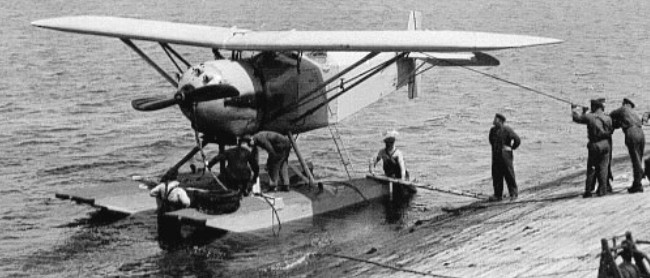
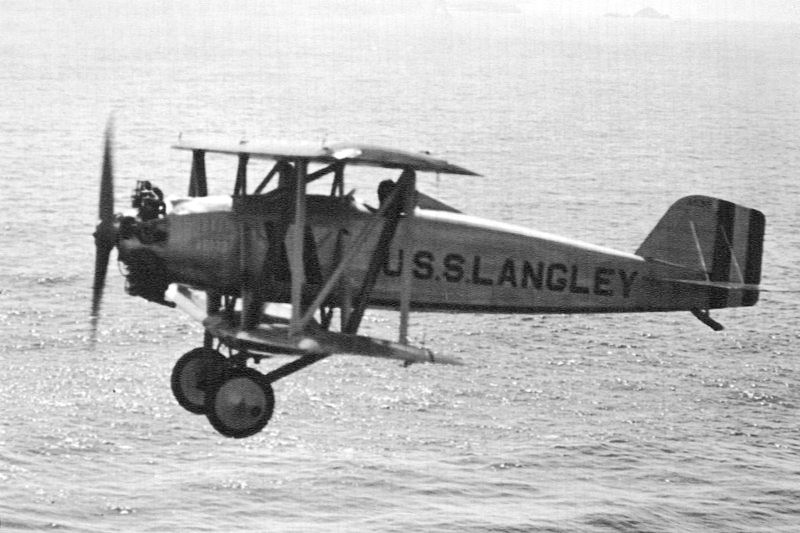
The NAF provided Curtiss with the plans to build the aircraft, and the result, designated TS-1, arrived at Anacostia on May 9, 1922. The TS-1 from Curtiss was delivered with wheels, so the NAF also designed wooden floats to enable their use on vessels other than aircraft carriers. Testing went well, and in late 1922 the Navy ordered 34 planes from Curtiss, with the first arriving on board the USS Langley (CV-1) in December. The NAF built another five themselves, as a test of relative costs, as well as four more used to experiment with water-cooled inline engines.
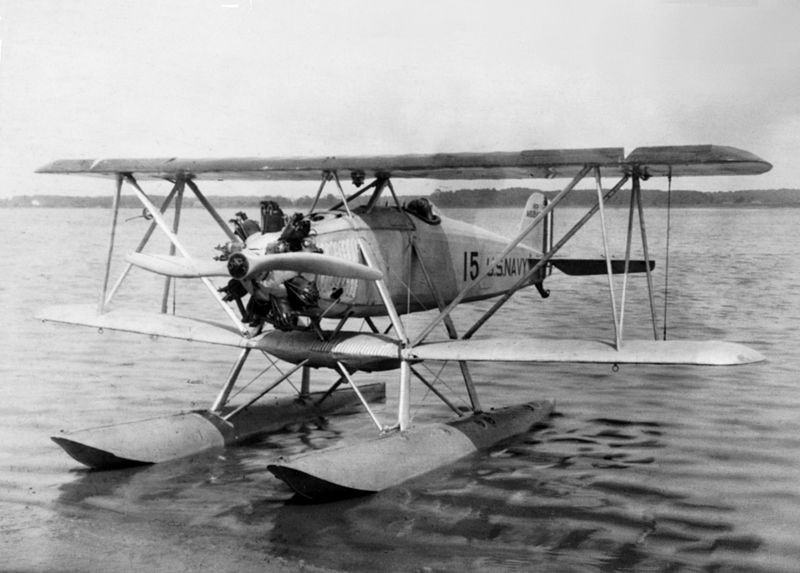
In addition to operating from the carrier deck, the TS-1s served for several years in floatplane configuration aboard destroyers, cruisers, and battleships. The aircraft were slung over the side by crane. Squadron VO-1 operated this way from 1922, and VF-1 flew its float-equipped TS-1s from battleships in 1925 and 1926.
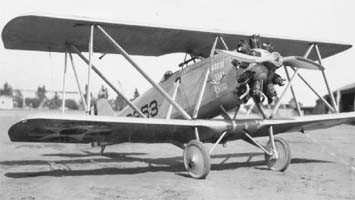
The TS-1 was not universally liked by its crews. Positioning of the lower wing below the fuselage resulted in short wheel struts. This, and the wheels’ placement close to each other, caused considerable problems with ground looping.
NAF also built two TS-2 (A-6446-6447) powered by a 240 hp (180 kW) Aeromarine engine, and two TS-3 (A-6448-6449) powered by a 180 hp (130 kW) Wright-Hispano E engine. One TS-3 was modified by changing the airfoil section to participate in the 1922 Curtiss Marine Trophy race and received the TR-2 designation, later it was used as a training aircraft for the US Navy team, preparing for the Schneider Cup competitions in 1923.
In May 1924, the TS-1 was re-designated as FC-1. They were retired in 1929.
Two all-metal versions of the aircraft, F4C-1s, were developed by Curtiss.
TS-1
Engine: 1 × Lawrance J-1, 200 hp (149 kW)
Wingspan: 25 ft (7.62 m)
Wing area: 228 ft² (21 m²)
Length: 22 ft 1 in (6.7 m)
Height: 9 ft 7 in (2.9 m)
Empty weight: 1,240 lb (562.5 kg)
Loaded weight: 2,133 lb (967.5 kg)
Maximum speed: 106.8 knots (123 mph, 198 km/h)
Cruising speed: 165 km / h
Range: 418.8 nmi (482 mi, 775.7 km)
Service ceiling: 16,250 ft (4950 m)
Rate of climb: 909 ft/min (4.61 m/s)
Armament: one 7.62mm Browning machine gun
Crew: 1