1928 NX7269 c/n 6
Engine: 225hp Wright J-5
1928 NX7269 c/n 6
Engine: 225hp Wright J-5
Designed by Frank R Seesock circa 1925, the New Pace had two side-by-side cockpits. An open cockpit high wing monoplane. It s known one carried 1491 lb in one test with a 1000-fpm rate of climb.
Known examples:
1929
Engine: 150hp Hisso A
Wingspan: 36’6″
Length: 22’9″
Useful load: 1200 lb
Max speed: 138 mph
Cruise speed: 110 mph
Stall speed: 42 mph
Range: 750 mi
Incl: NX1928
1930
Engine: 200hp Wright J-5
Max speed: 147 mph
Cruise speed: 120 mph
Stall speed: 42 mph
one NR786Y c/n 2
1932
Engine: 300hp Wright
one NX749Y c/n 101
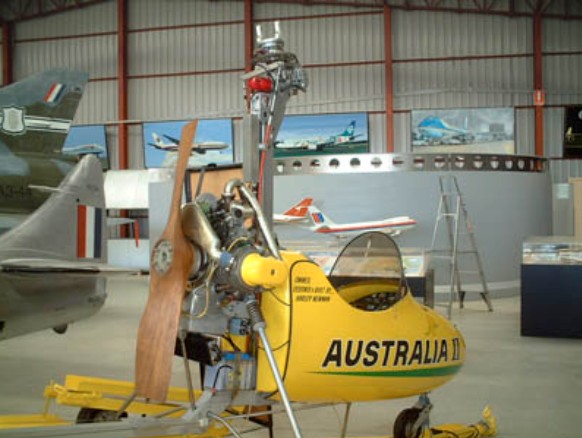
The Australia II was owned, designed and built by Sydney Engineer Mr. Harley Newman. The advantages of Australia II over the original gyrocopter, named Australia, include a more streamlined overall design, lighter weight and a single rudder to reduce the air drag created by the twin rudders on the original machine.
The engine is a turbo charged 900cc BMW motor bike engine. Features of the aircraft include a Streamlined Cabin, Hydraulic Pre-Spin Wind Up for the Rotor Blades, Full Instrumentation, Hydraulic Disc Brakes, Self Starter, Radio Communication, Cabin Controlled Adjustments for Advance and Retarding the engine, altering the Fuel Mixture of the Carburettor and directing the Oil Flow from the Hydraulic Pump to the Hydraulic Motor in the Rotary Head.
The fuel tank has been designed to be an integral part of the cabin area. Also of note was the design of the Tail Plane and Rudder.
Australia II was never flown. However, a considerable amount of Ground Testing and Development on the Engine, particularly the Turbo Charger had been carried out. At the time of Mr. Newman’s death this machine was producing high Horsepower and Static Thrust. At the time of it’s construction, Australia II was by far the most technically advanced Gyrocopter in Australia.
Australia II was donated to the Australian Aviation Museum by Harley Newman’s son Gordon, as this was his father’s wish.
Mr. Newman died on Saturday September 13th, 1986 while flying his Gyrocopter, named Australia. No reason for his death could be found.
The K C “Casey” Newland B-35 was a single place, open cockpit biplane, the Newland B-45 was built in 1936 and registered N14877 c/n 101. Powered by a 45hp Szekely, it was sold on 21 September 1940, dismantled, and the registration was cancelld on 14 April 1948.
The 1929 Newhouse NS-1, N635, was a three-place, open cockpit, parasol wing monoplane, powered by a 90hp Curtiss OX-5, First flown on 18 May 1929, it accumulated more than 1000 hours with considerable exhibition flying time.
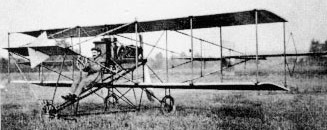
A 1911 Curtiss pusher-type single place, open cockpit biplane.
The 1931 New Era Aircraft Corp Model A was a two-place cabin, high wing monoplane, powered by a 90hp Cirrus engine. It featured a podlike cabin with a twin-boom tail, Registered NX10778 c/n 100, the tail booms broke during a rough taxi, and the plane was dismantled.
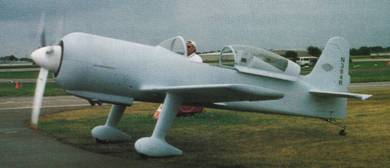
The Altitude Radial Rocket is an American amateur-built aircraft, produced by the Altitude Group of Overland Park, Kansas. The aircraft is supplied as a kit for amateur construction.
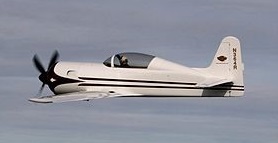
The aircraft features a cantilever low-wing, a two-seats-in-tandem enclosed cockpit under a bubble canopy, fixed conventional landing gear or retractable tricycle landing gear and a single radial engine in tractor configuration.
The aircraft is made from composites. The wing span and area as well as gross weight varies depending on the model. The Radial Rocket’s recommended engine power range is 360 to 400 hp (268 to 298 kW) and the standard engine used is the 360 hp (268 kW) Vedeneyev M-14P four-stroke powerplant.
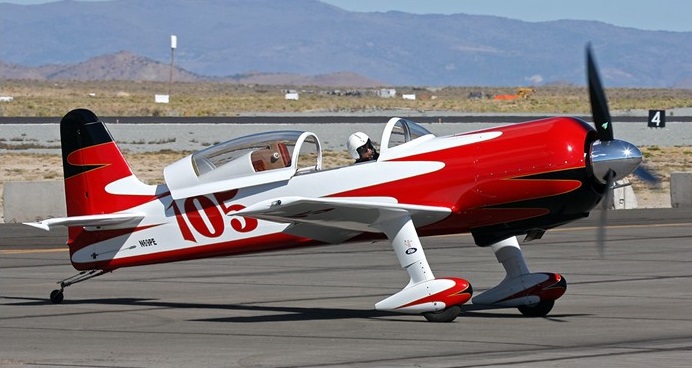
Jeff Ackland planned to sell kits under the company name New Century Aerosport. By October 2012 five examples had been registered in the United States with the Federal Aviation Administration. Unit cost US$74,500 (RG model, kit only) in production in 2011.
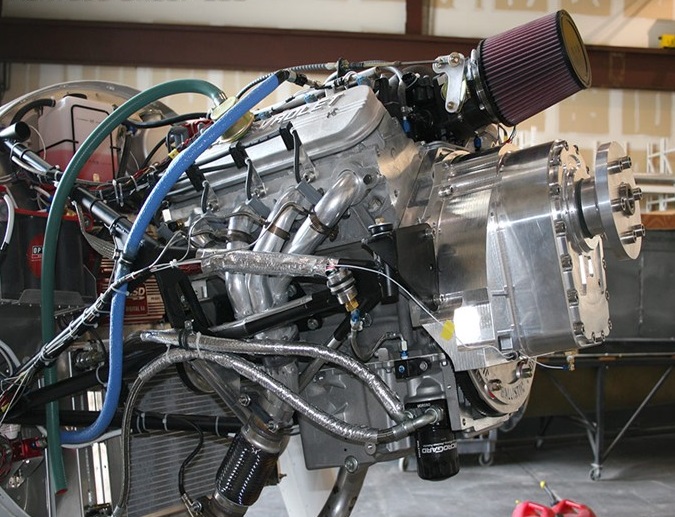
The P85 is the result of installing powerful, light, all aluminum liquid cooled V8 engine technology into the Radial Rocket airframe.
The focus of the P85 was on a simple, relatively low cost V8 firewall forward powerplant option. Toward this end, the P85 cowling has been lofted around the LS series of high performance V8’s.
The engine installed in the first P85 was a 402 CID LS2/LS3 hybrid designed to deliver 400+ HP to the prop at 5000 crankshaft RPM. A 1.8:1 ratio PSRU (prop speed reduction unit) reduces prop rpm to 2800 max. This single mesh gearbox drives a Catto 3 blade, 80 inch diameter fixed pitch propeller.
Also contributing to the goal of simplicity is single-lever power management – no mixture or prop controls to manage, thanks to electronic fuel injection controlled via an ECU.
Variants:
Radial Rocket RG
Retractable tricycle gear model. It has a 26.8 ft (8.2 m) span wing, a wing area of 93.9 sq ft (8.72 m2) and a gross weight of 2,575 lb (1,168 kg). Construction time from the supplied kit is 2000 hours. Two were reported flying by the end of 2011.
Radial Rocket TD
Fixed taildragger gear model. It has a 25.5 ft (7.8 m) span wing, a wing area of 90.8 sq ft (8.44 m2) and a gross weight of 2,550 lb (1,160 kg). Construction time from the supplied kit is 1900 hours. Four were reported flying by the end of 2011.
Specifications:
Engine: M-14P, 360 hp
Prop: MT 3-blade
HP range: 360-400
Length: 21.8 ft
Wing span: 25.5 ft
Wing area: 91.2 sq.ft
Empty weight: 1650 lb
Gross weight: 2550 lb
Fuel capacity: 91 USG
Cruise: 230 mph
Stall: 69 mph
Range: 1350 sm
Rate of climb: 3800 fpm
Takeoff dist: 600 ft
Landing dist: 800 ft
Cockpit width: 37 in
Landing gear: tail wheel
Seats: 2
Radial Rocket RG
Engine: 1 × Vedeneyev M-14P, 360 hp (270 kW)
Length: 22.2 ft (6.8 m)
Wingspan: 26.8 ft (8.2 m)
Wing area: 93.9 sq ft (8.72 m2)
Empty weight: 1,720 lb (780 kg)
Gross weight: 2,575 lb (1,168 kg)
Fuel capacity: 65 U.S. gallons (250 L; 54 imp gal)
Propeller: 3-bladed constant speed propeller
Cruise speed: 242 mph (210 kn; 389 km/h)
Stall speed: 70 mph (61 kn; 113 km/h)
Range: 1,200 mi (1,043 nmi; 1,931 km)
Rate of climb: 3,500 ft/min (18 m/s)
Wing loading: 27.4 lb/sq ft (134 kg/m2)
Crew: one
Capacity: one passenger
Radial Rocket RG
Engine / M-14PF, Nine Cylinder Radial, 400 HP
Prop / MT, 4 Blade, Constant Speed, 80 In. Diam.
Wingspan / 26.8 Ft.
Length / 22.2 Ft.
Cockpit Width / 34 In. Pilot, 30 In. Copilot
Wing Area / 93.9 Sq. Ft.
Empty Weight / 1720 Lbs.
Gross Weight / 2575 Lbs.
Useful Load / 855 Lbs.
Baggage Capacity / 12 Cu. Ft.
Fuel Capacity / 65 Gals.
Cruise, High Speed / 245 Mph
Cruise, Economy / 215 Mph
Range, Econ. Cruise, 30 Min. Reserve / 1125 sm
Climb / 4000+ Fpm Solo, 3000+ Fpm Gross
Vso, Stall, Flaps Down / 70 Mph (61 Kts)
Vs1, Stall, Flaps Up / 85 Mph (74 Kts)
Vne, Never Exceed Speed / 280 Mph
Seating / Two, Tandem
Radial Rocket TD
Seating / Two, Tandem
Engine / M-14PF, Nine Cylinder Radial, 400 HP
Prop / MT, 3 Blade, Constant Speed, 98 In. Diam.
Wingspan / 25.5 Ft.
Length / 22.2 Ft.
Cockpit Width / 34 In. Pilot, 30 In. Copilot
Wing Area / 90.8 Sq. Ft.
Empty Weight / 1650 Lbs.
Gross Weigth / 2550 Lbs.
Useful Load / 900 Lbs.
Baggage Capacity / 12 Cu. Ft.
Fuel Capacity / 70 Gals.
Cruise, High Speed / 230 Mph
Cruise, Economy / 200 Mph
Range, Econ. Cruise, 30 Min. Reserve / 1200 sm
Climb / 4000+ Fpm Solo, 3000+ Fpm Gross
Vso, Stall, Flaps Down / 70 Mph (61 Kts)
Vs1, Stall, Flaps Up / 85 Mph (74 Kts)
Vne, Never Exceed Speed / 280 Mph
G Limits / +6, -3 Limit ; +9, -6 Ultimate
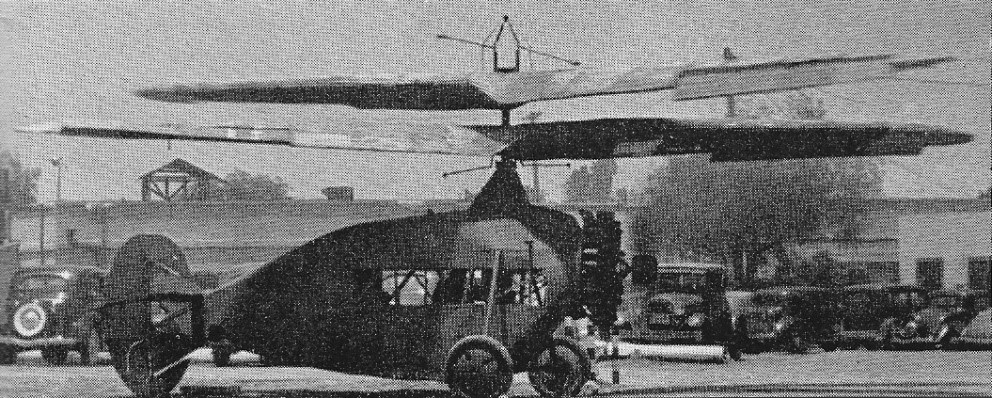
Built in 1928 in Hollywood, California, by Newbauer Vertical Airplane Co, the Hummingbird was an ornithopter-type craft with two revolving disks on top, and wings made from lateral vanes, all powered by a four-cylinder motorcycle engine.
The Hummingbird weighed 3496 lb and carried 44 Imp.Gal of fuel.
There is no record found of flight and US patent #1,743,327 was issued in 1930.

