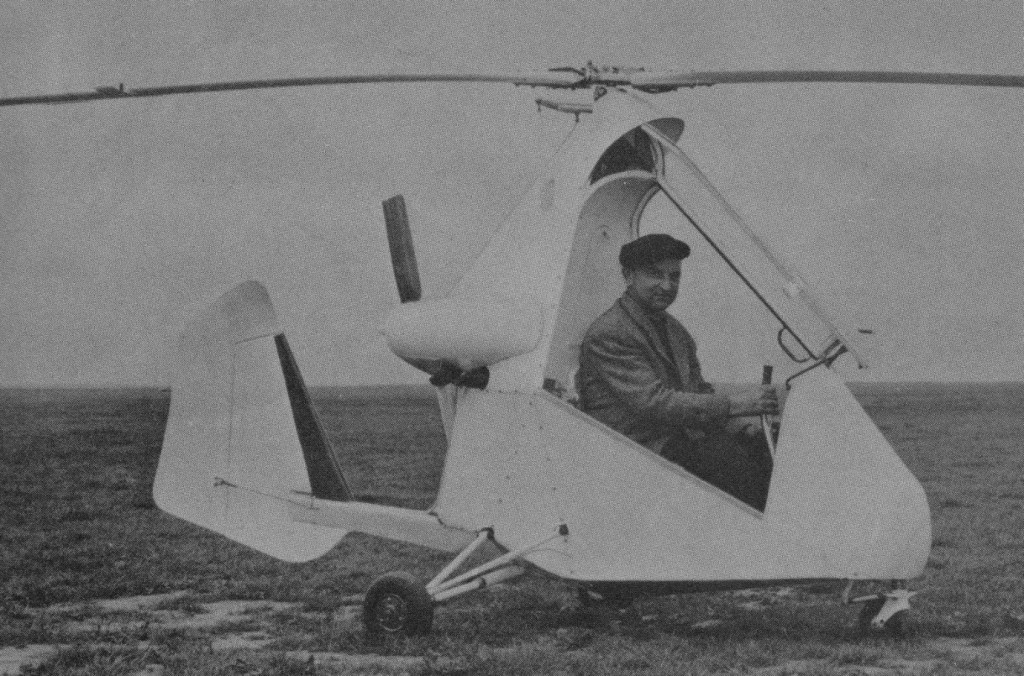
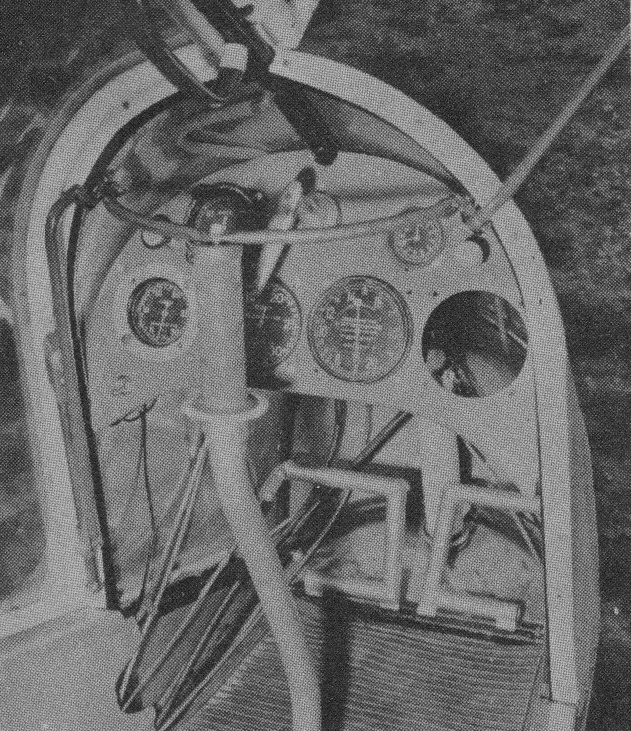
Francois Oslist designed and built a small autogiro, he called Microgiro, in 1964.
Rotor blades are formed from solid spruce, with an aluminium hub. The fuselage is steel tube with an aluminium skin. The tail is also tubular steel but with fabric cover.
Engine: McCulloch, 72 hp Rotor diameter: 20.6 ft Rotor chord: 7.8 in Fuselage length: 10.66 ft Hieght: 6.3 ft Landing gear tread: 54 in Landing gear track: 65 in Main wheel diameter: 9.5 in Nosewheel diameter: 6 in Empty weight: 330 lb MTOW: 550 lb
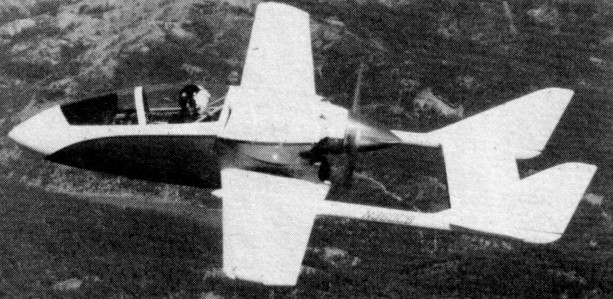
The BRO-23KR was designed by Bronis Oškinis and constructed by Česlovas Kisonas and K. Rinkevičius (the KR of the name) at the Kaunas hang gliding club.
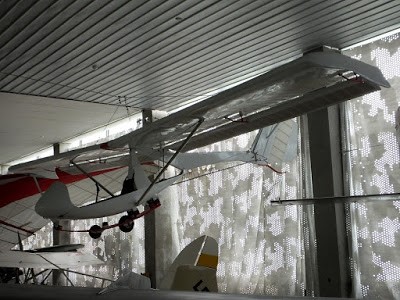
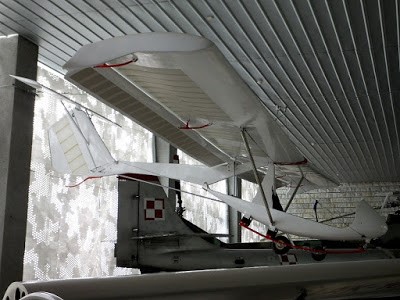
The BRO-23KR is a glassfibre aircraft with a strut and wire-braced high wing and a pod and boom fuselage with an open-sided cockpit and a T-tail. Its wing is rectangular in plan out to blunted and turned-down tips and both its single spar and ribs are formed from woven glassfibre. Three-ply glasscloth skin ahead of the spar forms a torsion resistant D-box. The narrow trailing edge of the wing was cast in epoxy with spanwise glassfibres and glasscloth covered. The whole wing was then covered with glued and thermally bonded, transparent polyethylene terephthalate film. It has narrow, full span, slotted ailerons, operating in co-ordination with rudder deflections and built in the same way as the wings. Single struts on each side brace the spar to the lower fuselage.
The fuselage of the BRO-23KR is formed from two GRP halves and attached to the wing centre-section. It has a long, shallow open cockpit which stretches back under the wing with the pilot in a reclined position. The tail unit, constructed in a similar way to the wing, has a highly swept, near-rectangular fin with a high aspect ratio horizontal tail mounted on its top. Its rather angular rudder, on a backward-leaning hinge, is large.
The BRO-23KR has very adaptable landing gear based on a landing skid sprung on five rubber blocks, which stretches nearly from the nose to just aft of the spar. The skid is wide enough to land on snow but can be fitted with a tyred wheel in summer. More unusual attachments include a set of introductory tricycle wheels and floats for landing on water. There is a long, self-sprung GRP landing skid under the tail.
It first flew in 1981.
Only two BRO-23KRs were constructed, the prototype and one built in 1984 by Panévežio Atsk. One took part in the 2nd World Championship, an Eastern European series gliding contest distinct from the FAI event, where it showed distinct improvements over earlier Soviet primary gliders. Both aircraft remained airworthy in 2015.
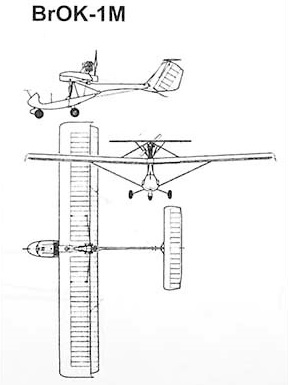
In 1982, Kišonas, Česlovas and Rinkevičius, K. (who had built the BrO-23KR glider) adapted a 25 HP engine on the BrO-23KR which thus became the BrOK-1M. The added K designates KIŠONASr.
BrOK-1M Garnys
In 1982 the prototype was motorized into the BROK-1M, with a largely uncowled, pusher configuration, 25 hp (19 kW) engine. Its installation, designed by Kišonas, placed it well above the rear part of the wing on forward and aft transverse V-struts from the central wing mountings, laterally braced on each side by a long strut out to the wing. It used the tricycle landing gear.
In 2009 one airframe remained in the Sport Aviation Museum in Kaunas.
Wingspan: 8.20 m (26 ft 11 in) Wing area: 10.40 sq.m (111.9 sq ft) Aspect ratio: 6.5 Airfoil: GA(W)-1 Length: 6.40 m (21 ft 0 in) Height: 2.2 m (7 ft 3 in) Empty weight: 83.5 kg (184 lb) Gross weight: 158.5 kg (349 lb) Maximum speed: 100 km/h (62 mph, 54 kn) smooth air Stall speed: 42 km/h (26 mph, 23 kn) Maximum glide ratio: 15 Min sink: 1.1 m / s (200 ft/min) Seats: 1
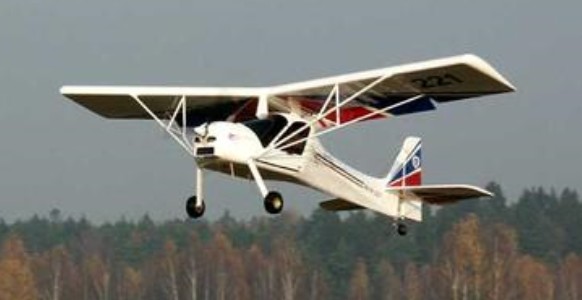
MAI-223 is a single-engine two seater semicantilever monoplane-parasol with non-retractable landing gear. Perfect controllability in all channels and an excellent pilot view from the cockpit make the plane extremely safe and pleasant for piloting. High thrust-to-weight ratio, high-lift device and landing gear with tail wheel allow to use airplane from short, unprepared runways. Floats and ski landing gear are enabled. Due to the folding wing airplane is very convenient for storage and transportation. 2009 Price: 27150 EURO
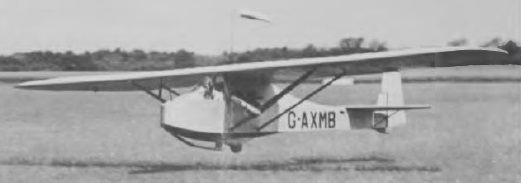
This powered converison of a T8 Tutor was made by E. W. Osbourn at Cranfield, Bedfordshire, in 1969 and was known as the Twin Cadet Mk 1. It was fitted with two 197cc Villiers 9E single-cylinder two-stroke engines mounted on the wing bracing struts and driving two small propellers just behind the pilot’s head. The prototype, G-AXMB (ex-VM590 and BGA 805) first flew with power on 20 September 1969. and received its Authorisation to Fly on 2 July 1970. It was later re-engined with a single 500cc Triumph T100 motorcycle engine mounted in the nose and first flew in this form as the Cadet Mk 2 at Cranfield on 22 January 1972, receiving its Authorisation to Fly on 6 June that year.
Twin Cadet Mk 1 Span: 38 ft 6 in Length: 20 ft 10.5 in Tare weight: 455 lb All-up weight: 657 lb Max speed: 60 mph (power on) Cruising speed: 40 mph (power on) Range: 100 miles
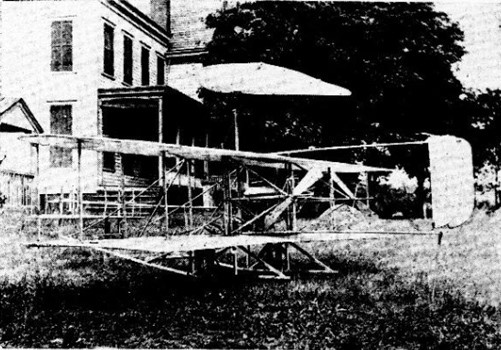
Washington DC man Harry Orme’s machine was generally similar to a Wright biplane, but differed in several respects. It was powered by an 8 hp 45 lb Belgian-made motor driving two propellers, with variable pitch. Over the top wing was a smaller “mushroom-shaped” wing on springs, capable of being distorted, and “intended to act as a bird’s tail does”, which Orme claimed would “prevent the sudden plunging of the aerial craft to the earth if any mishap occurs.” It didn’t help in December of 1908 when a loose wire got in the way of the propellers, breaking them, and ruining many support wires. The plane probably never flew again
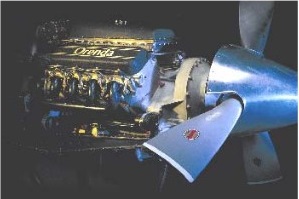
A liquid cooled V-8 piston engine in the 500-750 hp range. The OE600A model was first certified by FAA and Transport Canada in March 1998 at 600 hp.
Certificated in 1998 after a protracted and expensive development programme, the engine was in low-rate initial production in Debert, Nova Scotia when the effort was suspended in 2003. Engines had previously been delivered to Moravan in the Czech Republic for the Z-400 Rhino utility aircraft, to China for the Hongdu N-5 and to Tusas Aerospace Industries in Turkey for the Zui. Explorer Aircraft had selected the OE-600 for its 500R and several re-engining programmes were under way, including the Orenda-powered de Havilland Canada Otter and Beaver.
OE600 Cycle: 4 stroke No cylinders: V-8 Bore: 112.6 mm Stroke: 101 mm Compression: 8 Displacement: 8111 cc Cooling: Liquid Ignition: DCDI Reduction: Mechanical 2.14/1 Dimension: 812 x 1511 x 901 mm Weight: 340 kg Max pwr: 600 hp at 4400 rpm
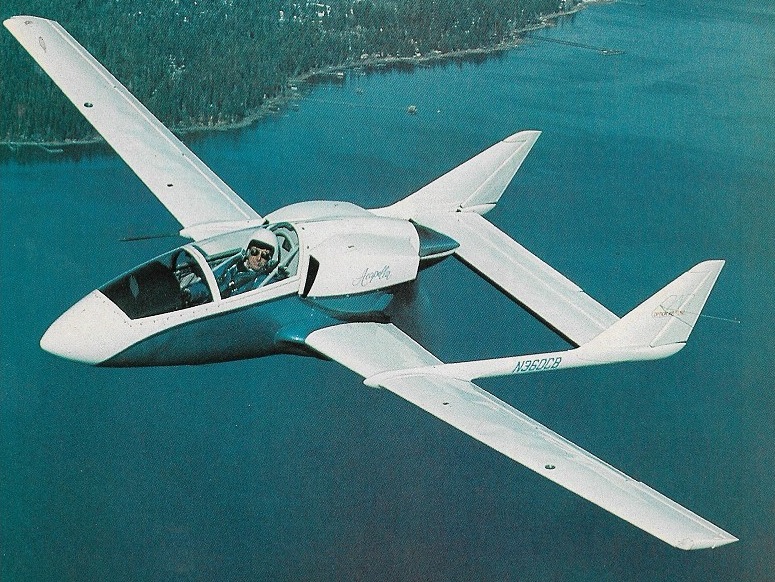
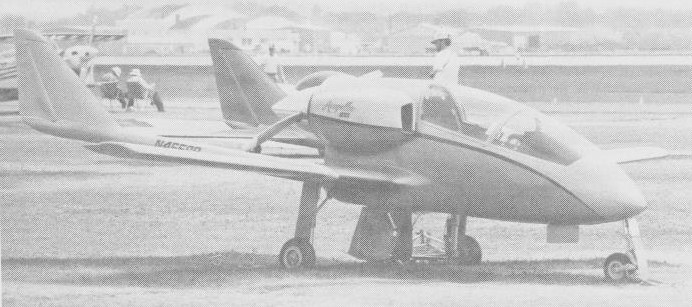
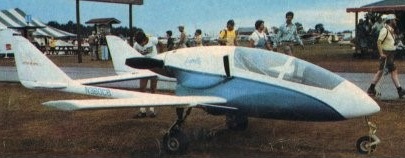
The Acapella is the creation of Carl O. Barlow, president of Option Air Reno, and sprung from his idea in 1977 to “re-do” the no longer available BD-5 design utilizing about 65 percent of the BD-5 hard¬ware including the fuselage from the firewall forward, the nosewheel, canopy and the short wings.
Design of the Acapella began in January 1978 and prototype construction started in June the same year. Registered N360CB, it achieved its first flight on June 6, 1980. After flying the prototype Acapella with both the short and long Bede wings, Barlow recommends using the long wings on the Acapella.
Production of kits began in June 1981, they include an engine mount, glass fiber cowling, new 8 ft (2.44 m) wing center section, tail booms, tail plane, elevator, main landing gear, many smaller components, and all necessary plans for the conversion. The prototype Acapella was powered originally by a 200 hp Avco Lycoming IO-360-A1B engine driving a Hartzell Q-Tip constant-speed pusher propeller, and in this form was known as Model 200-S.
It was re-engined subsequently with an 118 hp Avco Lycoming O-235 and fitted with longer-span wings to become the Model 100-L, with increased fuel capacity. The 200 series aircraft were not being made available to amateur constructors to build from plans or kits. This is because the majority of builders expressed interest in the smaller-engined Acapella 100-L, for which plans, kits and glass fiber components were available.
Work on a second prototype to carry a 118-hp Lycoming and a fixed-pitch propeller with a gross of about 1000 pounds was to be completed.
The Option Air Acapella N360CB crashed on July 28, 1982.
Option Air Acapella 100L N360CB
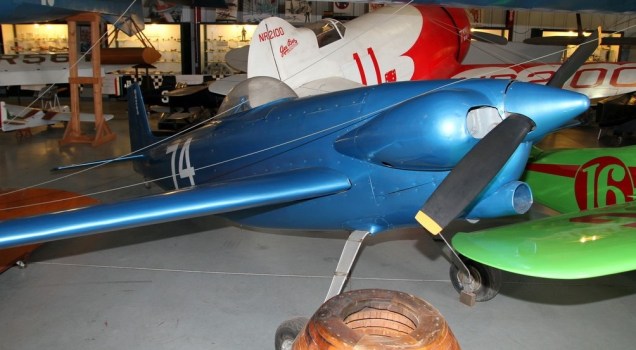
Only two aircraft were finished, the second one was registered N455CB on February 24, 1989, and it was this aircraft which was eventually donated to the EAA AirVenture Museum.
Gross Wt. 1350 lb Engine 200-hp Lycoming IO-360 Top speed 245 mph Cruise 214 mph Stall 81 mph Climb rate 1800 fpm Takeoff run 1000 ft Ceiling 26,500 ft
Single seat single engined high wing monoplane: no tall, canard wing. Pitch control by fully flying canard; yaw control by tip rudders. Wing braced from above by kingpost and cables, from below by cables. Undercarriage has three wheels in tricycle formation; bungee suspension on nosewheel and glass-fibre suspension on main wheels. Nosewheel steering. Optional brakes. Aluminium tube framework, without pod. Engine mounted below wing driving pusher propeller.
This machine was shown in prototype form in 1982 but since that time very little has been heard of its maker’s activities.
Engine: Cuyuna 430, 30 hp Propeller diameter and pitch 52 x 27 inch, 1.32 x 0.69 m Belt reduction, ratio 2.0/1 Nosewheel diameter overall 20 inch, 51 cm Main wheels diameter overall 20 inch, 51 cm