
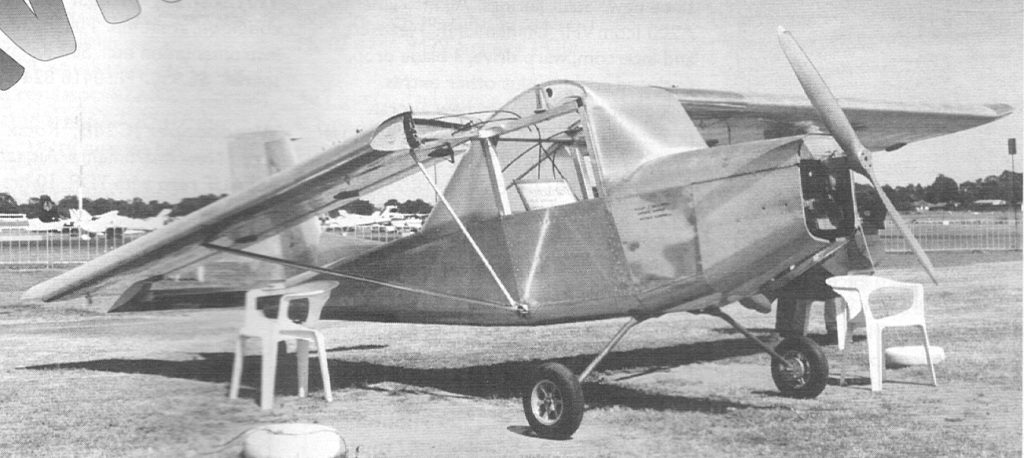
In 1999 Arthur Amour and Mathew Campbell were building this all-metal, 3-axis control, flaps, folding wings and an electric start aircraft.
Arthur designed adjustable seats.
The predicted weight on completion was 180 kg, in March 1999 it was at 180 kg.

Cessna had announced its intentions to study the feasibility of developing and producing an LSA on 6 June 2006. The concept design was unveiled on 24 July 2006 at EAA AirVenture Oshkosh as the Cessna LSA (also referred to as the Cessna Sport), via a marketing study of the feasibility of producing an aircraft compliant with the U.S. Federal Aviation Administration’s new Light-Sport Aircraft category.
Registered N158CS, the aircraft is an all metal design with stick controls, powered by a 100hp75kW Rotax 912 engine. The cabin width is 121cm/48in.

On 13 October 2006, nine months after launching the program, the concept prototype aircraft, registered N158CS, first flew, departing McConnell Air Force Base for Wichita’s Mid-Continent Airport and reaching a speed of 110 knots (200 km/h). Cessna formally launched the Skycatcher program 10 July 2007
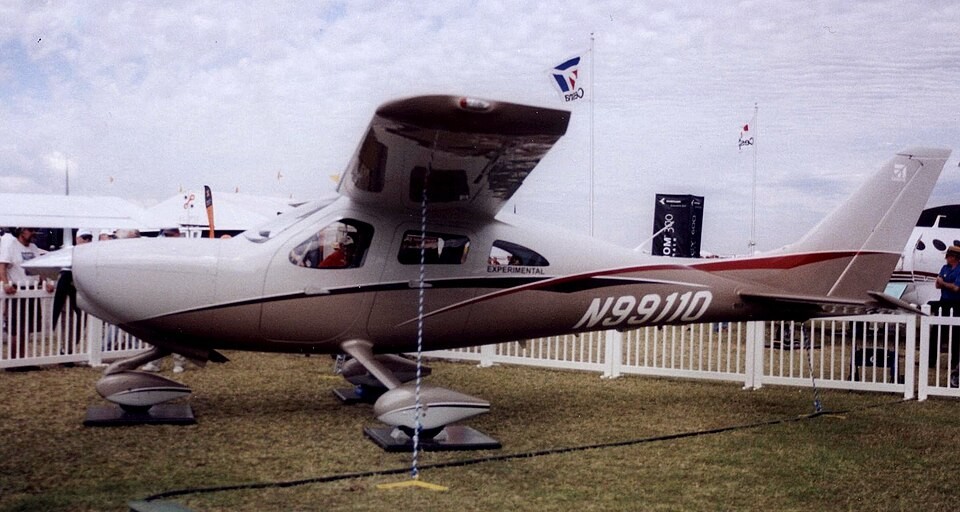
The Cessna Next Generation Propeller Aircraft (NGP) was a proof-of-concept design for a future family of single engine, fixed-gear, high cantilever wing, light aircraft intended for personal, flight training and commercial use.
The single flying prototype, registered N99110, was flight tested by Cessna, and first seen publicly in flight on 24 July 2006 at EAA AirVenture Oshkosh.
The aircraft was originally introduced as the “Next Generation Piston”, but starting in April 2008 Cessna began referring to it as the “Next Generation Propeller” aircraft instead. After absorbing the recently purchased Columbia Aircraft line, now known as the Cessna 350 and Cessna 400, Cessna indicated that it was re-positioning the NGP to fit logically into its current aircraft fleet. “Our team is working on finalizing the configuration,” said Van Abel, Cessna’s project engineer for the NGP in April 2008. “We continue to evaluate features and materials that will produce a new, unique aircraft family with a potential for multiple powerplants.” This indicates that the aircraft may become turbine or diesel powered so as not to conflict with sales of the 350 and 400.
Very little information was made public about the aircraft since development began sometime in early 2005. Cessna confirmed that the NGP was designed specifically to compete with other, newer aircraft. Due to its intended role as competition for the Cirrus SR22, it was frequently referred to in the aviation press as the “Cirrus Killer”.
The NGP mock-up displayed at AOPA Air Expo 2006, in Palm Springs, California, had five seats. The aircraft was, at that time, intended be powered by a Lycoming IO-580 FADEC 320 hp (240 kW) engine controlled by a single power lever. The design mock-up had four doors with a separate baggage door on the left side, tricycle landing gear with a castering nose wheel and a forward-swept high-mounted wing of relatively small area.
Reportedly the prototype accumulated more than 20 hours of flying time between its first flight on 23 June 2006 and the fly-by at Oshkosh on 24 July 2006. During its appearance at AirVenture it was fully painted in a factory-style paint scheme and sported wheel pants. The structure was made from composite materials and aluminum, optimizing the available technology.
Cessna President and CEO Jack Pelton confirmed at AirVenture 2006 that the NGP was intended at that time to be the first of a new family of Cessna singles that would, in the long term, replace the Cessna 172 and 182 in production. Pelton also confirmed that while the prototype flew with a Lycoming powerplant, Cessna was examining alternative new technology engines as well. The prototype was exhibited at the April 2007 Sun ‘n Fun general aviation event held at Lakeland, Florida.
On 27 November 2007, Cessna purchased Columbia Aircraft from bankruptcy for US$26.4M including its Columbia 350 and 400 line, which are in the same size and performance class as the NGP. These were introduced into the Cessna line as the Cessna 350 and Cessna 400 and initially built at former Columbia factory in Bend, Oregon. In 2009, Cessna closed the Bend plant and moved production to Wichita. The introduction of the similar Columbia designs caused media speculation that this would spell the end of the NGP project, but on September 26, 2007, Cessna Vice President for Sales, Roger Whyte confirmed that development of the Cessna NGP project was continuing, regardless of the purchase of Columbia.
In January 2009, Cessna CEO Jack Pelton gave an update on current Cessna projects under development and mentioned the 162 SkyCatcher, Cessna Citation Columbus and the Citation CJ4. No mention of the NGP project was made and the project’s webpage was deleted.
On 30 March 2011, at Sun ‘n Fun Cessna President Jack Pelton was interviewed by Paul Bertorelli of AvWeb about the NGP project and he indicated that it was “inactive but not mothballed” at that time, awaiting the right engine and avionics combination.
By August 2011, the prototype was no longer on the Federal Aviation Administration registry.
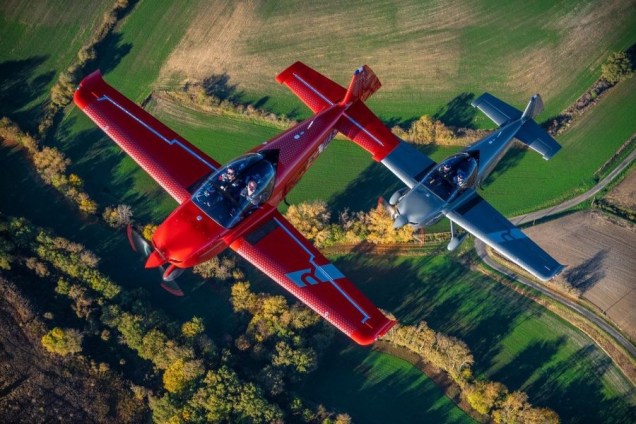
Powered by a Lycoming engine and driven by a constant-speed, two-blade MT propellor, the Integral R will have a cruising speed of 150kts and a range of 530nm. In 2023, Aura Aero indicated that EASA and FAA certification was expected from 2024.
However, since the Integral R made its maiden flight in 2020, the campaign has been marred by tragedy – with a fatal crash in April 2022 claiming the lives of both pilots and destroying the prototype. 19 months later, in November 2023, the R variant resumed its flight test campaign.
French aircraft manufacturer Aura Aero has completed the final test flight in the CS-23 certification campaign of its Integral R.
The taildragger Integral R is one of three aerobatically-capable, two-seat light aircraft variants currently under development by the Toulouse-based company and the first model to apply for type certification. (Other versions include the tricycle landing gear-configured Integral S and the all-electric Integral E).

In 2025 Czech aircraft manufacturer TL-Ultralight gained UK Type Approval for its tandem Stream light sport microlight aircraft. This accomplishment follows over two years of development in collaboration with the UK Civil Aviation Authority (CAA), the British Microlight Aircraft Association (BMAA), and TL’s UK agents, TL-Sting UK Limited.
The United Kingdom is the first country outside the Czech Republic to grant approval for the Stream, following a UK BCAR Section S standard certification.

In 2025 American manufacturer CubCrafters commenced production of the first microlight version of its popular Carbon Cub, named the Carbon Cub UL. The 160hp two-seater is powered by a Rotax 916iS and will be available in the US as a factory-built Light Sport Aircraft (LSA) and as a ‘factory builder assist’ Experimental Amateur Built (EAB) aircraft.
By using carbon-fibre in its construction, CubCrafters has reduced the empty weight to 390kg which, meeting the LSA maximum all-up weight of 600kg, provides a useful load of 210kg. The company stated that the UL is specifically designed to comply with the new Modernization of Special Airworthiness Certification (MOSAIC) rules, expected to be introduced by the FAA later this year. It also fits into the UK’s 600kg Light Sport Microlight category.
Engine: Rotax 916iS
Maximum cruise: 113kt
Stall speed: 28kt
Takeoff roll: 15m
Landing roll: 27m
Bert Volk started life as an engineer making cars in 1910.
A year later the first airplane landed in Brighton on the beach, a Bleriot monoplane. Volk became fascinated with aviation and he thought he would have a go.

In 1911, he started making parts for engines, wings, floats, and fabric bodies that would be fitted into planes, and two years later pleasure flights began being launched.
Bert Volk’s elder brother, Herman, invented a collapsible, portable hanger on the edge of the water from where pleasure flights started.
They were all built in bits and taken down to the seafront next to the Banjo Groyne, put together and launched into the sea.”
There was a ramp down into the water and planes were launched into the sea.
Seaplane pleasure flights began in Brighton in 1913
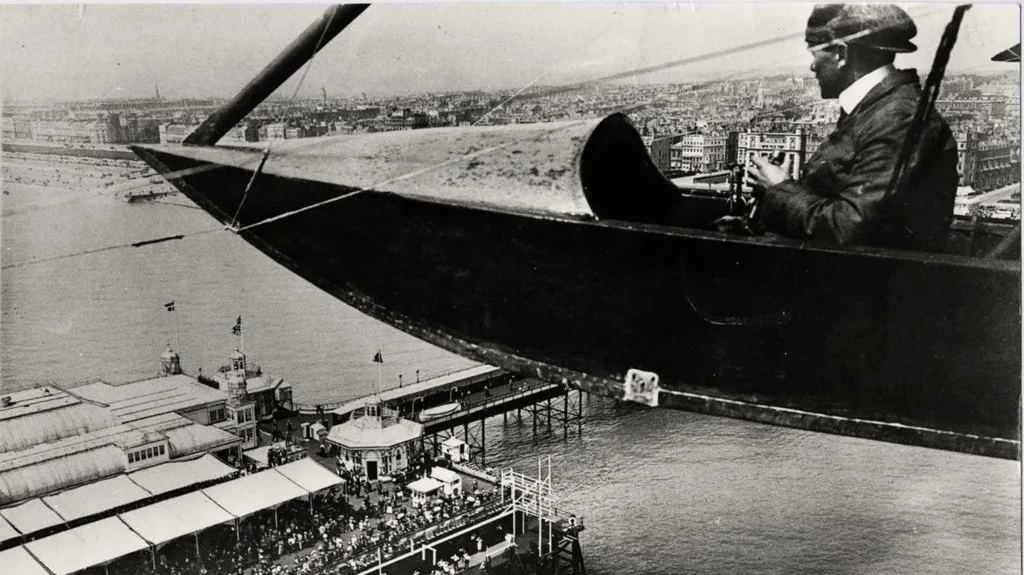
A year after flights started, the outbreak of World War One meant the hanger was requisitioned by the government and the project ended.
Herman Volk went off to manufacture planes for the war effort.
He also contributed to the development of Shoreham Airport – one of the first aerodromes in England.
After the war he took over the running of Volk’s Electric Railway on the seafront.
Bert went off to South Africa where he spent most of the rest of his life.
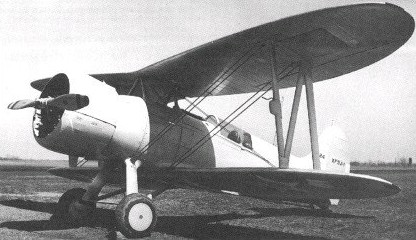
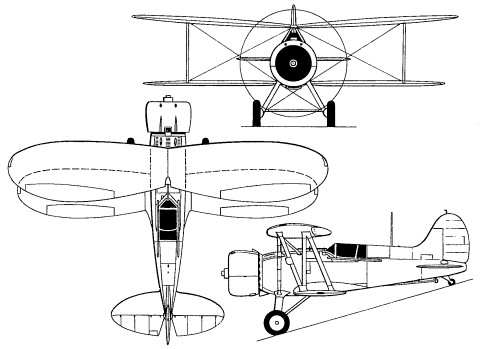
Designed by the US Navy Bureau of Aeronautics, the XF3J-1 was turned over to the Berliner-Joyce Corporation for development and construction. Ordered on 30 June 1932, this experimental single-seat shipboard fighter was completed in January 1934.
Of all-metal construction with a semi-monocoque fuselage and fabric-covered wings, the XF3J-1 was powered by a 625hp Wright XR-1510-26 radial. Armament was two 7.62mm synchronised machine guns, and provision was made for two 50kg bombs beneath the wings.
Although offering a good performance, the XF3J-1 was surpassed by the Grumman XF2F-1, and no further development was undertaken.
Engine: 625hp Wright XR-1510-26 radial
Empty weight: 1233 kg/2718 lb
Wingspan: 8.84 m/29 ft 0 in
Length: 6.98 m/23 ft 11 in
Height: 3.28 m/11 ft 9 in
Wing area: 22.26 sq.m/239.60 sq ft
Max. speed: 336 km/h/209 mph
Range: 1157 km/719 miles
Armament: two 7.62mm synchronised machine guns, two 50kg bombs
 All Aero