In 1957 Sim Paine built a single place, closed cockpit, high wing monoplane, registered N2747A.
Engine: 65hp Continental A-65-8
Wingspan: 24’0″
Length: 17’9″
Useful load: 158 lb
Max speed: 115 mph
Cruise speed: 95 mph
Stall speed: 50 mph
In 1957 Sim Paine built a single place, closed cockpit, high wing monoplane, registered N2747A.
Engine: 65hp Continental A-65-8
Wingspan: 24’0″
Length: 17’9″
Useful load: 158 lb
Max speed: 115 mph
Cruise speed: 95 mph
Stall speed: 50 mph
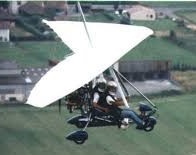
The Pagotto Brako is an Italian ultralight trike, designed by Enio Pagotto and produced by Carpenterie Pagotto of Pianzano.
The aircraft was designed to comply with the Fédération Aéronautique Internationale microlight category, including the category’s maximum gross weight of 450 kg (992 lb). The aircraft has a maximum gross weight of 450 kg (992 lb). It features a cable-braced hang glider-style high wing, weight-shift controls, a two-seats-in-tandem open cockpit without a cockpit fairing, tricycle landing gear with wheel pants and a single engine in pusher configuration.
The aircraft is made from welded stainless steel tubing, with its single or double surface wing covered in Dacron sailcloth. The Brako is factory supplied only with Grif wings. With the Trainer wing it has a wingspan of 10.35 m (34.0 ft). The wing is supported by a single tube-type kingpost and uses an “A” frame weight-shift control bar. The powerplant is a twin-cylinder, air-cooled, two-stroke, dual-ignition 50 hp (37 kW) Rotax 503 engine, with a reconditioned four-cylinder, air- and liquid-cooled, four-stroke, dual-ignition 80 hp (60 kW) Rotax 912UL engine optional.
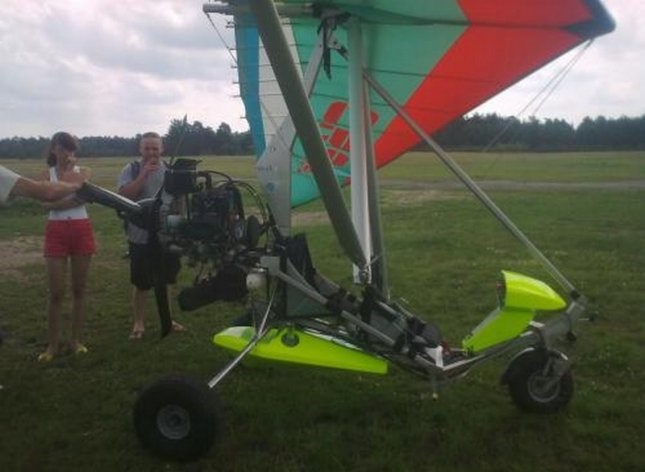
With the Rotax 503 engine and Grif Trainer wing the aircraft has an empty weight of 158 kg (348 lb) and a gross weight of 450 kg (992 lb), giving a useful load of 292 kg (644 lb). With full fuel of 42 litres (9.2 imp gal; 11 US gal) the payload is 261 kg (575 lb).
A number of different wings can be fitted to the basic carriage, including the beginner Grif Trainer, intermediate Grif Spyder and the higher performance Grif Corsair with wing areas of 12.8 sq.m (138 sq ft) and 13.7 sq.m (147 sq ft).
The aircraft was in production in 2013 and was supplied as a complete ready-to-fly-aircraft.
Brako / Grif Trainer wing
Engine: 1 × Rotax 503, 37 kW (50 hp)
Propeller: three-bladed composite
Wingspan: 10.35 m (33 ft 11 in)
Wing area: 16.0 m2 (172 sq ft)
Empty weight: 158 kg (348 lb)
Gross weight: 450 kg (992 lb)
Fuel capacity: 42 litres (9.2 imp gal; 11 US gal)
Maximum speed: 100 km/h (62 mph, 54 kn)
Cruise speed: 75 km/h (47 mph, 40 kn)
Stall speed: 45 km/h (28 mph, 24 kn)
Rate of climb: 2.8 m/s (550 ft/min)
Wing loading: 28.1 kg/m2 (5.8 lb/sq ft)
Crew: one
Capacity: one passenger
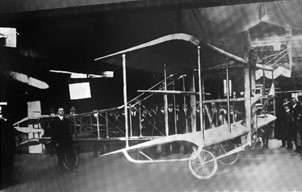
The 1909 single place Pagé-Light Biplane, loosely described as a Blériot XII copy with a lower biplane wing and interplane ailerons, was the work of Victor W Pagé and Oliver Light, both of Farmingdale, New York. At a February 1910 Boston aviation exhibition, the Pagé-Light was exhibited by the L.A.W. (League of American Wheelmen) Motors Company, and it was known under that name as well. The craft was powered by one of the company’s two-cycle Light rotary.
The LUSAC-25 (LUSAC = LePere US Army Combat) of 1919 was a development of the LUSAC-11.
Five are known to have been built: AS40025/40029.
The LUSAC-21 (LUSAC = LePere US Army Combat) of 1919 was LUSAC-11 refitted with the 420hp Bugatti 16 engine. One prototype was converted: AS40023.
Thirty LUSAC-11s with Liberty engines and three LUSAC-21 s with Bugatti engines were built, but contracts for quantity production were cancelled at end of First World War.
Engine: 420hp Bugatti 16
Length: 27’1″
Gross wt: 4485 lb
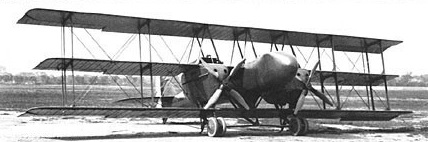
The 1919 LUSAO-11 (LUSAC = LePere US Army Observation) was a high-altitude long-range three seat open cockpit triplane observation aircraft for the Signal Corps.
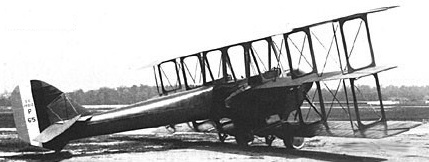
Only one prototype was built, SC40012.
Engines: 2 x Liberty 12, 400hp
Props: four-blade
Wingspan: 54’6″
Length: 38’2
Useful load: 3122 lb
Mas speed: 112 mph
Cruise speed: 106 mph
Stall: 60 mph
Range: 475 m
Ceiling: 17,300′
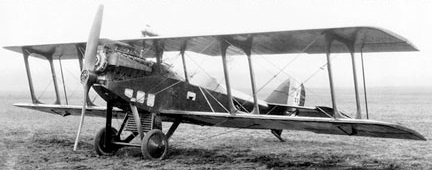
Captain Le Pere of the French Aviation mission to the USA, and Dwight Huntington designed a two-seat fighter, the LUSAC-11 (Le Pere United States Army Combat), which was built by the Packard Motor Car Company in 1918.
First flying in August 1918 piloted by Lt de Marmier, the LUSAC 11 (LUSAC = LePere US Army Combat) featured a plywood fuselage and box-type wing struts. It was the first US aircraft with a turbo-supercharger, and first to leave a vapor trail, on 27 February 1920.
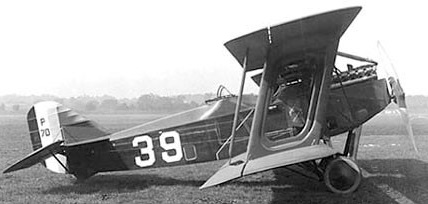
Two prototypes and 24 production LUSAC-11s with Liberty engines [AS40013/40023, AS42129/42142, AS42151] and three LUSAC-21s with Bugatti engines were built, but contracts for nearly 3,500 were cancelled at end of First World War.
AS40021 was modified as a single seat LUSAGH-11 with longer wings and a canopied cockpit at McCook Field. LUSAGH = LePere US Army Ground Harassment.
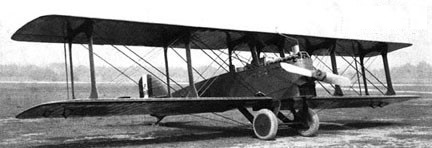
LUSAC-11
Engine: Liberty 12, 425hp
Wingspan: 41’7″ (?>39’0″)
Length: 25’3″ (?>25’5″)
Max speed: 133 mph
Cruise speed: 118 mph
Stall: 50
Range: 320 mi
Ceiling: 20,200′
Seats: 2
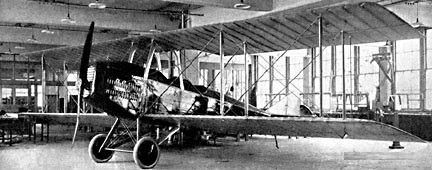
Circa 1919, the two place open cockpit biplane Packard A was Packard’s entry, featuring a self-starter, was planned for a civil market that failed to develop.
Only one was built, registered cn 01, N707.
A two place open cockpit biplane with a 200hp Packard-Liberty 8 found in the registers might be this ship, but it was not specified as actually a Packard Co product. The registry shows several private owners in Mt Clemens and Saginaw.
Engine: 160hp Packard 8
Useful load: 647 lb
Speed: 102 mph
Ceiling: 19,500′
Seats: 2
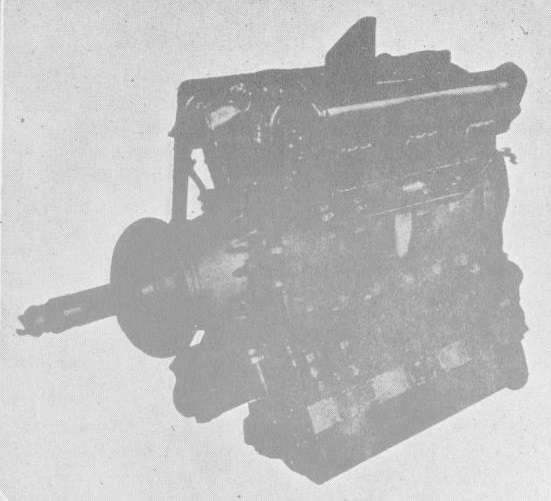
The X-24 came with a fuel pump, propeller hub and attaching parts, and tool kit.
Type: 24 cylinder X-type, water cooled
Military Rating: 1200 hp at 2600 rpm
Commercial Rating: 1200 hp at 2600 rpm
Displacement: 2775 cu.in
Compression ratio: 6-1
Bore: 5 3/8 in
Stroke: 5 in
Length: 77 1/2 in
Width: 28 5/16 in
Height: 44 33/64 in
Fuel consumption: not more than .55 lb/hp/hr
Oil consumption: not more than .035 lb/hp/hr
Lubrication: Pressure, dry sump, double scavenged
Ignition: 4 Delco
Carburation: 4 NAY6 P-Stromberg
Spark plugs: 2 Hornet B.G. per cylinder
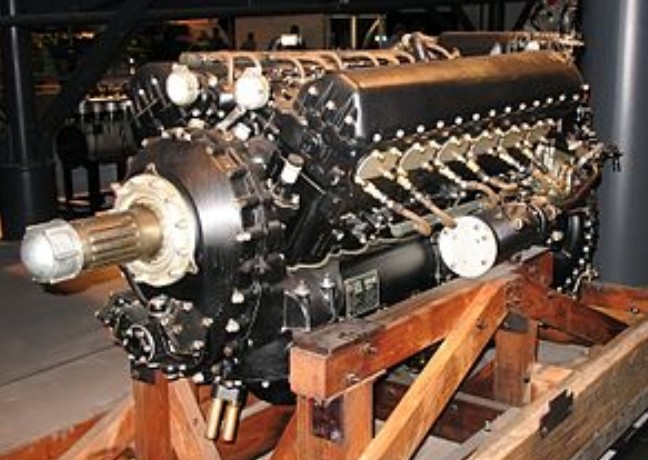
In June 1940, Henry Ford had offered to manufacture 1,000 aircraft a day if the government would let him do it his way, and during a discussion with Secretary of the Treasury Henry Morgenthau Jr. regarding what the Ford company might produce, Ford’s son Edsel tentatively agreed to make 6,000 Rolls-Royce liquid-cooled engines for Great Britain and 3,000 for the U.S. However, at the beginning of July, Henry Ford stated that he would manufacture only for defense, not for Britain, and the entire deal was declared off. Members of the Defense Advisory Commission subsequently began negotiations with other manufacturers in an effort to place the $130,000,000 Rolls-Royce order, and Packard Motor Car Company was eventually chosen because the engine’s British parent company was impressed by its high-quality engineering. Agreement was reached in September 1940, and the first Packard-built engine, designated V-1650-1, ran in August 1941.
The first American version of the Merlin was the Packard Merlin 28 (Mark XX), designated the V-1650-1 by the American military. This engine used a single-stage, two-speed supercharger. The two-speed gearing was – as well as for the “R-R” Merlins – from a French Farman patent license. As the Merlin 28, it was used for the Avro Lancaster bomber. The USAAF V-1650-1 version of this engine was used in the Curtiss P-40Fs. The initial Packard modifications to this engine changed the main crankshaft bearings from a copper lead alloy to a silver lead combination and featured indium plating. This had been developed by General Motors’ Pontiac Division to prevent corrosion which was possible with lubricating oils that were used at that time. The bearing coating also improved break-in and load-carrying ability of the surface.
The real improvement Packard incorporated into the Merlin was adopting the Wright supercharger drive quill. This modification was designated the V-1650-3 and became known as the “high altitude” Merlin destined for the P-51. The two-speed, two-stage supercharger section of the V-1650-3 featured two separate impellers on the same shaft that were normally driven through a gear train at a ratio of 6.391:1. A hydraulic gear change arrangement of oil operated clutches could be engaged by an electric solenoid to increase this ratio to 8.095:1 in high speed blower position.
The high speed gear ratio of the impellers was not as high as the ratio used in the Allison, but impeller speed is not the only factor that determines engine performance, which is also a function of the size and pitch of the impeller blades. The gear-driven supercharger is a parasitic accessory; therefore, impeller gearing and blade profiles are carefully designed for maximum power at altitude without compromise of available power at the critical take off stage of flight. The double staging of the compressed fuel/air mixture provided the boost pressure through a diffuser to the intake manifolds that increased the critical altitude of the power plant.
The ability of the supercharger to maintain a sea level atmosphere in the induction system to the cylinders allowed the Packard Merlin to develop more than 1,270 horsepower (950 kW) at altitudes beyond 30,000 feet (9,100 m). The two-stage impeller created extreme heating of the fuel/air mixture during the compression process and to prevent detonation of the compressed charge, it was necessary to cool the mixture prior to entry into the cylinders. The cooling was accomplished in an intercooler passage cast into the wheel case housing between the first and second stage impellers.
Ethylene glycol coolant was circulated by a pump through this passage to carry off the excess heat generated by the impellers. Without the intercooler the temperature of the charge could be as high as 400 °F (204 °C). The intercooler in itself was not adequate to deal with the high temperature and an additional cooling fin and tube core was placed between the outlet of the blower and the induction manifold to the cylinders. This radiator was known as an aftercooler and served as a reservoir for the supercharger cooling system. The glycol mixture used for cooling was independent of the main engine cooling system and used a centrifugal pump driven by the engine to circulate the coolant through an aircraft radiator system at a maximum rate of 36 U.S. gallons (136 litres, 30 Imperial gallons) per minute, depending on engine rpm. This combined system reduced the charge temperature to suitable levels.
Throttle valves in the updraft carburettor throat were controlled by an automatic boost control through the throttle linkage to maintain the selected manifold pressure with changes in altitude. The valves were only partially open during ground and low level operation to prevent overboosting of the engine. As air density decreases with increased altitude, the throttle valves were progressively opened in response to the reducing atmospheric pressure. This system provided full power within engine boost limitations up to the critical altitude of 26,000 feet (7,900 m).
It found its most famous application in the North American P-51 Mustang fighter, where it vastly improved that aircraft’s performance at altitude, transforming the Mustang into an outstanding fighter with the range and performance to escort heavy bombers over the European continent. By 1944, P-51B, P-51C and P-51D “Merlin” Mustangs were able to escort Allied heavy bombers in daylight all the way to Berlin and yet were still capable of combating German fighters attempting to intercept the bombers. By late 1944, the Allies had won air supremacy over the whole of Germany, and Germany’s defeat in World War II began to appear inevitable.
A total of 55,523 were built.
In the United States many war surplus engines and airframes were sold relatively cheaply – two of the most popular items were North American P-51 Mustangs and Packard V-1650 Merlin engines, several of which were “souped up” and modified for air racing in the Bendix Trophy, the Cleveland Air Races, and the Thompson Trophy.
Work continues on increasing the power output of the Merlin for the Unlimited Class racers at the Reno Air Races. Innovations, such as the use of Allison V-1710 connecting rods and the replacement of the intercooler with ADI (Anti-Detonate Injection) (50% Distilled Water and 50% Methanol), essentially the same idea as the Water Injection system used on Pratt & Whitney engines during World War II, have allowed great increases in power output. Many of the fastest Unlimited racers increase Merlin manifold pressures as high as 145 inHg (56.6 psi, 4.8 atm) to obtain the 3,800 horsepower, achieving Mustang speeds up to 490 mph.
Variants:
V-1650-1: 1,390 hp (1,040 kW); Based on Merlin 28, used in P-40 Kittyhawk and Curtiss XP-60 fighters
V-1650-3: 1,280 hp (950 kW); Based on Merlin 63.
V-1650-5: 1,400 hp (1,000 kW); Experimental.
V-1650-7: 1,315 hp (981 kW); Similar to Merlin 66, primary powerplant of the P-51D Mustang.
V-1650-9: 1,380 hp (1,030 kW); 2,218 hp WEP with Water methanol injection.
V-1650-9A: 1,380 hp (1,030 kW);
V-1650-11: 1,380 hp (1,030 kW); Modified fuel system.
V-1650-21: 1,380 hp (1,030 kW); Opposite rotation for P-82 Twin Mustang
V-1650-23:
V-1650-25:
Applications:
Avro Lancaster B Mk III/B Mk X
Bell XP-63
Curtiss P-60
Curtiss P-40F/L Kittyhawk
de Havilland Mosquito B Mk VII/B Mk 25
Hawker Hurricane Mk.X, XI, XII
North American P-51 Mustang
North American F-82 Twin Mustang
Supermarine Spitfire Mk.XVI
Specifications:
V-1650
Type: 12-cylinder supercharged liquid-cooled 60° “Vee” piston aircraft engine
Bore: 5.4 in (137.2 mm)
Stroke: 6 in (152.4 mm)
Displacement: 1,649 cu.in (27.04 lt)
Length: 88.7 in (2,253 mm)
Width: 30.8 in (781 mm)
Height: 40 in (1016 mm)
Dry weight: 1,645 lb (746 kg)
Valvetrain: Overhead camshaft-actuated, two intake and two exhaust valves per cylinder, sodium-cooled exhaust valve stems
Supercharger: Two-speed two-stage, boost pressure automatically linked to the throttle, water-air aftercooler installed between the second stage and the engine.
Fuel system: Twin-choke updraft carburettor with automatic mixture control
Fuel type: 100 Octane, from mid 1944 100/150 Grade Aviation fuel
Oil system: Dry sump with one pressure pump and two scavenge pumps.
Cooling system: 70% water and 30% ethylene glycol coolant mixture, pressurized.
Specific power: 0.95 hp/cu.in (43.3 kW/L)
Compression ratio: 6:1
Power-to-weight ratio: 0.80 hp/lb (1.73 kW/kg) take-off; 1.21 hp/lb (2.69 kW/kg) 100/150 grade fuel/MS gear.

