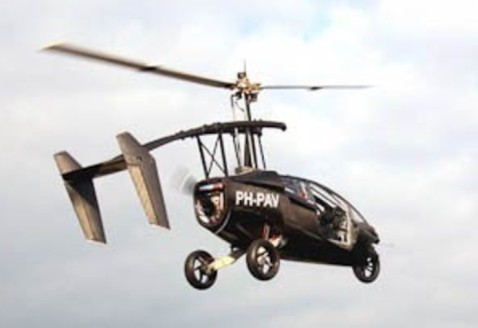
Papa 51 Thunder Mustang

The Thunder Mustang was originally designed by Martin Hollmann for Dan Denny in 1988. Martin later finished the design and performed the flutter analysis for high performance aircraft.

Papa 51 Inc has produced kits to build Thunder Mustang two-seat 75 percent-scale representation of P-51 fighter, first flown 1996. Papa51 Co. Ltd., the original manufacturer of the Thunder Mustang is no longer in business.

The Thunder Mustang was not in production. The Thunder Builders Group L.L.C. acquired the assets required to manufacture the Thunder Mustang through foreclosure on a loan. These assets were posted as for sale.
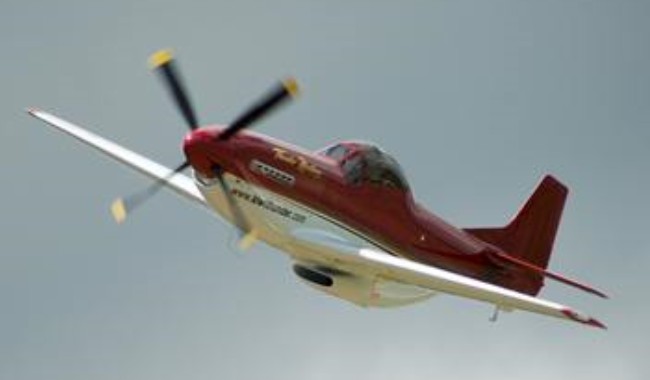
First flown in 1996, the two seat Thunder Mustang offers its owner a unique blend of speed, maneuverability and mystique. Given the power to weight ratio, it outperforms the original North American P-51D fighter at a fraction of the cost.

Thunder Mustang kits are complete, containing everything from the spinner, prop and engine to the tail wheel, less your choice of instruments, avionics, paint and upholstery. Extensive prefabrication helps reduce construction time and eliminate hassles. The complete use of carbon fiber in the structure produces incredible strength and light weight.

The 8 foot diameter, constant-speed 4-blade prop is manufactured by MT Propellers. The gear box ratio of 2.8:1 turns the prop at 1607 RPM for the optimum ratio for the best prop efficiency and high speed with the V-12 turning 4500 RPM. The 100 lb. propeller is of composite construction utilizing a wood core, which is self-dampening and non-fatiguing. This saves weight compared to metal propellers and reduces the gyroscopic effect of the prop on takeoff.
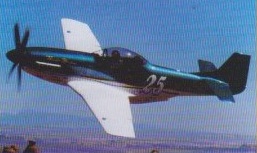
Walter-powered Thunder Mustang

Thunder Mustang
Powerplant: Falconer V-12, 640hp
Displacement: 601 cubic inches
Propeller: MT 94″ 4-blade constant speed
Length: 24.2 ft
Frontal Area: 8.1 sq. ft
Wing Span: 23.8 ft
Wing Area: 104 sq. ft
Height: 9.4 ft
Maximum Level Speed @ Sea Level: 326 kts (375 mph, 603 kph)
Cruise Speed: @ 75% Power: 300 kts (340 mph, 547 kph)
Vne (never exceed): 439 kts
Vsl (stall, clean): 77 kts
Vso (stall, in landing config.): 68 kts
Range: 1300 nautical miles
Rate of Climb @ gross: 5200 ft/min
Takeoff distance: 1000 ft
Landing distance: 2500 ft
Service Ceiling: 25,000 ft.
Gross Weight: 3200 lb
Empty Weight: 2200 lb
Useful Load: 1000 lb
Payload w/full Fuel: 400 lb
Basic Fuel Capacity: 102 gallons (in wings)
Baggage Capacity: 50 lb
Wing Loading: 28.84 lbs/sq.ft
Power Loading: 4.69 lbs/hp
Design Limit Load Factor: +9g / -6g @ 2600 lb / +7.3 / -4.9 g @ 3200 lb
Vx (best angle of climb): 87 kts
Vy (best rate of climb): 156 kts
Va (design maneuvering): 222 kts
Vfe (max flaps extended): 165 kts
Vle (max landing gear extended): 148 kts
Best Glide: 153 kts
Seats: 2

Engine: Falconer V-12, 640 hp
Wing span: 7.25 m
Wing area: 9.57 sq.m
MAUW: 1361 kg
Empty weight: 907 kg
Fuel capacity: 401 lt
Max speed: 603 kph
Cruise speed: 555 kph
Minimum speed: 109 kph
Climb rate: 26 m/s
Seats: 2
Kit price (1998): $195,000
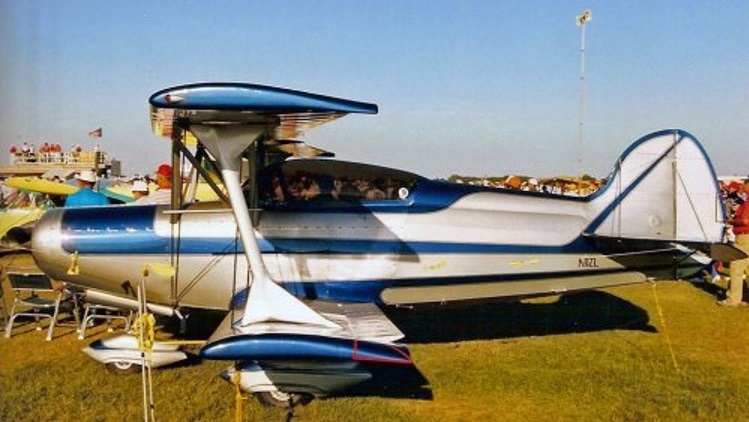
Panzl PAN

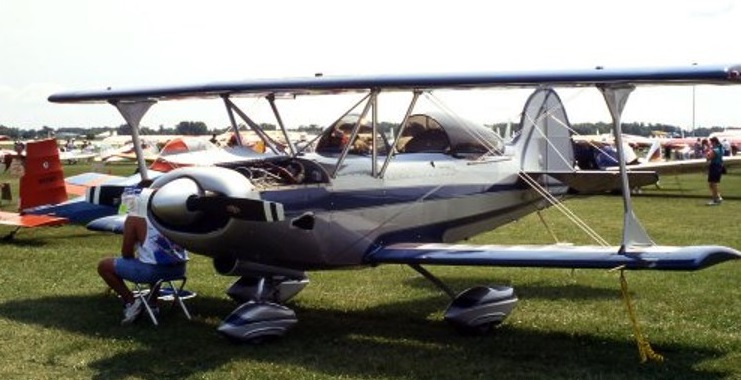
Despite its superficial resemblance to a Pitts S-2, the Panzl Pan 1 N11ZL is an original 1987 homebuilt experimental biplane. It was a two-place cabin biplane, powered by a Franklin 6V-335.

The one built, N11ZL c/n ZL-1, won the EAA Champion Custom-Plans Built award at Oshkosh in 1990.

It was substantially damaged on March 18, 2003 during impact with terrain following a forced landing attempt near Vernal, Utah. The commercial pilot, who was the sole occupant on board, received minor injuries.

Pander Multipro

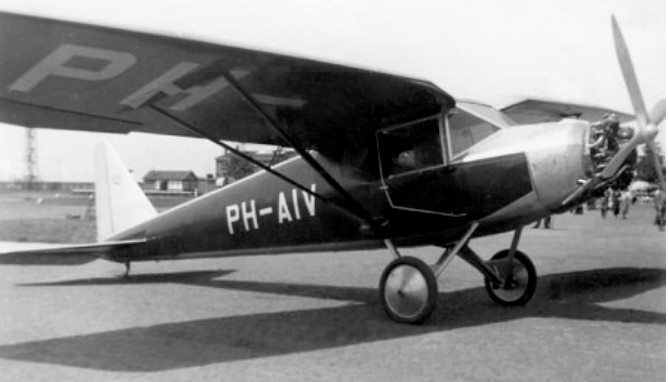
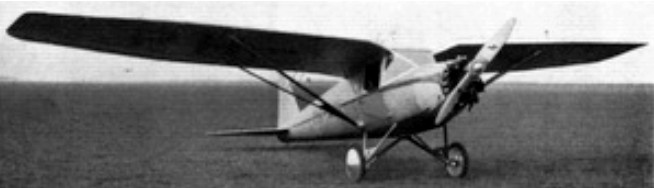
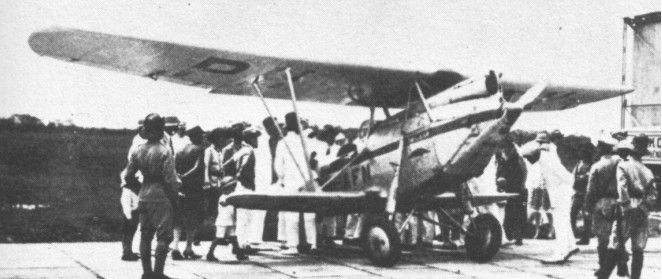
Designed by Theo Slot, who was responsible for all of Pander & Sons original designs, the Multipro is variously described as a side-by-side two seat or three seat light aircraft. It had high and almost constant chord wings, braced on each side by a V-form pair of struts fixed to the lower fuselage longerons. The fuselage was a rounded, plywood skinned structure, contemporaries remarking, as they had with other Panders, at the quality of the finish.

It was powered by a Pobjoy R 7-cylinder radial engine; the two blade propeller was driven via spur gears that reduced its speed and placed the output shaft above the engine centre, an unusual arrangement for a radial. The cabin was under the wing with a deep starboard-side access door and multi-panel glazing. The fuselage tapered aft, with the tailplane set half way up it and its fin and rudder together were almost triangular apart from a rounded tip. The Multipro’s conventional undercarriage was fixed, with the mainwheeels on V-sruts attached to the lower longerons and stabilized laterally by an inverted V-strut jointed at the fuselage central underside.

The Multipro flew for the first time in September 1932.

In all three Multipros were built. The first (PH-AIU c/n 42) and third (PH-AIX c/n 44) were rapidly sold to private individuals; the second (PH-AIV c/n 43) remained registered to the Pander works until 1937, when it too was bought privately. All remained on the Dutch civil aircraft register until at least 1939. One, the second aircraft, is known to have been destroyed by German bombing during the invasion of the Netherlands on 10 May 1940.

Engine: 1 × Pobjoy R 7-cylinder, 63 kW (85 hp)
Wingspan: 11.30 m (37 ft 1 in)
Length: 7.80 m (25 ft 7 in)
Gross weight: 720 kg (1,587 lb)
Maximum speed: 175 km/h (109 mph; 94 kn)
Capacity: 2 or 3

PAM 100B

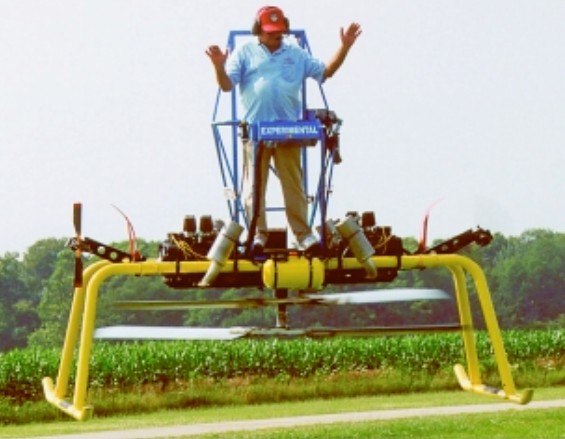
PAM 100B Single place, stand-on Individual Lifting Vehicle (ILV) with two composite 24″ diameter props for directional control. Simple tubular helicopter-type high strength airframe made of aircraft grade aluminum. Controls consist of a throttle and a fly-by-wire joy stick for directional control. There is no collective control. Kit price of $50,500 includes everything but shipping in 2009. Plans were also available.

Engines: (2) Hirth F-30 100 hp
Rotor Blades: Four extruded aluminum
Blade diameter: 9.17 ft
Chord: 8″ chord

Min Speed Hover
Cruise 45 mph
Top Speed 60 mph
Empty Weight 640 lbs
Useful Load 360 lbs
Gross Weight 1,000 lbs
Skid Width 10 ft
Height 9 ft
Length 8 ft

PAL-V One

The PAL-V (Personal Air and Land Vehicle) in flight is an autogyro or gyrocopter designed by C. Klok (exterior design), with a pusher propeller at the rear of the fuselage providing forward thrust and a free-spinning rotor providing lift. Directional stability is provided by twin boom-mounted tailfins. It has a tricycle undercarriage with relatively large wheels.

On the ground, the propeller and rotor are stopped and power is diverted to the wheels, allowing it to travel as a three-wheeled car. Unusually, it leans into turns like a motorcycle, a solution pioneered by the Carver vehicle, also produced by a Dutch company. However, the PAL-V does not tilt as a Carver but like the BMW “Simple Concept” from 2009. The PAL-V ONE transforms into a gyrocopter within minutes as its rotor unfolds and its tail extends. Converting the PAL-V ONE from airplane to automobile takes about 10 minutes. The propeller folds itself automatically into the driving position. Pushing a button then lowers the rotor mast into the horizontal position. The same motion lowers the tail. The outer blades are folded over the inner blades via hinge mechanisms. And then driver/pilot has to push the tail into its driving position and secure the rotor blades.

The PAL-V One has two seats and a 160 kW flight certified gasoline engine, giving it a top speed of 180 km/h (112 mph) on land and in air, and a Maximum Takeoff Weight of 910 kg.

A prototype model was first test flown in March 2012 and the company was seeking funds to develop the type for production. Estimated unit price is around $300,000 in 2014.

Engine: 160 kW
Dimensions Road (LxWxH): 4.0 x 1.6 x 1.6 m
Empty weight: 1,499 lb (680 kg)
Gross weight: 2,006 lb (910 kg)
Maximum speed: 97 kn (112 mph; 180 km/h)
Minimum control speed: 27 kn (31 mph; 50 km/h)
Range inflight: 220-315 mile
Range on land: 750 mile
Takeoff dist: 165m (540 ft)
Landing roll: 30 m (100 ft)
Capacity: 2