Patricroft Rogallo

Geoff Ball and Hughie McGovern

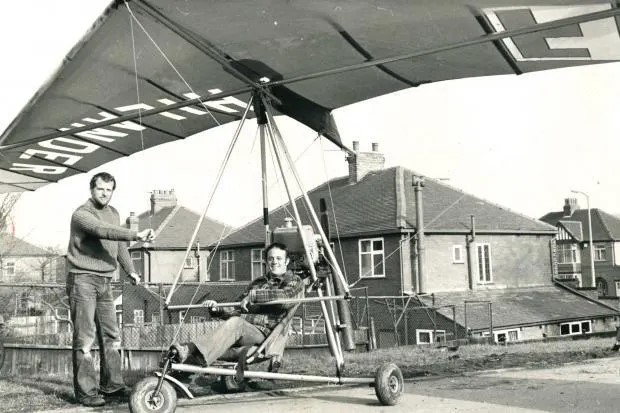
Geoff Ball and Hughie McGovern had a novel way of beating the traffic to work in the morning in 1981 – they flew in by hang-glider.
The engineers worked at Patricroft which made powered hang-gliders and they commuted to the factor from a field near Geoff’s Meadowside Avenue home in Tong Fold.

The journey took them less than 10 minutes and they never had to face any hold-ups

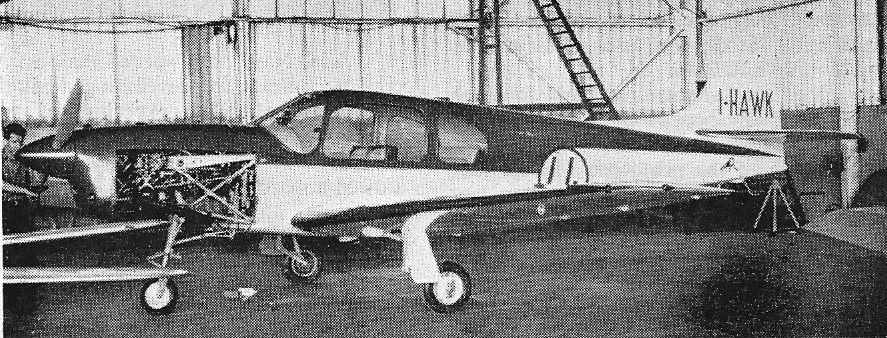
Paton Monoswift

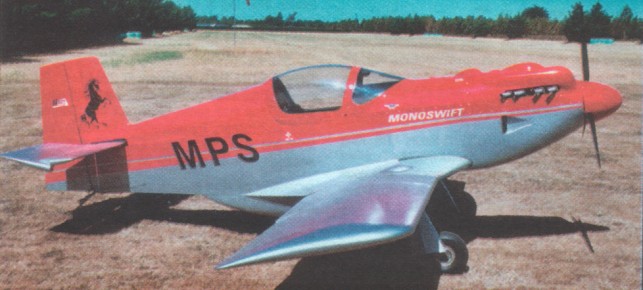
For Maurice Paton of Canterbury, New Zealand, his re¬quirements were to design an aircraft that was bigger than a Corby Starlet and about the same size as a Thorp T18, but to be a single seater and meet the micro¬light rules.

With all of these ideas in mind Maurice sat down at his computer and with the help of the C.A.D system he designed his Monoswift over a period of six months. The next step was to build a 3D surface model to prove the concept. Then followed the printing of detailed drawings of all the components at full size. This made the building easier and very accurate because each piece was built directly on top of the drawing.

Western Hemlock is the main type of ma¬terial used in the construction, with fibre¬glass being used for the wing tips and the belly fairings.

The engine option was the water-cooled 3.9-litre Rover V8 using a single, two-inch SU carburettor (instead of fuel injection) and a radiator belly scoop, which direct drives a ground adjustable, 68-inch, three-blade Warp drive propeller via a custom made adapter to the flywheel end of the crankshaft. Fuselage construction is basically a wood and ply box section, with formers for the shape and fibreglass for the non-structural cowlings, wing tips, etc.

The undercarriage is a tailwheel configuration with the main wheels attached to the main spar and folding into the lower fuselage. Engine cooling is via a radiator housed beneath the fuselage. The starting point for the drawings was a Thorp three-view, with a radiator belly scoop and a larger rudder, the undercarriage moved to the wings, a raised rear turtle deck and a reshaped engine cowl. The wing is a single piece and based on the Sirocco (that is, a box spar with no dihedral but given one degree of washout at the tips).

From start to finish the Monoswift took Maurice three years and two months to build.

The aircraft, sn MPS001, was first registered, to M J Paton, Rangiora, New Zealand, on 24 September 2003.

The aircraft was flown by Maurice from his home strip “Barraca” to the Rangiora airfield on 26-10-2003.
Maurice reports it just flies like any other plane with no real surprises. After eight hours he found it to cruise at 130 kts, stalls at 38 kts and uses 25 litres/hr. The manually operated system for the retractable undercarriage works well al¬though there is noticeable drag on the air¬craft when the wheels are going down. He approaches at 55 60 kts over the fence with good forward visibility and finds the air¬craft easy to control on the ground.
The empty weight has come out at 9001bs which allows for 300 Ibs. for fuel and pilot etc. Maurice is using a 3 blade, direct drive, ground adjustable propeller but has found that he is running out of pitch adjustment in flight. So he has purchased a new warp drive in flight adjustable propel¬ler which should see the cruise speed in¬crease to 145 150 kts. The only other mod he is considering is to add a trim tab on the elevator to unload the stick forces when the flaps are fully extended for approach and landing.

Engine: 1 x 3.9-litre Rover V8
Paterson-Francis 1913 Twin-Tractor

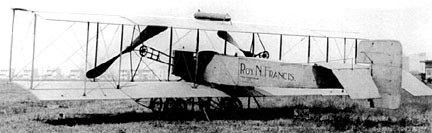
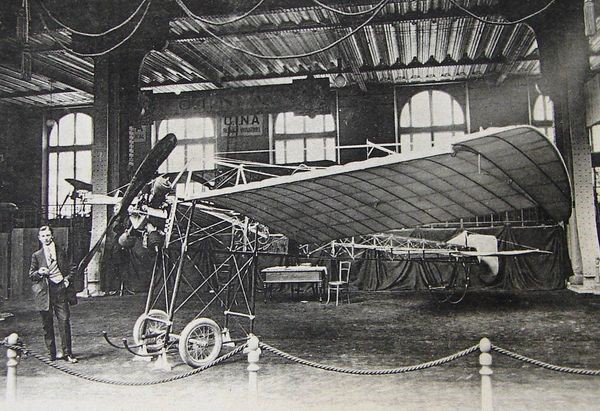
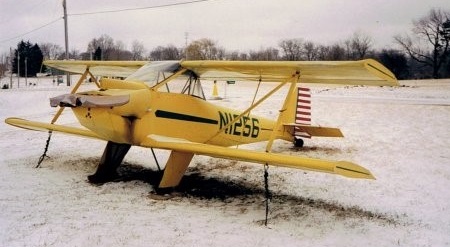
The Paterson-Francis Twin-Tractor of 1913 was a two-place open cockpit biplane. It was powered by Hall-Scott V-8 with two chain-driven props. A developed version of the 1912 Fowler-Gage, the plane’s components were designed and built in San Francisco by Francis, then shipped to Cicero IL for assembly. It crashed on its test flight and disappeared soon afterwards, either stolen or vandalized.

Paterson-Francis 1913 flying boat

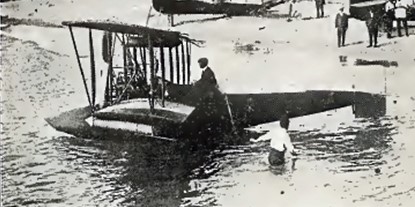
A flying boat with the engine mounted in the front of the (boat) fuselage, driving two tractor propellers via chains. Roy Noel Francis was a designer and aviator who in 1913 founded the Paterson-Francis Aviation Company. Charles Paterson was probably the financier. The machine was built in 1913 for the Great Lakes Reliability Tour. It apparently did survive the Great Lakes event and is reported to have been packed up by Francis and sent home, but nothing seems to be mentioned afterward. Around the same time, Paterson was reportedly building a monoplane flying boat.

Patchen Explorer/Observer

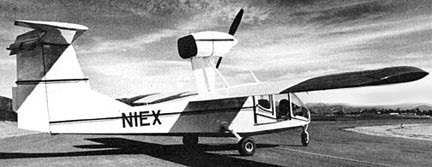
Patchen Explorer N1EX

Only one Patchen Explorer was ever built, in the 1960s, registered N1EX.

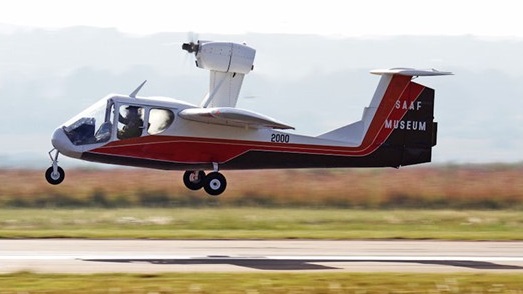
By 1982 the prototype was shipped to the Republic of South Africa and evaluated by the SAAF’s test flight and development centre for use as a light recon forward air control aircraft, but was not quite what was required. As a result it languished in a hangar for many years before being donated to the SAAF Museum.

National Dynamics (Pty) Ltd, South Africa, was formed 1975 after acquiring the prototype and all production rights of the Patchen Explorer/Observer four-seat cabin lightplane conceived originally by Thurston Aviation Corporation in the U.S.A., as a landplane development of the Teal amphibian.

Engine: Lycoming, 200hp
Max speed: 130 mph
Cruise speed: 115 mph
Seat: 2

The aircraft is still alive and well, operated by the South African Air Force Museum. Why only one prototype was ever built I do not know, as it is a great little aircraft with a fantastic helicopter-type view from the cockpit. I will admit that it does not have the greatest control harmony (sensitive rudder and elevator, heavy ailerons), but it goes well with a 200hp Lycoming and variable-pitch prop. I served with the SAAF Museum during 1999 as a display pilot and flew the Patchen at many airshows. It looks so weird that it attracts far more interest at airshows than many of the vintage aircraft! (James R Feuilherade 11/15/00)

Pasped Skylark W-1

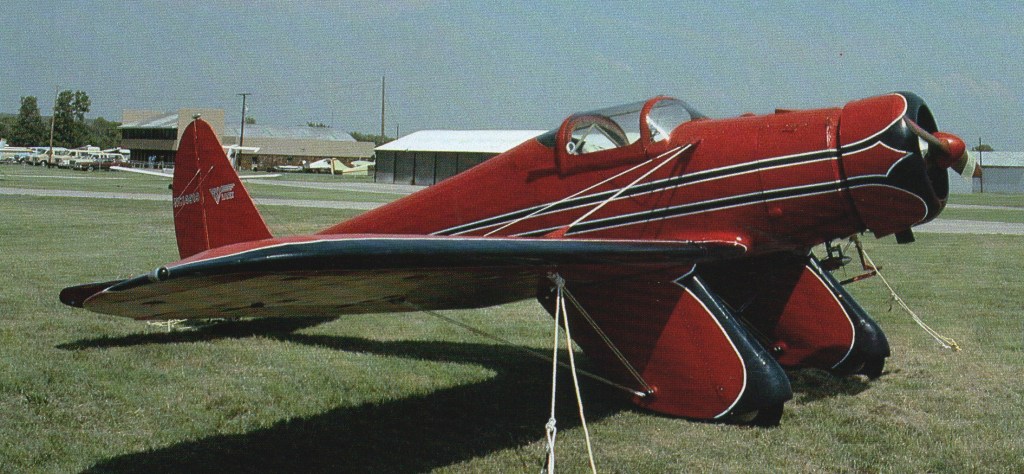
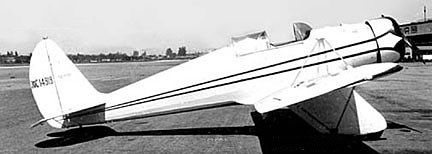
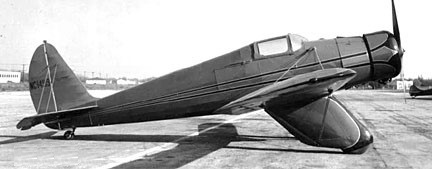
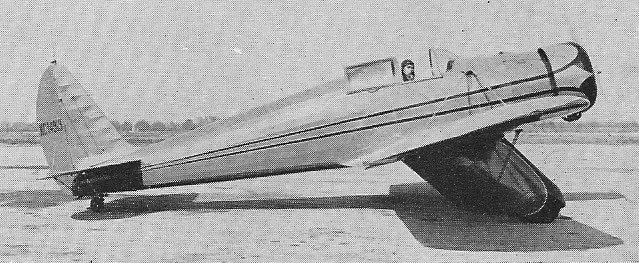
Based at Glendale, California, Fred Pastorius and Stanley Pederson designed the W-1 Skylark two-seat light cabin monoplane in 1935.

NX14919

A prototype was built (ATC 2-546) NX/NC14919 c/n 1, powered with a 125 hp Warner Scarab engine. The W-1 was equipped with full-panted gear and side-by-side cockpit with optional enclosure. It was later approved for 145-165hp Warners, but only the one was built at a price of $4,485.

NC14919

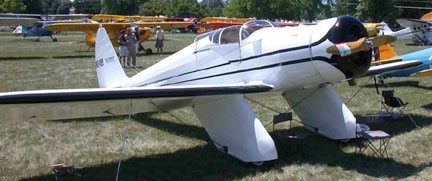
The prototype survived and was restored to flight circa 2002.

Pasped W-1 NC14919 Restoration at 2002 AirVenture

Engine: Warner Scarab, 125 hp
Wing span: 35’11”
Wing area: 187 sq.ft
Length: 25’0″
Height: 7 ft 11 in
Empty weight: 1288 lb
Loaded weight: 1775 lb
Useful load: 597 lb
Max speed: 139 mph
Cruise sped: 125 mph
Stall: 35 mph
ROC: 850 fpm
Service ceiling: 16.000 ft
Range: 475 mi
Seats: 2