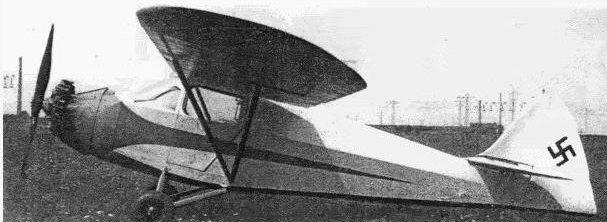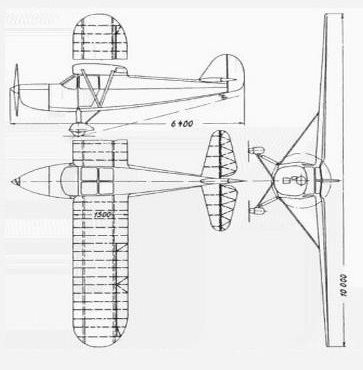
Payne Knight Twister Imperial

The Payne Knight Twister is a single-seat, single-engine aerobatic sport aircraft first flown by Vernon Payne Sr. in the United States in 1932 and marketed in plans form for homebuilding.

It is a conventional biplane design with slightly staggered wings of unequal span. The wings are of fully cantilever design and do not require the bracing wires commonly used on biplanes or even interplane struts; however, most builders brace the wings with I-struts and at least one pair of wires. The cockpit is open, and the undercarriage is of fixed, tailwheel type with divided main units. The wings and horizontal stabilizer are of wooden construction, skinned in plywood, while the fuselage and vertical stabilizer are of welded steel tube covered in fabric.

Payne designed the Knight Twister in 1928 while teaching aircraft design and repair at a school attached to the Aviation Service and Transport Company in Chicago. Construction of a prototype by Payne and his students commenced the following year but ended shortly thereafter when the school was forced to close as a consequence of the Great Depression. Payne began building a second prototype in 1931, which first flew in fall the following year powered by a Salmson 9Ad radial engine. This aircraft was damaged in a forced landing due to fuel exhaustion during a demonstration flight for the press, and parts of the airframe were reused to build the second Knight Twister in 1935. This machine, powered by a converted Ford Model A automobile engine, was built for an Argentine buyer who eventually declined to take delivery. After it had passed through several hands, Payne himself bought the aircraft back after World War II and his son, Richard, was killed in it during a test flight on which the engine failed shortly after take-off.
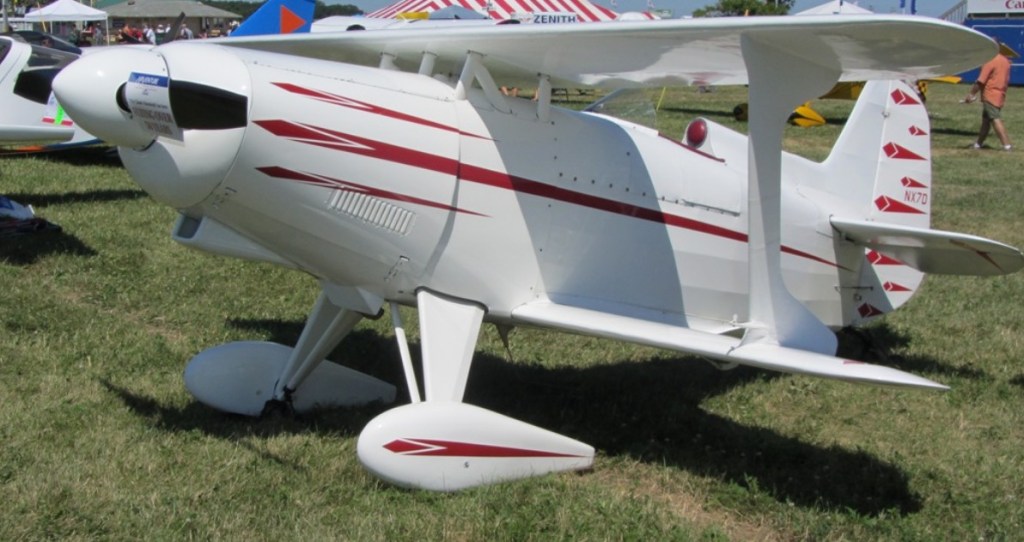
1951 D-1 Knight Twister

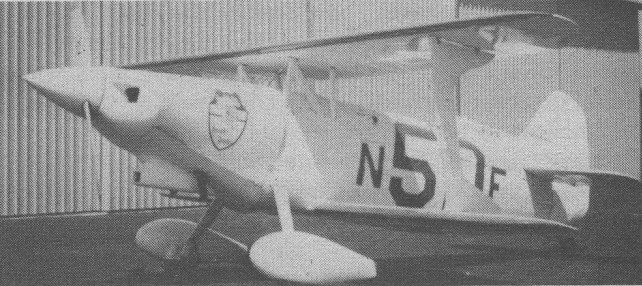
The Knight Twister built a reputation as a racing aircraft. In 1964, Clyde Parsons flying the “Parsons Twister”, won the Sport Biplane Championship race at Reno with a speed of 144.7 mph. In the 1970s, Don Fairbanks competed with a Knight Twister preserved initially at the Motorsports Hall of Fame of America museum in Novi, Michigan, and later in the lobby of Sporty’s Pilot Shop at Clermont County Airport, Batavia, Ohio. Fairbanks set the world record in the sport biplane class of 178 mph (284 km/h) with this aircraft.

The Knight Twister has a reputation as a “handful” to fly, but this has been vigorously denied by both its designer and by Fairbanks. Both men have attributed this reputation to the controls being lighter and more responsive than those of the light aircraft that most pilots are more familiar with.
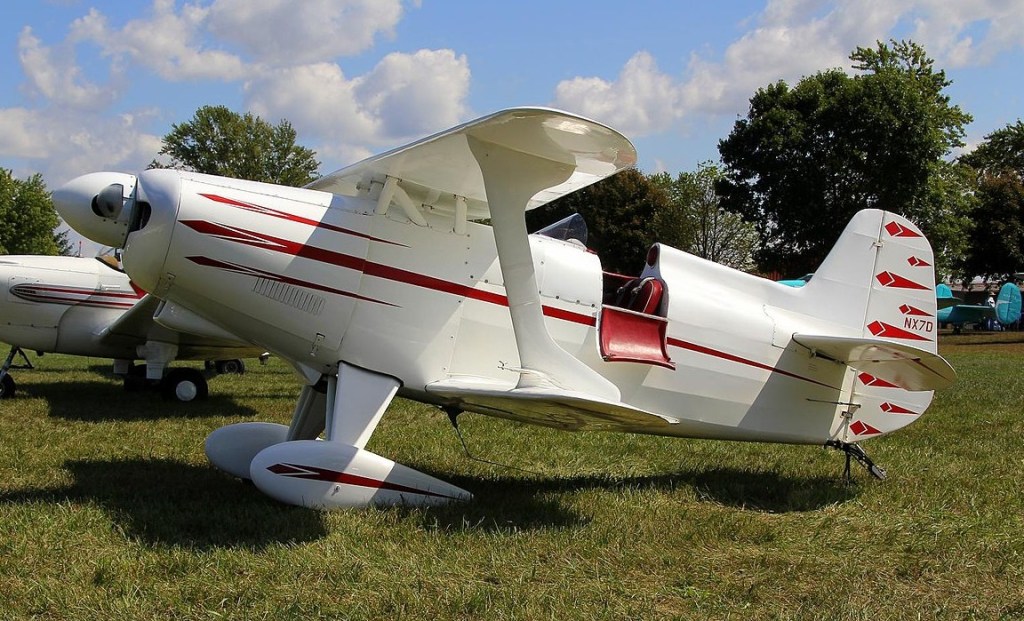
KT-125

In the 1990s, the rights to the design were acquired by Steen Aero, who continue to offer plans for sale in 2009.

Variants
KT-125
KTS-1 – first prototype with Salmson 9Ad engine (1 built)
KTD-2 – second prototype with converted Ford Model A engine designated Douglas Bear (1 built), later redesignated Knight Twister Junior 75-85
KT-50 – version with 50 hp (37 kW) Continental or Franklin engine and 18-ft wingspan
KT-75 Knight Twister Junior – version with 75 hp (56 kW) Continental or Lycoming engine and 17 ft 6 in-wingspan
KT-80 – version with 80 hp (60 kW) Franklin engine
KT-85 – standard version with Continental engine of 85 to 90 hp (63 to 67 kW) and 15-ft wingspan
KT-90 – version with 90 hp (67 kW) engine and 15-ft wingspan
KTT-90 – version with 90 hp (67 kW) Lycoming engine and 18-ft wingspan
KT-95 – version with 95 hp (71 kW) Lambert engine
KT-125 – version with 185 hp (138 kW) engine
KT-140 – version with 140 hp (104 kW) engine.
SKT-125 Sunday Knight Twister – version with 125 hp (93 kW) Lycoming engine and 19 ft 6 in-wingspan
KT Imperial – version with engine of 135 to 150 hp (101 to 112 kW) and wing area increased (span: 17 ft 6 in) to comply with Sport Biplane class rules
KT Holiday – version with 125 hp (93 kW) engine and wingspan of 19 ft 6 in
KT Acro – version with wingspan of 15 ft 6 in
KT Coed – version with passenger seat in tandem with pilot’s; wingspan of 22 ft 6 in.
Double Twist – A two place model with an untapered 21 ft M6 airfoil.
Pretty Prairie Special II model 1 – Straight leg conventionally braced based on a Knight Twister, stretched 16 inches
Pretty Prairie Special III – A Menasco powered variant displayed in the EAA Airventure Museum in Oshkosh, Wisconsin until 2006, and now at the Kansas Aviation Museum.

Payne Knight Twister
Span upper: 15.00 ft
Span lower: 13 ft
Length: 14 ft

Knight Twister Imperial
Engine 140-hp Lycoming.
Gross Wt. 900-1100 lb
Empty Wt. 694 lb
Fuel capacity 35 USG
Wingspan 17 ft
Length 16 ft 1 in
Top speed 170 mph
Cruise 120 mph
Stall 50 mph
Climb rate 1000 fpm
Takeoff run 475 ft
Landing roll 800 ft
Range 680 miles

KT-85
Powerplant: 1 × Continental C90 , 90 hp (67 kW)
Wingspan: 15 ft 0 in (4.57 m)
Wing area: 60 sq ft (5.6 m2)
Length: 14 ft 0 in (4.27 m)
Height: 5 ft 3 in (1.60 m)
Empty weight: 535 lb (243 kg)
Gross weight: 960 lb (435 kg)
Maximum speed: 160 mph (257 km/h, 140 kn)
Range: 390 mi (625 km, 340 nmi)
Rate of climb: 900 ft/min (4.6 m/s)
Crew: One pilot
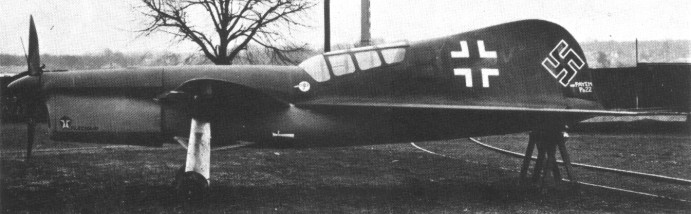
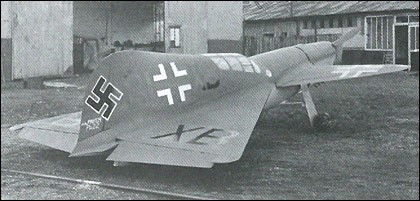
Payen PA-22 / PA-112

Roland Payen evolved a radical tandem-wing configuration which he dubbed the Fléchair, the short-span tapered foreplane carrying a combination of ailerons and flaps and the 67-deg aft plane carrying combined elevator-flaps, the pilot’s cockpit fairing into the vertical tail surfaces. In 1938, Payen proposed to the Ministère de l’Air a lightweight fighter version of the PA 112, a racing aircraft then being developed by the Sociêté Co-operative d’Etudes et Productions Aéronautiques (SCEPA) to the Fléchair configuration and intended to participate in the 1939 Coupe Deutsch de la Meurthe. The PA 112 was to be a retractable monowheel undercarriage with outrigger skids retracting into the aft plane. Weighing only 948 lb (430 kg) empty and 1,345 lb (610 kg) loaded, the PA 112 had extremely small overall dimensions which included a span of 13 ft 7¾ in (4,16 m) and a length of 22 ft 1 in (6,74 m), height being 6 ft 11 in (2,11 m), and it was rather optimistically anticipated that a maximum speed of 360 mph (580 km h) would be attainable. The projected lightweight fighter derivative, the PA112 Cl, was to have had two wing-mounted 7,5-mm machine guns and a 20-mm cannon firing through the extension shafts of the Salmson engines, and an elaborate mock-up of the proposed PA112 Cl was built, this, in fact, utilising the airframe of one of the two PA 100 Coupe Deutsch racing aircraft. Possibly as a result of the dramatically unorthodox nature of the proposed PA 112 Cl, no contract was forthcoming from the Ministère de lAir.

Although no example of the PA 112 was completed and the 1939 Coupe Deutsch was destined never to take place, development of the Fléchair concept continued with the PA 22 which was of similar configuration to the PA 112 but had a conventional engine installation and a conventional fixed tailwheel under¬carriage. The PA 22 had originally been built to test the Mèlot ramjet but was eventually to be completed in 1939 with a 180 hp Régnier R6 inverted inline air-cooled engine. After completion, it was mounted in the Chalais Meudon wind tunnel where it was found by the German occupation forces who expressed some curiosity as to its possible flying characteristics. Accordingly, it was transferred to Villacoublay where it was flown for the first time by Jacques Charpentier in October 1942. A flight test programme was conducted, but before this could be completed, the German authorities decided that the PA 22 should be taken to Rechlin. However, on the pretext that a number of modifications were necessary, Payen succeeded in having the prototype returned to his factory at Juvisy where it was intended to make changes to the undercarriage, mount supplementary fuel tanks and fit a variable-pitch propeller. In the event, these modifications were still in process when the factory was hit during an Allied bombing raid on the Juvisy railway yard, the PA 22 being destroyed.

Engine: Régnier R6 inverted inline air-cooled, 180 hp
Empty weight: 1,221 lb (554 kg)
Loaded weight: 1,894 lb (859 kg)
Wing span: 15 ft 9 in (4,80 m)
Length: 24 ft 3.33 in (7,40 m)
Height: 7 ft 8½ in (2,25 m)
Wing area: 107.64 sq ft (10,00 sq.m)
Maximum speed: 224 mph (360 kmh)
Maximum cruise: 205 mph (330 kmh)
Landing speed: 47 mph (75 kmh)

Payen AP-10

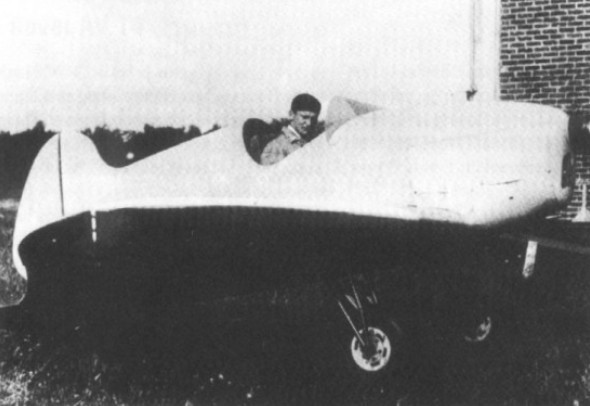
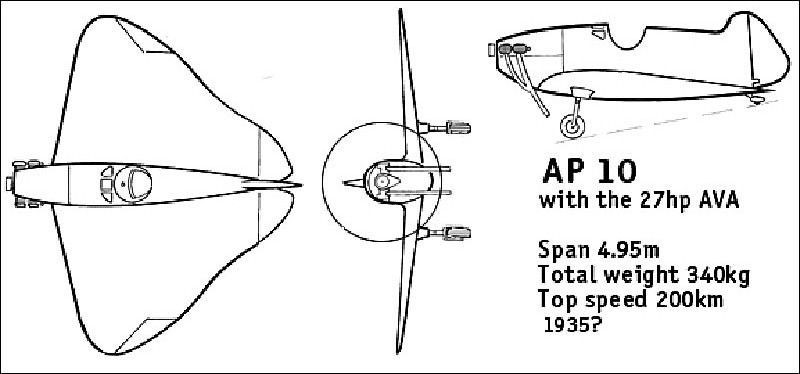
Payen first built a small single-seater AP-10, studied in collaboration with Aubrun. It was a light monoplane with triangular wing with a short length. This machine flew in Dieppe in 1935 and 1936, equipped with an AVA engine of 25 hp, then later a TRAIN of 40 hp. The AP-10 was extrapolated into the two-seater AP-12.

Wing span: 4.95m
Length: 4.16 m
Wing area: 10 sq.m
Empty weight: 200 kg
Max. gross weight: 340 kg
Min. speed: 45 km/h
Max. speed: 200 km/h

Pawnee Aviation Warrior

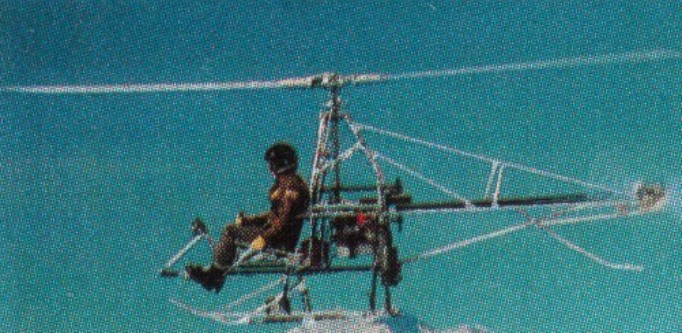
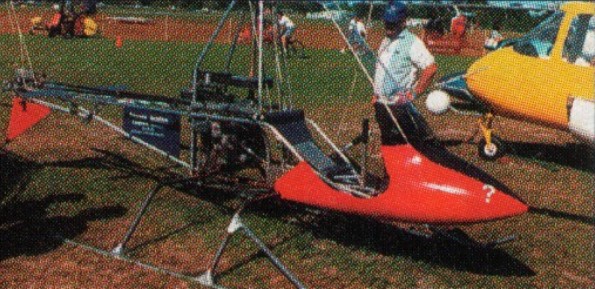
A kit helicopter, first flown in 1992, the kits had all major parts assembled, and all blades and parts balanced.
Kit price in 1997 was US$15,500.

Engine: Hirth, 65 hp
hp range: 65-110
Height: 7 ft
Length: 15 ft
Disk span: 21 ft
Empty weight: 435 lb
Gross weight: 825 lb
Fuel capacity: 14 USG
Max speed: 100 mph
Cruise: 80 mph
Range: 175 sm
Rate of climb: 1000 fpm
Service ceiling: 10,000 ft
Seats: 1

Paup P-Craft

Single seat single engined high wing monoplane with two axis control (optional conventional three axis control). Wing has unswept leading edge, swept forward trailing edge and tapering chord; cruciform tail. Pitch control by elevator on tail; yaw control by fin mounted rudder; no separate roll control (optional roll control by ailerons); control inputs through stick for pitch/yaw and (optionally) pedals for roll. Wing braced from below by struts; wing profile; double surface. Undercarriage has three wheels in tail dragger formation; bungee suspension on all wheels. Push right go right tailwheel steering connected to yaw control. No brakes. Aluminium tube/steel tube framework, without pod. Engine mounted below wing driving pusher propeller. Framework in 2024T3 aluminium and 4130 chrome moly steel. Wing covering is Stits Polyfiber, doped.
Shown for the first time to the public at 0shkosh in August 1982, P Craft from D Paup appears to be a minimum aircraft and as such is directly descended from the Kolb Flyer and Ron Wheeler Scout.

This one offers the choice between two axis control, with steering by induced roll, or conventional three axis control when fitted with ailerons (an option on the standard kit). Where the lower longeron and a higher, nearly parallel tube which carries the pilot seat meet at the nose, there is a horizontal transverse tube on which can be hinged the rudder pedals.

Paup aircraft offers the two axis version in kit form, requiring 150 hours for completion, at the price of $3395 in 1983.

Engine: Cuyuna 215D, 20hp at 6000rpm
Propeller diameter and pitch 36 x 12 inch, 0.91 x 0.30 m
No reduction
Power per unit area 0.15hp/sq.ft, 1.6hp/sq.m
Fuel capacity 2.5 US gal, 2.1 Imp gal, 9.5 litre
Wing span 32.5 ft, 9.88 m
Total wing area 132 sq.ft, 12.3 sq.m
Wing aspect ratio 8.0/1
Main wheels diameter overall 20 inch, 51 cm
Empty weight 165 lb, 75kg
Max take off weight 402 lb, 182 kg
Payload 237 lb, 107 kg
Max wing loading 3.05 lb/sq.ft, 14.8 kg/sq.m
Max power loading 20.1 lb/hp, 9.1 kg/hp
Max level speed 60 mph, 97 kph
Never exceed speed 70 mph, 113 kph
Max cruising speed 50 mph, 80 kph
Economic cruising speed 35 mph, 56 kph
Stalling speed 22 mph, 35 kph
Max climb rate at sea level 300ft/min, 1.5m/s
Take off distance 75 ft, 23 m

Paulista CAP-9 Carioca

The Companhia Aeronáutica Paulista CAP-9 Carioca four-seat, single-engine high-wing monoplane with enclosed cockpit and fixed undercarriage, was CAP’s last attempt, in 1947, to remain in the aircraft market. The company had chosen to build the CAP-9 Carioca instead of the CAP-8. The CAP-8 (which reached the prototype stage) was a 4-seater low-wing aircraft and although the prototype was made of wood in order to gain time (the war was about to end but there was still a shortage of aluminum), the idea was to build an all-metal aircraft.

Without commercial success with its new projects and a vertiginous drop in its orders, CAP ends its activities in 1948.