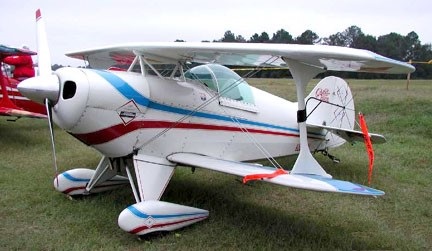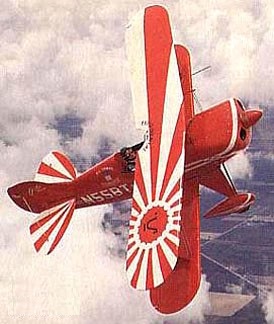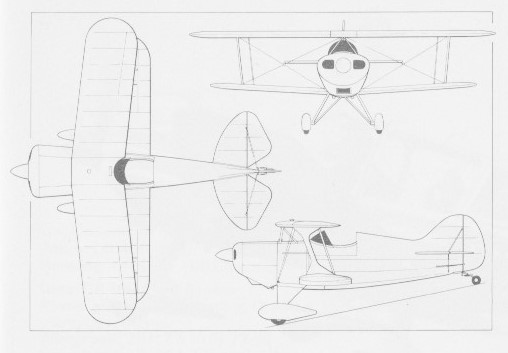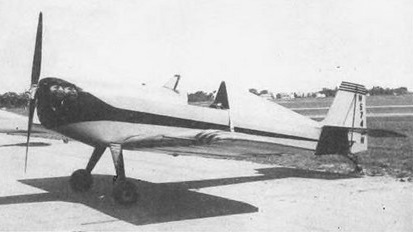
Pitts S-2

Pitts S-2B

It was not until 1967 that Pitts introduced the two seat S 2A. Although similar to the S 1 in configuration and construction, the S 2A is slightly larger in overall dimensions and shares little commonality in components. In 1973, five 200 hp S 2As were supplied to a British aerobatic team sponsored by Rothmans Tobacco. Five more S 2As were later supplied to the Carling Black Label team in Toronto, Canada. And in mid 1976, the Peruvian Air Force announced an order for six S 2As, for “an unspecified training role.” The single seater’s popularity has been partially eclipsed by that of the two seat version, the S 2A, which went into production early in 1971, and of which nearly 140 have been sold by 1977.

Pitts S-2A N846

The S 2A is slightly larger in all dimensions than the S 1; no attempt was made at commonality of structure. A tandem two holer with a 200 hp Lycoming engine and a constant speed prop, it is not a tiny airplane. Both wings use symmetrical airfoil sections, the upper considerably thicker than the lower; they are set at an incidence that compromises between the requirements of upright and inverted flight, so that the airplane feels slightly nose high in cruise but comfortably level when inverted. The cockpits are fairly roomy, but the instrument panel is inches from your face, and the optical distortions caused by the edges of the compound curved windshields add to an already (and inevitably) cluttered view. Canopy hoods of plexiglass may be fitted, at the expense of intimacy with the air. The hoods reduce the unpleasant forward pressure of the wind on the rear seat pilot. The cockpit sides are high, blocking visibility, which in the landing disappears altogether. Any object carelessly dropped finds its way into the far end of the tail cone, there to interfere with the elevator controls.
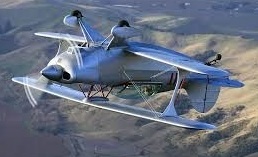
1972 Pitts Special S2A

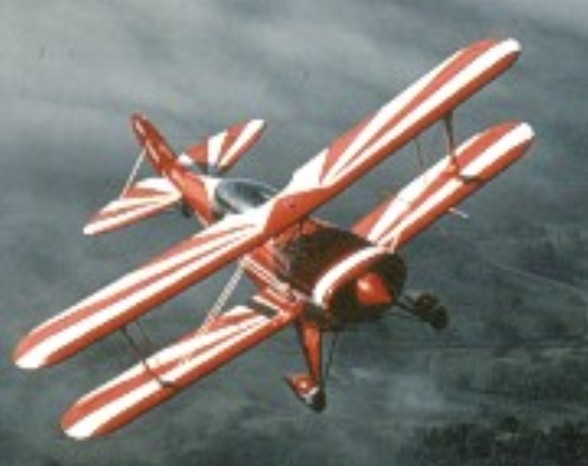
Besides its legendary ability to snap roll several times in succession with little loss of rate, the Pitts is notable for its willingness to be held in any attitude and yet to recover on command. As well as being a highly qualified aerobatic competitor, the S-2A is also ideally suited for advanced aerobatic instruction. It is a two-place aerobatic biplane that offers the student the opportunity to learn aerobatics under the supervision of an instructor.

The S-2B is a two-place 260hp aircraft. Wings and landing gear moved forward 6 in to balance the larger engine.
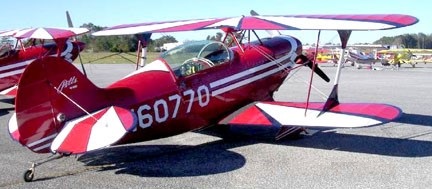
Christen-Pitts S2-B N60770

The S-2E price in 1982 was $50,800 as a complete kit. Units delivered to June 1982: 75.

The S-2S is identical to the S-2A except for the forward fuselage which has been shortened 14 inches to accommodate the larger 285hp Lycoming IO 540 engine, with the wings nine inches further forward and a number of other differences such as symmetrical ailerons which increase roll rate over other Pitts by 60″/sec (Up to 240″/sec). In addition, the front cockpit has been eliminated, making it a single-place plane. The S-2S’s larger size makes it ideal for air show flying as well as aerobatic competition. Its cruising speed of 175 mph combined with its fuel capacity of 35 gallons also gives it excellent cross country capability. With a 5 lb/hp and thrust/weight ratio of almost 1:1, it can, for example, do three vertical rolls in full competition, climb 300ft/min in knifedge and hover for “three or four seconds” at the end of a vertical climb. Climb rate is around 3,000ft/min and its snap roll rate is something like 480o/sec, and other party tricks include the ability to pinwheel, which is a stall turn through 540 degrees.

The first S 2S received its certification in mid 1981. The S-2S price in 1982 was $56,550 as a complete kit. Units delivered to June 1982: 10.

1972 Pitts Special S2A

The S-2, S-2A, S-2B, and S-2S are certified under FAA A8SO.

The S2-S was not a Pitts product, but a single place experimental home-built.

Pitts S2-S N99MF

Gallery

S-2A
First built: 1971
Engine: Lycoming AEIO-360-A1E, 200 hp
TBO: 1600 hr
Prop: Hartzell 2-blade, 76-in
Seats: 2
Length: 17.8 ft
Height: 6.4 ft
Wingspan: 20 ft
Wing area: 125 sq.ft
Maximum ramp weight: 1575 lb
Maximum takeoff weight: 1575 lb
Standard empty weight: 1000 lb
Maximum useful load: 575 lb
Maximum landing weight: 1575 lbs
Wing loading: 12.6 lbs/sq.ft
Power loading: 7.9 lbs/hp
Maximum usable fuel: 144 lb
Best rate of climb: 1900 fpm
Service ceiling: 17,000 ft
Maximum speed: 139 kt
Stalling speed: 52 kt
1.3 Vso: 71 kt
75% cruise: 121 kt
55% cruise: 113 kt
Range max fuel /75% pwr: 169nm/1.4hr
Range max fuel / 55% pwr: 209 nm/ 1.9 hr
Turbulent-air penetration speed: 134 kt
Fixed tail wheel under carriage
Min field length: 1150 ft

S-2B
Engine: Lycoming AEIO-540-D4A5, 260-hp
MAUW: 1700 lb
Empty Wt. 1175 lb
Pwr loading: 6.54 lb/hp
Wing loading: 13 lb/sq.ft
Length: 18 ft 9 in
Wing span: 20 ft
Height: 6 ft 7.5 in
Wing area: 125 sq.ft
Stall: 53 kt
Vne: 184 kt
Cruise 65%: 140 kt
Max X-wind: 17 kt
Range (wth res): 300sm
ROC: 2700 fpm

S-2C Pitts Special
Base Price 2009: $165,500
Engine: Lycoming AEIO-540, 260 Hp
TBO: 1200 hr
Fuel type: 100LL
Propeller: Hartzell, constant speed, composite three-blade
Landing gear: Fixed/Conv.
Max ramp weight: 1700 lb
Gross weight: 1700 lb
Max landing weight: 1700 lb
Empty weight: 1155 lb
Useful load: Normal 545 lb (aerobatic 470 lb)
Payload, full fuel: 371lb
Usable fuel: 28 USgal (23 USgal aerobatic)
Oil capacity: 12 qt
Wingspan: 20 ft
Overall length: 17 ft. 9 in
Height: 6 ft. 5 in
Wing area: 127.5 sq. ft
Wing loading: 13.3 lbs./sq. ft (12.7 lbs./sq. ft aerobatic)
Power loading: 6.59 lbs./hp (6.25 lbs./hp aerobatic)
Wheel base: 163 in.
Wheel track: 60.75 in.
Wheel size: 5.00 x 5
Cabin width: 2 ft. 4 in
Cabin height: 6 ft. 11 in
Baggage capacity: 20 lb
Stall: 56 kt
Max cruise: 169 kt
Cruise speed 75% power: 157 kt
Cruise speed 65% power: 150 kt
Cruise speed 55% power: 147 kt
Max range (w/ res) 75% power: 246 nm
Max range (w/ res) 65% power: 274 nm
Max range (w/ res) 55% power: 300 nm
Fuel consumption 75% power: 13.5 USgph
Fuel consumption 65% power: 12 USgph
Fuel consumption 55% power: 11 USgph
Estimated endurance (65% power w/1 hr reserve): 5.6 hr
Best rate of climb (SL): 2900 fpm
Takeoff ground roll: 554 ft
Takeoff over 50-ft. obstacle: 860 ft
Landing ground roll: 750 ft
Landing over 50-ft. obstacle: 1200 ft

Pitts S-2C
Engine: Lycoming AEIO-540, 260 HP
Propeller: The Claw by Hartzell 76: Composite Constant Speed
Length: 17 feet 9 inches
Height: 6 feet 5 inches
Wing Span : 20 feet
Wing Area : 127.5 square feet
Wing Loading : 13.3 lb/sqft (normal)/12.7 lb/sqft (aerobatic)
Power Loading : 6.59 lb/hp (normal)/6.25 lb/hp (aerobatic)
Seats : 2 tandem
Cabin Length : 6 feet 11 inches
Cabin Width : 28 inches
Cabin Height : 47 inches
Empty Weight : 1,155 pounds
Maximum Gross Weight : 1700 pounds
Useful Load : 545 lb (normal)/470 lb (aerobatic)
Payload w/Full Fuel : 371 pounds
Fuel Capacity w/5 Gallon Wing Tank: 29 U.S. gallons (28 gallons usable)
Aerobatic Flight Load Limits: +6 G/-5 G
Takeoff Distance Ground Roll: 554 feet
Takeoff Distance Over 50 ft Obstacle: 860 feet
Max Demonstrated Crosswind Component: 17 kt
Rate of Climb, Sea Level, Minimum Weight: 2,900 fpm
Maximum Level Speed, Sea Level: 169 kt
Cruise Speed w/30 min rsv. at 75% Power: 150 KTAS/1.6 hours
Range w/30 min rsv. at 75% Power: 284 st. miles
Fuel Consumption at 75% Power: 84 pph/14 gph
Best Economy: 6,000 feet
Landing Distance over 50 ft Obstacle: 1,200 feet
Landing Distance, Ground Roll: 750 Feet
VY (Best Rate of Climb): KIAS 82
VA (Design Maneuvering): KIAS 134
VNO (Max Structural Cruising): KIAS 134
VNE (Never Exceed): KIAS 185
VSI (Stall, Clean): 56 KIAS

Aviat Pitts S2C
Engine: Lycoming AEIO-540-D4A, 260 hp
TBO: 1200 hr
Fuel type: 100LL
Propeller: Hartzell Constant Speed
Landing gear: Fixed Bungee
Max ramp weight: 1700 lb
Gross weight: 1700 lb
Landing weight: 1700 lb
Empty weight, std: 1155 lb
Useful load, std: 545 lb
Payload, full std. fuel: 377 lb
Useful fuel, std: 28 USG
Oil capacity: 12 qt
Wingspan: 20 ft
Overall length: 17 ft. 5 in
Height: 6 ft. 5 in
Wing area: 127.5 sq. ft
Wing loading: 13.3 lbs./sq. ft
Power loading: 6.25 lbs./hp
Wheel size: 5.00 x 6
Seating capacity: 2
Cabin width: 24 in
Cabin height: 41 in
Baggage capacity: 20 lb
Cruise speed 75% power: 160 kt
Cruise speed 65% power: 156 kt
Cruise speed 55% power: 152 kt
Max range (w/ reserve) 75% power: 270 nm
Max range (w/ reserve) 65% power: 290 nm
Max range (w/ reserve) 55% power: 310 nm
Fuel consumption 75% power: 14.0 USgph
Fuel consumption 65% power: 12.9 USgph
Fuel consumption 55% power: 11.5 USgph
Vso: 56 kt
Best rate of climb (SL): 2900 fpm
Service ceiling: 29,500 ft
Takeoff ground roll: 554 ft
Takeoff over 50-ft. obstacle: 860 ft
Landing ground roll: 750 ft
Landing over 50-ft. obstacle: 1200 ft

S-2E
Designed in 1966
Gross weight: 1,500 lb
Empty weight: 980 lb
Useful load: 520 lb

S-2S
First built: 1977
Engine: Lycoming AEIO-540-D4A5, 260 hp
TBO: 1600 hr
Prop: Hartzell 2-blade
Seats: 1
Length: 17.4 ft
Height: 6.4 ft
Wingspan: 20 ft
Wing area: 125 sq.ft
Maximum ramp weight: 1575 lb
Maximum takeoff weight: 1575 lb
Standard empty weight: 1100 lb
Maximum useful load: 475 lb
Maximum landing weight: 1575 lb
Wing loading: 12.6 lbs/sq.ft
Power loading: 5.7 lbs/hp
Maximum usable fuel: 210 lb
Service ceiling: 20,000 ft
Maximum speed: 185 kt
Stalling speed: 58 kt
Turbulent-air penetration speed: 134 kt
Fixed tail wheel under carriage

Pitts S-1

Pitts S-1-11B Super Stinker

Curtis Pitts began designing the single-seat S 1 in 1942. The 55 hp prototype flew in September 1944, but was repowered with 90hp Franklin and sold to a cropduster, who reportedly was so hard of hearing that one time he didn’t hear the motor quit and crashed—no injury, but the plane was written-off.

Pitts S-1 Article

A second Special, with 85hp Continental C-85, went to aerobat Betty Skelton in 1947 as Li’l Stinker (NX86401/N22E) (still active in 1975, displayed at NASM 2001).

Black Beauty (built by Pitts for Caro Bailey) started the trend toward more power by packing a 125 hp Lycoming O 290.

Betty Skelton Pitts Special

The Pitts Special is a single seat, open cockpit, fully aerobatic biplane. The fuselage is made up of a welded steel tube structure to which plywood formers and wooden stringers are fitted, the whole being fabric covered except for the aluminium front panels. Roth wings have solid spruce spars to which are fitted wooden ribs, each wing panel being internally and externally wire braced and fabric covered. The wings are set at 6 degrees sweep back at the quarter chord line, Frise type ailerons are fitted only to the lower wings, which have 3 degrees dihedral. Single faired interplane struts and N type cabane struts are fitted. The wing airfoil section is an M6.The main undercarriage is made up of welded steel tube and utilises rubber cord shock absorption. The tail wheel is steerable. A 16 Imperial gallon fuel tank is located immediately aft of the firewall. Engines of from 100-200 h.p. may be fitted.

The 1960 S1-C or Flatwing incorporated a semi-symmetrical airfoil and lower-wing ailerons with a Continental O-200 engine. The first S1-C was Pat Ledford’s (N8L) and the plans were drawn up as it was constructed. They were redrawn in the ’90s by Steen Aero Lab, incorporating many minor changes, one of which was the inclusion of the slightly-longer S1-S fuselage.

Christen-Pitts S1-C N3507

The S-1D is a four aileron version with a modified M-6 airfoil, completely certified. Kits and plans were marketed to home-builders.

The S1-E is an experimental, home-built version of the S1-S, with some crossover in names and parts provided by the factory between the -S and –E. An unknown number of S1-E became certified S1-S.

The S-1S model was first year built in 1974. The price in 1982 was $41,690 as a complete kit, or certified under FAA A8SO.

Christen-Pitts S1-S N55BT

S1-S / Roundwing of 1973 was an S1-D with two different symmetrical airfoils on the upper and lower wings with four ailerons.

S1-S production continued until 1981, when its plans were released for home-builders. Any home-built S1-S predating 1981 was not a true S1-Ss.

S1-SS or Super Stinker Pitts Special used an airfoil and aileron setup derived from the S-1-11/-11B “Super Stinker” aircraft, which was not a Pitts Special nor was it an S1, but a new design meant for world championship aerobatic competition. S1-SS was offered by Steen Aero Lab since the ’90s as supplemental wing plans to fit onto any S1 fuselage.

Christen-Pitts S1-SS N519DC

The 1981 S-1T is a single-seater model which claims roll rates of up to 240 degrees/second. A certified version that superseded the S1-S, with a 200hp engine, constant-speed prop, and new aileron design. Pitts has sold more than 2500 sets of plans for the popular S-1T.

Christen-Pitts S1-T

By 1998 the Pitts S-1 was marketed by Aviat Aircraft.

Gallery

S1 Special
1945
Engine: 55hp Lycoming
Wingspan: 20’0″
Length: 18’3″
Seats: 1

S-1C
Engine: Lycoming IO-360-B4A, 180 hp
Speed max: 147 mph
Cruise: 143 mph
Range: 250 sm
Stall: 64 mph
ROC: 2600 fpm
Take-off dist: 300 ft
Landing dist: 600 ft
HP range: 125-200
Fuel cap: 20 USG
Weight empty: 720 lb
Gross: 1150 lb
Height: 6.25 ft
Length: 15.5 ft
Wing span: 17.33 ft
Wing area: 98 sq.ft
Seats: 1
Landing gear: tail wheel

Engine: Lycoming O-320, 150 hp
Cruise: 150 mph
ROC: 2650 fpm
Range: 300 sm
Span: 17 ft 5 in
Length: 15 ft 6 in
Empty wt: 720 lb
Max wt: 1050 lb

S-1C
Engine: 1 × Textron Lycoming AEIO-540-D4A5, 260 hp (194 kW)
Wingspan: 17 ft 4 in (5.28 m)
Length: 18 ft 9 in (5.71 m)
Maximum speed: 210 mph (338 kph)
Maximum range: 319 miles (513 km)
Service Ceiling: 21,000 ft (6,400 m)

S1-D
Enine: 180hp Lycoming IO-360B
Wingspan: 17’5″
Length: 15’6″
Useful load: 425 lb
Max speed: 145 mph
Cruise speed: 135 mph
Stall: 64 mph
Range: 230 mi
Ceiling: 22,000′

S-1S
First built: 1973
Engine: Lycoming AEIO-360-B4A, 180 hp
TBO: 2000 hr
Prop: Sensenich 2-blade, 72-in
Seats: 1
Length: 15.5 ft
Height: 6.3 ft
Wingspan: 17.3 ft
Wing area: 98.5 sq.ft
Maximum ramp weight: 1150 lb
Maximum takeoff weight: 1150 lb
Standard empty weight: 740 lb
Maximum useful load: 410 lb
Maximum landing weight: 1150 lb
Wing loading: 11.7 lbs/sq.ft
Power loading: 6.4 lbs/hp
Maximum usable fuel: 120 lb
Best rate of climb: 2500 fpm
Service ceiling: 18,000 ft
Maximum speed: 139 kt
75% cruise: 123 kt
55% cruise: 115 kt
Stalling speed: 56 kt
Turbulent-air penetration speed: 134 kt
Fixed tail wheel under carriage
Payload max fuel: 257 lb
Range max fuel/75% pwr: 148 nm/1.2 hr
Range max fuel / 55% pwr: 190 nm/ 1.7 hr
Min field length: 800 ft
Fuel cap: 114 lb

S-IT
Gross Wt. 1150 lb
Empty Wt. 830 lb
Fuel capacity 20 USG
Wing span 17’4”
Length 15’6”
Engine 200-hp AEIO-360-AE1
Top speed 185 mph
Cruise 175 mph
Stall 64 mph
Climb rate 2800 fpm

Aviat Aircraft Pitts S-1
Engine: Lycoming
Wing span: 5.27 m
Wing area: 9.06 sq.m
MAUW: 522 kg
Empty weight: 345 kg
Fuel capacity: 72 lt
Max speed: 222 kph
Cruise speed: 195 kph
Minimum speed: 100 kph
Climb rate: 12.5 m/s
Seats: 1
Fuel consumption: 35 lt/hr
Plan price (1998): US$250

Pitt Yellow Jacket

In 1953 Bruce & Gilbert Pitt designed and built the sole single place low wing monoplane, Yellow Jacket N5745N. The fuselage was framed with tubing from a surplus PT-23 and a Porterfield, and the wings from a 1948 Anderson Special. The Yellow Jacket was first flown on 8 August 1953.

“Bullet” cowls were added to streamline the four cylinders of the 85-hp Continental C-85-8 motor.

Engine: Continental C-85-8, 85-hp
Wing span: 14 ft.
Length: 19 ft
Max speed: 150 mph
Cruise speed: 130 mph
Stall: 60 mph

Pither Monoplane

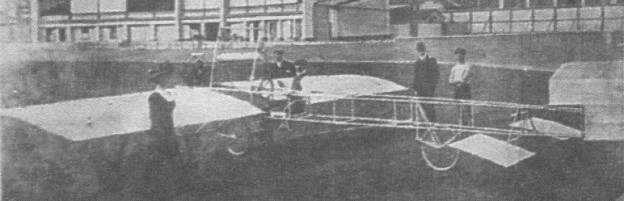
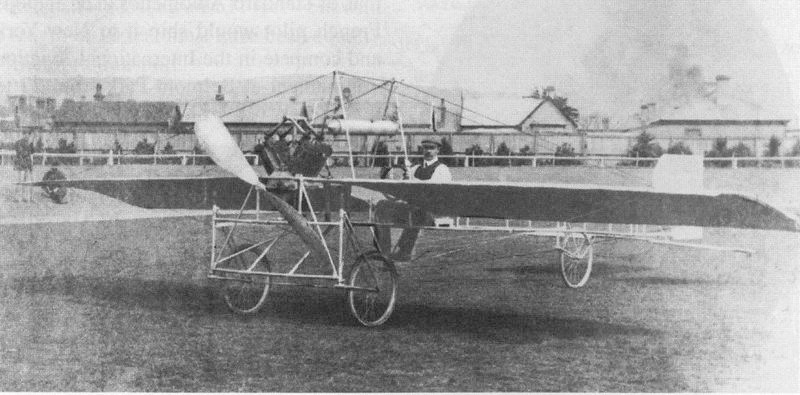
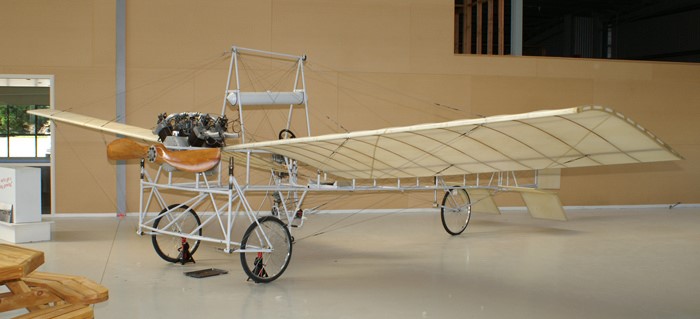
Herbert John Pither of Invercargill, New Zealand, was a professional cyclist, cycle and small engine manufacturer and aviation experi¬menter. The basic facts are clear. Pither built a Bleriot type monoplane, and a V 4 configured engine to power it. He incor¬porated some ideas of his own, including the early use of bicycle steel for the airframe. His workmanship was of a high standard.

Pither tested his aircraft on a remote Southland beach in winter 1910, but there is no contemporary record of a witness to the flight he later described. He claimed to have flown for 1.5 km along Riverton Beach on 15 July 1910 at a height of 30 ft.

He took it to Australia in November 1910 hoping to attract the attention of the Australian government, and then disappeared from aviation history.

Replica

Pitcairn-Cierva PAA-1

The 1931 PAA-1 (ATC 433) was priced at $6,750. Twenty-five were built.

Any PA-20 or PAA-1 autogyro could be changed to a PA-24 by installing a Kinner B-5 engine.

Year: 1931
Engine: Kinner B-5, 125 hp
Rotor dia: 37 ft
No of blades: 4
Span: 22’9″
Length: 18’7″
Gross wt: 1750 lb
Empty wt: 1178 lb
Max speed: 90 mph
Cruise: 75 mph
Range: 250 mi
Ceiling: 10.000′
Seats: 2

Pitcairn-Cierva PA-39

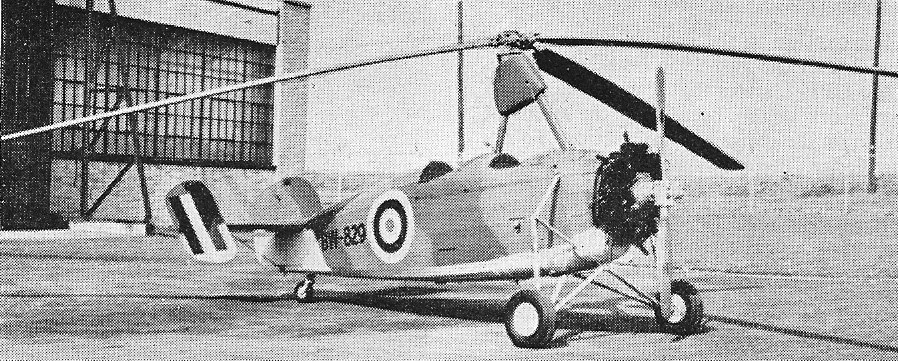
PA-39 BW829

Seven PA-18 Autogyros were recalled during WWII and rebuilt as PA-39 for the British Air Commission in the latter half of 1941. BW829 was the first constructed.

The were used experimentally and for RAF communications duties.

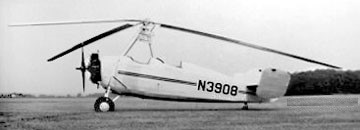
Pitcairn PA-39 N3908

BW829 to BE833 were crated and shipped to England but were lost when their transport was sunk.

BW834 and 835 remained in the USA and were used by the British Air Commission personnel for communications duties.

Year: 1939
Seats: 2
Engine: Warner Super Scarab, 165 hp
Gross wt: 2150 lb
Rotor dia: 42 ft 3 in
No of blades: 3

Pitcairn-Cierva PA-36 / Pitcairn-Larsen PA-36

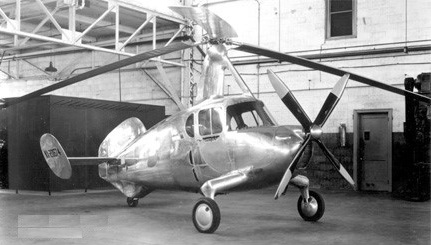
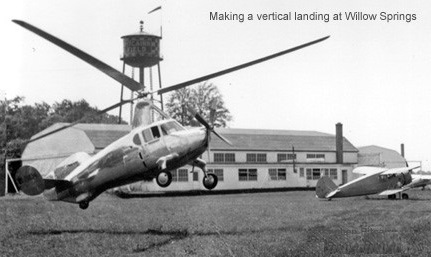
Cierva’s C30 series and Pitcairn’s PA-22 and Luscombe-built aluminum body PA-36, and the KD-1 series constructed by Kellett Autogiro Company of Philadelphia were capable of jump take-offs and direct-control without wings.

Designed by Agnew Larsen, one PA-36 Whirl Wing, o Pitcairn-Larsen PA-36, was built, in 1939, NX20674. An all-metal, roadable version of Autogiro AC-35 for military trials with side-by-side cabin, which proved unsuccessful with the advent of the helicopter and it was cut up for scrap during WW2.

Another was partially constructed as the Pitcairn-Larsen PA-36 in 1941.

Year: 1939
Engine: Warner Super Scarab, 165 hp
Rotor dia: 43 ft
No of blades: 3
Length: 20’5″
Width: 8’3″
Gross wt: 2050 lb
Useful load: 625 lb
Max speed: 122 mph
Cruise: 102 mph
Range: 375 mi
Seats: 2

Pitcairn-Cierva PA-34 / XOP

Pitcairn XOP-1

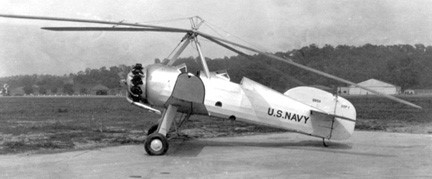
In 1931 the US Navy used three PA-34, with 45’0″ rotor, designated XOP-1, for testing stability in carrier use.

Of the three, A8850, A8976, and A8977, the first was modified as the wingless XOP-2, and the last two were flown by the USMC.

Engine: Wright R-975/E2, 420 hp
Gross wt: 3300 lb
Empty wt: 2300 lb
Rotor dia: 46 ft 2 in
No of blades: 3
Seats: 2