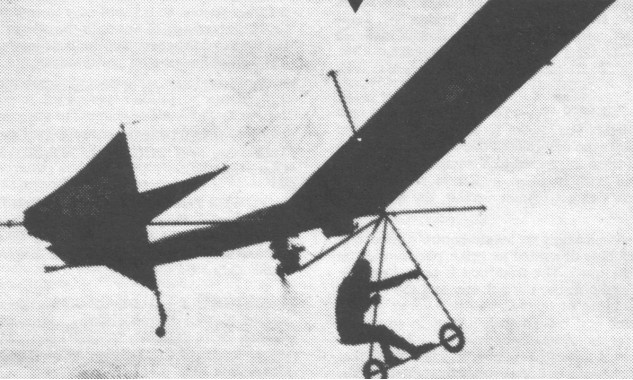
A single seat single engine, high wing mono¬plane with hybrid control circa 1983. Wing has unswept leading and trailing edges, and constant chord; cruciform tail. Pitch control by weight shift; yaw control by fully flying rudder; no separate roll control; control inputs through weight shift for pitch/yaw/roll. Wing braced from above by kingpost and cables, from below by cables; wing profile single ¬surface. Undercarriage has three wheels in tail dragger formation. Metal tube framework, without pod. Engine mounted below wing driving pusher propeller.
It appears to have a rudder to assist the weight-shift in yaw, a combination which is sufficient to class the Zhuravlic as a hybrid, but it is not clear whether a similar arrangement is used for pitch control or whether the pilot relies solely on weight shift for up/down control.
No details are given of the power unit, except that it is of 350 cc and is coupled to a two blade propeller.
Wing span 31.5 ft, 9.60 m Engine: 350 cc Empty weight 121 lb, 55 kg Max level speed 37.5 mph, 60 kph Best glide ratio with power off: 30/1 Take off distance 66ft, 20m Landing distance 33ft, 10m Service ceding 6600ft, 2000m
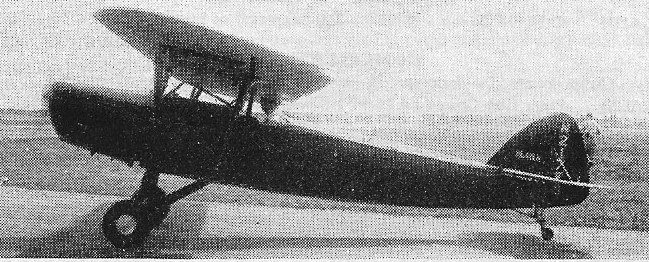
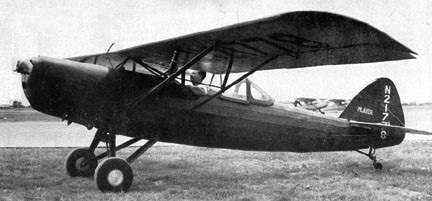
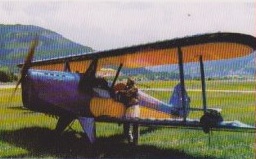
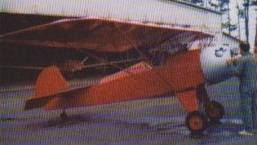
The 1941-built Player monoplane N21778 was fabric covered geodetic construction. Design based on Long Longster and Corben Super Ace plans published in Mechanix Illustrated. Wing modified from a Long Longster, tail from a Curtiss-Wright Junior. Fuselage was first of Player’s geodetic incorporations.
Player Sport N21778
Canopy cockpit. Later repowered with 65hp Continental A-65. Still flying in the 1960s
c.1936 Engine: 45hp Ford A Seats: 1
Engines: Continental A-65, 65 hp Span: 30 ft 0 in Length: 10 ft 0 in AUW: 740 lb Max speed: 95 mph Cruise: 87 mph
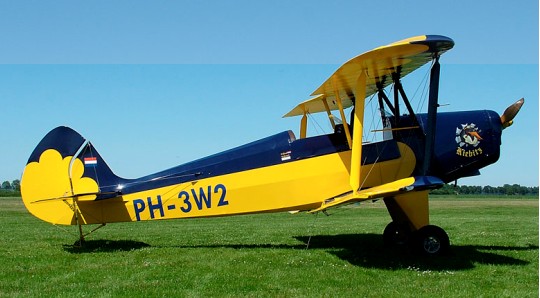
Based on the 1927 Focke-Wulf S-24 “Kiebitz”, the modern Kiebitz was designed by Michael Platzer and has been available as an UL-biplane kit since 1984. Almost 300 Kiebitz biplanes had been built by homebuilders throughout the world.
Various engine options have flown, including Rotax 2 and 4 stroke, Limbach 2000, Sauer 2100, Nissan MA12, and English built 100 hp Mid-West rotary.
Engine: Nissan 12 P, 50 hp Wing span: 7.6 m Wing area: 18.3 sq.m MAUW: 400 kg Empty weight: 200 kg Fuel capacity: 50 lt Max speed: 140 kph Cruise speed: 125 kph Minimum speed: 50 kph Climb rate: 3 m/s Certification: Vz Seats: 2 Fuel consumption: 9.5 lt/hr Plan price (1998): 1500 DM
Engine: Nissan MA12 Seats: 2 Tandem Wing Span: 7,6 m Wing Area: 18,3 sq.m Length: 6,9 m VNE: 77 kts Cruise: 60 kts Stall speed: 38 kts Empty Weight: 220 kg / 485 lbs Max. take-off weight: 472 kg
In 1981 Michael Platzer designed and built Germany’s first legal ultralight with three axis control, the P.4 Motte. It has a spaceframe fuselage and dural tube wings.
A parasol UL, the Motte was rebuilt and fitted with a converted Nissan Micra automobile engine.
P4 Motte BR Engine: Rotax 462, 52 hp Wing span: 8.2 m Wing area: 11.4 sq.m MAUW: 285 kg Empty weight: 170 kg Fuel capacity: 40 lt Max speed: 145 kph Cruise speed: 125 kph Minimum speed: 50 kph Climb rate: 4 m/s Certification: Vz Seats: 1 Fuel consumption: 13 lt/hr Plan price (1998): 1000 DM
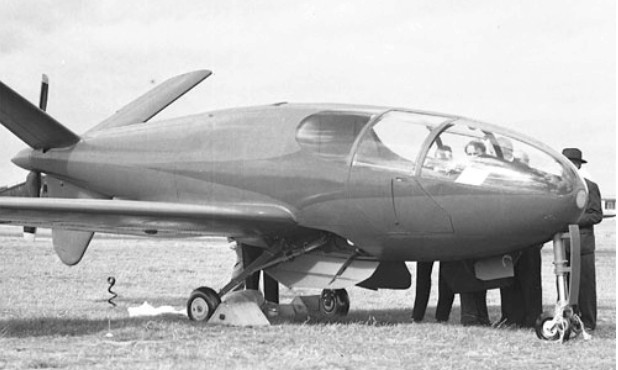
A three-seat light aircraft with vee tail and pusher propeller, the Planet Satellite was powered by a Gipsy Queen 32 via an extension shaft. The first aeroplane constructed entirely of magnesium sheet, and with retractable tricycle undercarriage.
Designed and built by J.N.D.Heenan of Croydon, UK, in 1948, the Satellite appeared at the 1948 Farnborough Airshow. Construction of the prototype G-ALOI c/n 1 was completed at Redhill,
Chronic vibration problems brought attempts at flight to a close at Blackbushe in 1949. After a period of store at Redhill it was broken up in 1958.
A second prototype, c/n 2, was built and used in the construction of the Firth helicopter G-ALXP.
Engine: Gipsy Queen 32 Wingspan: 33.08 ft Length: 26.03 ft
UK Built Satellite three-seat light aircraft with vee tail and pusher propeller in 1949. The first aeroplane constructed entirely of magnesium sheet, it was powered by a Gipsy Queen engine, but did not fly and was subsequently broken up. Fuselage of the second prototype was used in the Firth helicopter.
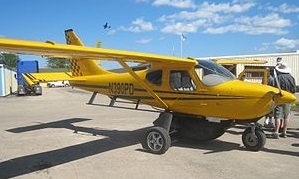
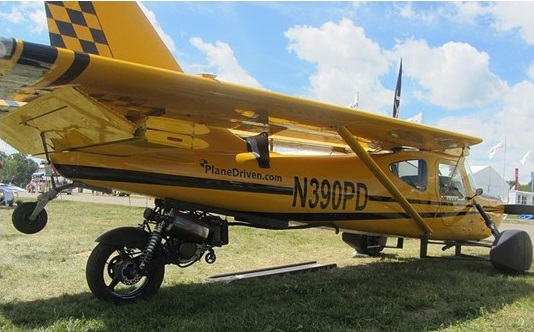
The Plane Driven PD-1 is a modification to the Glasair Sportsman 2+2 to convert it into a practical roadable aircraft. Trey Johnson, a homebuilt aircraft built the PD-1, intended to be an aircraft first, and a car second. The approach uses a mostly stock aircraft with a modified landing gear “pod” that carries a separate engine for road propulsion.
The engine pod carries a separate engine for road travel with its own fuel tank. The wheels are driven through an automatic transmission with a reverse gear. The lightweight fuselage coupled with a low power engine allows 25 miles per US gallon (9.4 L/100 km; 30 mpg imp) fuel economy with 5 US gallons (19 L) of usable fuel. The aircraft is registered in Washington State as a motorcycle due to its 3-wheel configuration.
PD-2 pod installation
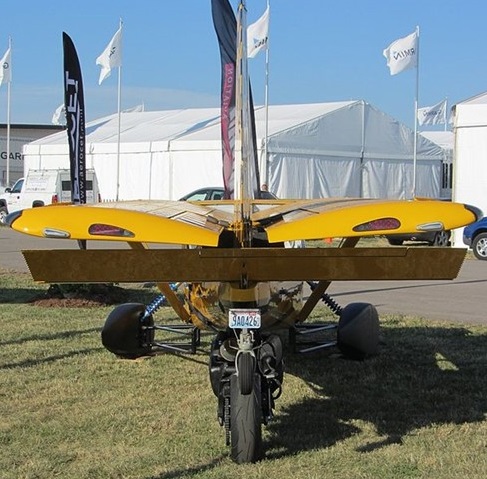
The PD-1’s wings fold along its sides, and the main landing gear and road engine pod slide aft along special rails, creating a driving configuration. The driving configuration compensates for the rearward center of gravity created by the folded wings, and provides additional stability for road travel.
The wings are hinged to allow them to rotate and fold back against the rear fuselage of the plane. The horizontal stabilizer is also hinged to reduce the width of the vehicle in road travel mode.
The prototype was constructed using Glasair’s two weeks to taxi program. It was started on March 29, 2010, and the modified prototype was test flown by July 21, 2010.
The vehicle can cruise at a speed of up to 140 mph in normal flight even with the road engine sitting as dead weight.
The prototype was displayed at the Experimental Aircraft Association Airventure airshow in 2010. The company’s second generation refinement was code named the PD-X, with intention of building a marketable aircraft based on the PD-X test results.
PD-2 rear
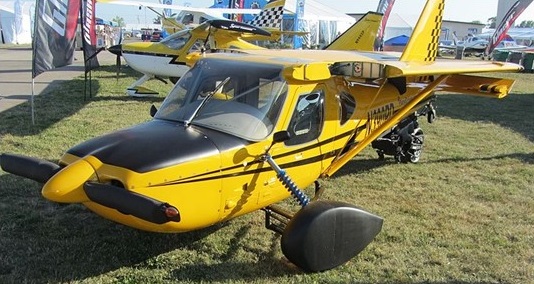
A second generation version of the PD-1 using the same Sportsman airframe as the PD-1, the PD-2, uses two forward mounted wheels with suspension in a conventional landing gear layout. A single rear wheel is mounted aft on the pod containing the second engine for road use. An updated pod was developed using a 50 hp four cycle engine with casters that fits into the baggage compartment. A custom lightweight four-piece carbon-fiber ramp can be used to load the pod without lifting. Gas milage is 24mpg in ground use.
PD-2 on display
PD-1 Engine: 1 × Lycoming IO-390, 210 hp (160 kW) Engines: 2 × 500cc Yamaha Phazer 4 Cycle, 80 hp (60 kW) each Wingspan: 35 ft (11 m) Wing area: 131 sq ft (12.2 m2) Aspect ratio: 9.1 Length: 23 ft (7.0 m) 24 feet 8 inches with wings folded Fuel capacity: 50 US gallons Cruise speed: 122 kn (140 mph; 226 km/h) Capacity: 2 persons
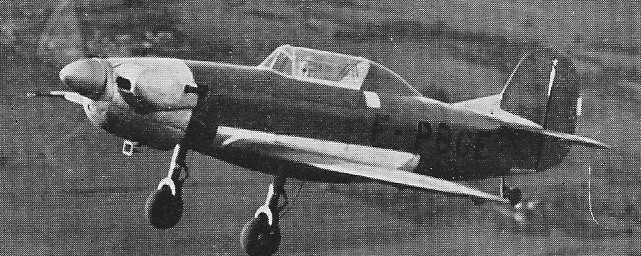
Designed by M. Max Plan, the PF.204 single-seat racing and sport monoplane was flown for the first time on 5 June 1952, powered by a 75 hp Minie 4 DC 32.
The PF.204 is of all-wood construction with plywood skin and has a fixed cantilever undercarriage with light alloy fairings.
Only one prototype may have been built.
Engine: 75 hp Minie 4 DC 32. Wingspan: 18 ft Loaded weight: 792 lb MTOW: 1100 lb Length: 17 ft 6 in Max speed: 130 mph Cruise: 99 mph ROC: 394 fpm Endurance: 2 hr 30 min at full pwr
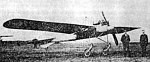
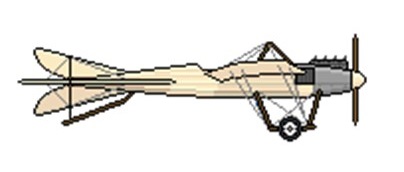
After the unsuccessful Plage I, its designer Emil Plage continued his works in Berlin and in 1911 he designed there, together with Max Court a very elegant and aerodynamically well developed for its time monoplane aircraft. Built by Kühlstein Wagenbau, Germany, it made first flight in autumn 1911 and was met with interest from German military authorities which run its further trials.
In the next year Plage and Court built slightly upgraded version of the aircraft, which made numerous flights, including successful participation in several air contests, until it crashed in October 1912.