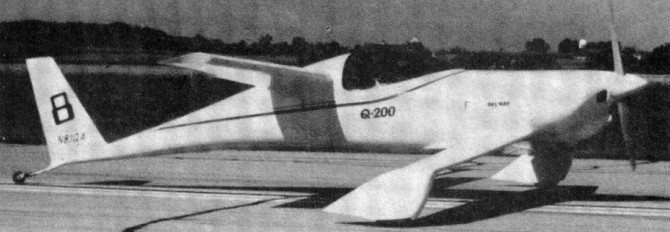
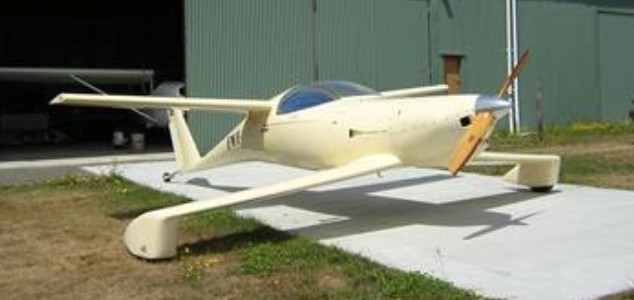
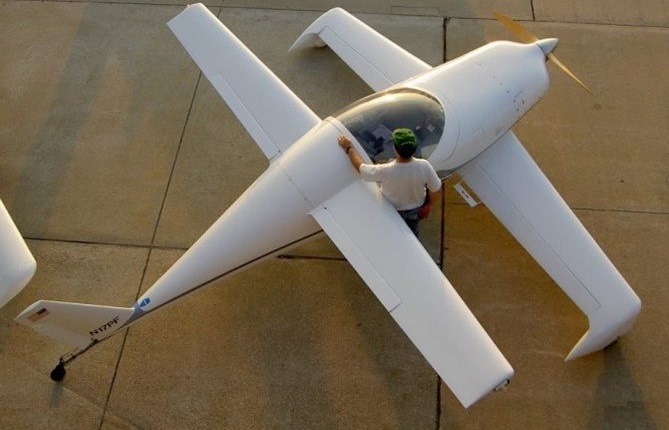
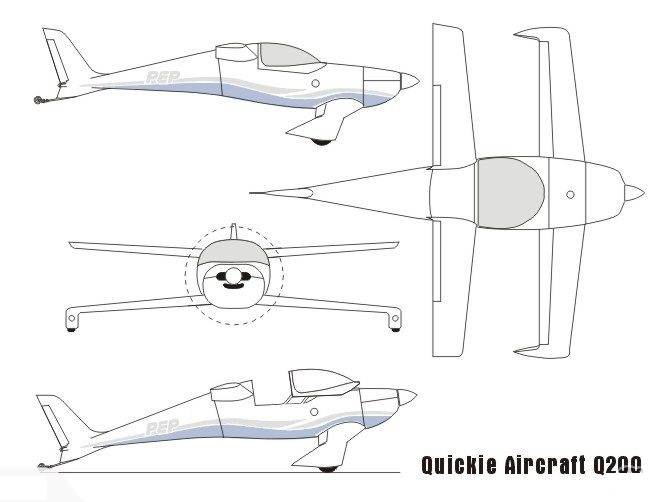
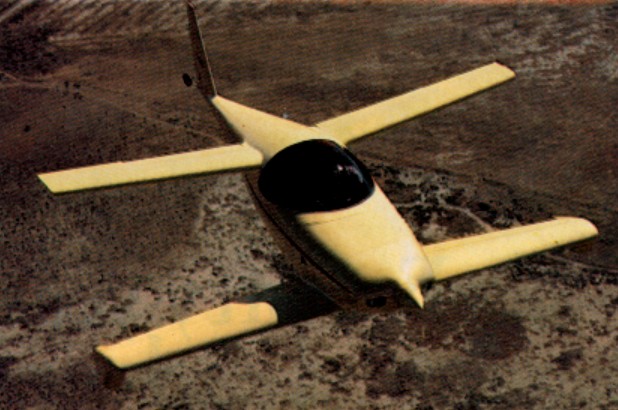
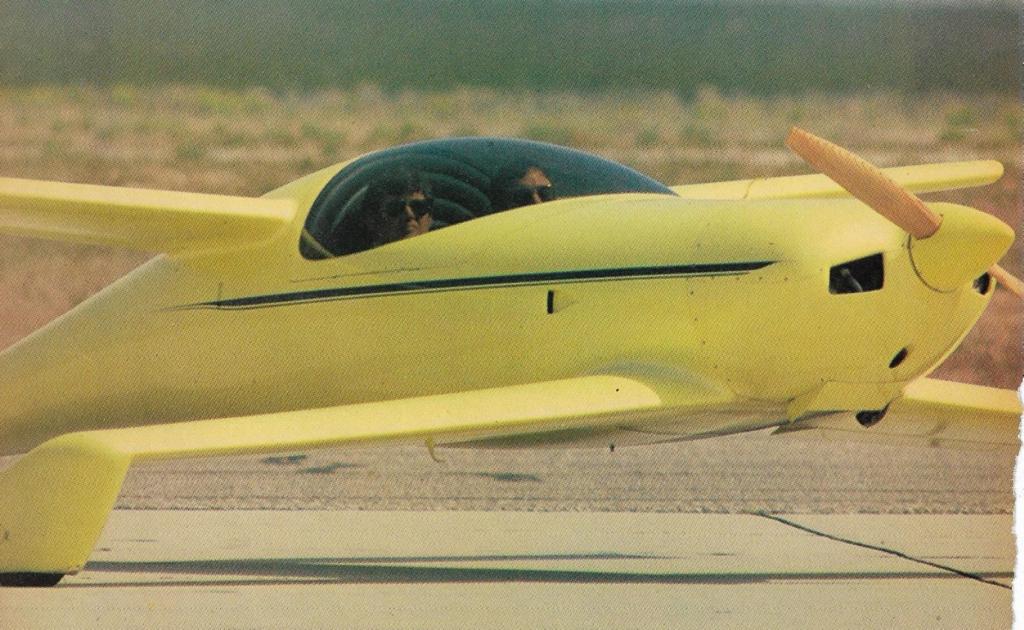
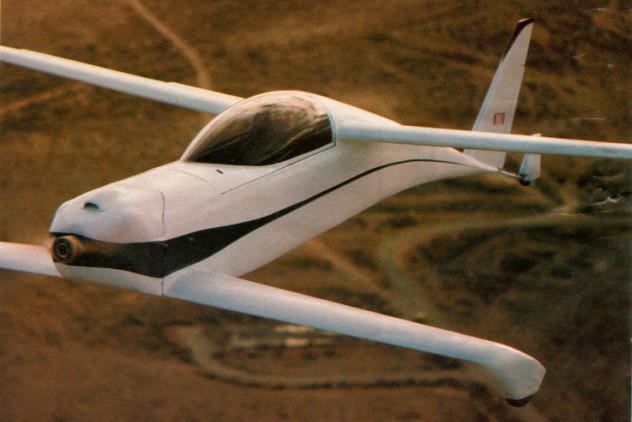
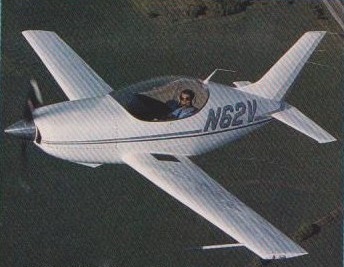
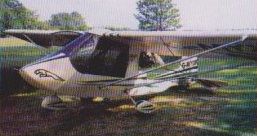
The Q2 is a two-place, side-by-side version of the composite-construction Quickie-canard-platform aircraft. It is designed for high performance on low horsepower with high efficiency. The proven Revmaster 2100-D is used. Cruise for the Q2 is 170 mph at 8000 feet burning 3.8 gph for 44 mpg. According to its designers, the Q2’s equivalent flat plate area is now 1.18, cleaner than the Glasair or the original VW-powered VariEze prototype. Like the Quickie, the Q2 is built from basic foam and epoxy/fiberglass composite construction and is similar in configuration. The fuselage is pre-molded in four pieces to facilitate construction.
Designed in 1980. Price 1982: $9,595 (Excludes paint and battery). Won 1982 Cafe 250 race.
In 1974, Tom Jewett and Gene Sheehan began designing an airplane that would provide “more flying enjoyment for less money” than other homebuilt aircraft designs. Burt Rutan assisted Jewett and Sheehan in the design work and the first Quickie was finished, tested in flight, and ready for a public introduction by April 1978.
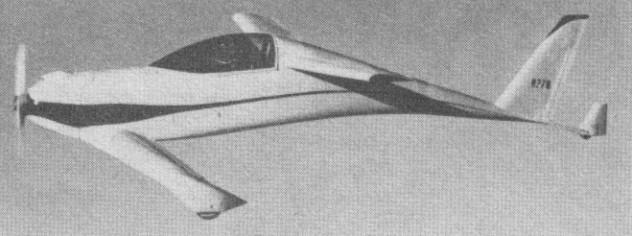
Developed around a heavy but durable modified industrial en¬gine, the prototype was designed and built in less than three months and returns incredible performance figures for its minimal power: 201 kph (125 mph) cruise speed and 145 km (90 miles) on a single gallon of fuel. It has no tail surface, just a pair of sharply staggered wings with wheels set into the tips of the lower wing.
The original aircraft was awarded “Outstanding New Design” by the Experimental Aircraft Association in 1978. The aircraft is technically a canard design, however the nearly equal size of each wing makes it appear to be a biplane.
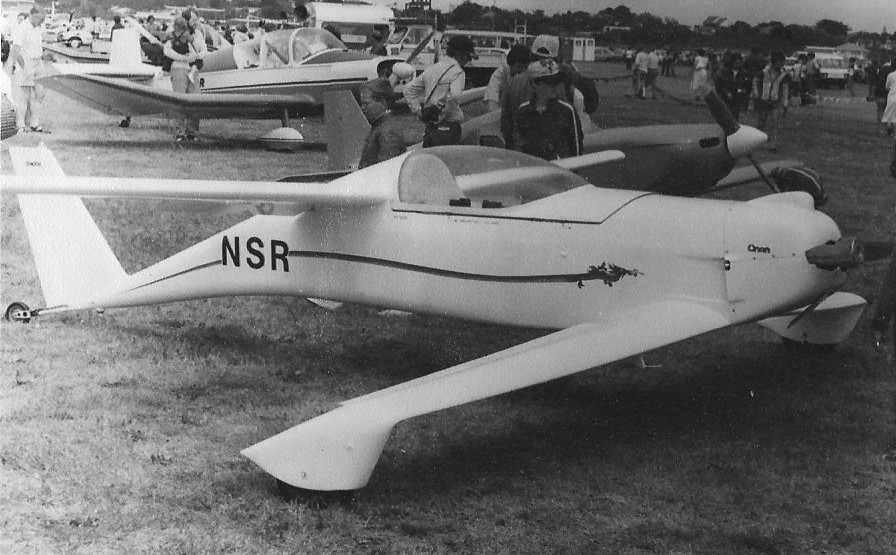
Rutan Quickie ZK-NSR
This revolutionary design incorporated state of the art materials, and proved to be highly efficient and forgiving. Sold in kit form for production by amateurs in 400 hours, the full kit (in 1977) cost only $6,395 (Cdn), about one-third the cost of a basic 2-seat factory production aircraft at the time. The Onan engine is a modified two cylinder, air-cooled industrial engine.
Basic to the Quickie’s economy is the 16-hp Onan flat, horizontally opposed, four-stroke engine commonly used to power lawn mowers and RV generators, modified to produce 22 hp. The wide canard of the Quickie carries the main landing wheels at each end, and a tiny tailwheel at the rear end is covered with a small rudder. Complete kits include engine, prefabricated cowling, canopy, all machined parts, all welded parts and some of the tools in an effort to limit building time for the inexperienced builder. Construction is from composite materials, and the cockpit is suitable for one pilot up to 210 pounds.
Price 1982: $4,995 (excludes paint and battery). Units delivered to June 1981: 550.
Engine Onan two-cylinder, 22-hp MTOW: 820 lb Empty Wt: 240 lb (109 kg) Fuel cap: 8 USG Wingspan 16’8” Length 17 ft 4 in (5.3 m) Wing area: 55 sq.ft Height 4 ft 6 in (1.4 m) Top speed: 140mph Cruise: 130 mph (210 km/h) Stall: 52mph Climb rate 550 fpm Ceiling: 14,800 ft Takeoff run: 660 ft Landing roll: 838 ft Range 525 miles Seats: 1
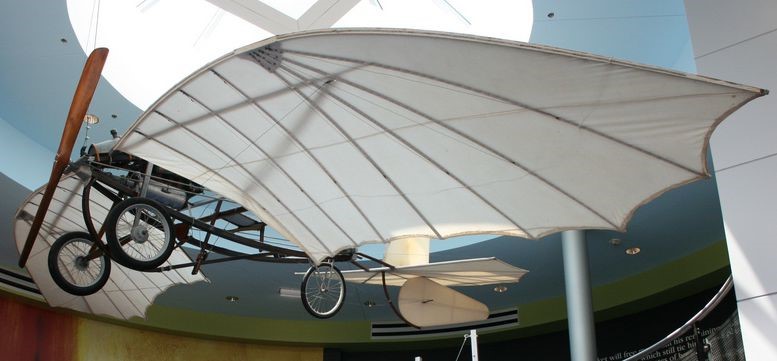
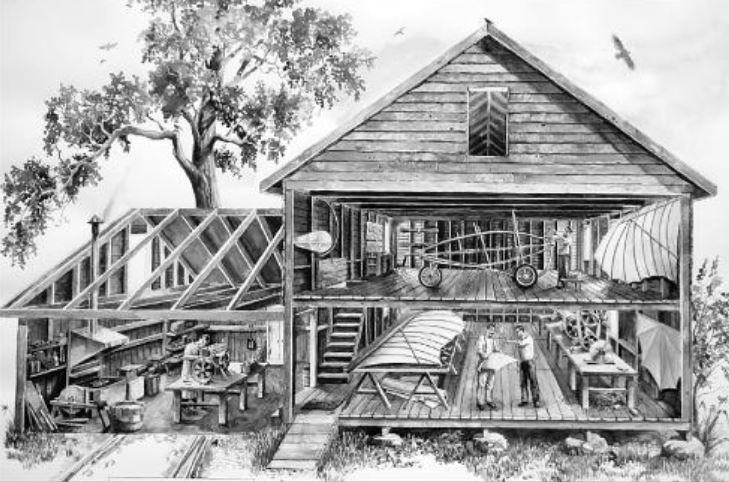
This monoplane was designed and built by William Lafayette Quick and apparently made a single flight in April, 1908 in Hazel Green, Alabama, making it the first aircraft to have flown in that state. The builders’ son, William Massey Quick, was the pilot. When the craft actually took to the air, the pilot leaned forward in order to admire the view below him. That pitched the nose down, and the craft crashed. It ended up being stored in a barn for 54 years. It’s now been restored and is on display at the U.S. Space & Rocket Center in Huntsville.
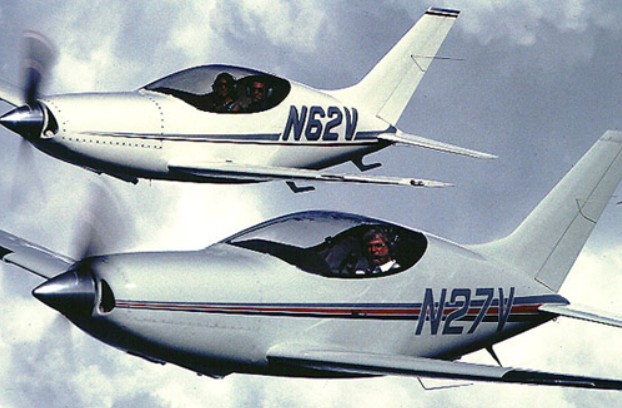
Designed by Jim Griswold, the prototype had only 50 hours on it when it arrived at Oshkosh 1988. Griswold’s company, Questair, was tooled up and nearly through the flight test program. The structural and flight test programs were the same as the FAA specified for factory certified planes.
The Venture uses stretched form fuselage skins that come as part of the kit ($49,950 1988). The cockpit was designed to be wider than a twin engined Beechcraft Baron.
The all-metal, roomy, fast, kit-built NuVenture (formally Questair Venture) was the winner and fastest plane at the Aircraft Spruce-sponsored 1998 Sun ’n Fun Sun100 race with an average speed of 303 mph.
The NuVenture flies on a Cont. I0-550-G with empty weight of 1240 lbs. The fuel tank holds 56 gallons. Vso is 61 KIAS. Range 12,000’ is 1,000Nm, VFR w/reserves or a cruise of 240 KTAS of 138 lb/h of fuel.
The Spirit derivative has fixed undercarriage.
Engine: Continental IO-550N6B, 310HP @ 2700 RPM Propeller: McCauley BlackMac, 68″ Wing span: 27.5 ft Wing area: 72.5 sq ft Wing loading: 27.6 lb / sq ft Structural limits: +5 G, -2.5G @ 2000 lb Fuel capacity: 56 USG std, 88 optional Gross weight: 2000 lb Empty weight, equipped: 1300 lb Payload: 700 lb Cruise speed: 240 kt, 276 mph Cabin width: 46 inches Sea level top speed: 250 knots Max rate of climb: 2500 ft / min Takeoff to 50 ft: 1000 ft Landing over 50 ft: 1600 ft Range: 1000 nm, VFR reserves Vx (best angle of climb): 90 knots Vy (best rate of climb): 130 knots Vne (never exceed): 300 knots Va (maneuvering speed): 156 knots Vso (stall in landing configuration): 61 knots Vs1 (stall, clean): 68 knots Gear speed (all): 170 knots Seats: 2
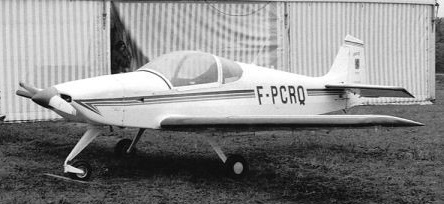
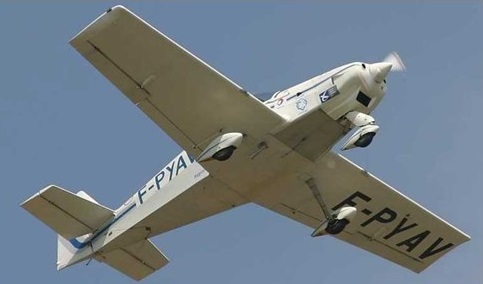
The CQR-1 two-seat homebuilt aircraft was more or less a scaled-up development of the Roussoulières Occitan and was a design of Louis Cariou, former RSA President.
The prototype CQR-1 was constructed by the RSA at Centre Régional de Construction Aéronautique Amateur Quercy-Rouergue (CQR) under the leadership of Charles Roussoulières and it flew for the first time on March 2, 1997. This aircraft was powered by a 90 hp Limbach L2400EO3 engine.
A second very similar aircraft was also completed in France in 1998 or 1999 and by late 2010 at least 6 were constructed.
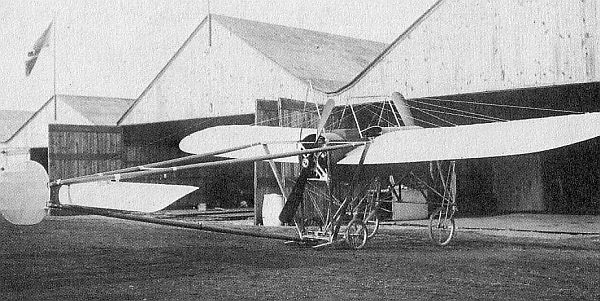
Taken at Mineola airfield, the Queen Speed Monoplane / Double Gnome Monoplane; fitted with two Gnôme rotary engines of 50 hp – the two bladed propellers driven in opposite direction to prevent torque. Its design influenced by the Blériot monoplane (Queen built Blériot XI monoplanes under license at the time), the twin engine construction was thought to be safer, that in the case of malfunction of one, flight could continue using the other. The machine was financed by the banker Willis McCormick, who was president of the New York Aeronautical Society. Built in Fort George, New York in 1911, its first flight was made by Frank Stone on July 10, 1911. Unfortunately the machine was unstable during the climb, turned and crashed, injuring the fearless Stone. The machine was ruined, never to fly again.
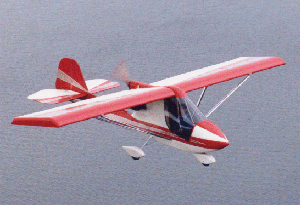
A two place version of the Challenger. This is a 2 seat high wing pusher microlight with a semi-enclosed cabin with a factory built airframe. All U.S. tubing. 10-15 minute set up time.
The Challenger II features two-seats and a 31.5 ft wingspan long wing. The Challenger II qualifies as a 51% kit for Experimental – Amateur-Built, can be flown with Sport Pilot Permit, and qualifies as Light Sport Aircraft.
In 2010 quick-build kits were from US$11,940 to US$16,035 ex engine with engine options being the Rotax 447, 503, 582 and HKS 700E.
The Challenger II Special is a 2 place with a 26 ft wingspan for quick roll rate and up 95 mph cruise speed. With a 30 mph cross-wind capability and 300 ft take-off roll (average dual), the Challenger II Special qualifies as a 51% kit for Experimental – Amateur-Built, can be flown with Sport Pilot Permit, and qualifies as Light Sport Aircraft.
Challenger II Special
In 2010 quick-build kits were from US$13,165 to US$16,035 ex engine and engine options were the Rotax 447, 503, 582 and HKS 700E.
A version released in the UK circa 1998 was revised by Mike Whittaker.
The Challenger Special is a single seat, clipped wing version, for a quicker roll rate. It qualifies as a 51% kit for Experimental – Amateur-Built, can be flown with a Sport Pilot Permit. And qualifies as a Light Sport Aircraft.
In 2010 quick-build kits were from US$10,215 to US$12,965 ex engine, and engine options include the Rotax 447, 503, 582 and HKS 700E.
The all have a 30 mph cross-wind capability and 200 ft take-off roll.
Engine: Rotax 447, 42 hp HP range: 42-50 Height: 6 ft Length: 18 ft Wing span: 26 ft Wing area: 117 sq.ft Weight empty: 270 lb Gross: 550 lb Fuel cap: 5 USG Speed max: 100 mph Cruise: 85 mph Range: 160 sm Stall: 32 mph ROC: 1000 fpm Take-off dist: 200 ft Landing dist: 200 ft Service ceiling: 14,400 ft Seats: 1 Landing gear: nose wheel Cockpit width: 24 in