Red Baron

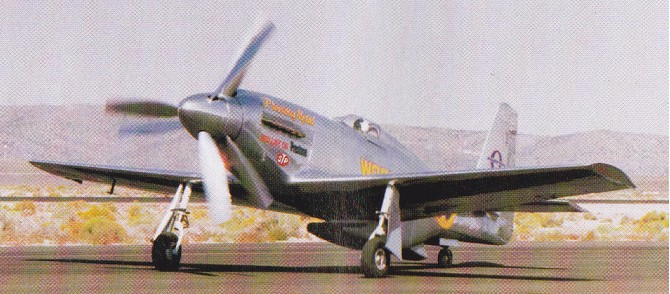
Several North American Mustangs raced in the Unlimited Class races at the Reno Air Races have been fitted with Griffons. These include the RB51 Red Baron (NL7715C), “Precious Metal” (N6WJ) and a Mustang/Learjet hybrid “Miss Ashley II” (N57LR). In all cases, Griffons with contra-rotating propellers, taken from Avro Shackleton patrol bombers were used in these aircraft. The RB51 Red Baron is noteworthy for holding the FAI piston-engine 3-kilometer world speed record from 1979 to 1989.

In 1979, Steve Hinton, the well known race pilot, took the heavily modified Griffon-powered Mustang RB-51 Red Baron out and broke the existing record with an average 499.018 mph. With further engine development and ideal conditions, the RB-51 could have exceeded 525 mph, but was lost at that year’s Reno races.

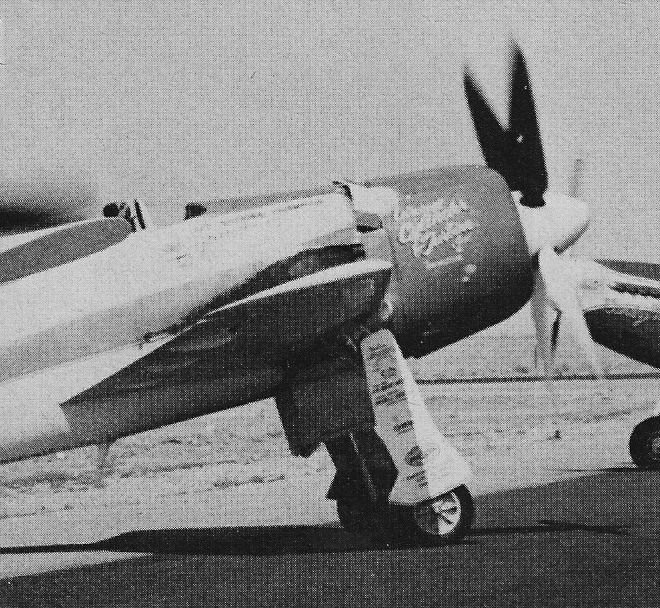
Rare Bear

Lyle Shelton began racing the Grumman F8F-2 Bearcat ‘Rare Bear’ in 1969 after attending Reno the previous years in borrowed aircraft. The aircraft came fifth in 1969, coming at just over 356 mph powered by an R-3350 radial.

Modifications to the Wright R-3350 on Rare Bear, include a nose case designed for a slow-turning prop, taken from a R-3350 used on the Lockheed L-1649 Starliner, mated to the power section (crankcase, crank, pistons, and cylinders) taken from a R-3350 used on the Douglas DC-7. The supercharger is taken from a R-3350 used on the Lockheed EC-121 and the engine is fitted with Nitrous Oxide injection. Normal rated power of a stock R-3350 is 2,800 horsepower (2,100 kW) at 2,600 rpm and 45 inHg (150 kPa) of manifold pressure. With these modifications, Rare Bear’s engine produces 4,000 horsepower (3,000 kW) at 3,200 rpm and 80 inHg (270 kPa) of manifold pressure and 4,500 horsepower (3,400 kW) with Nitrous Oxide injection.

Wins include:
Cape May (1971) at 360 mph
Miami (1971) at 373 mph
Reno (1973) at 428 mph
Mojave (1973) at 396 mph
Reno (1975) at 429 mph
Hamilton (1988) at 412 mph
Reno (1988) at 456 mph
Reno (1989) at 474 mph

In August 1989 Rare Bear pushed the world piston aircraft 3-km (1.86mile) speed record to 528.329 mph, flown by Lyle Shelton at Las Vagas, New Mexico. Further attempts to extend this record were planned.

Externally the aeroplane looks stock type, apart from its clipped wings. Its colour is basically white with an ochre or purple cowling/fuselage stripe. On the vertical tail is an appropriate Mustang-crushing bear cartoon.

Rare Bear
Span: clipped from 10.92 m (35 ft 10 in)
Length: 8.61 m (28 ft 3 in)
Powerplant: 1 x Wright R-3350 Cyclone 18, 2610 kW (3,800 hp)
Max TO weight: about 3175 kg (7,000 lb)
Max speed: 528.329 mph at low altitude

Precious Metal

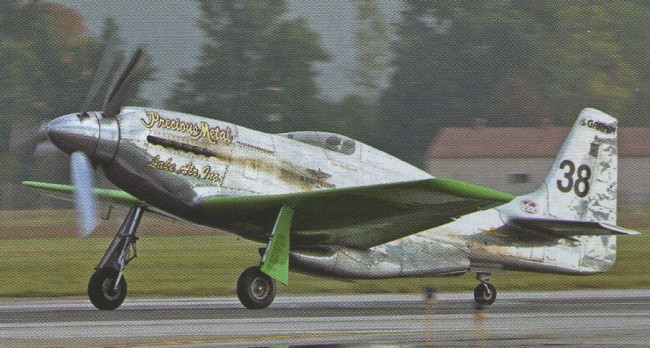
A P-51 Mustang development, it took the Whitting brothers of Fort Lauderdale, Florida, five years to create Precious Metal, with its squarer-cut wingtips, revised low-drag cockpit with a sloped windscreen faired into the upward-hinging canopy and aft aerodynamic turtleback.

Several North American Mustangs raced in the Unlimited Class races at the Reno Air Races have been fitted with Griffons. These include the RB51 Red Baron (NL7715C), “Precious Metal” (N6WJ) and a Mustang/Learjet hybrid “Miss Ashley II” (N57LR). In all cases, Griffons with contra-rotating propellers, taken from Avro Shackleton patrol bombers were used in these aircraft.

Precious Metal flies in a polished natural metal finish and sports the racing number 09 and made its debut at the 1988 National Air Races at Reno, Nevada, and qualified for the Unlimited class final, only to suffer the failure of the propeller governor.

Ron Buccarelli’s Rolls-Royce Griffon powered N6WJ.

Precious Metal
Span: slightly less than 11.89 m (37 ft 0.25 in)
Length: slightly more than 9.85 m (32 ft 3.25 in)
Powerplant: 1 x Rolls-Royce Griffon, about 2237 kW (3,000 hp)
Max TO weight: about 3402 kg (7,500 lb)
Max speed: about 480 mph at low altitude
Mr Awesome

This former Egyptian Air Force Yak-11 was acquired by Joe Kasperoff of California and handed to Ascher Ward of Van Nuys to be modified into a Reno Unlimited Racer. Extensively modified and stretched, the aeroplane has a metal-skinned fuselage in which the cockpit was moved back at least 0.91 m (3 ft). In place of the Soviet powerplant, a Pratt & Whitney R-4360 was installed.

On the aeroplane’s first outing at Reno in 1988 test pilot Skip Holm, after several flights, declared the aeroplane unsafe. In the lead-up to Reno 1989 the aeroplane was further modified, including the fitting of the fin from a Lockheed T-33 jet.

Darryl Greenamyer purchased the aeroplane before the Reno Unlimiteds but 1989 ended in disaster for MrAwesome when it crashed and was severely damaged during the heats at Reno. It was planned to rebuild the aeroplane.

Mr Awesome
Span: 8.5 m (30 ft 10 in)
Length: about 8.5 m (27 ft 10.75 in)
Powerplant: 1 x Wright R-3350 Cyclone 18, about 2796 kW (3,750 hp)
Max T/0 weight: about 2540 kg (5,600 lb)
Max speed: about 440 mph

Miss America

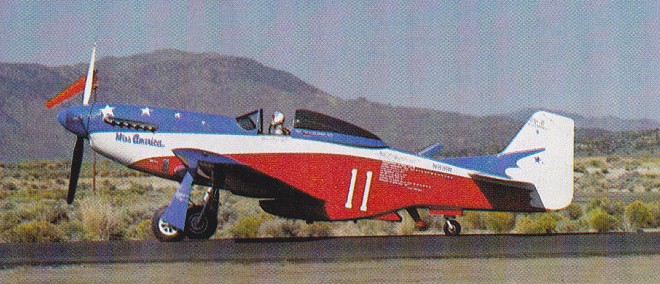
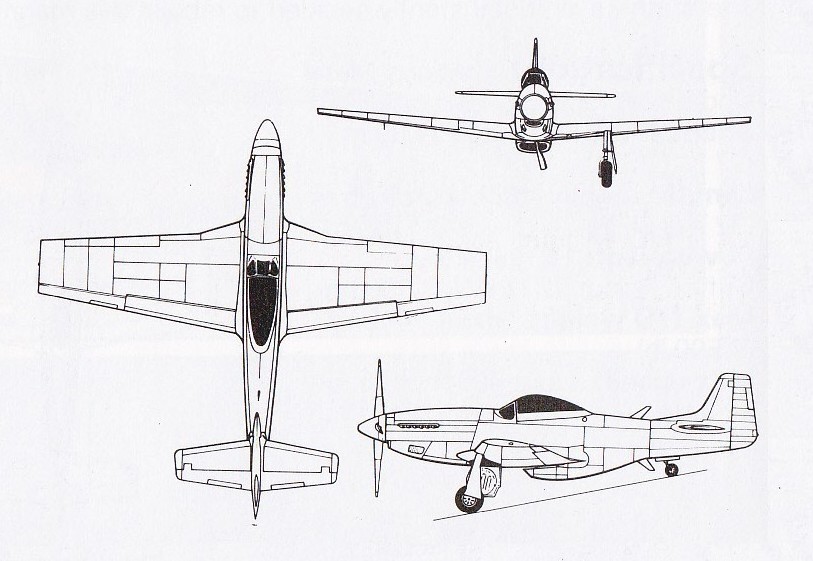
Race numbered 11 in red, white and blue markings, P-51D Miss America has been racing for many years in a basically externally stock condition. Though the aeroplane sports clipped wings, it is otherwise generally unmodified but has a highly tuned race Merlin engine.

When owned by Howie Keefe and raced in its original form, Miss America was generally flown by Chuck ‘Always Second’ Hall and Bud Granley, a Canadian pilot.

It was acquired by a new race team organiser and extensively revised for a higher level of ‘competitivity’ in the 1990 season.

Miss America
Span: clipped from 11.89 m (37 ft 0.75 in)
Length: 9.83 m (32 ft 3 in)
Powerplant: 1 x Packard V-1 650 Merlin, about 1864 kW (2,500 hp)
Max T/0 weight: about 3175 kg (7,000 llb)
Max speed: about 460 mph at low altitude
Georgia Mae / Escape 1

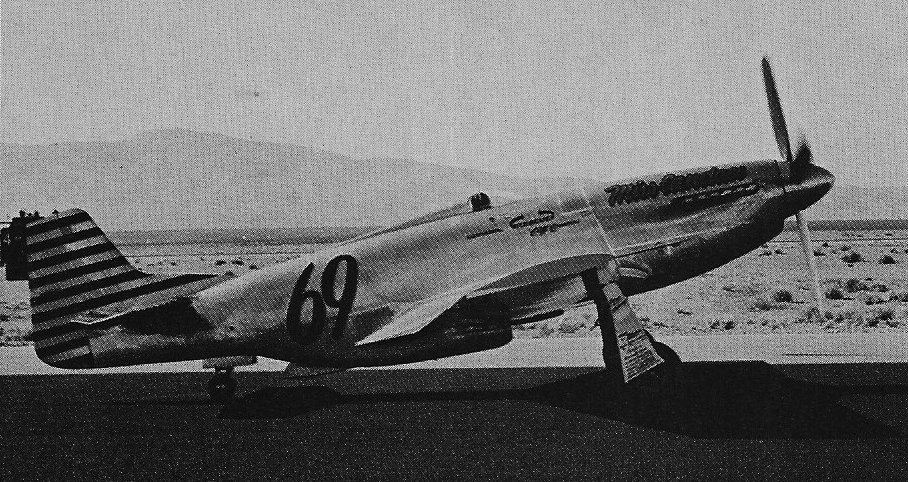
After years of success with Jeannnie, the racing team operated by the Wiley Sanders Truck Lines, Inc. of Troy, Alabama, souped-up another derivative of the P-51 Mustang. Formerly the late Jack Sliker’s Escape 1, the Georgia Mae carries the same racing number (69) and mirror-bright polished natural metal finish.

In external features no.69 is a stock Mustang, but its Merlin engine has received the full treatment of Zeuschel Racing Engines for radically improved power at low level.

The Georgia Mae revealed a high turn of speed in the 1985 National Air Races, but was badly damaged in a ground-looping accident, as John Putnam was landing after a heat and was hit by a crosswind. The aeroplane was rebuilt, and in 1988 was placed fourth in the Gold final.

Georgia May
Span: 11.89 m (37 ft 0.25 in)
Length: 9.85 m 32 ft 3.25 in)
Powerplant: 1 X Packard V-1 650, about 1715 kW (2,300 hp)
Max TO weight: about 3311 kg (7,300 lb)
Max speed: about 400 mph at low altitude
Furias

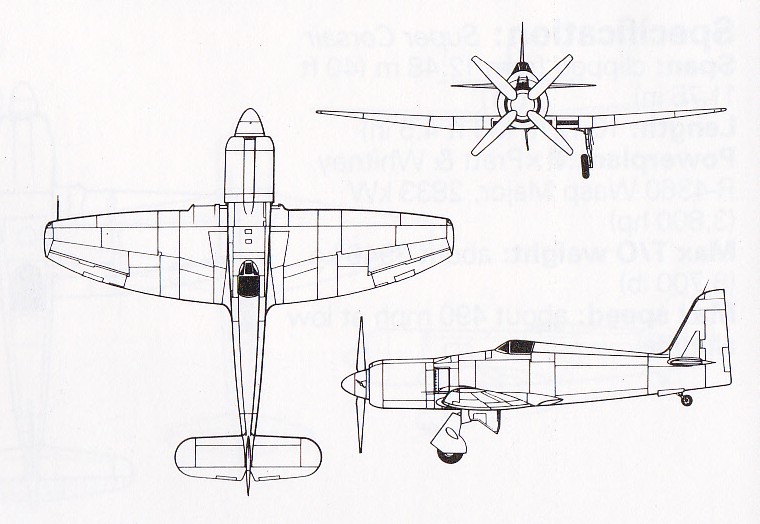
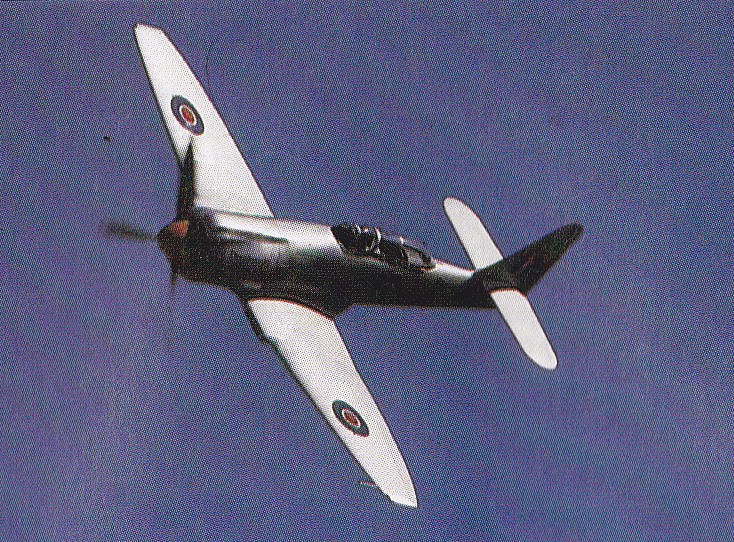
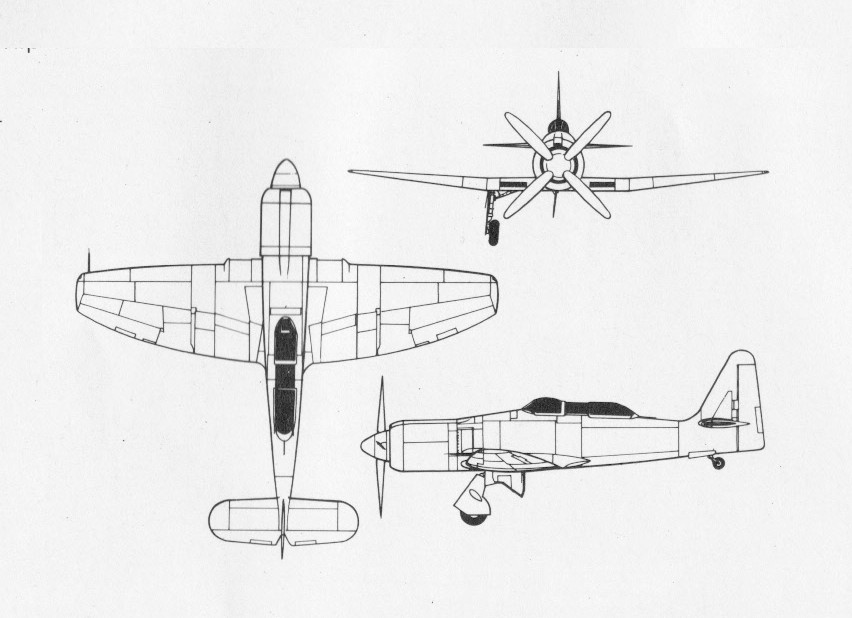
California-based Lloyd Hamilton has long been associated both with the sport of air racing and with the Hawker Sea Fury. Furias was built up from the components of a number of Sea Fury airframes and a 2833-kW (3,800-hp) R-4360 radial and the propeller of a Douglas A-1 Skyraider installed in place of the stock Centaurus engine and propeller. Qualifying at over 400 mph at Reno in 1985, over the years various modifications have been incorporated, including a turtledeck, but victory continues to elude this unique razor-back Fury. Furias is flown in a colour scheme of red with the upper fuselage and the rear portions of the inner flying surfaces in gold.

Furias
Span: slightly less than 11.7 m (38 ft 4.75 in)
Length: about 10.57 m (34 ft 8 in)
Powerplant: 1 x Pratt & Whitney R-4360 Wasp Major, 2833 kW (3,800 hp)
Max TO weight: about 4536 kg (10,000 lb)
Max speed: about 470 mph at low altitude

Dreadnought

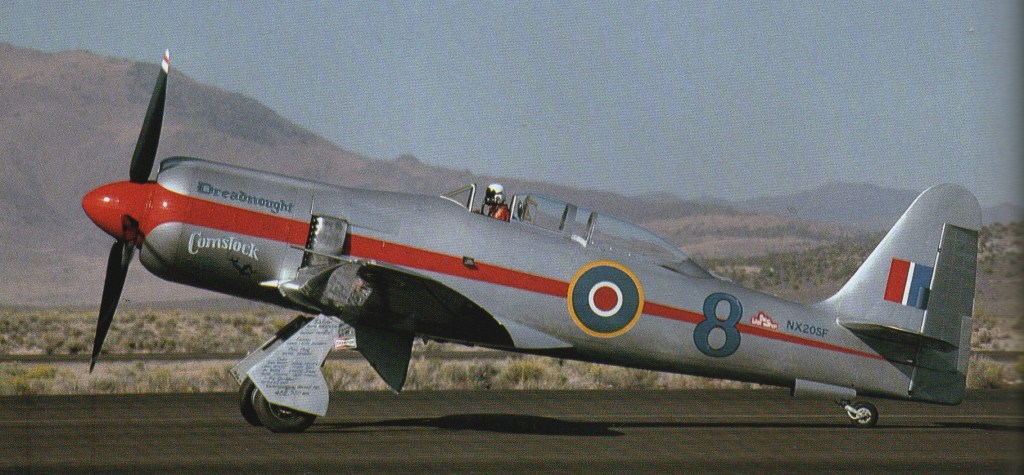
Frank Sanders Racing is responsible for this former Royal Navy Sea Fury T.Mk 20 racer. Dreadnought was prepared at Chino by Frank and his sons Dennis and Brian in 1982/3, and the two-seat aeroplane sported several modifications, the most obvious was the replacement of the original 1849-kW (2,480-hp) Bristol Centaurus with a Pratt & Whitney R-4360 radial. A four-blade propeller was fitted in place of the Sea Fury’s characteristic five-blade unit.

The pilot for the first outing was Neil Anderson. Neil completed the Reno course in Dreadnought at 446.39 mph, breaking the qualifying record and eventually taking first place in the Gold Championship to make this another first-time-out winner in 1983.

Dreadnought
Span: 11.7 m (38 ft 4.75 in)
Length: increased from 10.54 m (34 ft 7 in)
Powerplant: 1 x Pratt & Whitney R-4360-63A Wasp Major, 2833 kW (3,800 hp)
Max TO weight: about 3946 kg (8,700 lb)
Max speed: about 480 mph at low altitude

Mike Brown won the Unlimited Gold Race at Reno on September 17, 2006, at a speed of 453.61 mph in Hawker Sea Fury September Fury. Second was Matt Jackson in Sea Fury Dreadnought.

Gallery