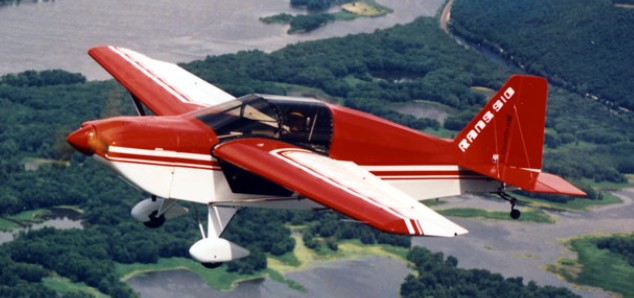
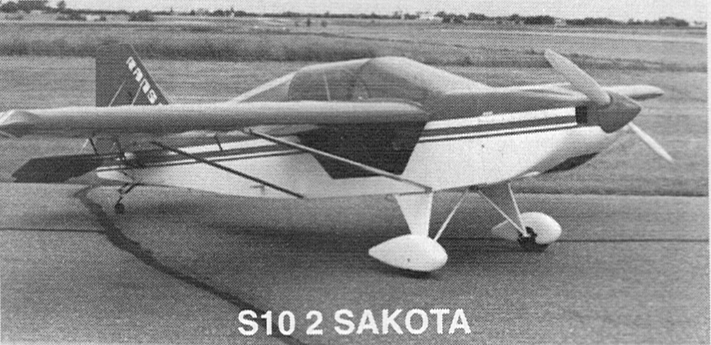
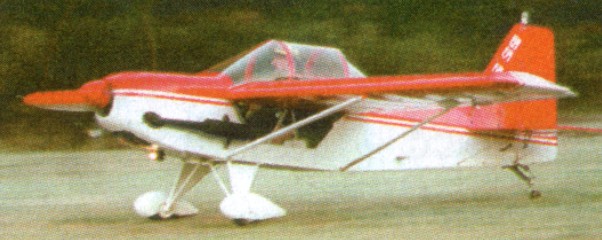
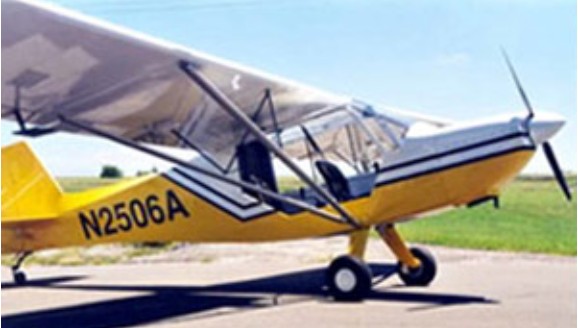
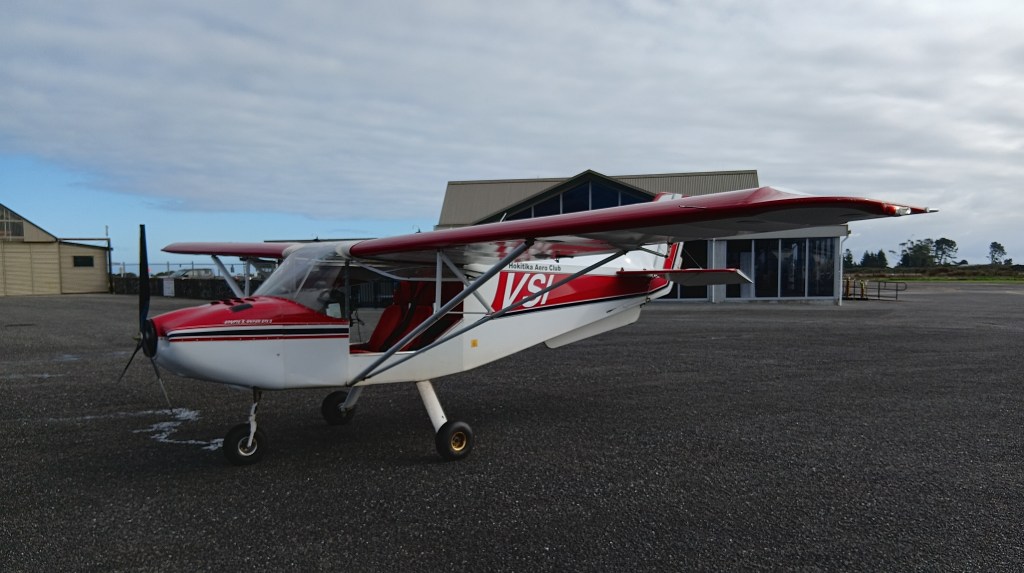
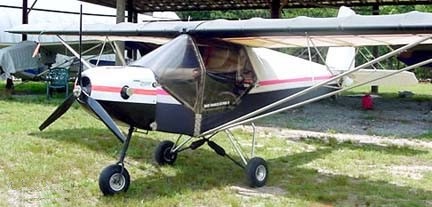
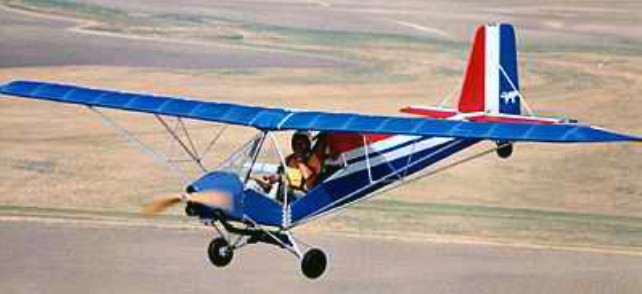
First flown in 1986, the Sakota can cross country or aerobat. The small but potent wing gives it high performance in short take-offs and 120 mph cruise speeds and the tapered wing reduces drag. A bubble canopy and large under wing windows offer exceptional visibility. Comfort for two in the 37″ wide cabin with well upholstered bench seat. A quick build kit was available. Fly aerobatics solo and cross country with 2.
Features: Rotax 582 65 HP liquid cooled with dual CDI ignition; RPM gauge; 2-Blade wood prop; 4130 Welded steel fuselage, tail group and tapered steel landing gear; Aluminum wheels with aircraft tires; Wheel pants; Pre-formed trussed wing ribs; .020 Aluminum leading edge wrap; 3″ Tubular Aluminum Main spars; 2″ Tubular Aluminum Aft spars; (2) 9 Gallon wing tanks; Seat adjustable in tilt and fore and aft; 2.7 ounce aircraft covering fabric, all tapes, glue, and inspection plates; Aluminum framed canopy; Airfoil struts; In-flight pitch trim; In-flight start; “Deep Set” panel; Roll over protection; Shoulder harnesses and lap belts; Dual elevator horns; 1 1/4″ Push-pull elevator tube; Cable operated rudder; 3-Position flaps; Differential ailerons are cable and push-pull tube operated; Dual control sticks and throttles; Center flap lever; Pre-molded cowling; 12″ Composite spinner; Heavy duty engine mount; Under the wing windows; Dual fuselage foot pegs and wing steps; Dual wire braced folding tail; Steerable tail wheel; Dual rudder pedals; Hydraulic brakes; Firewall sound proofing; Baggage compartment.
The S-10 Sakota is an FAA Approved 51% Kit – No welding required, with a build time of 350 to 600 hours.
June 1997
Engine: Rotax 582, 65hp Propeller Diameter: 68 in to 70 in Propeller Type: Wood Gear Reduction: 1:2.58 Fuel G.P.H.: 5.75 USgal @ 85% Wing Span: 24.0 ft Wing area: 95.0 sq ft Mean Chord: 4 ft 2 in Aspect: 4.23:1 Length: 17 ft 10 in Height: 4 ft 10 in Cockpit Width: 37 in Headroom: 38 in Legroom: 42 in Number of Seats: 2 Doors: 2 Landing Gear: fixed tail Baggage Volume: 8 cubic ft Baggage Capacity: 30 lbs Fuel Capacity: 18 gal US Gross Weight: 960 lbs Empty Weight: 460 lbs Useful Load: 500 lbs Wing Loading: 10.1 lbs Power Loading: 14.7 lbs Limit Load Factors: +4 -2 Take Off Roll: 300 ft Rate of Climb: 800 fpm Service Ceiling: 12,500 ft Cruise: 110 mph VNE: 130 mph Stall Clean: 45 mph Roll Rate: 100° /sec Glide Ratio: 7:1 Landing Roll: 400 ft Endurance: 3.1 hrs Range: 341 miles
Engine: Rotax 912, 78 hp HP range: 65-78. Speed max: 150 mph Cruise: 120-130 mph. Range: 540 sm Stall: 42-45 mph. ROC: 800 fpm Take-off dist: 325 ft. Landing dist: 500 ft Service ceiling: 14,000 ft. Fuel cap: 18 USG Weight empty: 525 lbs. Gross: 1100 lbs Length: 17.83 ft. Wing span: 24 ft Wing area: 95 sq.ft. Height: 4.8 ft Seats: 2. Landing gear: tail wheel Aerobatic.
Engine: Rotax 912/921S, 80/100hp Propeller Diameter: 68 in to 70 in Propeller Type: Wood Gear Reduction: 1:2.58 Fuel G.P.H.: 4.1/4.5 USgal @ 80% Wing Span: 24.0 ft Wing area: 95.0 sq ft Mean Chord: 4 ft 2 in Aspect: 4.23:1 Length: 17 ft 10 in Height: 4 ft 10 in Cockpit Width: 37 in Headroom: 38 in Legroom: 42 in Number of Seats: 2 Doors: 2 Landing Gear: fixed tail Baggage Volume: 8 cubic ft Baggage Cap: 30 lbs Fuel Capacity: 18 gal US Take Off Roll: 325 ft/310 ft Rate of Climb: 900 fpm/1200 fpm Service Ceiling: 14,000 ft/14,500 ft Cruise: 120 mph/125 mph VNE: 130 mph Stall Clean: 48 mph Roll Rate: 100° /sec Glide Ratio: 8:1 Landing Roll: 400 ft Endurance: 4.4 hrs/4 hrs Range: 528 miles/520 miles Gross Weight: 1010 lbs Empty Weight: 510 lbs Useful Load: 500 lbs Wing Loading: 10.6 lbs Power Loading: 12.6 lbs Load Limit: +4 -2g
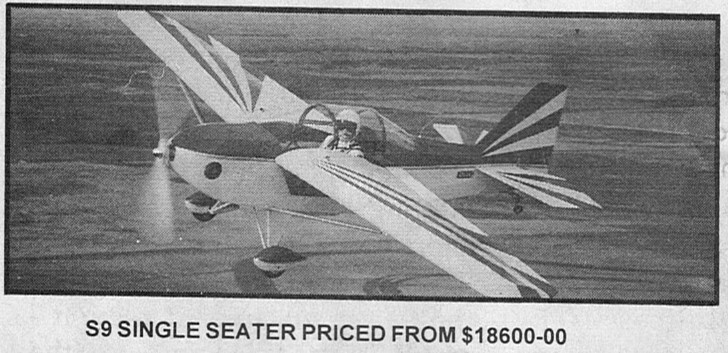
The S-9 Chaos has been in production since 1986. A stock S-9 equipped with a Rotax 503 47hp engine is potent enough to compete in sportsman class aerobatics. S-9’s have been equipped with up to 100 hp engines with spectacular results. With full inverted capability, a Chaos can achieve advanced aerobatics. As with all RANS kits, the Chaos comes welded and pre-fabricated, reducing assembly time and increasing precision.
The S9 Chaos powered by a Rotax 503 has wing and header fuel tanks, a four point harness plus lapstrap, and open cockpit with optional canopy.
Engine: Rotax 504, 47 hp Prop: 68-70 in dia. Prop reduction: 2.58-1 Fuel consumption: 4USG/hr at 70% pwr Wing Span: 22.0 ft Wing area: 91.5 sq ft Mean Chord: 4 ft 2 in Aspect: 5.3:1 Length: 15 ft 8 in Height: 4 ft 10 in Cockpit Width: 26 in Headroom: 38 in Legroom: 45.5 in Number of Seats: 1 Doors: 1 Landing Gear: nose or tail Fuel Capacity: 9 or 18 gal US Take Off Roll: 250 ft Rate of Climb: 800 fpm Service Ceiling: 13,500 ft Cruise: 90 mph VNE: 130 mph Stall Clean: 38 mph Roll Rate: 100° /sec Glide Ratio: 8:1 Landing Roll: 400 ft Endurance: 2.25 hrs/4.5 hrs Range: 202.5 miles/405 miles Gross Weight: 670 lbs Empty Weight: 340 lbs Useful Load: 330 lbs Wing Loading: 7.32 lbs Power Loading: 14.2 lbs Limit Load Factors: +6 -4
Engine: Rotax 582, 65 hp Prop: 68-70 in dia. Prop Reduction: 1:2.58 Fuel consumption: 5.76USG/hr at 85% pwr Wing Span: 22.0 ft Wing area: 91.5 sq ft Mean Chord: 4 ft 2 in Aspect: 5.3:1 Length: 15 ft 8 in Height: 4 ft 10 in Cockpit Width: 26 in Headroom: 38 in Legroom: 45.5 in Number of Seats: 1 Doors: 1 Landing Gear: nose or tail Fuel cap: 9 or 18 USG Take Off Roll: 200 ft Rate of Climb: 1000 fpm Service Ceiling: 15,000 ft Cruise: 100 mph VNE: 130 mph Stall Clean: 41 mph Roll Rate: 100° /sec Glide Ratio: 8:1 Landing Roll: 400 ft Endurance: 1.56 hrs/3.13 hrs Range: 156.5 miles/313 miles Gross Weight: 710 lbs Empty Weight: 375 lbs Useful Load: 335 lbs Wing Loading: 7.76 lbs Power Loading: 11.0 lbs Limit Load Factors: +6 -4g
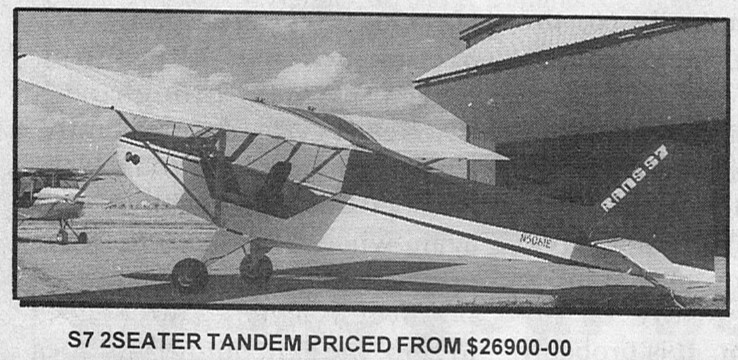
The design of the S-7 originated out of the need to train Coyote I pilots; so the cockpit was set up the same with throttle left, stick in the middle. Named the Courier in honour of the Helio Courier, the S-7 is very STOL. The first one flew in 1985, but this sturdy two-seat taildragger has evolved considerably in the last 23 years.
Built with keeping-it-simple in mind the original plane weighed in at only 390 pounds with a 503 Rotax. It flew very well for the low horsepower, but soon was fitted to the 65 HP 532.
Over the years the basic plane stayed true to form, a light, simple plane, with traditional construction, minus the traditional headaches. However, in 2001 the S-7C, a much-refined version, was certified under the primary category. This plane represents 7 years of process to obtain the Type Certificate. Introduced in 2003 the S-7S is a kit form of the “C”. The S-7S also complies with the new Sport Plane Rule.
June 1997
Because the S-7S complies with the standards for sport planes we will be able to offer this plane in ready to fly form. Designated the S-7LS, this form of a ready to fly Courier is in production.
In 2008, for $89,000 you could purchase a fully equipped S-7LS, with such amenities, as Garmin moving map GPS/COM, and Transponder.
The S-7S kit is a version of the certified Courier.
The model with a Rotax 912 engine and a 71 inch Warpdrive, ground adjustable propeller, gets 105 mph cruise at 5,000 rpm. Take-off roll at the maximum all up weight is less then 90m in nil wind and climb rate is around 700 ft/min. With one up and full fuel (60 lt), it can get airborne in 50m and climb at 1,000 ft/min. Fuel burn is around 13 litres per hour.
The RANS S 7C Courier has gotten a more powerful engine. The Courier boasts the 100 horsepower Rotax 912S four¬-stroke aircraft engine, replacing the 80 horsepower Rotax 912 previously in the airplane. The new engine, says the company, allowed designers to stretch the fuselage, increasing the power of the tail, resulting in better stability and better all around handling, including on landing. The bigger engine delivering an eight percent faster cruise speed (up to around 110 mph) and a much improved rate of climb.
The RANS S-7S Courier was offered as an Experimental/Amateur-Built kit and also as an FAA-approved, factory-built SLSA.
RANS S-7S
The 2012 updated S-7LS Courier, Cub-style tandem high-winger remained an S-LSA. Base price: $97,500 base (no avionics).
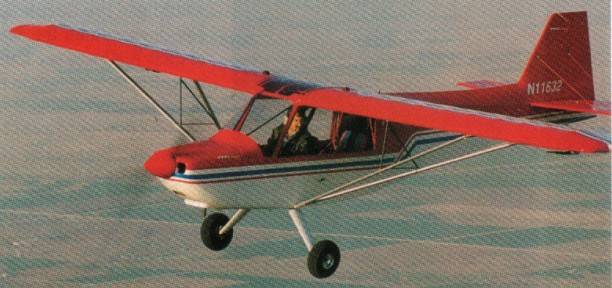
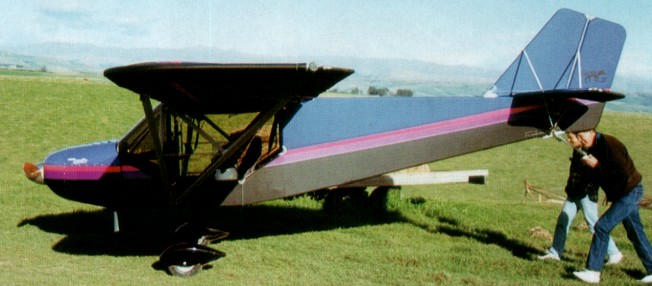
Since beginning Coyote II production in 1989 over 1600 Coyote II’s have been produced. The cabin is roomy fitting from 5’2″ to 6’6″, and weather tight. With the optional heater, fly year round. The Coyote II is STOL, with fast cruise 105 MPH to 120 MPH, depending on wing and engine options.
The sport wing offers great performance in both STOL and cruise speeds. At 30’8” span and a slight taper the handling is with little adverse yaw and snappy role rate. The sport wing will function well on floats and at high altitude. The advanced construction of the sport wing also allows a very precise shape airfoil in short build times.
With the standard wing the stock 80 HP Rotax 912 UL engine cruise speeds are in excess of a 100 mph. Fuel burn rates of less than 5 gallons per hour common. The 100 HP ups the cruise a few MPH, with a large increase in climb, all at a small increase in fuel burn. Overhaul times as high as 2000 hours have been reported by operators.
June 1997
June 1997
S 6 ES Coyote
On December 23 2008 RANS certified the Coyote II as an SLSA. Designated S-6LS (for light sport) the Coyote II S-6LS, the design has been in production as an experimental aircraft since 1989. With almost 2000 flying examples in operation world wide.
Constructed using welded steel cage and light tubular aluminum alloy tail cone and flying surfaces. The design is classic high wing side by side seating, offered in tailwheel and trike landing gear configurations.
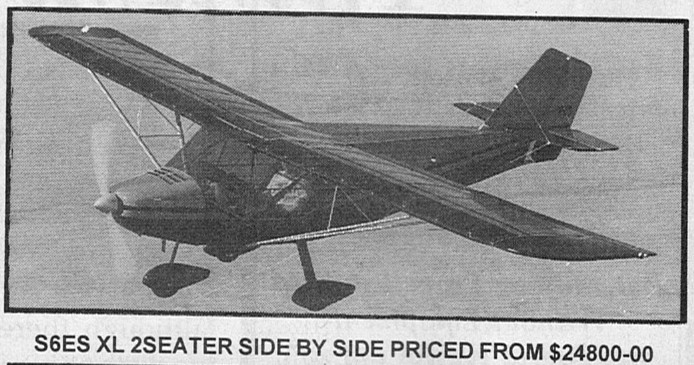
The S-6ES went into production in April 1990. The ES denotes “extended span”. It is the second generation of the original S-6 design. Increased wing span through a fuselage redesign resulted in improved performance and appearance. The ES denotes “extended span”. The design goals that the S-6 achieved represented a significant advance in quick-build kit planes. The S6ES series takes this goal even further. Using mostly all pre-finished parts and pre-sewn skins, the average build time is between 350 and 400 hours. Coyote II’s can be built in the confines of an average garage normal shop tools and skills.
Coyote II’s can be built in the confines of an average garage using normal shop tools and skills. 2009 Price: 14700 US$
The S-6ES and S-6S Sport share the same fuselage, tricycle landing gear. They differ in wing (both size and planform). There are three choices of wing for the S-6ES and S-6S. The standard wing on both spans 34.5 ft with 155 sq.ft area. The Area-2 wing employs tapered flaps and ailerons that increase the wing area by about 10 sq.ft. The 116 wing is of tapered planform, reduces the span to 29.5 ft and 116 sq.ft. area.
The sport wing is standard and offers a 9:1 glide, the roll rate is light and adverse yaw very minimal. The presewn wings skins feature few seams. The sport wing is the most advanced dacron covered wing on the market, with such features as a leading edge skin, and root rib tensioning, and CNC stamped aluminum ribs. Of 4130 tube frame, fabric covered.
The Coyote II had four Rotax engine choices; 503-DC 52 hp, 582 65 hp, 912 80 hp, or 912S 100hp.
In 2012 the previous S-LSA—the S-19LS Venterra low-wing, all-aluminum cruiser and S-6LS Coyote II (2,000 delivered) moved back to E-LSA or EAB kits-only status.
S 6 ES Coyote Engine: Rotax 582, 64 hp Wing span: 10.52 m Wing area: 14.42 sq.m MAUW: 421 kg Empty weight: 215 kg Fuel capacity: 56 lt Max speed: 165 kph Cruise speed: 145 kph Minimum speed: 60 kph Climb rate: 2.5 m/s Certification: VZ, PFA Seats: 2 Fuel consumption: 14.5 lt/hr Kit price (1998): £13,400
S 6 ES Coyote Engine: Rotax 582, 64 hp Wing span: 10.52 m Wing area: 14.42 sq.m MAUW: 421 kg Empty weight: 215 kg Fuel capacity: 56 lt Max speed: 165 kph Cruise speed: 145 kph Minimum speed: 60 kph Climb rate: 2.5 m/s Certification: VZ, PFA Seats: 2 Fuel consumption: 14.5 lt/hr Kit price (1998): £13,400
S-6ES Coyote II Engine: Rotax 912 ULS, 100 hp Wing Span: 30.4 ft Wing area: 137.6 sq ft Mean Chord: 4 ft 6 in Aspect: 6.73 Length: 20 ft 9 in Height: 7 ft 8 in Cockpit Width: 45 in Headroom: 39 in Legroom: 41 in Seats: 2 Doors: 2 Landing Gear: fixed nose or tail Baggage Vol: 6 cu ft Baggage Cap: 50 lbs Fuel Capacity 18 gal US Propeller Dia: 66 to72 in Propeller: Wood Gear Reduction: 1:2.43 Take Off Roll: 210 ft Rate of Climb: 1250 fpm Service Ceiling: 16,000 ft Cruise: 110 mph VNE: 130 mph Stall Clean: 41 mph Stall Flaps: 36 mph Roll Rate: 80° /sec Glide Ratio: 9:1 Landing Roll: 260 ft Endurance: 3 hrs Range: 345 miles Gross Weight: 1200 lbs Empty Weight: 650 lbs Load Limit: +4 -2g Useful Load: 550 lbs Wing Loading: 8.7 lbs Power Loading: 12 lbs
S-6ES Coyote II Engine: Rotax 912UL, 80 hp Wing Span: 30.4 ft Wing area: 137.6 sq ft Mean Chord: 4 ft 6 in Aspect: 6.73 Length: 20 ft 9 in Height: 7 ft 8 in Cockpit Width: 45 in Headroom: 39 in Legroom: 41 in Seats: 2 Doors: 2 Landing Gear: fixed nose or tail Baggage Vol: 6 cu ft Baggage Cap: 50 lbs Fuel Capacity 18 gal US Propeller Dia: 66 to72 in Propeller: Wood Gear Reduction: 1:2.27 Fuel G.P.H: 4.5 USgal @ 75% Take Off Roll: 220 ft Rate of Climb: 950 fpm Service Ceiling: 14,000 ft Cruise: 105 mph VNE: 130 mph Stall Clean: 41 mph Stall Flaps: 36 mph Roll Rate: 80° /sec Glide Ratio: 9:1 Landing Roll: 260 ft Endurance: 3.5 hrs Range: 385 miles Gross Weight: 1200 lbs Empty Weight: 650 lbs Load Limit: +4 -2g Useful Load: 550 lbs Wing Loading: 8.7 lbs Power Loading: 15 lbs
S-6ES Coyote II Engine: Rotax 912, 78 hp HP range: 52-80. Wing span: 29 ft Wing area: 116 sq.ft. Speed max: 130 mph Cruise: 100 mph. Range: 470 sm Stall: 36 mph. ROC: 900 fpm Take-off dist: 275 ft. Landing dist: 250 ft. Service ceiling: 15,000 ft. Fuel cap: 18 USG Weight empty: 510 lbs. Gross: 1100 lb Height: 5.92 ft. Length: 20 ft Seats: 2. Landing gear: nose or tail wheel.
S-6S Coyote II Engine: Rotax 912, 80 hp Speed max: 130 mph. Cruise: 115 mph Range: 500 sm. Stall: 33 mph ROC: 850 fpm. Take-off dist: 275 ft Landing dist: 200 ft. Service ceiling: 16,000 ft HP range: 52-80. Fuel cap: 18 USG Weight empty: 640 lbs. Gross: 1200 lb Height: 5.92 ft. Length: 20 ft Wing span: 29 ft. Wing area: 116 sq.ft Seats: 2. Landing gear: nose or tail wheel.
S-6S Coyote II Engine: Rotax 912 UL, 80 hp Wing Span: 30.4 ft Wing area: 136.35 sq ft Mean Chord: 4 ft 6 in Aspect: 6.73 Length: 20 ft 9 in Height: 7 ft 8 in Cockpit Width: 45 in Headroom: 39 in Legroom: 41 in Seats: 2 Doors: 2 Landing Gear: fixed, nose or tail Baggage Vol: 6 cu ft Baggage Capacity: 50 lbs Fuel Capacity: 18 gal US Propeller Diameter: 66 in to 72 in Propeller Type: Wood Gear Reduction: 1:2.27 Fuel US G.P.H. 4.5 @ 75% Take Off Roll: 220 ft Rate of Climb: 950 fpm Service Ceiling: 14,000 ft Cruise: 110 mph VNE: 130 mph Stall Clean: 41 mph Stall Flaps: 36 mph Roll Rate: 80° /sec Glide Ratio: 9:1 Landing Roll: 260 ft Endurance: 3.5 hrs Range: 385 miles Gross Weight: 1200 lbs Empty Weight: 675 lbs Useful Load: 525 lbs Wing Loading: 8.7 lbs Power Loading: 15 lbs Load Limit: +4 -2
S-6S Coyote II Engine: Rotax 912 ULS, 100hp Wing Span: 30.4 ft Wing area: 136.35 sq ft Mean Chord: 4 ft 6 in Aspect: 6.73 Length: 20 ft 9 in Height: 7 ft 8 in Cockpit Width: 45 in Headroom: 39 in Legroom: 41 in Seats: 2 Doors: 2 Landing Gear: fixed, nose or tail Baggage Vol: 6 cu ft Baggage Capacity: 50 lbs Fuel Capacity: 18 gal US Propeller Diameter: 66 in to 72 in Propeller Type: Wood Gear Reduction: 1:2.43 Fuel US G.P.H. 5 gal @ 75% Take Off Roll: 210 ft Rate of Climb: 1250 fpm Service Ceiling: 16,000 ft Cruise: 115 mph VNE: 130 mph Stall Clean: 41 mph Stall Flaps: 36 mph Roll Rate: 80° /sec Glide Ratio: 9:1 Landing Roll: 260 ft Endurance: 3 hrs Range: 345 miles Gross Weight: 1200 lbs Empty Weight: 675 lbs Useful Load: 525 lbs Wing Loading: 8.7 lbs Power Loading: 12 lbs Load Limit: +4 -2
S-6S Super 6 Engine: Rotax 912, 78 hp Cruise: 120 mph. Stall: 38 mph TO dist: 75m. Ldg dist: 75m.
S-6LS Engine: Rotax 912 ULS, 100hp Propeller Type: Composite Gear Reduction: 1:2.43 Fuel G.P.H.: 5 USgal @ 75% Wing Span: 30.4 ft Wing area: 136.35 sq ft Mean Chord: 4 ft 6 in Aspect: 6.73 Length: 20 ft 9 in Height(nose u/c): 7 ft 8 in Height(tail u/c): 6 ft 0 in Cockpit Width: 45 in Headroom: 39 in Seats: 2 Legroom: 41 in Doors: 2 Baggage Volume: 6 cu ft Baggage Cap: 50 lbs Fuel Capacity: 18 gal US Take Off Roll: 342 ft Rate of Climb: 950 fpm Service Ceiling: 16,000 ft Cruise: 115 mph VNE: 130 mph Stall Clean: 44 mph Stall Flaps: 36 mph Roll Rate: 80° /sec Glide Ratio: 9:1 Landing Roll: 260 ft Endurance: 3 hrs Range: 345 miles Gross Weight: 1232 lbs Empty Weight: 675 lbs Useful Load: 557 lbs Wing Loading: 8.9 lbs Power Loading: 12.32 lbs Limit Load Factors: +4 -2 Landing Gear: fixed nose or tail
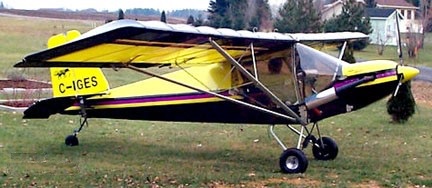
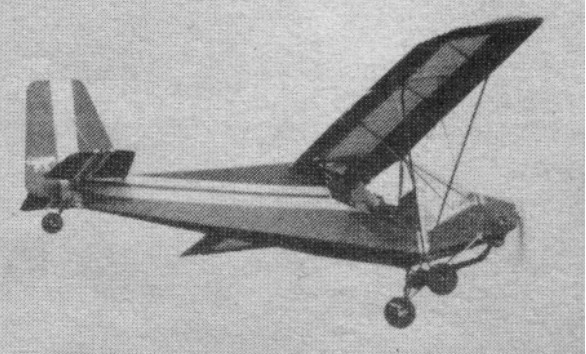
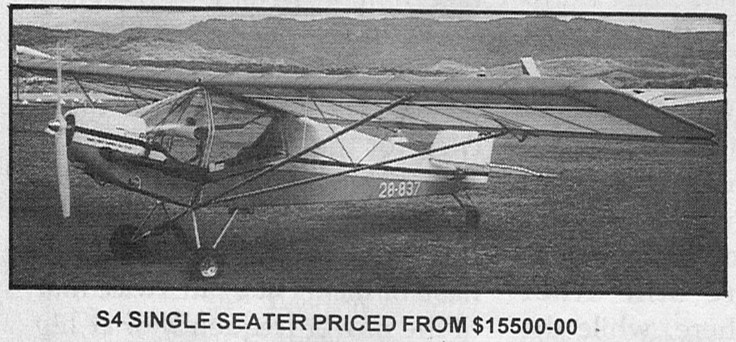
Construction began in November 1982, with the first flight being in November 1982. Single seat single engined high wing mono¬plane with conventional three axis control. Conventional tail. Control inputs through stick for pitch/roll and pedals for yaw. Wing braced from below by struts; wing profile; double surface. Undercarriage has three wheels in tail dragger formation. Push right go right tailwheel steering connected to yaw control. Aluminium tube framework, totally enclosed. Engine mounted below wing driving tractor propeller.
Rans S-4 Coyote C-IGES
The cockpit is fully enclosed and there is only one seat. Equipped with doors, 4 position flaps, elevator trim, bungee suspension landing gear, steerable tailwheel, brakes, radio and headset. Rotax 503 with electric start gives a 70 mph cruise.
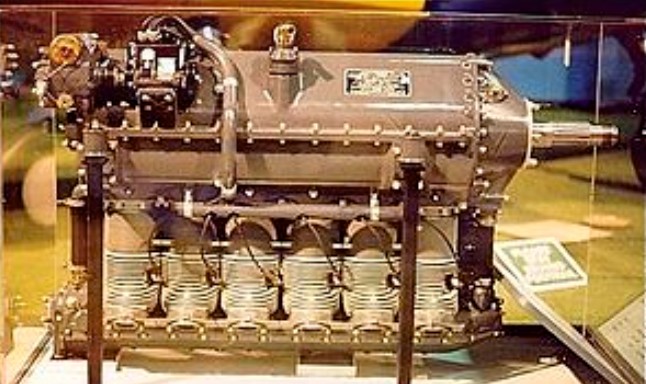
The Ranger V-770 was an American air-cooled inverted Vee aero-engine developed by the Ranger Aircraft Engine Division of the Fairchild Engine & Aircraft Corporation and first run in 1931.
In 1931, the V-770 design was put to paper, based on the Ranger 6-440 series of inline air-cooled engines, and test flown in the Vought XSO2U-1 Scout. In 1938 it was tested in the Curtiss SO3C Seamew and found to be unreliable with a tendency to overheat in low-speed flight. By 1941 a more developed V-770 was installed in the Fairchild XAT-14 Gunner prototype and found satisfactory for the production Fairchild AT-21 Gunner gunnery school aircraft.
Produced from 1941 to 1945, the V-770 featured a two-piece aluminum alloy crankcase, steel barreled cylinders with integral aluminum alloy fins and aluminum alloy heads. The V-770 was one of very few V-type, in-line, air-cooled engines to reach production. The engine was used in a relatively small number of Army Air Forces aircraft, among them the Fairchild AT-21 twin-engine trainer of which approximately 175 were built, and in the two Bell XP-77s.
By 1944, the unit cost was US$11,000
Variants: V-770-4 Installed in the Vought XSO2U-1 Scout
V-770-6 Installed in the XAT-14 Gunner prototype, intended for the Ryan SOR-1 Scout
V-770-7 Installed in the Bell XP-77 light-weight fighter prototype
V-770-8 Installed in the Curtiss SO3C Seamew Scout.
V-770-9 Installed in the XAT-6E Texan prototype.
V-770-11 Installed in the Fairchild AT-21 Gunner.
V-770-15 Installed in the Fairchild AT-21 Gunner.
SGV-770C-1 Tested in the Curtiss XF6C-7 Hawk Fighter-Bomber at 350 hp.
SGV-770D-5 Developed for post-war commercial use, 700 hp (kW) at 3,600 RPM, weight 870 lb (395 kg), height 31.11 in (790 mm), length 74.92 in (1,900 mm), width 33.28 in (846 mm)
Applications: Bell XP-77 Curtiss SO3C Edo OSE Fairchild AT-21 Fairchild BQ-3 Ikarus 214D Vought XSO2U
Specifications:
SGV-770C-1 Type: 12-cylinder inverted Vee piston engine Bore: 4 in (101.6 mm) Stroke: 5 1⁄8 in (130.2 mm) Displacement: 773 in3 (12.6 L) Length: 62 in (1,574.8 mm) Width: 28 in (711.2 mm) Height: 32.2 in (817.88 mm) Dry weight: 730 lb (331 kg) Valvetrain: Two overhead camshafts, one per cylinder bank, gear driven Supercharger: Single-Speed, Single-Stage, produced 45 inches of mercury (1.5 bar, 7.5 psi) at take-off Fuel system: Holley non-icing carburetor Fuel type: 87 octane petrol Oil system: Full pressure type Cooling system: Air-cooled Power output: 520 hp at 3,150 rpm (387.7 kW) Specific power: 0.673 hp/in3 Compression ratio: 6.5:1 Power-to-weight ratio: 0.71 hp/lb
The Ranger L-440 (company designation 6-440C) are six-cylinder inline inverted air-cooled aero-engines produced by the Ranger Aircraft Engine Division of the Fairchild Engine and Airplane Corporation of Farmingdale, New York, United States. The engine was mainly produced for Fairchild’s family of training aircraft in the mid-1930s.
Variants: 6-440C-2 175hp variant with a 6:1 compression ratio.
6-440C-3 180hp variant with a 6.2:1 compression ratio.
6-440C-4 190hp variant with a 6.8:1 compression ratio.
6-440C-5 200hp variant with a 7.5:1 compression ratio.
Applications: Fairchild PT-19/26 Falconar SAL Mustang Grumman Widgeon Maestranza Central de Aviación HF XX-02 St. Louis PT-LM-4
Specifications:
6-440C-2 Type: Six-cylinder inline inverted air-cooled Bore: 4 1⁄8 in (104.8 mm) Stroke: 5 1⁄2 in (139.7 mm) Displacement: 441 in³ (7.2 litres) Length: 53.156 in (1.351 m) Width: 21.954 in (0.549 m) Height: 33.50 in (0.854 m) Dry weight: 376 lb (170.7 kg) Valvetrain: Underhead camshaft Fuel system: Upright carburetor Fuel type: 65 octane rating gasoline Oil system: Full pressure type Cooling system: air-cooled (pressure type cylinder baffles) Power output: 175 hp at 2,450 rpm Compression ratio: 6:1
The Rankin RBM-4 of 1928 was a two-place low wing monoplane powered by a 60hp LeBlond 5D engine. Fist flown by Basil B Smith, they were priced at $2,500.
One appears in a 1936 register as four-place cabin with a 200hp Wright NC9622 (how the NC was acquired is unknown)] c/n 3, owned by brothers Alexander, Arch, and Charles Rankin of Wayne MI. Company promotion also told of a three-place open cockpit with 90hp LeBlond 7D also in progress, with a useful load circa 500 lb and max speed of 110mph, as well as an ambitious plan for a network of national distributors.