RMI RMI-9 M/G

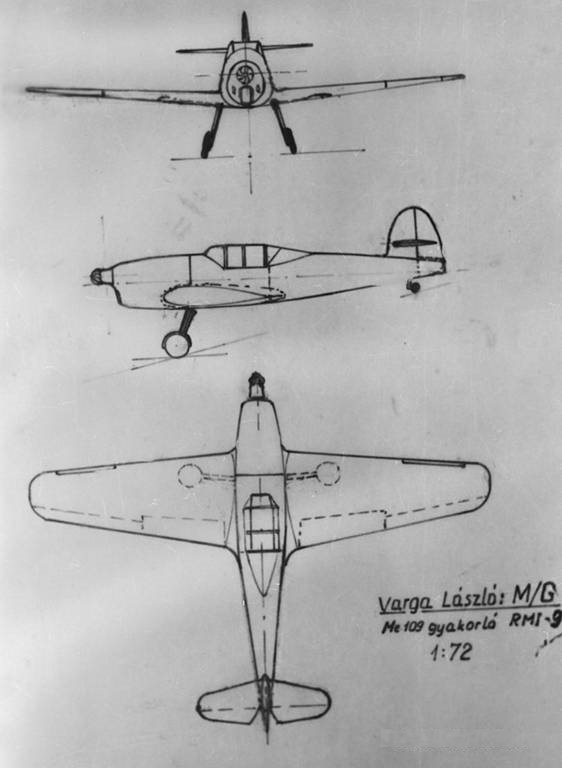
From 1943 the Air Force was gradually getting the Bf-109 advanced jet fighters (F and G versions), but it was not easy to get used to the tight and narrow track undercarriage. The Aero Technical Institute created the RMI-9 M/G specifically for the Messerschmitt pilots in training. The machine was designed with slats, so as to better mimic the Bf-109 flight characteristics.

Designed by Varga László, the RMI-9 M/G [or Me/G] Bf-109 pilot trainer was built but destroyed by US bombing in 1944 in the Ferihegy experimental hangar.

Engine: Argus As-411, 480 hp
Wing span: 9.5m
Length: 7.2m
Height: 2.3m
Empty weight: 1,100 kg
T/O weight: 1,480 kg
Maximum speed: 350 km/h
Range: 700 km
Ceiling 9,200 m

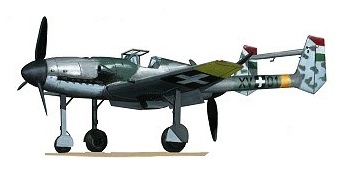
RMI RMI-8 X/V / Marton X/V

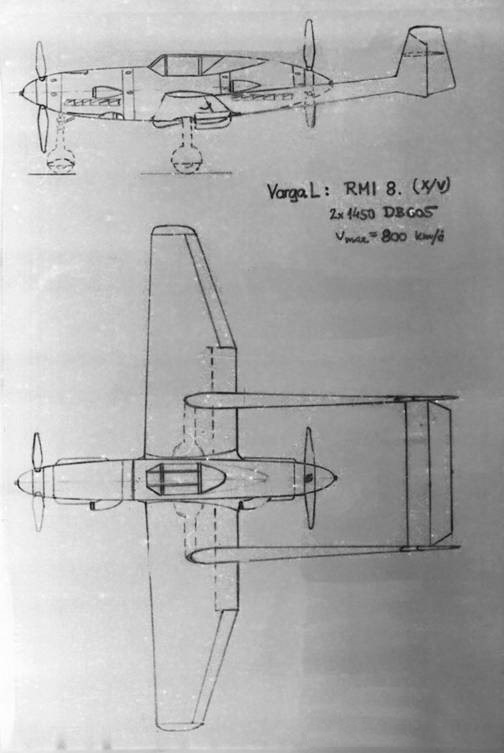
The RMI-8 X/V twin-boom, twin DB605 fighter was designed by Vilmos and Dezso Marton (assisted by László Varga), was also called the Marton X/V after the designers.

The two wings joined to the tail section, which is designed to incorporate the connection points of the high-powered MK-108 (30mm) deck gun.

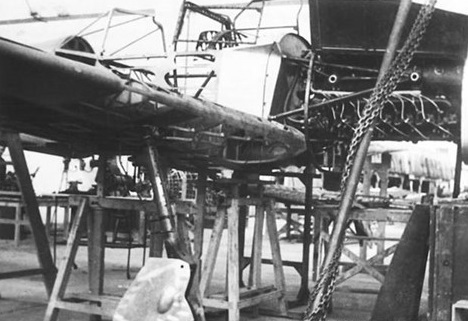
The prototype (X/V-01) was said to have been destroyed by bombing while the airframe was still incomplete in April 1944.

Engines: 2 x DB-605, 1475 hp
Wing span: 11.8m
Length: 10.2m
Height: 3.5m
Empty weight: 2,850 kg
T/O weight: 3,800 kg
Maximum speed: 800 km/h
Range: 1,000 km
Ceiling: 11,500 m
Armaments: 2 x 8 mm machine guns, 2 x 30mm MK-108 machine guns.

RMI RMI-7 V/G

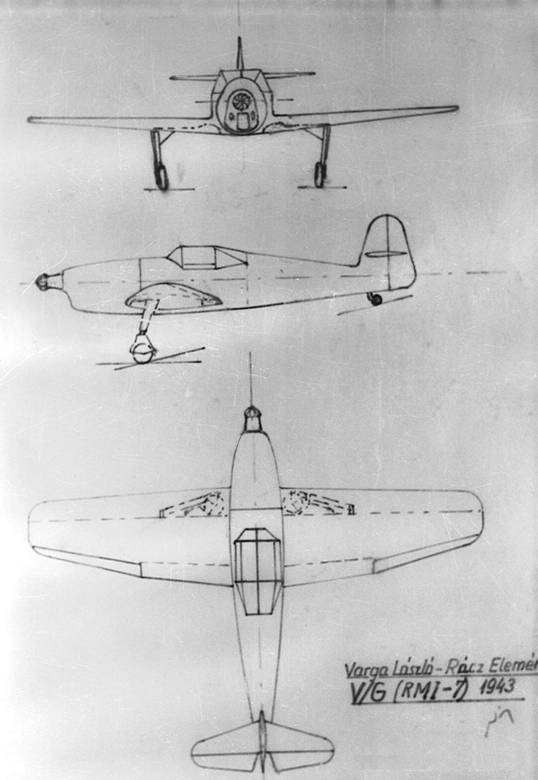
The RMI-7 V/G was a side-by-side trainer powered by an Argus As.410, and equipped with retractable undercarriage. The mixed wood-built machine with torsion wings and hydraulic main landing gear had the same structure as the RMI Z / G.

The V / G was designed from the start serial production. Designed by Varga László and Rácz Elemér, a prototype was built in 1944. In 1944 the prototype was shipped to the Budaörs airport in order to fly but possibly never flew.

Engine: Argus As.410
Wing span: 9.54m
Length: 7.81m
Height: 2.5m
Empty weight: 1,200 kg
T/O weight: 1,680 kg
Maximum speed: 360 km/h
Range: 1,000 km
Ceiling: 8,000m

RLU RLU-1 Breezy / Breezy Aircraft RLU-1 Breezy

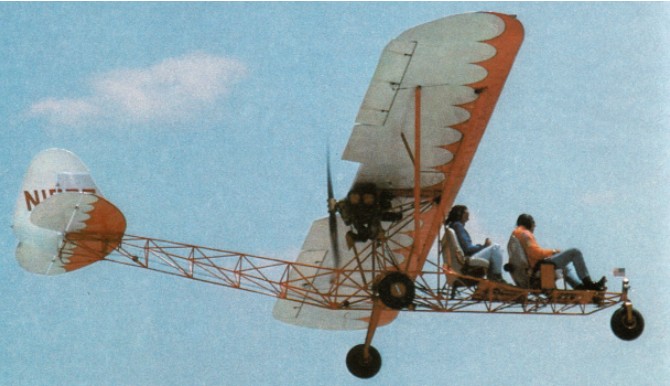
Designed and constructed by Charles Roloff, Carl Unger, and Bob Liposky, the Breezy was first introduced in 1965, and hailed as one of the most distinctive and unusual homebuilt designs to ever attend an EAA Fly-in.

RLU RLU-1 Breezy Article

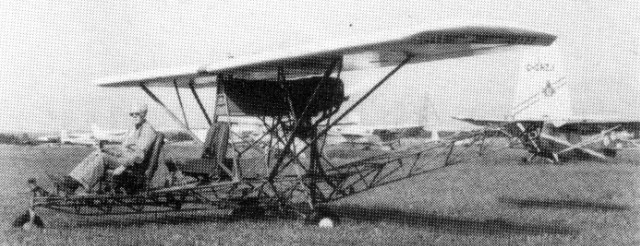
The original Breezy was designed and built to accept a set of PA-12 wings. For that reason, there are no wing drawings with the plans. It is possible to substitute Champ, Taylorcraft, PA-14, PA-18, or J-3,4, or 5 wings. It’s also possible to order wing kits that replicate a J-3 wing. Breezy’s fuselage is an open framework steel tube truss. It is a three-place airplane with two seated abreast on the second seat, but it could easily be adapted as a single-seater or tandem two-seater.

Power for the prototype, which now hangs in the EAA Aviation Museum in Oshkosh, WI, is a Continental C-90. The original design utilizes a Piper Super Cruiser wing.

Plans could be purchased through:
Carl Unger, 8751 S. Kilbourn, Oak Lawn, IL 60456, USA.

Gallery

Engine 85-125hp
Span 33ft
Wing area 165 sq.ft
Length 22ft 5in
Max wt: 1200 lb
Empty wt: 700 lb
Fuel capacity 18 USG
Top speed 105 mph
Cruise 56kt
Stall 25 mph
ROC 500 fpm
Takeoff run 450 ft
Landing roll 450 ft
Range 250 mile
Seat: 2-3

Ritz Standard ‘A’

Strut-braced high wing monoplane, conventional tail, geodetic wing & tail construction. Landing gear: Tricycle. Price 1984: $2,495. Certified to PUMA standards.

Engine: 22 hp Zenoah
Wingspan 36’
Wing area 140 sq.ft
Empty weight 200 lb
Gross weight 500 lb
Cruise speed 30-50 mph
Stall speed 15mph
Vmax 65 mpg
Climb 400 fpm
Takeoff run 120 ft
Landing roll 200 ft
Setup time 15min

Riter Special

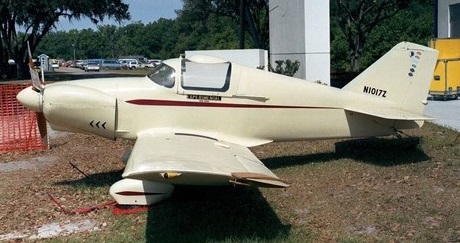
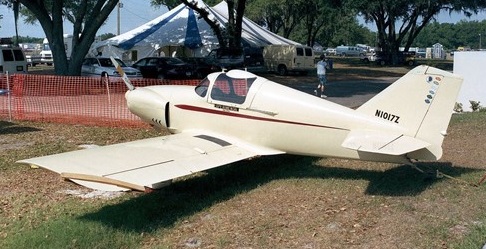
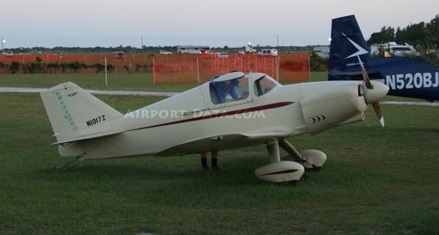
The Riter special is a single engine, low wing, single seat, retractable conventional landing gear aircraft. The wings fold upward for ground transport on a trailer. The landing gear is retracted by hand with a worm-gear mechanism.

First flown in 1961, the two seat aircraft was registered N1017Z Riter Special R.E.C. C/N 101.

Engine: Lycoming O-290 GPU
Maximum speed: 174 kn; 322 km/h (200 mph)
Cruise speed: 148 kn; 274 km/h (170 mph)
Crew: one

Riley Super 414

Riley Super 414-8 / Cessna 414
Engines: 2 x Lycoming IO-720-B1B, 400 hp
Seats: 7
Wing loading: 32.4 lb/sq.ft
Pwr loading: 8.53 lb/hp
Max TO wt: 6825 lb
Empty wt: 4750 lb
Equipped useful load: 1976 lb
Payload max fuel: 560 lb
Range max fuel/ 75% cruise: 1161 nm/4.4 hr
Range max fuel / 55% cruise: 1573 nm/ 7.2 hr
Service ceiling: 35,000 ft
75% cruise: 260 kt
55% cruise: 220 kt
ROC: 2400 fpm
SE ROC: 500 fpm
SE ceiling: 25,000 ft
Min field length: 2400 ft
Cabin press: 4.2 psi
Fuel cap: 840/1416 lb
Riley Super 340

The Riley Super 340 is a conversion from a stan¬dard Cessna 340. The 285 hp engines in a standard Cessna 340 and the 310 hp en¬gines in the Cessna 414 are basically the same. Some additions and changes in the area of the induction air intercooler, oil cooler and intake manifold elbows make it possible to extract more power from the 414 engine, through the use of three inches more manifold pressure. Fuel injection, cyl¬inder baffles and other modifications are also necessary. Riley does all this to the en¬gines in a 340 to convert it to a “Super.” When Riley finishes, the engine is just like the 310 hp engines built by Continental and installed in the 414 by Cessna. Even the data plate on the engine is changed to reflect the change. The airplane then be¬comes a 340 with the 414 powerplants. Weight increase is minimum, at 22 pounds.

Additional horsepower helps rate of climb more than anything else, and in the Super 340 conversion, there’s a bonus over and above the apparent simple increase in horsepower. The 285 engines have a mani-fold pressure restriction starting at 16,000 feet; the 310 hp engines are unrestricted to 20,000 feet and can pull 285 hp to 22,000 feet, for a 6,000 foot advantage over the straight 285 engine.

There is one qualification to the Riley Super 340 package. Even after conversion, the engines are “flat rated” at 285 hp, meaning that you aren’t supposed to use the full 310, even though it is there and the engine is built for it. This is because Riley would have to do time consuming certifica¬tion work, such as developing figures for a higher engine out minimum control speed to reflect the higher horsepower. It will come in time; in the interim, Super 340 pi¬lots are told to mind the 33 inch (which means 285 hp) redline on the manifold pressure on takeoff. That’s no problem, but I’d imagine that in an engine out situation, it would be tempting to go for the extra three inches for extra single engine rate of climb, even acknowledging that Vmc would be a little higher. When climbing and cruising, you can get full benefit from the conversion by using 75 percent of the 310 hp for cruise climb. Again, the benefit is most no-ticeable at altitude: The 285 engine is good for 75 percent climb or cruise power to 20,000 feet; converted, it will deliver 75 percent of 310 hp to about 25,000 feet and 75 percent of 285 to about 27,000 feet. So you can see that the Super 340 really pays powerful dividends up high.

Riley Super 340 / Cessna 340
Engines: 2 x Continental TSIO-520-J, 310 hp
Seats: 6
Wing loading: 32.47 lb/sq.ft
Pwr loading: 9.63 lb/hp
Max TO wt: 5975 lb
Empty wt: 3745 lb
Equipped useful load: 2131 lb
Payload max fuel: 715 lb
Range max fuel/ 75% cruise: 1420 nm/6 hr
Range max fuel / 55% cruise: 1732 nm/ 8.5 hr
Service ceiling: 32,000 ft
75% cruise: 235 kt
55% cruise: 205 kt
Vmc: 86 kt
Stall: 71-79 kt
1.3 Vso: 92 kt
ROC: 1800 fpm
SE ROC: 350 fpm @ 100 kt
SE ceiling: 16,000 ft
Min field length: 2130 ft
Cabin press: 4.2 psi
Fuel cap: 840/1416 lb
Riley Super 340-8 / Cessna 340
Engines: 2 x Lycoming IO-720-B1B, 400 hp
Seats: 6
Wing loading: 32.47 lb/sq.ft
Pwr loading: 9.63 lb/hp
Max TO wt: 6600 lb
Empty wt: 4525 lb
Equipped useful load: 1976 lb
Payload max fuel: 560 lb
Range max fuel/ 75% cruise: 1238 nm/4.4 hr
Range max fuel / 55% cruise: 1716 nm/ 7.2 hr
Service ceiling: 45,000 ft
75% cruise: 276 kt
55% cruise: 240 kt
ROC: 2500 fpm
SE ROC: 600 fpm
SE ceiling: 30,000 ft
Min field length: 1600 ft
Cabin press: 4.2 psi
Fuel cap: 840/1416 lb