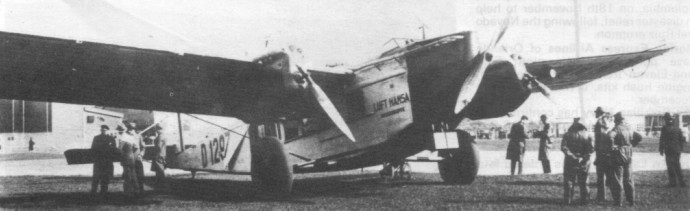
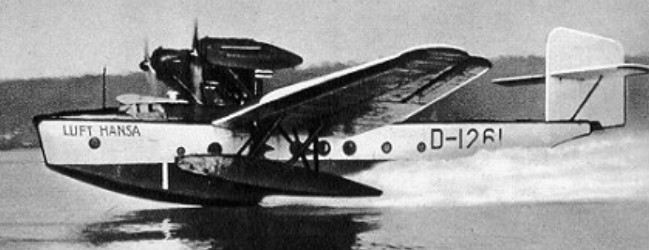
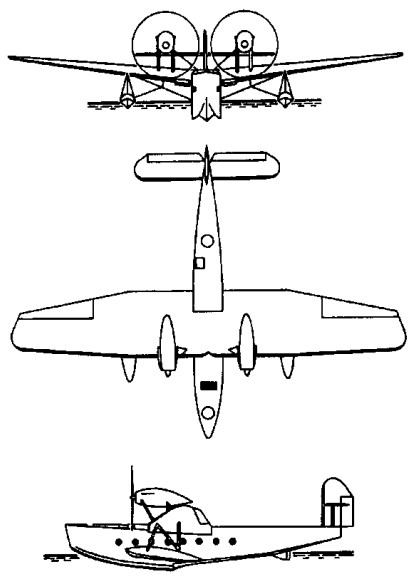
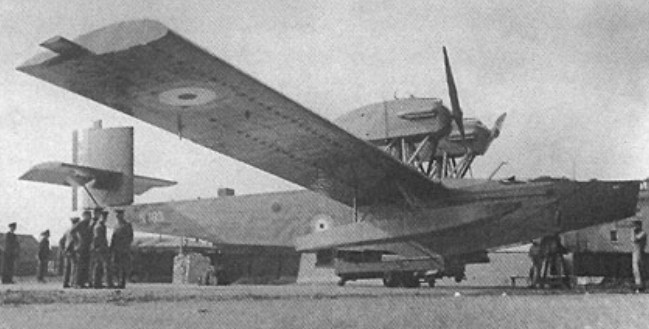
Rohrbach Ro.X Romar

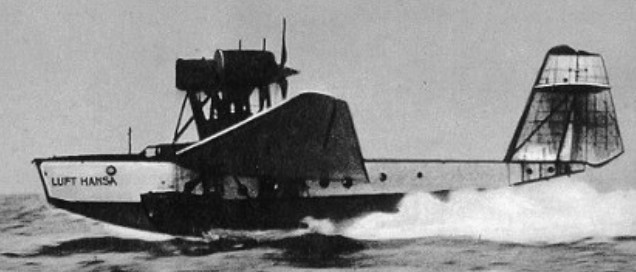
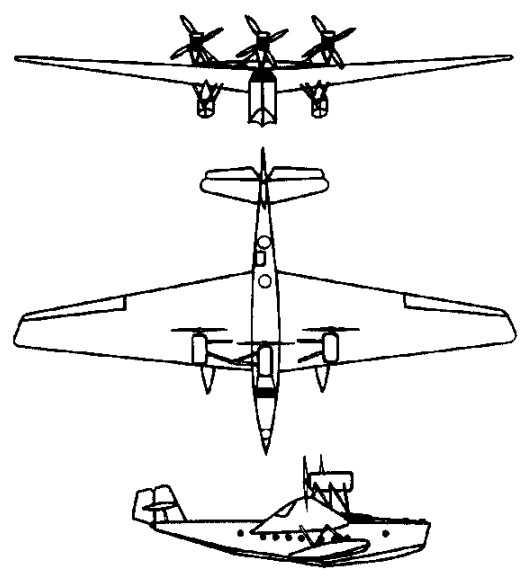
A long-range passenger flying boat, the first prototype flew on August 7, 1928.

Two models were produced. The Romar I (Werk Nrs 29,30 and 31), registrations D-1693, D-1734, and D-1747 respectively.

The single Romar II built, Werk Nr 62, went to France on the 1st April 1931 as F-AKEM.

The difference in the models was that the Romar II had BMW VIaU engines driving through a Farman gearbox.
At some point the fin was changed on all models.

The three German aircraft, named “Hamburg”, “Bremen” and “Lubeck”, were all scrapped in 1933.

Ro X Romar
Engines: 3 x BMW VIUZ, 485kW
Wingspan: 36.9 m / 121 ft 1 in
Length: 22.0 m / 72 ft 2 in
Height: 8.5 m / 28 ft 11 in
Max take-off weight: 19000 kg / 41888 lb
Empty weight: 9900 kg / 21826 lb
Max. speed: 210 km/h / 130 mph
Ceiling: 2800 m / 9200 ft
Range w/max.fuel: 4000 km / 2486 miles
Crew: 4-5
Passengers: 12

Rohrbach Ro X Romar

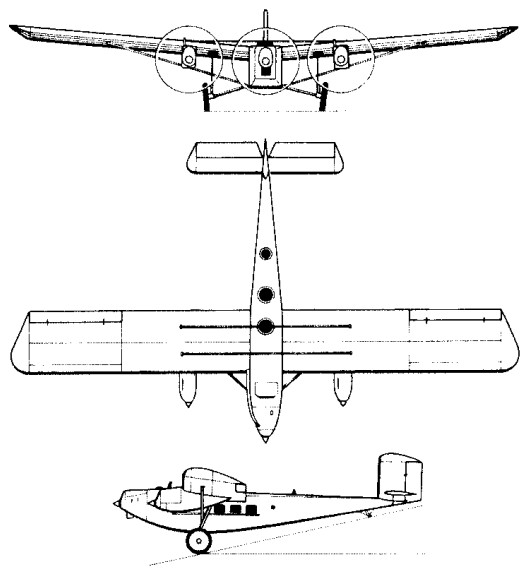
Rohrbach Ro.VIII Roland

A the three engined version of the Farman Jabiru, the first flight was by D-991 (Werk Nr 18) on the 5th September 1926. It went to Iberia, as M-CAAC, later that year along with the second aircraft D-999 (Werk Nr 19) identified as M-CBBB. Both these aircraft were Mark I and were used on the Madrid – Barcelona route until August 1928 when they were returned to DHL. Six examples were operated by Deutsche Luft Hansa

There were effectively three marks: I, Ia, and II.

The Ia and II used the BMW Va engine, the Roland II of 1929 having an increased wing span of 26.3m and a maximum take off weight of 6615kg (14553lb). The maximum speed was increased to 225km/h (140 mph), the service ceiling was increased from 4,300m to 4,600m (15,100 ft). Both types were high-wing tri-motor monoplanes

A total of 18 of all models was produced with some flying well into the late 1930’s.

The last to be produced (Roland II Werk Nr50) was later registered D-ANAX. It was used by DLH until 1934 and then went to DVS.

Ro VIII Roland
Engine: 3 x BMW IV, 239kW
Max take-off weight: 5265 kg / 11607 lb
Wingspan: 26.0 m / 85 ft 4 in
Length: 16.3 m / 54 ft 6 in
Height: 4.5 m / 15 ft 9 in
Wing area: 88.0 sq.m / 947.22 sq ft
Max. speed: 195 km/h / 121 mph
Ceiling: 4600m
Range w/max.payload: 925 km / 575 miles
Crew: 2
Passengers: 10

Rohrbach Ro VIII Roland

Rohrbach Ro.V Rocco

Werk Nr 26 was flown by Severa GmbH for comparison flights with the Dornier Super Wal, then latter as a seaplane trainer.

The one aircraft was built in 1927, and was used by Lufthansa between 21st May and 15th June 1928 for 47 flights between Travemunde and Oslo via Copenhagen and Gothenburg after this it was delivered to the Erpobungstelle at Travemunde.

Ro V Rocco
Engines: 2 x Rolls-Royce Condor, 480kW
Wingspan: 26.0 m / 85 ft 4 in
Length: 19.3 m / 63 ft 4 in
Height: 6.7 m / 22 ft 0 in
Wing area: 94.0 sq.m / 1011.81 sq ft
Max take-off weight: 9600 kg / 21164 lb
Empty weight: 5990 kg / 13206 lb
Max. speed: 220 km/h / 137 mph
Cruise speed: 168 km/h / 104 mph
Ceiling: 3150 m / 10350 ft
Range w/max.fuel: 2400 km / 1491 miles
Crew: 3
Passengers: 10

Rohrbach Ro V Rocco

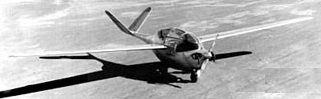
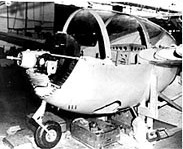
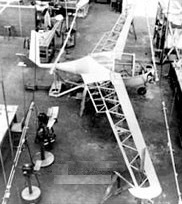
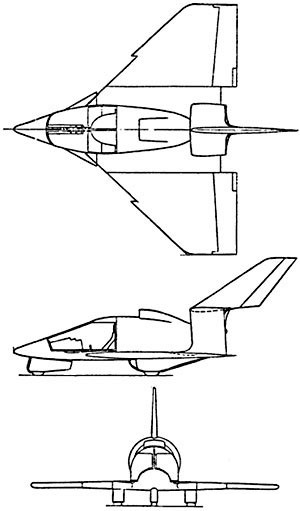
Rohr 2-175

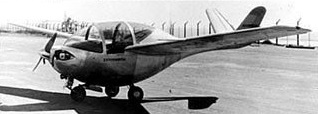
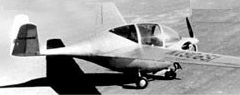
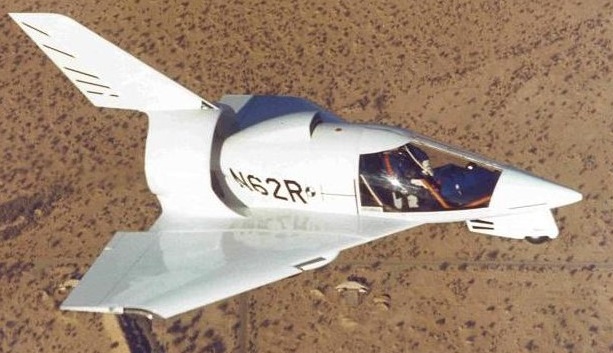
In 1974, Rohr Chairman Burt Raynes resolved to move Rohr into the light airplane market by summoning Walt Mooney as designer and project manager to come up with a quantum leap in light aircraft technology. Mooney selected the best people Rohr had, including key players Bill Chana, Bob Fronius, Mike Voydisch, and Don Westergren, and built three airframes; two flying prototypes and a static tester, plus 1/10- and 1/2-scale models for feasibility tests.

Fiberglass-reinforced plastic honeycomb construction. Sparless folding wings and vertical tail for storage in an average one-car garage. Goodrich Aerostructures Group was a contract manufacturer of engine cowlings and pylons.

A shortage of funds precluded further development. By the time the project ended (for reasons having nothing to do with the merits of the airplane), one prototype had accumulated 23 hours in the air.

Engine: 150hp Lycoming special high-rpm (4400rpm)
Prop: four-blade ducted-fan pusher prop plus a six-blade stator
Wingspan: 30’0″
Length: 28’0″
Gross weight: 1450 lb
Seats: 2

Rogožarski AŽR

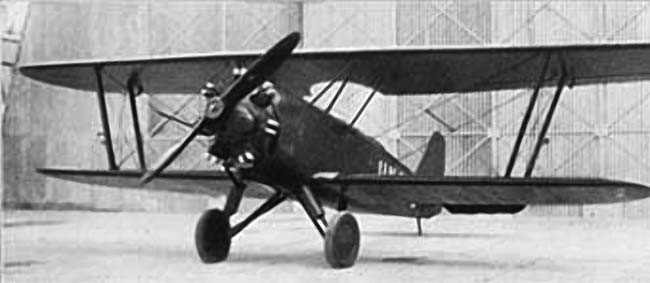
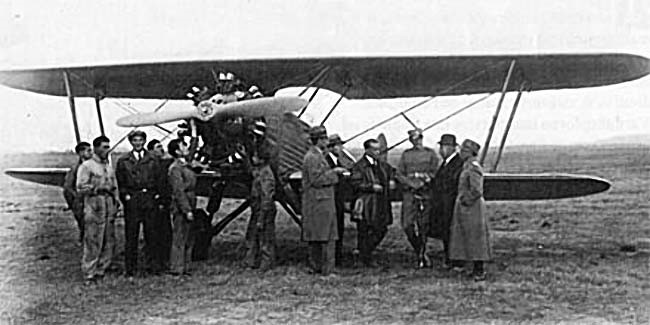
The Rogožarski AŽR (Serbian Cyrillic: Рогожарски АЖР) was a single-engined, two-seat biplane aircraft designed as a trainer in Yugoslavia before World War II. It was designed by Viljem Šuster and built at the Rogožarski factory in Belgrade.

The aircraft was a biplane with the lower wing smaller than the upper. It was equipped with a seven-cylinder Walter Castor air-cooled radial engine of 240 hp and a wooden double-bladed propeller. The plane had dual controls, the two crew (pilot and flight instructor), sat one behind the other. It was to be employed as an intermediate trainer, replacing the outdated Hansa-Brandenburg C.I. The fuselage, which was of rectangular cross-section, was made of wood and covered with plywood. The wings had rounded ends, each was connected by a pair of metal struts and wire tensioners. Construction of the wing involved the use of wood covered with canvas. The landing gear was fixed and had no axle.

The first flight was conducted by a factory test pilot on November 5, 1930 and after the completion of factory tests, was handed over to the Yugoslav Royal Air Force Commission for testing.

The AZR was planned to replace the obsolete Hansa Brandenburg aircraft in the future. However, the flight characteristics were lower than the requirements, and they refused mass production.

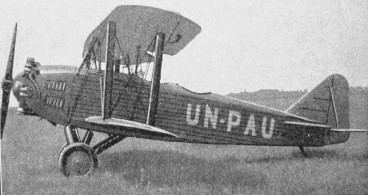
The aircraft was only used in 1931 for advertising purposes, demonstration flights and participation in air shows. It also competed in the King’s Cup and the like; AZR still hoped to come to some arrangement with the military. This did not happen, Rogozarski withdrew from aircraft design, the prototype was registered as a civilian plane and used by the factory. It received the civil registration UN-PAU. In the meantime, the economic situation was such that the AŽR was standing in its hangar, waiting for better days; despite bank loans, there was a distinct lack of orders and the company went bankrupt in 1933.

Circumstances improved in the summer of 1934 when the Yugoslav Air Force bought the AZR and the fortunes of the factory improved, becoming a shareholder company. The AŽR was used as a trainer until 1937.

Engine: 1 × Walter Castor 7-cyl radial, 176 kW (236 hp)
Propellers: 2-bladed
Wingspan: 10.55 m (34 ft 7 in)
Wing area: 27.00 sq.m (290.6 sq ft)
Length: 7.55 m (24 ft 9 in)
Height: 3.05 m (10 ft 0 in)
Empty weight: 859 kg (1,894 lb)
Gross weight: 1,433 kg (3,159 lb)
Maximum speed: 215 km / h
Cruising speed: 185 km / h
Range: 745 km (463 mi; 402 nmi)
Service ceiling: 5,320 m (17,450 ft)
Rate of climb: 4.78 m/s (941 ft/min)
Crew: 2
Rogožarski SIM-II

Engine: Siemens Sh 14, 82 kW (110 hp)
Propeller: 2-blade
Wingspan: 12.40 m (40 ft 8 in)
Wing area: 21.70 sqm (233.6 sq ft)
Length: 7.80 m (25 ft 7 in)
Height: 2.68 m (8 ft 10 in)
Empty weight: 520 kg (1,146 lb)
Gross weight: 770 kg (1,698 lb)
Maximum speed: 105 km/h (65 mph; 57 kn) 148 km/h at sea level
Range: 750 km (466 mi; 405 nmi)
Service ceiling: 5,000 m (16,404 ft)
Crew: 2