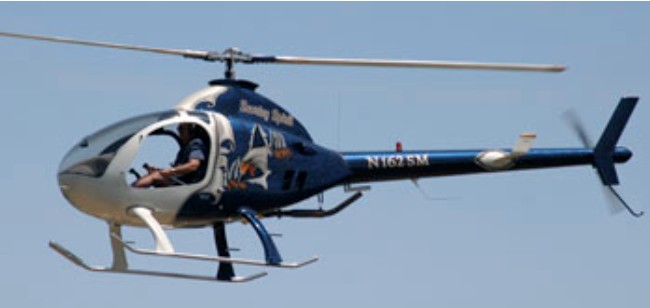
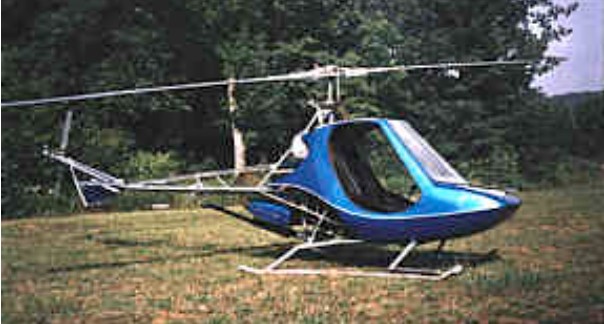
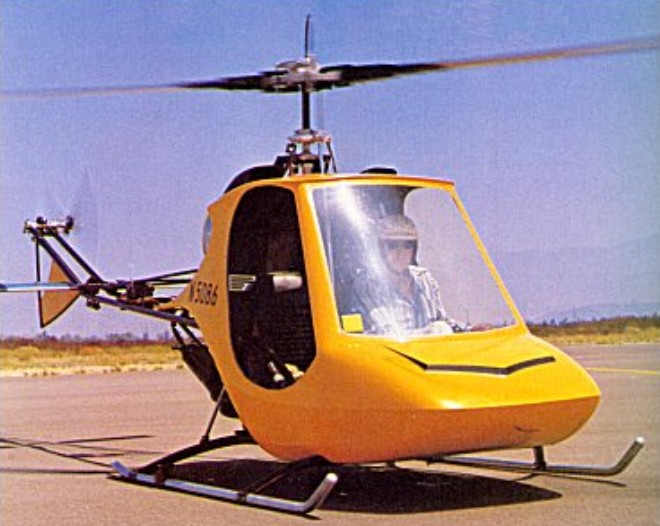
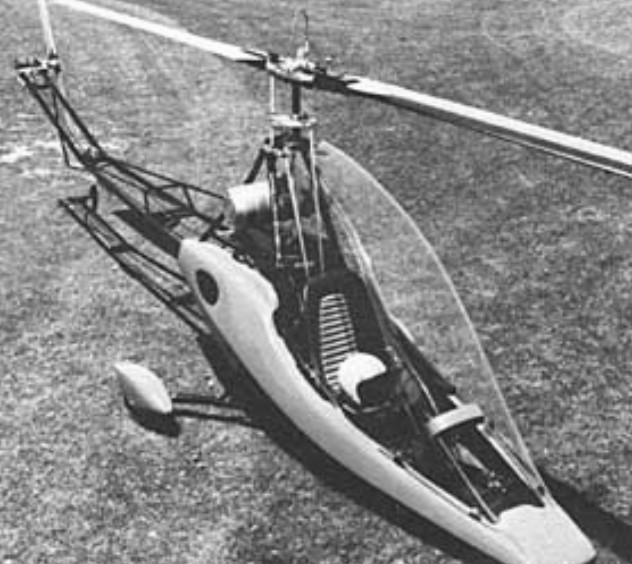
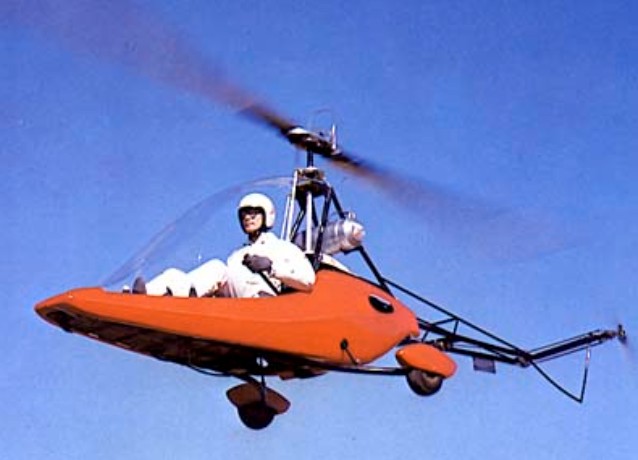
In the late 80’s, RotorWay created the Elete, a larger, two-place helicopter. The Elete had an RW 152, water-cooled, dual electronic, 4 stroke engine that provided 152 horsepower with a pilot and passenger payload of 400 lb / 180kg. Normal cruise was 113 mph / 180km/h with maximum airspeed of 130 mph / 210km/h. After selling three Elete helicopters, the company finally succumbed to financial challenges and was soon purchased by a former customer, John Netherwood, a businessman from England. The new company recognized the design hurdles of the Elete and promptly set out to address making the proven Exec model a better aircraft to sell.
After selling three “Elete” helicopters, the company finally succumbed to financial challenges and was soon purchased by a former customer, John Netherwood, a businessman from England. The new company recognized the design hurdles of the “Elete” and set out to improve the proven “Exec” model a better aircraft to sell.
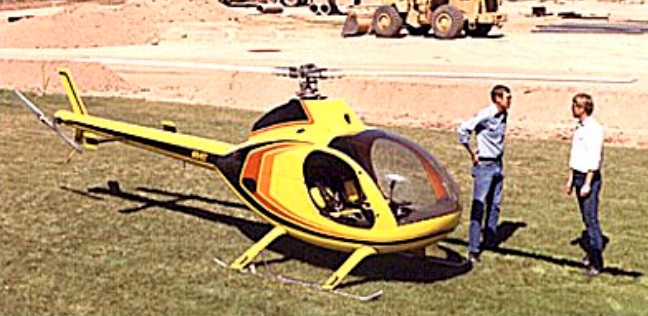
First presented at the 1980 Oshkosh. The RotorWay Exec is a two-place aircraft which features Rotorway’s RW-145 engine which offers improved operation on inexpensive automotive fuels as well as a greater ability to accomplish hovering maneuvers. Its asymmetrical airfoil rotor blades, a result of several years of research and development, reduce the autorotation descent rate to approximately 1300 fpm, and the increased lift for given pitch movement of these blades translates into less wear and tear on the powerplant. Other features include a simplified rotor blade thrust retention system, a fully enclosed streamlined fuselage and ultra-light tail boom construction.
Rotorway Exec
Purchased by a former customer, John Netherwood, a businessman from England, the new company recognized the design hurdles of the Elete and promptly set out to address making the proven Exec model a better aircraft to sell, the Exec 90. The Exec was reviewed from top to bottom. Any and all suggestions from the experienced staff were considered, evaluated and many implemented. Extensive redesigning was done and when all was complete, 21 items were changed or improved including the aerodynamics, drive train, stability and power. The engine was once more a primary area of improvement, a task made even easier by the fact that RotorWay had been engineering and manufacturing their own engine for years by this time. The RI 162 cubic inch engine was specifically designed for rotorcraft flight and possessed an incredibly light weight to horsepower ratio. Extended life limits were added to the chains, belts, rotor system and asymmetrical blades.
Improvements were made in every aspect of the aircraft including the method of packing and organizing the kit, the manuals, and the customer service program to assist the builder with technical information. Many critical systems were then assembled by RotorWay itself, almost all of the fabrication completed for the builder. All of the welding was now done at the factory as well. The rotor blades required little more than finishing touches. The tailboom had been formed and riveted and was ready for inspection covers to be fitted and mounted on the airframe. The wiring harness was assembled and tested, coming ready for installation.
The Exec 90 was the only piston-powered helicopter at the time to utilize an asymmetrical airfoil for improved autorotation characteristics and safety. The Exec 90 also utilized a unique drive system, eliminating an expensive transmission, metal chip detectors and possible in-flight failures. With all of this in place, the expected build time with the standard kit was about 500 hours. A quick build kit was soon offered, cutting that time nearly in half. Eventually, the quick build kit became the only way in which to purchase the helicopter. Pilot and passenger load was 400 pounds with a normal cruise of 95 mph and a maximum airspeed of 115 mph.
Exec 90
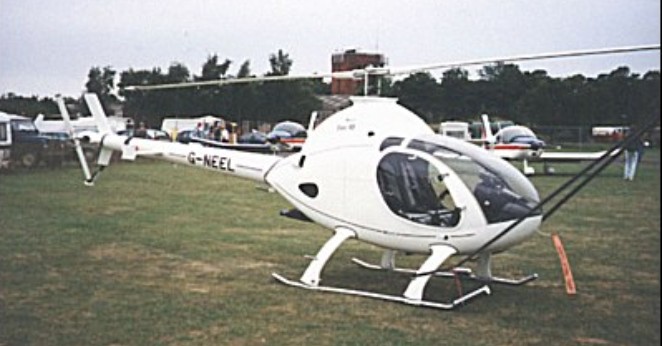
The Exec 162F powerplant utilises the very latest, fully automated, digital electronic control system. Designed to incorporate high performance with maximum reliability, maintenance on the Exec is kept to a minimum. Fuel consumption is only 8 USG per hour and the Exec 162F works with 92 Octane. The Exec 162F utilizes an asymmetrical airfoil for improved autorotation characteristics and safety. An elastomeric rotor hub eliminates a lot of moving parts, bringing considerable simplicity to the rotor system.
The many prefabricated components of the Exec 162F make the kit an easy project for the first time builder. The average build time of only 450 hours is one of the lowest in the kit industry. Some have even done it in as low as 300 hours. There is no welding to be done, only minor fabrication work, and all major components are pre-assembled.
Each of the Exec 162F’s smaller components are provided on detailed shrink wrapped cards. Each part is numbered to coincide with the construction manuals, prints, and templates. Construction manuals are in see-do style using step by step photographs. The Exec 162F can be built and stored in a one car garage. The kit was designed with the amateur builder in mind and no special tools are required.
With the introduction of the Exec 162F came a new cabin design. The side by side seating arrangement was modified from that of previous models, adding 2 cu. ft. of cabin space and greatly increasing cabin comfort. The cabin is 44 inches across the shoulders. The floorpan was widened to provide more leg room. Cabin doors were also widened to improve accessibility to the cabin. Dual controls are standard with each kit.
The Exec 162F utilizes the latest in fuel injection and electronic ignition. The “FADEC SYSTEM” (Fully Automated Digital Electronic Control) controls the Exec 162F powerplant. This processing unit provides the powerplant with the correct fuel, air, and ignition ratios required for optimum performance with minimum fuel expenditure. Sensors monitor the engine’s vital functions. These are provided to the pilot via a digital display in the cockpit. This display will also automatically display any system operating out of its normal range. Unique to this system is its excellent component redundancy. All Systems have a backup and in the event of a total loss or failure of any system component, including the electronic control unit, a redundant system will automatically engage for uninterrupted operation. Dual electronic ignition, electronic fuel injection, and complete engine monitoring are all part of the “FADEC” system.
Exec 162 F
Flight orientation and maintenance training was available to RotorWay owners.
Brochure $15, Video $15, both $25. Kit: $64,350 complete in 2009.
Executive 145 Engine 145-hp RotorWay RW-152 Gross Wt. 1285 lb Empty Wt. 830 lb Fuel capacity 15 USG Rotor diameter 25 ft Length 21 ft 6 in Top speed 115 mph Cruise 90-95 mph Climb rate 1200 fpm Range 190 miles
Exec 162F Engines: RotorWay RI162 with FADEC system Rotor Blades: 25 ft / 7.6 m RotorWay aluminum alloy Elastomeric rotor and hub Tail rotor: 50.25in / 1.2 m Width: 5 ft 5 in Height: 8 ft / 2.4 m Fuselage Length: 22 ft / 6.7m Overall length: 29 ft 6 in / 9 m Empty Weight: 975 lbs / 442 lb Useful Load: 525 lbs / 238 kg Gross Weight: 1,500 lbs / 680 kg Fuel cap: 17 USG / 64 lt Min Speed: Hover Cruise: 95-100 mph Top Speed: 115 mph / 100 kt ROC: 1000 fpm Service ceiling: 10,000 ft HIGE: 7000 ft HOGE: 5000 ft Range: 180 sm / 2 hr. Cabin width: 44 in / 1.1 m Landing gear: skids Skid width: 65 in / 1.6 m Seats: 2
Exec 162 F Engine: Rotorway 162, 150 hp Rotor span: 7.62 m MAUW: 680 kg Empty weight: 442 kg Fuel capacity: 65 lt Max speed: 185 kph Cruise speed: 153 kph Minimum speed: 0 kph Climb rate: 5 m/s Seats: 2 Fuel consumption: 30 lt/hr Kit price (1998): $62,350
Designed by B.J.Schramm, in 1972, the Scorpion II was introduced with an OMC 125 horsepower, 2 cycle engine which provided the added power to fly two lightweight people in cool, low density altitude environments with a gross weight of 1125 pounds. But despite all the improvements, overhaul times on the major components were still not up to the desired levels.
In 1973 the new Scorpion Too made its first flight at Oshkosh with designer B. J. Schramm piloting. In 1975, RotorWay developed its own four-cylinder engine to better meet the helicopter’s requirements for a two-person load and an empty-vehicle weight of less than 700 pounds.
In 1974, the company embarked on a major redesign of the helicopter once more with the end goal of reducing the amount of maintenance time required per every hour of flight. The first, and most important, item to be addressed was the elimination of the inefficient 2 cycle engine. The company realized that there would never be a way to sufficiently dampen the excessive vibration and low torque associated with this type of engine. The vibration was found to cause rapid wear in various parts and had a tendency to cause cracks in airframe and drive systems.
Unable to find an engine manufacturer to make their 4-cycle engine suitable for the helicopter, RotorWay set forth on producing their own engine. Called the RotorWay RW 133, this 4 cycle, 4-stroke engine now had the added power and torque the company was looking for. The RW 133 had a cruise speed of 80 mph with a range of 120 miles and a useful load of 420 pounds.
In 1975 a 4-cycle engine, the RW 133, went from design to prototype, to production. In 1976, RotorWay changed the model designation from the Scorpion Too to the Scorpion 133 to indicate the new RW 133 power plant. This new Scorpion has a new asymmetrical airfoil rotor system.
B.J. Schramm wanted to give the world a low cost personal helicopter, but it wasn’t until the summer of 1976 that he finally raised the flag. As of October 1, 1976, RotorWay Corporation sold Scorpion 133 kits for $13,500 including a completely new water cooled 133 hp (derated from 140) engine de¬signed and produced by RotorWay. Schramm owns his own foundry.
The engine has a single ignition system, the airframe is steel tubing that comes to the builder tack welded into the proper alignment. The builder with no welding experience is encouraged to get expert help to finish the welds; any experienced aircraft welder could do the job handily. The airframe is designed for very low initial cost. It is also designed to be easy to repair and overhaul, taking only eight hours to disassemble to a bare ship, 16 hours to rebuild the subassemblies and 20 hours to reassemble. The frame is based on several intersecting circles and triangles that offer excellent rigidity, a pylon over the cabin for rollover protection and a notice¬able lack of busy little clusters of tubing in favor of simple single tube structures.
The rotor system is a clockwise rotating two-blade teeter system (to avoid the cost of designing out ground resonance in the landing gear) with a clever system that separates the collective and cyclic functions so that blade pitch changes only when the pilot moves the collective control. A cable runs up the rotor shaft and curves back down to connect to a scissor that regulates the blade pitch. An otherwise conventional swash plate operates the cyclic control of the rotors. The airfoils are asymmetrical, which Schramm says avoids pressure center shifts and produces lift at lower angles of attack. The controls are all push pull cables.
The primary drive uses belts, which have good power pulse damping characteristics and perform well in low torque applications. The secondary uses a chain drive because of the higher torque; the chain produces a loss of only 1.5 percent of power, which is much better than gears would have achieved. Three belts from the secondary run a relay race to the tail rotor, and they’re happy transmitting as much as 25 hp, though the Scorpion’s tail rotor could never draw more than 15.
The cabin enclosure is all fiberglass and can be removed in 10 or 15 minutes; if it’s damaged, it can be repaired with conventional glass repair kits. It can be equipped with dual controls, which take about 10 minutes to install. The throttle is five percent coordinated with collective. Pedals are conventional, although it takes awhile to get used to kicking the right rudder for hover torque instead of the left, since the rotors turn opposite of normal.
Scorpion Too
Scorpion Too Engine: 105kW Evinrude marine. Seats: 2
Scorpion 133 Engine: RW 133, water cooled, four stroke, 133 hp Length: 22 ft Height: 7.5 ft Width (cab): 4 ft Rotor dia: 24 ft Gross weight: 1,235 lb Empty weight: 805 lb Accessories: 15 lb Equipped useful load: 415 lb Payload max std fuel: 355 lb Fuel capacity, standard: 10 USG/60 lb Fuel capacity, optional: 15 USG/90 lb Disc loading: 2.5 lb/sq.ft Power loading: 9.3 lb/hp Rate of climb: 800 fpm Service ceiling: 10,000 ft Max cruise: 70 knots Hover I.G.E. 6500 ft Range (max fuel, optimum cruise power, one person): 130 nm/2 hr Range (max fuel, optimum cruise power, two persons): 79 nm/1.3 hr Fuel flow at maximum cruise 45 lb/hr Fuel flow at maximum range cruise 40 lb/hr Seats: 2
The Scorpion was the first real kit helicopter on the market that actually flew. It generated a tremendous amount of excitement in the aviation world. This was an experimental aircraft in the truest sense of the word, the company pioneering a concept of individual helicopter ownership and flight and making it a reality. It was not meant for the commercial market, but rather for the sport-flying public. While priced at $6,000, far more than the average car at the time, it still opened the possibility of individual helicopter ownership to a whole new audience. The greatest challenge was to design a helicopter that the average customer could actually build while providing the essential elements required for helicopter flight. When first introduced to the public it was an open-cabin single-seater.
Of all the systems available for propulsion, RotorWay chose what had proven to be one of the most efficient systems and paralleled the design also used on most light commercial helicopters at the time: a standard main rotor with a tail rotor to counteract the torque. Analyzing the pros and cons of three classical types of rotor hub systems (semi-rigid, rigid and fully articulated), RotorWay opted for the semi-rigid system for the Scorpion. In this system, the collective and cyclic controls were kept completely distinct by a patented system which used a flexible push-pull cable for control separation. All controls functioned with precision bearings and quality dampening devices.
This breakthrough in design, along with an extremely simplified rotor blade and off the shelf drivetrain components all served to make the RotorWay extremely simple in design, never sacrificing structural strength. This was RotorWay’s constant objective. The original design, whose prototype was first flown in 1966, had very low life limits on major components. This was the main weakness that needed to be addressed with further research and development. With the help of consulting engineers, along with creative input and ideas from innovative customers, an improved version of the Scorpion was introduced in 1971. Among the improvements made were all-aluminum rotor blades, a 115 horsepower OMC 2-cycle engine (Evinrude Vulcan V-4 outboard motor) and a heavier drive system (shafts and bearings).
The Scorpion also utilized a system of v-belts to drive the tail rotor. This had a number of inherent safety features. First of all, the belts were not subject to torsional fatigue as in a long shaft. Secondly, the tail rotor drive gearbox overheating was eliminated. The result was that maintenance was both simplified and reduced. Build time was approximately 600 hours with far more of the fabrication done by the builder than in the current model. It proved to be an extremely popular product and set the stage for even better things ahead. Price 1982: US$21,700.
Scorpion Engine: 1 x Mercury, 47kW Main rotor diameter: 5.85m Max take-off weight: 272kg Empty weight: 172kg Max speed: 137km/h Service ceiling: 3655m Range: 257km
Engine 145-hp RotorWay Gross Wt. 1250 lb Empty Wt. 830 lb Fuel capacity 10 USG Rotor diameter 25 ft Length 25 ft Top speed 85mph Cruise 65-70 mph Climb rate 1200 fpm Range 110 miles
Engine: Evinrude 14 cylinder outboard marine engine, 115 hp Length: 17ft 1.25in Rotor dia: 19 ft 6.5 in Speed: 90 mph Ceiling: 12,000 ft Range: 105 miles Seats: 1
Scorpion-I Engine hp: 85 to 115 hp Length: 17 ft Height: 6 ft Width (cab): 2 ft Rotor dia: 19 ft Empty weight: 375 lb Gross weight: 700+ lb Payload: 425+ lb Disc loading: 2.2 lbs/sq.ft Range: 160 miles Speed (max): 95 mph Speed (cruise): 65 mph Service ceiling: 12,000 ft Rate of climb: 900 ft/min
In 1958, B.J.Schramm set up a company to market a single-seat amateur-built helicopter known as the Schramm “Javelin”. This machine had a tubular steel structure with a formed aluminium body shell and was powered by a 75kW Mercury powerboat engine. It first flew in August 1965.
Named the Javelin (in several different forms), this first attempt by RotorWay Aircraft founder, designer and builder, B.J. Schramm, turned into a learning process that led to the eventual success of the Scorpion, the company’s first production helicopter, offered in 1967.
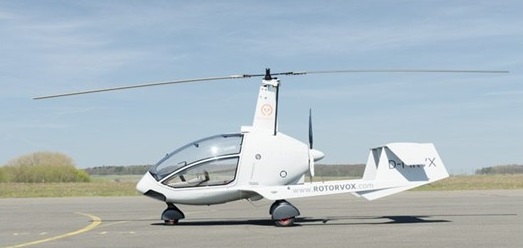
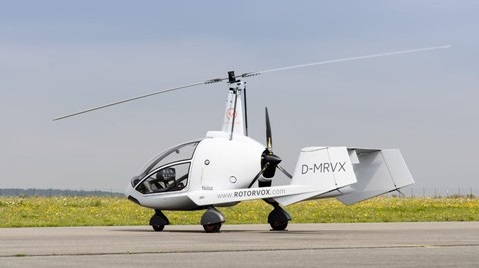
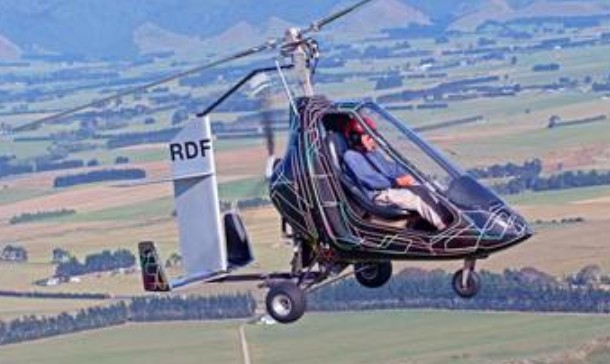
The Rotorvox C2A is a two-seat autogyro developed in Germany.
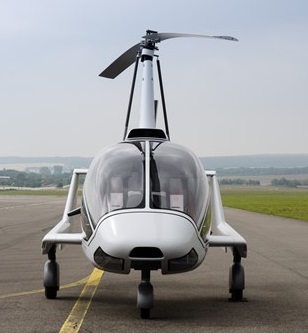
Structurally, the C2A is largely carbon-fibre monocoque. The fuselage pod contains a protective cell for the side-by-side seating behind a large, forward hinged, three piece canopy. A faired pylon, mounted immediately behind the cell supports a two blade aluminium rotor and behind it a 73 kW (98 hp) Rotax 914 liquid-cooled flat-four engine drives a pusher three blade propeller. The rotor is pre-rotated hydraulically.
Flat-sided tail booms are held away from the fuselage on short stubs and each mounts a straight-tapered fin and rudder, their tips linked by the tailplane. There are shallow, long ventral fins. The C2A has a short-legged, wide track tricycle undercarriage with its mainwheels near to the forward end of the booms and a nosewheel under the forward fuselage.
First flown around 2009, at least two prototypes were flown over five years of development before C2A deliveries began in October 2014.
Engine: 1 × Rotax 914, 73 kW (98 hp) continuous Main rotor diameter: 8.40 m (27 ft 7 in) Blades: two aluminium, airfoil NACA 8H12 Length: 5.50 m (18 ft 1 in) fuselage; including rotors 8.40 m (27 ft 7 in) Width: 2.21 m (7 ft 3 in) fuselage Height: 2.85 m (9 ft 4 in) Max takeoff weight: 560 kg (1,235 lb) Fuel capacity: 90 l (20 imp gal; 24 US gal) Propellers: 3-bladed Duc, 1.75 m (5 ft 9 in) diameter Cruise speed: 145 km/h (90 mph; 78 kn) Never exceed speed: 164 km/h (102 mph; 89 kn) Range: 600 km (373 mi; 324 nmi) Endurance: maximum 6 hr Crew: Two
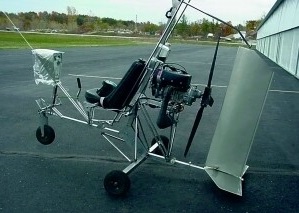
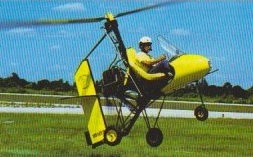
Correspondingly named, the Sparrow is the drop keel ultralight cousin of the Falcon. Its bolt-together aluminum frame carries a useful load of up to 240 pounds, depending on the engine (choice of Rotax 447 or 503, or Hirth 2704 or 2706). Cruising airspeed is 63 mph.
Bolt-together all-aluminum frame. Components done on CNC. Contains all fasteners, cables, wheels, engine mount, rotor head, pod, tall tail and horizontal stabilizer, and joystick.
Kit for the Sparrow: (Without engine, seat tank, propeller, rotors and instruments) 2001: $3795. Plans for the Sparrow 2001: $175
Engines: Rotax 447, 503; Hirth 2704 Propeller: 2 or 3-blade Warp Drive Rotor Blades: Rotor Hawk 23 or 24 rotor disk Width 64″ Height 84″ Length 9′ Min Speed 15-20 mph Cruise 63 mph Empty Weight 254 lbs Useful Load up to 240 lbs (depending on engine)
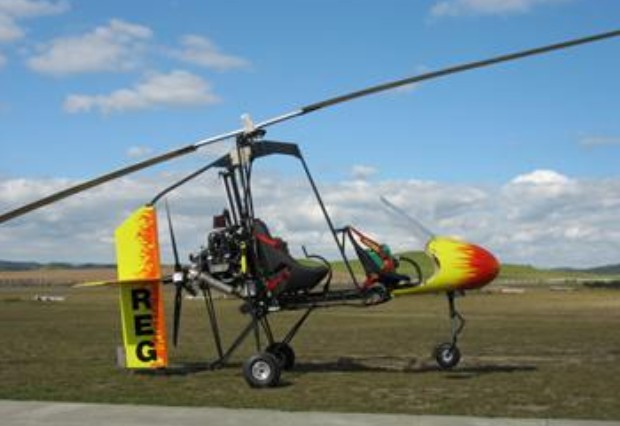
Both Falcon and Falcon II are accommodating to most aircraft engines, including Subaru, Rotax and Hirth, and both cruise at 60 to 70 mph with a top speed of 95 mph. But two passengers can ride side-by-side in the Falcon II while the Falcon only has room for one. Both are available with or without enclosure.
Falcon kit (without engine, propeller, rotor blades, instrument and seat tank) 2001: $3995 Falcon II kit (without engine) 2002: $11,950, but may cost less, depending on option choices.
The airframe is aluminium bolted together. Engine options include 70 hp Subaru, Rotax or VW. Rotor blades: 22-28’, 8 1/8” aluminium bonded and riveted.
Complete kit available as well as individual components and modification kits for upgrading Bensen-type machines to the Falcon configuration. Features main gear suspension using standard 2 x 2 Bensen axle tube. Full enclosure available. Kit contains everything less engine, prop, rotor blades, instruments and seat tank. Info pack: $3.00 Kit: $3,995 in 2009.
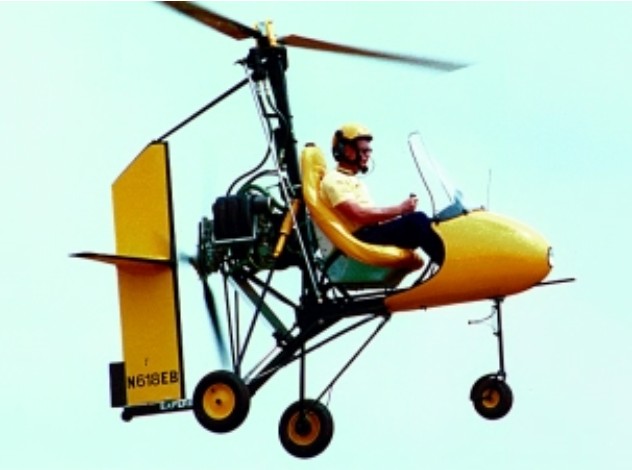
A two seat tandem autogyro. A high profile open-frame design utilising a T tail, full suspension landing gear and large propeller. Also available: parts, components, pre-welded airframe kit.
High-profile open-frame design built of 2 x 2 aluminum tubing bolted together and welded. Utilizes tall tail, full suspension landing gear with 9″ travel, large propeller. Also available: parts, components, pre-welded airframe kit.70-min video $27.95 Assembly manual now available.
Plans were available for the single-seater Dominator models in 2001: $175. Plans: US$175 in 2009.
Depending on model and engine size, Dominators are available fully assembled: $12,000 to $29,000 in 2001.
The craft also holds the official world altitude record in its class, at 24,463 ft.