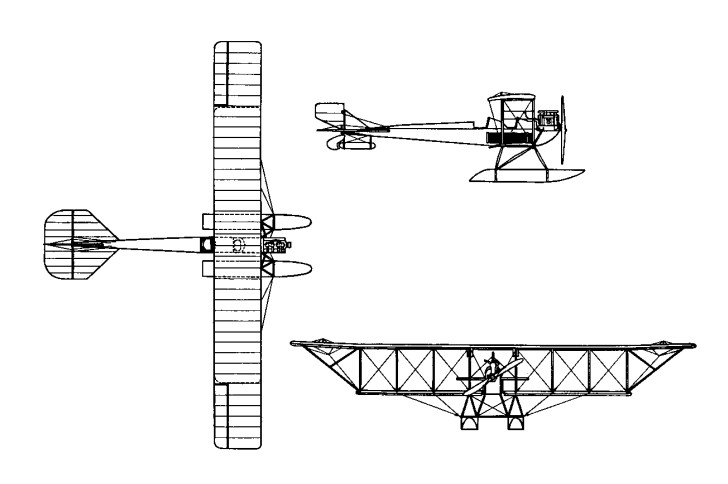
The S-15 was a seaplane of the S-10 family.
Piston
Russo-Baltic Waggon Works Sikorsky S-12
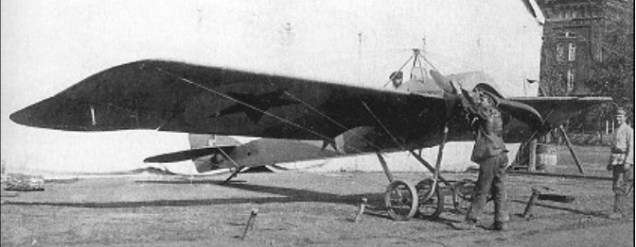
The S-12 was built at the suggestion of George Yankovsky as a lighter, single-seat version of the S-11 with an 80hp Gnome. He looped it in September 1913, the first time a Russian aircraft had performed this manoeuvre, and set a Russian height record of 3680m shortly afterwards. Most of the dozen or so S-11s that were built survived the war, and served in the earliest Soviet Air Force units during the Revolution. Several were still operational in 1922, mostly with an 80hp Le Rhone engine.
Russo-Baltic Waggon Works Sikorsky S-11 Pulukrugliy

Developed from the larger and heavier S-9, the 1913 S-11 Polukroogly (half-round) had a conventional wooden fuselage and 100hp Gnome Monosoupape engine. It was initially equipped with ailerons that were operated by steel tubes inside the wing. Trials revealed that they were not efficient, so they were replaced by wing warping. The pilot and observer sat side-by-side, with controls only for the left seat. A top speed of 100km/h, stalling speed of 70km/h and take-off run of 75m were good enough to gain the S-11 second place in the 1913 military competition for a reconnaissance aircraft; but it was not ordered into production.

Span: 38’1″
Length: 23′
Loaded Weight: 2215 lb
Speed: 63 mph
Russo-Baltic Waggon Works Sikorsky S-6 / S-10
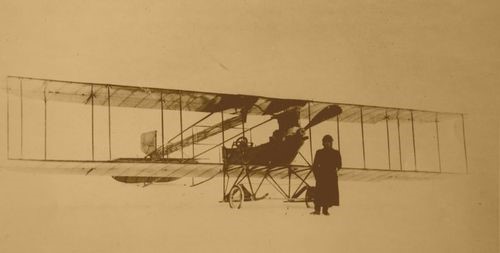
Constructed in Kiev, this 100 hp Argus-powered biplane was used by Igor Sikorsky to set new Russian flight records in November 1911, even setting a world-record with his design – a distance record with two passengers.
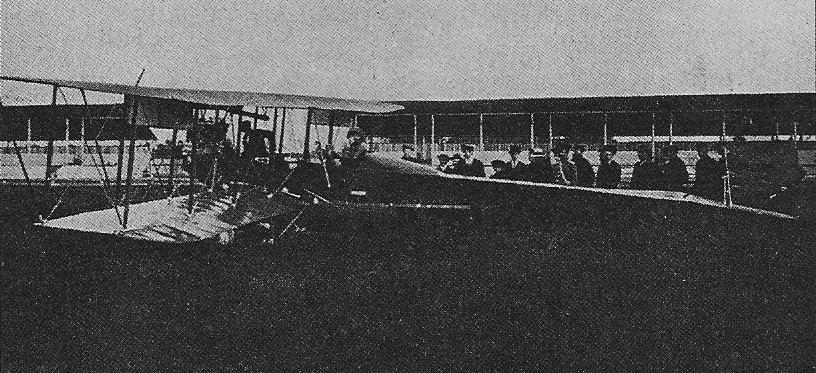
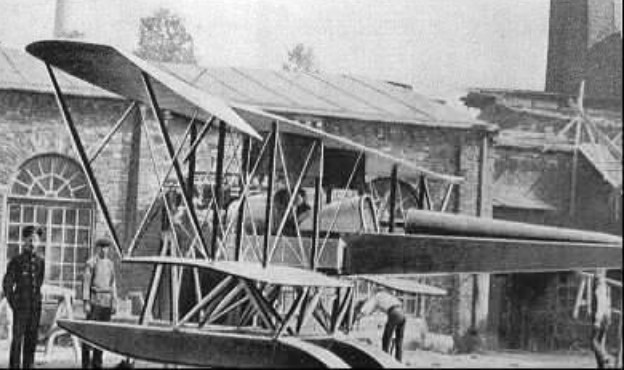
Under the designation S-10, about sixteen production versions of the S-6B were built by the RBVZ. The majority were delivered as twin-float seaplanes for service with the Baltic Fleet, from the summer of 1913 to 1915, with 100hp Argus or Gnome Monosoupape engines. Some were deployed on the world’s first operational seaplane carriers.
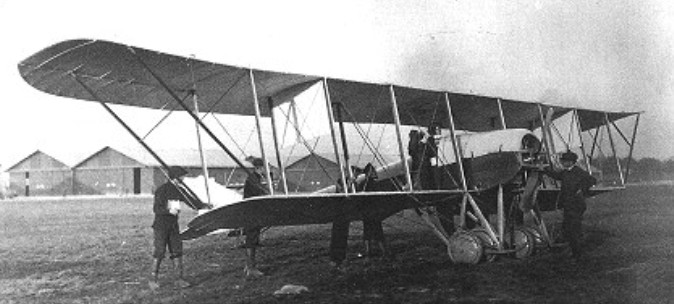
A special Competition S-10 landplane, with 80hp Gnome engine, was built for the 1913 military aircraft competition. The wing span was increased to 16.75m, with outer panels that could be folded for storage. The two seats were placed side-by-side, and the control wheel could be swung from pilot to co-pilot during flight. Production test pilot Alechnovich set a Russian record by flying it 500km in 4 hours 56 minutes, and it took first prize in the 1913 competition although it lacked the speed and manoeuvrability of the S-6B. After its span had been reduced to 13.70m and a 100hp Monosoupape installed, it served as a trainer with the Baltic Fleet.
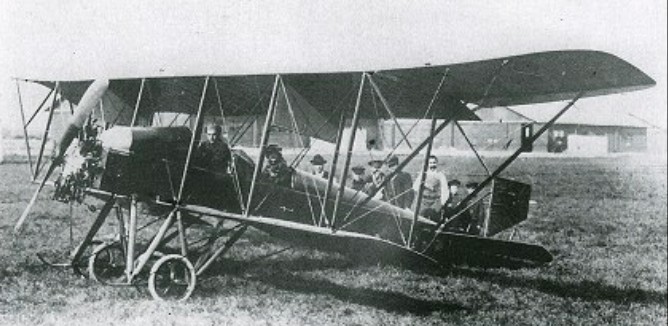
The S-10A’s span of 13.7m and two seats in tandem set the standard for all S-10 seaplanes, and its 125hp (de-rated to l00hp) Anzani engine gave it better speed and rate of climb than the Competition S-10. Its flying characteristics were less good, preventing it from gaining first prize, but it set a new Russian height record of 3420m, piloted by Gleb Alechnovich. Modified to have a 100hp Monosoupape and floats, it was assigned to the Baltic Fleet.
Engine: 1 x 100hp Argus
Wingspan: 16.9 m / 55 ft 5 in
Length: 8.0 m / 26 ft 3 in
Height: 4.1 m / 13 ft 5 in
Wing area: 45.0 sq.m / 484.38 sq ft
Max. speed: 90 km/h / 56 mph
S-10
Span: top 55’5″ bottom: 39’4″
Length: 26’3″
Loaded Weight: 2227 lb
Speed: 62 mph
S-10A
Span: 45′
Length: 34’6″
Speed: 56 mph
Russo-Baltic Waggon Works Sikorsky S-9 Kruglyi
The 1913 Sikorsky S -9 Monocoque “Kruglyi” (Rounded One) was designed and built by I.I. Sikorsky in Russia
Developed into the S-11
Span: 39’4″
Loaded Weight: 2182 lb
Speed: 62 mph
Russian Gyroplanes Gyros-2 Smartflier
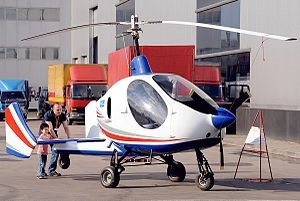
The Russian Gyroplanes Gyros-2 Smartflier autogyro was designed for a variety of roles, including aerial application, courier, forestry patrol, search and rescue, geological survey, air taxi and flight training. It features a single main rotor, a two seats in side-by-side configuration enclosed cockpit accessed by doors, tricycle landing gear, plus a tailwheel and a 200 hp (149 kW) Mistral 200 engine in tractor configuration.
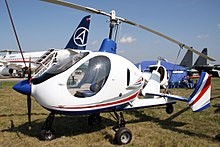
Russian designed and produced by Russian Gyroplanes of Zhukovsky, Moscow Oblast, the aircraft is supplied complete and ready-to-fly.
The autogyro has a two-bladed rotor and a three or six-bladed tractor propeller. The autogyro also fits an optional Racket 120 single-cylinder, two-stroke auxiliary engine for running the agricultural equipment, when it is installed.
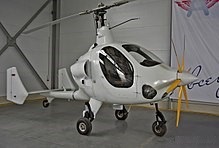
Gyros-2
Powerplant: 1 × Mistral 200 gasoline engine, 150 kW (200 hp)
Aux powerplant: 1 × Racket 120, 10 kW (13 hp)
Propeller: 3-bladed ground adjustable
Empty weight: 610 kg (1,345 lb)
Gross weight: 750 kg (1,653 lb)
Fuel capacity: 100 litres (22 imp gal; 26 US gal)
Useful load: 140 kg (309 lb)
Payload w/ full fuel: 68 kg (150 lb)
Cruise speed: 130 km/h (81 mph; 70 kn)
Range: 800 km (497 mi; 432 nmi)
Rate of climb: 3.1 m/s (610 ft/min)
Crew: one
Capacity: one passenger
Russian Gyroplanes Gyros-1 Farmer
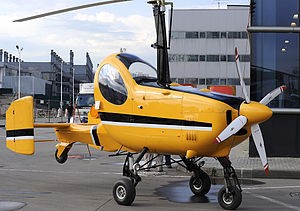
Russian Gyroplanes designed the Gyros-1 Farmer autogyro for aerial work use, including aerial application, courier, forestry patrol, search and rescue and geological survey.
It features a single main rotor, a single-seat enclosed cockpit accessed by a door, tricycle landing gear, plus a tailwheel and a 200 hp (149 kW) Eggenfellner E6 Suburu-based, automotive conversion, six cylinder, four-stroke, horizontally-opposed, liquid-cooled, gasoline engine in tractor configuration.
Russian designed and produced by Russian Gyroplanes of Zhukovsky, Moscow Oblast, the Gyros-1 is supplied complete and ready-to-fly.
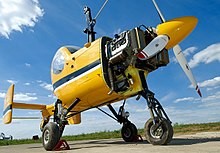
The aircraft fuselage includes a baggage compartment or application hopper between the cockpit and the nose-mounted engine. It has a two-bladed rotor and a four-bladed propeller. The aircraft also fits an optional Racket 120 single-cylinder, two-stroke auxiliary engine for running the agricultural equipment, when installed.
Gyros-1 Farmer
Powerplant: 1 × Eggenfellner E6, 150 kW (200 hp)
Aux powerplant: 1 × Racket 120, 10 kW (13 hp)
Propeller: 4-bladed ground adjustable
Empty weight: 610 kg (1,345 lb)
Gross weight: 750 kg (1,653 lb)
Useful load: 140 kg (309 lb)
Fuel capacity: 100 litres (22 imp gal; 26 US gal)
Payload w/full fuel: 68 kg (150 lb)
Cruise speed: 130 km/h (81 mph; 70 kn)
Range: 800 km (497 mi; 432 nmi)
Rate of climb: 3.1 m/s (610 ft/min)
Crew: one
Russian Empire airship B-2 USSR Smolny
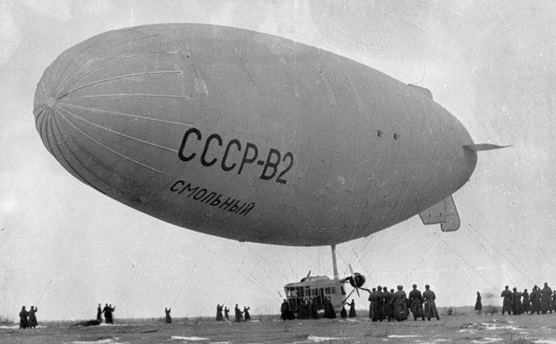
By May 1932, the Russian Empire had built three airship — the USSR B-1, B-2 USSR “Smolny” and the Soviet B-3 “Red Star”, which in the main have been set up to implement educational and propaganda operations. The B-1 envelope was 2200 cubic meters and B-2 5000 cubic meters. The airships had different engines. The V-2 had two 230 hp engines and could carry 8 passengers. The envelope of all 3 airships was made of three-layer rubberized material and had an inner wall that divided the volume of the two equal parts. This partition to reduced transfusion of gas along the envelope for trim of the craft.
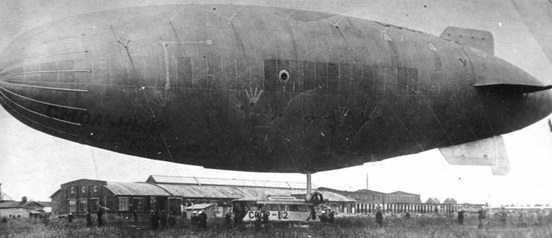
These three airships performed a series of successful flights on the routes of Leningrad — Moscow — Leningrad, Moscow — Kharkov, etc. The three airship were joined by USSR-4.
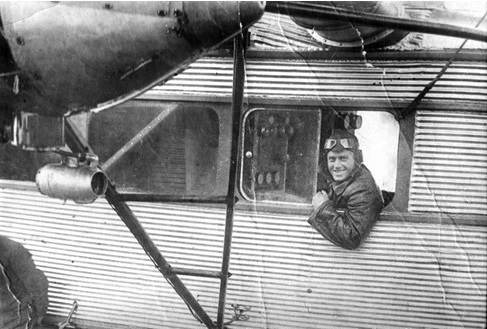
On September 6, 1935 USSR-2 Smolny was at the Stalino (Donbass) airport, when wind pulled out of the ground all 60 anchors that held it. Have seized on one of the cables commander of dirigible NS Gudovantsev managed at an altitude of 120 meters to get to the gondola, in which at that time were 4 crew members and 11 tourists. At an altitude of 800 meters the engines were running. After that, having waited for the adverse weather conditions to decrease, the airship landed safely after 5 hours and 45 minutes. For this heroic act Gudovantsev was awarded the Order of the Red Star.
The airship crashed in the Novgorod Region in 1933 when its engines failed.

The airship was disassembled in 1939.
Russian Empire airship USSR B-1
By May 1932, the Russian Empire had built three airship — the USSR B-1, B-2 USSR “Smolny” and the Soviet B-3 “Red Star”, which in the main have been set up to implement educational and propaganda operations. The B-1 envelope was 2200 cubic meters / 78,000 cu ft and B-2 5000 cubic meters. The V-1 was designed to pick up passengers without landing. The airships had different engines. The envelope of all 3 airships was made of three-layer rubberized material and had an inner wall that divided the volume of the two equal parts. This partition to reduced transfusion of gas along the envelope for trim of the craft.
These three airships performed a series of successful flights on the routes of Leningrad — Moscow — Leningrad, Moscow — Kharkov, etc. The three airship were joined by USSR-4.
During The Second World war SSSR-V1 was used for carrying supplies for captive balloon units of Red Army, making more than 900 flights.
Engines: 2 x 75hp
Envelope: 2200 cu.m / 78,000 cu ft a
Top speed: 55 mph
Endurance 12 hr
Crew of 7
Russian Empire airship Kobchik / Falcon
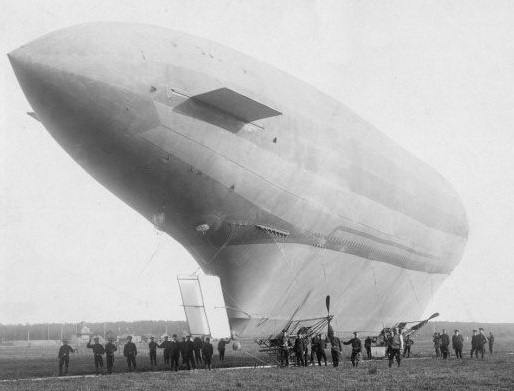
Designer by Nemchenko and built in 1912 at the plant “Duflon, Constantinovich and Co”, the semi-rigid Kobchik / Falcon airship was sent to the Far East, but not used. Builders S. Nemchenko and A.E. Garut.
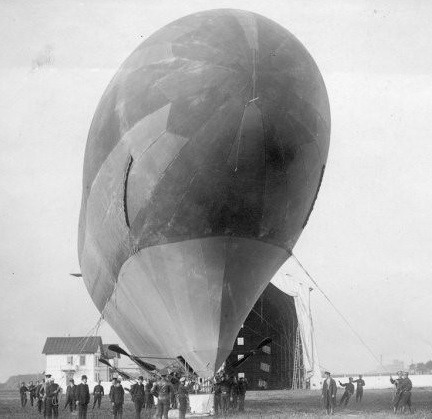
Engines 2 x 50 hp
Envelope: 2150 cu.m
Length: 48 m
Diameter: 9.5 m
Max speed: 50 kph

