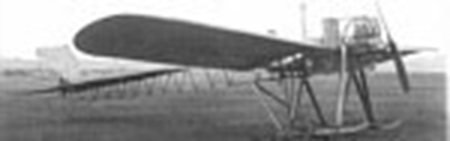
The 1911 Star monoplane was designed and built by Star Engineering Co. in the UK, selling for £450.
Span: 42′ later 37′
Length: 32′
Weight all up: 750 lb
Speed: 36 mph
The 1911 Star monoplane was designed and built by Star Engineering Co. in the UK, selling for £450.
Span: 42′ later 37′
Length: 32′
Weight all up: 750 lb
Speed: 36 mph
The 1911 Sperry tractor biplane was designed and built by Lawrence Sperry Aircraft Co. in the USA

The 1911 Sommer Type de Campagne biplane was designed and built by Roger Sommer in France
The 1911 Sommer “Rapide” Type L biplane was designed and built by Roger Sommer in France
Span: upper 39’4″ lower 25’7″
Length: 29’6″
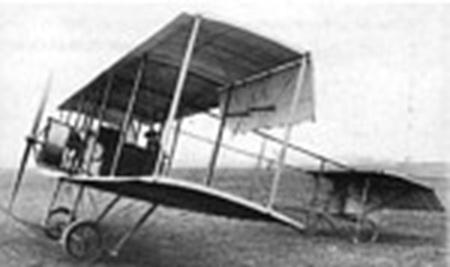
The 1911 Sommer “De Course” tractor biplane was designed and built by Roger Sommer in France

The Aeroprakt A-32 is a Ukrainian two-seat, high-wing, tricycle gear ultralight aircraft that was designed by Yuri Yakovlev and is manufactured by Aeroprakt. In Australia the A-32 is referred to as the Vixxen.
The A-32 is a development of the A-22 Foxbat; however unlike the earlier aircraft, which can be purchased in kit form or fully assembled, the A-32 Vixxen is supplied only as a kit in the UK, or ready-to-fly factory-built aircraft in 31 other countries.

The A-32 was developed from A-22 Foxbat during three years of research and development. To increase cruise speed while employing the same 100 hp (75 kW) Rotax 912ULS engine as the A-22, the A-32 has a new flush wing-to-body fairing design and all flying horizontal stabilizer, as well as moulded baffling for improved engine airflow and cooling. Other changes include a wing that is 10 cm (3.9 in) shorter, shorter lift struts and better wing tank fairing. This results in a cruise speed that is 20 kn (37 km/h) faster than the A-22.
The prototype A-32 was completed in January 2014 and the first production aircraft was shown in April 2015. It was then transported to Australia, first flying at Moorabbin on 20 July 2015.
The Aeroprakt A-32L is an ultralight variant of the A-32 with a MTOW of 450 kg (or 472.5 kg with recovery parachute system) to comply with European regulations, although not UK legal. Central control Y-stick installed as default, twin control yokes offered as an option.
A-32 Vixxen
Powerplant: 1 × Rotax 912ULS, 75 kW (100 hp)
Propeller: 3-bladed KievProp 3-blade ground-adjustable prop with metal leading edges
Wingspan: 9.45 m (31 ft 0 in)
Length: 6.27 m (20 ft 7 in)
Height: 2.22 m (7 ft 3 in)
Empty weight: 320 kg (705 lb)
Max takeoff weight: 600 kg (1,323 lb)
Fuel capacity: 95 L (25 US gal; 21 imp gal) usable in two tanks
Cruise speed: 213 km/h (132 mph, 115 kn)
Stall speed: 50 km/h (31 mph, 27 kn)
Never exceed speed: 232 km/h (144 mph, 125 kn)
Endurance: 4.5 hours
g limits: +4/-2
Crew: one
Capacity: one passenger
In 1948, far a light freighter, SAI-Ambrosini modified the wartime Lombarda A.L.12P freight carrying glider to take two 225 hp Alfa 115 four-cylinder air-cooled engines. They also fitted a simple wide-track, fixed, tail wheel undercarriage and re-designated the aircraft P.512.
The lines of the AL.12P have been retained along with the swivelling forward fuselage section which hinges on a vertical axis for loading.
The P.512 is a high-wing monoplane. The wing is wooden monospar with plywood covering and fitted with aerodynamically balanced differentially-operated slotted ailerons. The fuselage is a woken semi-monocoque of elliptical section.
The tail unit is of wooden construction covered by fabric. Elevators and rudder contain trim tabs, the rudder adjustable in flight; the elevator on the ground.
The forward section of the fuselage, containing the pilot’s compartment, hinges to starboard, simplifying access to the pilots’ compartment and enabling bulky objects to be loaded easily. Two doors, 3 ft 6 in by 2 ft 3 in are placed either side of the fuselage forward of the wing leading edge.
Engines: two 225 hp Alfa 115
Wingspan: 70 ft
Length: 46 ft
Height: 11 ft
Wing area: 546 sq.ft
Empty weight: 4410 lb
Useful load: 3527 lb
Loaded weight: 7937 lb
Wing loading: 14.5 lb/sq.ft
Power loading: 17.6 lb/hp
Max speed SL: 155 mph
Cruise 70%: 143 mph
Min speed no flap: 60 mph
Min speed w/flap: 53 mph
ROC SL: 970 fpm
Climb to 3280 ft: 3 min 39 sec
Climb to 23,000 ft: 75 min 8 sec
Est ceiling: 24,000 ft
Service ceiling: 21,200 ft
SE ceiling: 6900 ft
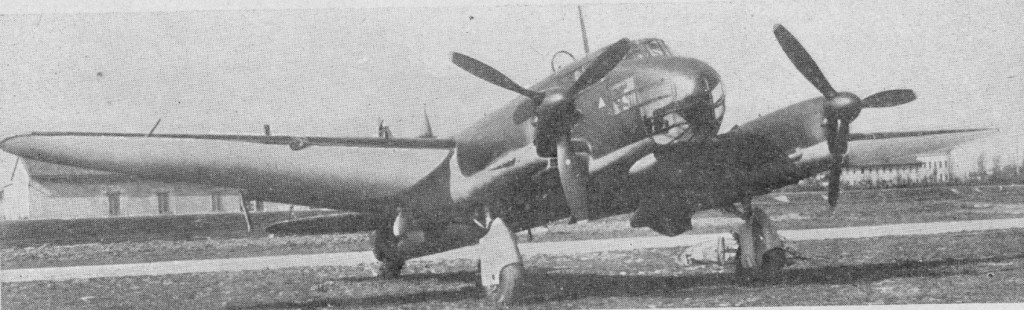
The Ca AVS (Addestramento al volo strumentale) is a twin-engined night flying and instrument trainer resembling the Ca 314 externally. A low-wing cantilever monoplane, it is powered by two 770 hp Isotta Fraschini Delta RC 40-III inverted V-12 engines, driving three blade constant speed props.
The cantilever monoplane wing comprises a centre-section and two outer sections. Construction is of wood with two box spars, former ribs and plywood covering.
The fuselage is a welded steel-tube framework, built in two sections and bolted together, with fabric covering over a light fairing structure. The tail unit is wood with plywood and fabric covering. The elevators and rudders are aerodynamically and statically balanced.
A crew of six can be carried for instruction of wireless operators, navigators and bomb aimers. Dual controls are fitted and one position can be screened off for blind flying.
Engines: two 770 hp Isotta Fraschini Delta RC 40-III
Wing span: 54 ft 6 in
Length: 38 ft 0.5 in
Height: 12 ft 11.5 in
Wing area: 422.4 sq.ft
Empty weight: 9180 lb
Useful load: 4078 lb
Loaded weight: 13,886 lb
Max speed SL: 214 mph
Max speed 14,928 ft: 255 mph
Cruise SL: 198 mph
Cruise 14,928 dt: 237 mph
Service ceiling: 26,574 ft
Ceiling est: 28,542 ft
Max range 211 mph: 745 miles
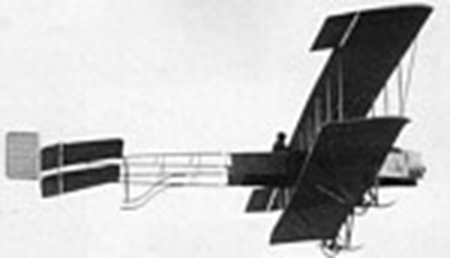
The 1911 Sloan Concours Militair biplane was designed and built by John Sloan
Span: 43’8″
Length: 31’2″
Weight: 1100 lb
Air Leader Airplane Co
Floral Park NY.
USA
Circa 1926 Air Leader Airplane Co rebuilt a surplus Curtiss JN-4D as a parasol monoplane. Registered NX3742, it was powered by a 90hp Curtiss OX-5 and had three seats.
 All Aero