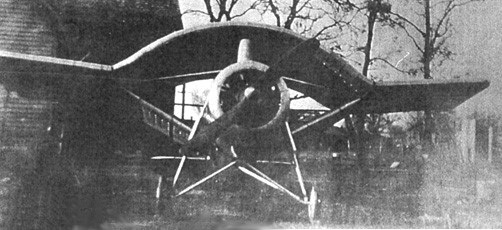
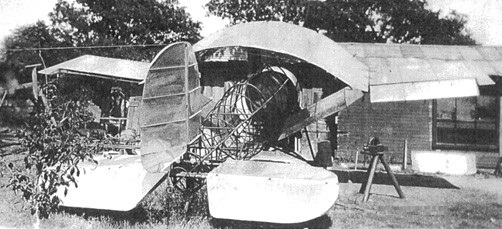
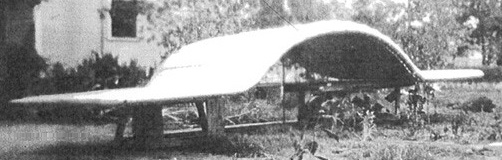
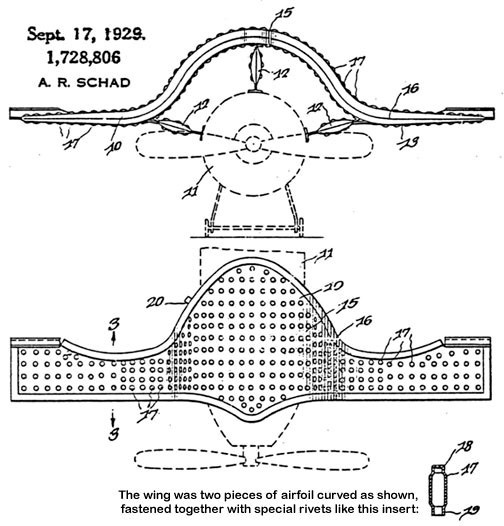
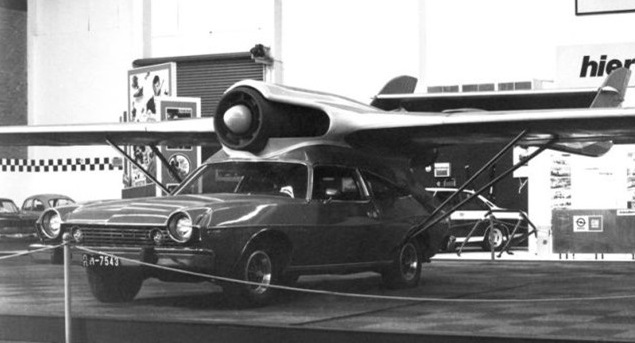
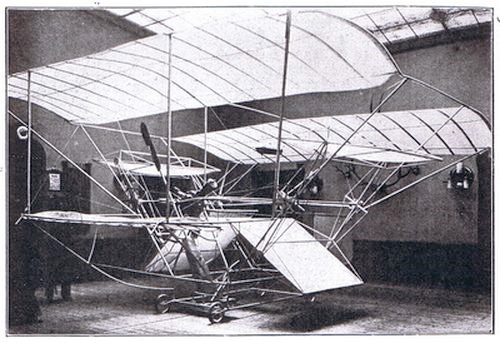
Built by German emigrate Schad, with partners Stacy Ashcraft, J C Bradley, Oscar Ford, Joe Kavecki, and (Mrs) A T Quattlebaum, to prove his unique, patented (#1,728,806) wing design based on Schad’s research, as a baker-turned-boilermaker, of tubular strengths.
Built circa 1927, the aircraft was a single-place with a steel-tube frame covered with dural, with a war-surplus 80hp Le Rhône rotary engine.
The construction site was Schad’s back yard and the date of the first flight is unknown, but the pilot was Cal Murray. It was flown successfully by Schad and others from Cleburne’s Bluebonnet golf course and, later, Meacham Field, where on its second flight there the tail was broken. Unable to afford a much-needed more powerful engine, no repair was made on the plane and it was stored on a farm, finally dismantled and sold for scrap in 1941.
In 1942 the US government purchased the 1929 patent for possible use in the war, but what if anything came from it is unknown, as are data and performance specs for the ship.
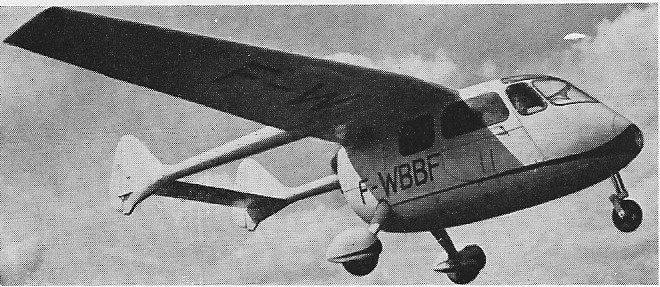
The Courlis is of all-metal construction, and the hinged entrance door allows the fitting of a stretcher or bulky freight.
First flown on 9 May 1946, the S.U.C.10 Courlis (Curlew) was manufactured by the Societe dd’Etudes et de Constuctions Aero-Navales. 135 being built.
Engine: 180 hp Mathis 8G or 175 hp Mathis 8G-40 Wingspan: 37 ft 8 in Length: 26 ft 10 in Height: 8 ft 9.5 in Empty weight: 2180 lb Loaded weight: 3386 lb Max speed: 143 mph Cruise: 124 mph Service ceiling: 13,120 ft Range: 621 mi
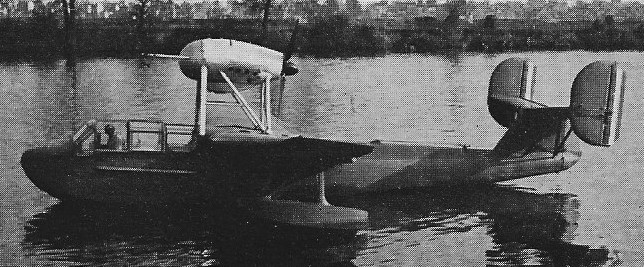
A light monoplane flying-boat designated SCAN 20, was built secretly in 1941 during the German occupation of France.
Powered by a 325 hp Bearn 6D, the SCAN 20 was fitted with dual controls. The instructor and pupil were side-by-side, with two additional seats behind.
First flying on 6 October 1945, the SCAN 20 was built by Societe de Constructions Aero Navale, with delivery of 23 to French Navy under way in 1951.
Engine: 325 hp Bearn 6D Wingspan: 49 ft 2.5 in Wing area: 344 sq.ft Length: 38 ft 6 in Height: 11 ft 10.5 in Max loaded weight: 5511 lb Max speed: 143 mph at 6560 ft Cruise: 124 mph Ceiling: 16.405 ft Range: 621 mi
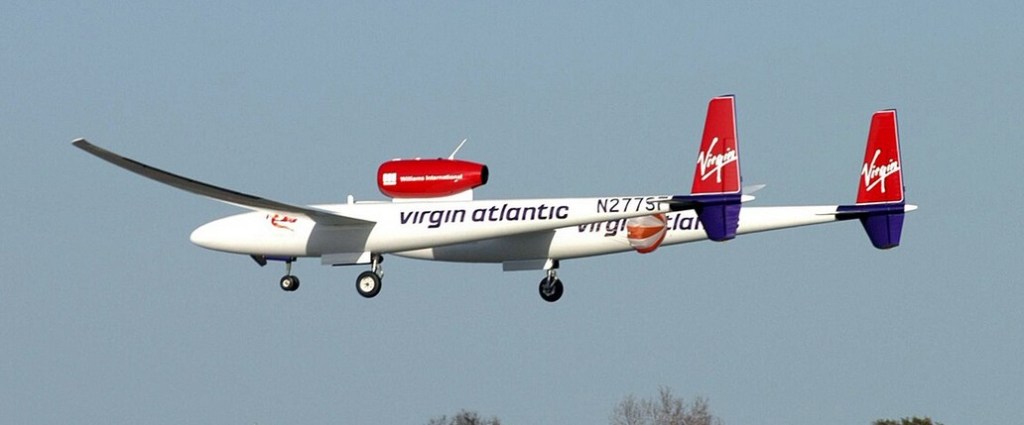
Test flying began in 2004 in the US on an aircraft designed to fly around the world by a single pilot and without refuelling. Known as the Global Flyer, or Scaled Composites Model 311, it made the first of several flights which tested its controls and systems, including its “drag chutes” used during descent and landing.
The GlobalFlyer is a single seat, turbofan powered airplane designed to fly around the world nonstop, unrefueled. It achieved this milestone for the first time on March 03, 2005 after 67 hours and one minute of flying time. With that, Pilot Steve Fossett set the record for fastest time around the world unrefueled. The GlobalFlyer took off and landed in Salina, Kansas.
The second world-record flight was completed on February 11, 2006 when Pilot Steve Fossett made an emergency landing at Bournemouth Airport in England. Kennedy Space Center was chosen for the takeoff, which took place on February 8. The flight had many stressful moments. Despite this, Steve was able to accomplish the goal of the “Ultimate Flight” by breaking the previous world distance record for an airplane, which was set by the Voyager in 1986 (24,987 miles), as well as the aviation long-distance record set by the Breitling Orbiter Balloon in 1999 (25,361 miles).
Aerodynamics are key to this aircraft, and its configuration is optimized for range and fuel efficiency. The aircraft’s shape has been designed using computational fluid dynamics to predict how the aircraft’s surfaces will behave in flight. The aircraft is so aerodynamically efficient that the only practical way to descend is using drag parachutes. As the aircraft is only required to land once, these aren’t detachable and take time to reset.
The aircraft is a trimaran-like construction with two huge external ‘booms’ which hold the landing gear, and 5,454 pounds of fuel on either side of the pilot’s cockpit in the center on top of which is the single Williams turbofan jet engine. The construction materials used for the structure of this aircraft are all graphite/epoxy. The stiffest carbon fibers are used in the construction of the wings, and the skin is a sandwich of graphite/epoxy and Aramid honeycomb.
The aircraft doesn’t have what is known as ‘deicing’ or ‘anti-ice’ measures. This means that it is not able to fly in ‘icing’ conditions. In addition, it does not cope with turbulence very well in the early part of the flight when the aircraft is heavy and structural margins low; so weather will be an important factor in choosing when and where to take off from.
The pilot sits in the main fuselage, the center pod, just behind the nose landing gear and below the engine. He also sits in front of the main fuel header tank which feeds the engine. Early on in the project, there were huge obstacles to overcome caused by engine noise levels, but those were quickly overcome with the addition of insulation. The cabin is pressurized because of the altitude which gives a ‘cabin altitude’ of 10,000 feet at the 45,000 feet the plane actually flys at.
There are thirteen fuel tanks all in all, and on take-off, it is expected that this aircraft will be 83% fuel by weight. Getting fuel to where it’s needed whilst maintaining the balance and stability of the aircraft is a feat that will require constant supervision and monitoring. The fuel itself is a special fuel that has a much lower freezing point than regular aviation fuel.
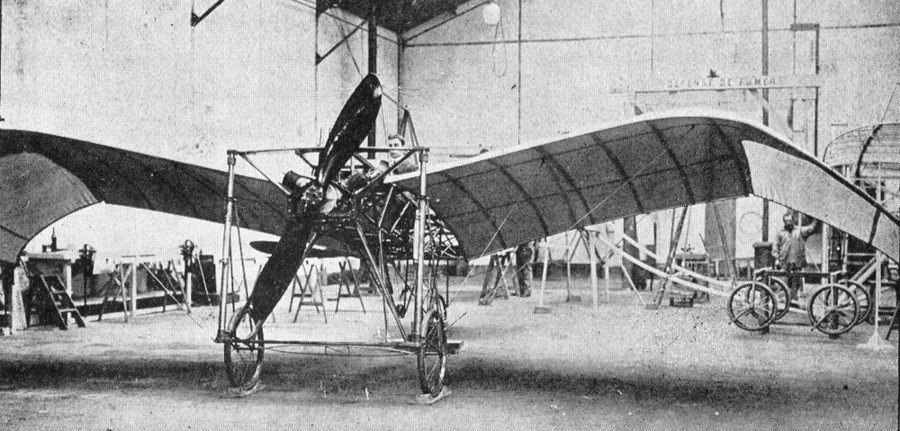
The SCAA (Société de Construction d’Appareils Aériens) produced in 1910 this monoplane for Robert de Lesseps. This monoplane – named the Frégate – had a characteristic gull wing construction. The undercarriage was along the lines of Blériot.
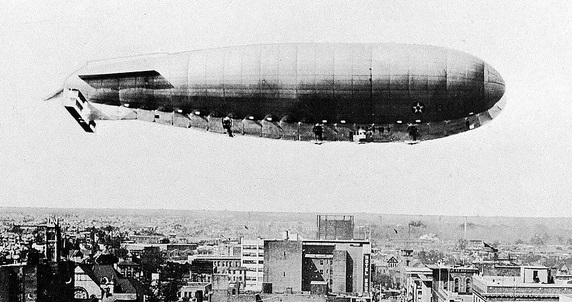
The Italian semi-rigid airship Roma was designed by Celestino Usuelli, the engineers Eugenio Prassone, Umberto Nobile and Colonel Gaetano Arturo Crocco. It was the first project of the Stabilimento Costruzioni Aeronautiche (“Aeronautical Construction Factory”), as the partnership of Umberto Nobile, Usuelli, Giuseppe Valle and Bennetto Croce was known. Originally designated T-34, it was designed for trans-Atlantic crossings and was the largest semi-rigid airship in the world at the tie.
As a semi-rigid design it was built about a rigid keel – though the keel was partially articulated to allow some flexibility. The passenger spaces and control cabin were within the keel. The engines, 400 hp Ansaldos, were mounted outside, angled such that the slipstreams would not interfere with each other. In addition to the 11 cells of hydrogen within its skin, it housed six cells of air, called ballonets, into which additional air could be pumped if the gasbag drooped or flattened.
It first flew in September 1920.
It was purchased by the United States from the Italian government for $250,000 in 1921. After purchase by the US, in March 1921 the Roma flew the 300 miles from Rome to Naples and back carrying the US Ambassador. After transportation to the US, Roma flew on 15 November 1921 with minor problems. When Langley crews unpacked the crated airship that August, they found its fabric skin mildewed and weakened. Six new, American-made Liberty motors, were ordered as replacements for the balky Italian powerplants.
It served in the US Army until February 21, 1922, when it crashed.
The Roma crashed in Norfolk, Virginia on February 22, 1922. The crash was caused by failure of the airship’s box rudder system, which allowed it to maneuver over tight areas. The airship contacted high voltage lines, and burst into flames. A total of 34 were killed, 8 were injured, and 3 escaped unharmed. Among the dead was the airship’s pilot, Captain Dale Mabry.
At 12:45 p.m., the preflight checks complete, 45 souls on the manifest – the crew, a few civilian mechanics, government observers – stepped aboard. The rain had stopped. The temperature had warmed to 46 degrees. One hundred fifty men gripped lines holding the airship to earth as the Roma’s crew completed last-minute preparations for launch. The Libertys were fired up, then idled. All six worked. Lines dropped away. The airship swept upward, tail first, then leveled. At 500 feet, Mabry (the ship’s skipper) ordered cruising speed and, engines roaring, the Roma began making for the Chesapeake Bay. It reached it near the mouth of the Back River. Mabry ordered the ship south along the shoreline, toward Old Point Comfort. The crew waved to people below at Fort Monroe, looked down on the site of the burned Hotel Chamberlin, at crowds on the government pier. The Roma headed out over the water toward Willoughby Spit. The spit was dotted with waving Norfolkians agog at the mammoth craft overhead. Mabry steered the Roma toward the Navy base. After passing over the Spit and cruising over the Norfolk Naval Station, crewmembers noticed that the upper curve of the gasbag’s nose was flattening. The Roma, pitched nose-first toward the ground. From far astern came a cry: The keel was slowly buckling. Then another: The tail assembly was coming loose. The Roma began to bullet earthward at a 45-degree angle. On the ground, sailors and civilian base workers watched the ship’s nose tilt, and warehousemen at the Army’s nearby Quartermaster Depot stepped outside to witness what was, clearly, an airship in trouble. The skipper could see the greens and fairways of the Norfolk Country Club ahead, beyond the depot and the Lafayette River. If they could get the Roma that far, they could put it down somewhat safely. The passengers and crew, meanwhile, began to panic, to toss everything they could get their hands on through the keel’s windows – tools, furniture, spare engine parts. People on the ground watched a shower of equipment fall to earth. But the Roma’s dive continued. The ground rushing to meet the falling ship was a scrubby field at the depot, split by a small road – and by a high-voltage electric line. The end came in a flash. The Roma’s nose hit the ground, its massive girth brushed the electric line, and in an instant it was engulfed. Its gas cells, loaded with more than a million cubic feet of hydrogen, blew to atoms. The blast set off the ship’s gasoline tanks, creating a pyre of flame and smoke and din that leapt from the field and into the overcast sky. Depot workers and sailors rushed to the wreckage, but the flames kept them back. Three fire companies spent five hours quelling the blaze, and watched as the Army’s greatest airship shrank to a pile of twisted aluminum that glowed red into the evening.
The event marked the greatest disaster in American aeronautics history at the time. It was the last hydrogen filled airship flown by the US military; all subsequent ships were inflated with helium.
Engines: 6 × Liberty L12, 300 kW (400 hp) each Length: 125 m (410 ft 0 in) Diameter: 25 m (82 ft 0 in) Volume: 33,810 m3 (1,193,000 ft3) Height: 92 ft Empty weight: 34,500 kg (76,000 lb) Useful lift: 19,100 kg (42,000 lb) Maximum speed: 128 km/h (80 mph)
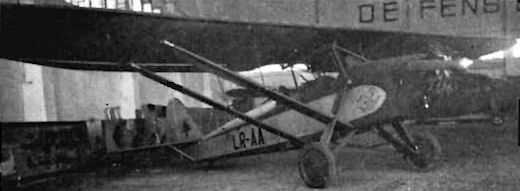
Air France personnel stationed in Damascus during the 1930s, mechanic at the Air France overhaul workshop in Damascus, and four of his work mates designed and built an amateur aircraft. Because of his five “fathers”, it was named S.B.P.C.C. DS1 “Papillon” (Moth).
The aircraft is a high-wing monoplane equipped with a 40 hp Salmson 9 Ad engine from a Klemm. The fuselage is made of molybdenum steel tubes, welded and crossed by piano strings with floor forming box. The front part is made of 0.6 mm duralumin and the rear part is clothed.
The wing is carried by a cabin in profiled and welded steel tubes and by nets in duralumin tubes profiled and covered. The wing is made of wood, consisting of a monospar forming a box with scythe spar to support the fins. The empennage is also made of wood. All the cover is in canvas.
The undercarriage is made of duralumin tubes triangulated by recoil legs. Bungee cords provide cushioning.
The tanks are made of sheet metal of welded aluminum and the controls in steel cables with torsion bar mounted on ball bearings. The aircraft is two-seater in tandem under an open cockpit.
Begun in September 1934, the aircraft flew on November 1, 1935 in Syria. It may never have been officially registered although there has been a pic sporting the S-YRIE registration.
After WW2 it may have gone to Lebanon as the DS-1 Papillon with 1947 registration LR-AAP. It was damaged in the same year.
Engine: 40hp Salmson Wingspan: 10,00 m Length: 6,50 m Height: 2.05 m Wing area: 14 sq.m Weight: 320 kg Max speed: 140 kph at SL Stall: 45 kph
The Drachenflieger-Radflieger was designed by the Saxon Association for Air Navigation and actual construction was done by the “Maschinenfabrik von Hayn u. Leilich” in Chemnitz. The machine was powered by a 30 hp engine constructed by Fritz Hayn.