In 1978 John Selcher built the Selcher JS-1, two place, open cockpit biplane, registered N67JS.
Engine: Lycoming O-235, 108hp
Wing span: 26’0″
Length: 17’0″
Useful load: 573 lb
Seats: 2
In 1978 John Selcher built the Selcher JS-1, two place, open cockpit biplane, registered N67JS.
Engine: Lycoming O-235, 108hp
Wing span: 26’0″
Length: 17’0″
Useful load: 573 lb
Seats: 2
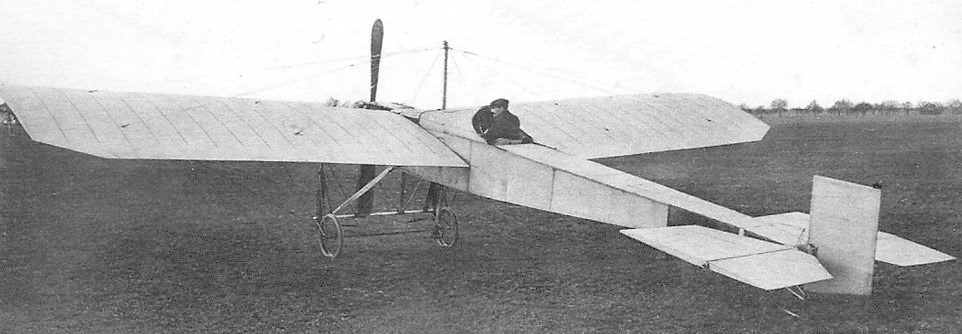
In 1909 the pilot Gaudard founded the Société d’Étude pour la Locomotion Aérienne (SELA) in France. G Badini, their designer, built two similar aircraft powered by 55 hp Aviatik engines, one appeared in 1910 at St Cyr, the other, a variant, in 1911. This machine was sponsored by “La Dentelle au Foyer”, a lace-workers’ magazine which later bought a Farman for the Army, christened “La Dentelle de Puy”; the city of Puy was famous for its lace industry.
Designed by G.Badini and built by Societe d’Etude pour la Locomotion Aerienne
Similar to 1910 SELA-2
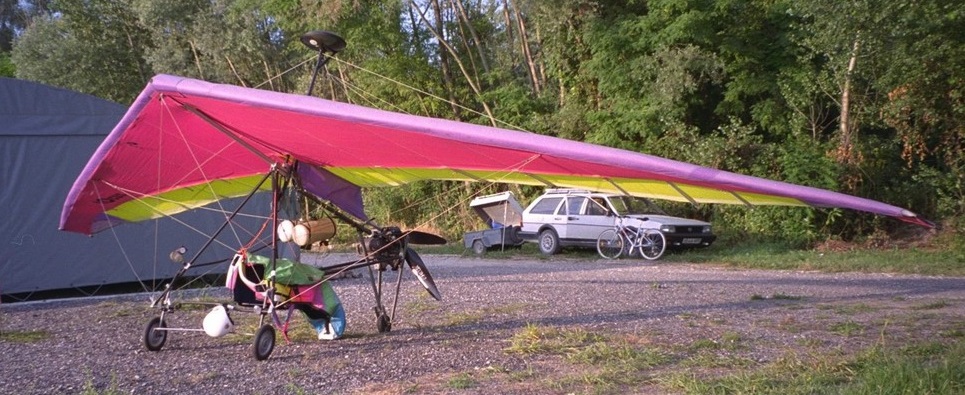
The Mini II, which was built by W. Seiffert until 1992, was designed as a minimum: with low engine power. The Mini II was 15,000 DM at that time. The production of the Mini II was discontinued in 1992.
With a hang glider wing (Schönleber Focus 18) power is from a 24 hp König three-cylinder two-stroke engine, with electric start. The battery was originally charged from a solar cell. In practice, however, the sunshine is far from sufficient to always have a full battery.
With the large surface area of the Schönleber Focus (18 square meters) wing, thermal flying is possible.
The Mini II is officially approved for double-seater operation – as the only one yet.
The Mini II is very manoeuvrable thanks to the large wheels on the ground.
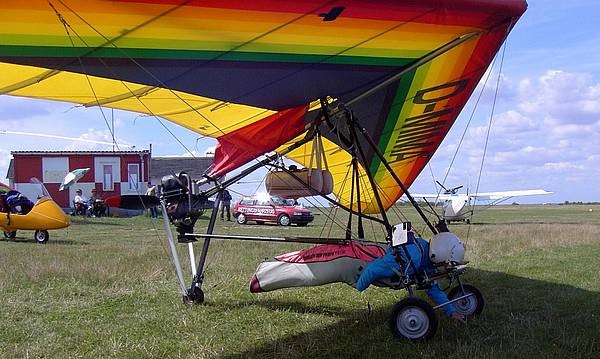
The fuel is held in 2 x 12 lt tanks, and the consumption of the three-cylinder engine is about 8 lt/ hour.
ALF (founded in autumn 2010, at the Altes Lager airfield, south of Berlin) has the rights for the construction and distribution of the Mini II and has been working on the successor since 2005. Markus Hanisch has taken over the construction and distribution rights from the DULV and is building the Mini II again in a modern form.
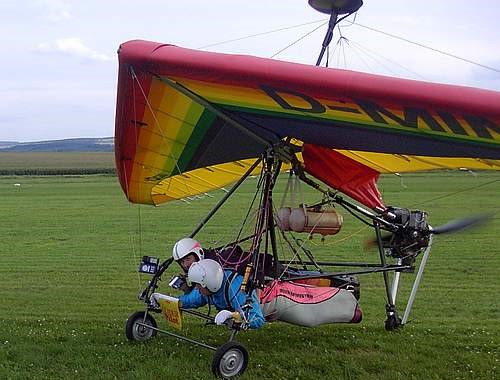
The older, somewhat slow Focus 18 surface (as in the original Mini II) from UL-manufacturer Schönleber is used. In the approval process is the Bautek Bico wing. The development has not yet moved beyond a prototype device.
Engine: König SC 430, 24 hp
Wing: Schönleber Focus
Wing area: 18 sq.m
Climb rate solo: – 4 m/s
Climb rate MAUW: 2 m/s
Price 1987: 15.000 DM

Designed and built by Robie Seidelinger for the Wilmington Aero Club, and flown by Eddie Bloomfield.
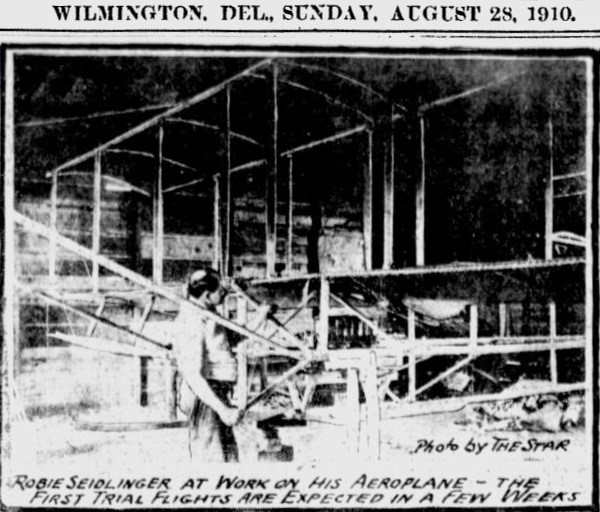
According to “Delaware Aviation History” by Frebert, taxi tests in the configuration shown resulted in moving the engine to a position after the wings rather than under the pilot’s seat, and use of a single propeller, as well as shortening the rear fuselage. In this later form it flew 300 yards on October 21, 1910, and made several other fights on the following days. It was destroyed when lightning struck its storage shed.
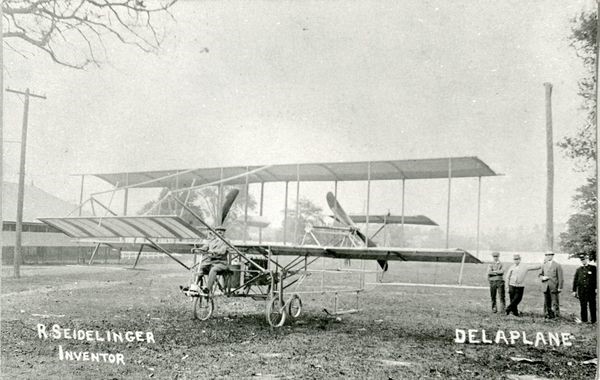
While built by Seidelinger, it was funded by the Wilmington Aero Club.
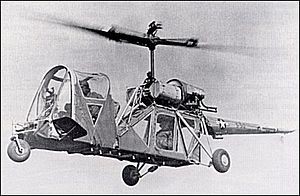
Charles Seibel began development on the S-4 after forming the Seibel Helicopter Company with funding from local Kansas oil investors. The S-4 was a continuation of his work on his previous design, the Seibel S-3, which he flew as a demonstrator for his design concepts; primarily a new design for a two-bladed rotor system and a simplified transmission. These features would also be incorporated into the S-4 design.
The S-4 frame was a welded steel-tube box frame, with two decks. A lower deck supported the control panel, pilot’s seat, wheeled, tricycle landing gear, and a small passenger/cargo area accessible from the rear, and an upper deck carried the engine, the fuel and oil tanks, and supported the transmission and rotor assembly. A tapered, monocoque, alloy tail boom with a two-bladed antitorque tail rotor was attached at the rear of the upper deck.
In January 1949, the S-4 N5152 c/n 1 lifted off the ground for the first time, piloted by Johnny Gibbs. In March 1950, certification tests were completed and on 23 April 1950, the S-4 received civil certification by the CAA.

Both the U.S. Army and U.S. Air Force showed interest in the S-4. In early 1951, the U.S. Army ordered two examples for operational and engineering evaluation in the observation, utility, and aeromedical evacuation roles. The Army designated the S-4 as the YH-24 Sky Hawk. The first Sky Hawk, serial number 51-5112, was delivered to Fort Bragg, North Carolina in April 1951 and returned to Cessna in 1952; the second YH-24, serial number 51-5113, was delivered to Wright Field, modified to S-4B. YH-24 51-5113 with a 165hp Franklin 6A4-165-B3, was modified as a side-by-side trainer for Army testing at Fort Sill OK. Both ships were eventually scrapped by Cessna.
Despite the simplicity of the S-4, the Army determined that it did not provide a sufficient payload capability and the aircraft were dropped from the inventory and returned to Seibel in 1952. Only the two were built.
A larger engine, the Lycoming O-290B with 125 hp, would be installed in the aircraft and side-by-side seats, making it the 1950 S-4A N5153 c/n 2. Flight tests by CAA’s Hal Hermes.

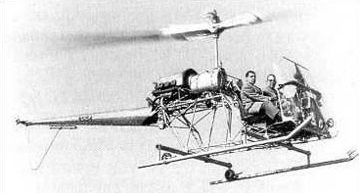
Based on feedback from the Army during the evaluation, Seibel, shortened the fuselage of the second YH-24 (51-5113) and widened the cockpit for a co-pilot’s seat next to the pilot’s seat. Seibel also replaced that aircraft’s original wheeled, tricycle undercarriage with landing skids. This aircraft would become the S-4B. The S-4B would serve as the basis for the design of the Cessna CH-1 Skyhook, the only helicopter Cessna ever produced.
Variants:
S-4
Original design, certified by the CAA in 1950.
S-4A
Featured an upgraded, 125 hp Lycoming O-290B engine.
S-4B
Modified airframe based on Army recommendations during YH-24 evaluation. Two-seat cockpit and skid landing gear.
Specifications:
S-4 Skyhawk
Engine: 108hp Lycoming O-235-C1
Rotor: 29″2″
Length: 27’10”
Useful load: 580 lb
Max speed: 65 mph
Cruise: 58 mph
Range: 100 mi
Ceiling: 4300′.
Seats: 2 tandem
S-4A
Engine: 125hp Lycoming O-290-B
Length: 24’6″
Seats: 2-3
YH-24
Engine: 1 × Lycoming O-290-D, 125 hp (93 kw)
Rotor diameter: 29 ft 11⁄2 in (8.88 m)
Disc area: 666 sq ft (61.9 m2)
Length: 27 ft 10 in (8.48 m)
Height: 10 ft (3.05 m)
Empty weight: 960 lb (436 kg)
Max. takeoff weight: 1,540 lb (700 kg)
Maximum speed: 65 mph (105 km/h)
Cruise speed: 58 mph (93 km/h)
Range: 98 mi (85 nmi, 158 km)
Service ceiling: 4,300 ft (1,310 m)
Rate of climb: 700 ft/min (3.6 m/s)
Crew: 1-2
S-4B / YH-24
Engine: 165hp Franklin 6A4-165-B3
Seats: side-by-side
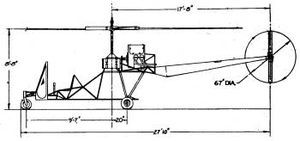

With two collaborators Seibel built in 1947 the S-3 light helicopter with lateral and longitudinal control effected by changing the center of gravity. Each blade attaches to the rotor hub with the help of a piece of bent sheet metal. This formed an angle that could be “twisted” to control changes in pitch. The advantage of this design is how mechanically simple it is. There is no need for bearings, hinges or dampers.
A moveable cabin section shifted in response to “cyclic” stick inputs, thereby shifting the c/g and causing the machine to act accordingly. This was soon abandoned (insufficient control and the potential for roll-over on a hard landing) and replaced by a more conventional cyclic control system for testing and promotional flying.
S-3 NX735B c/n 1 was built in a cellar from miscellaneous spare parts, including a truck differential and an automotive clutch.
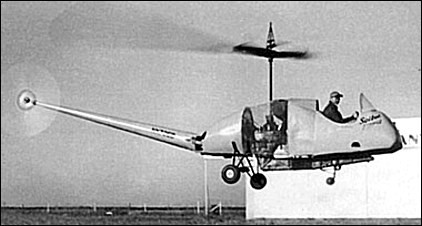
The S-3, NX735B, first took flight on 4 September 1947 and flew mainly to demonstrate Charles Seibel’s simplified two-bladed rotor system and transmission.
Most design and features evolved into the Cessna CH Skyhook.
Engine 65hp Franklin
Rotor diameter: 7.62m
Loaded weight: 365kg
Empty weight: 245kg
Cruising speed: 112km/h
Inclined climb: 275m/min
Absolute ceiling: 3660m
Seats: 1
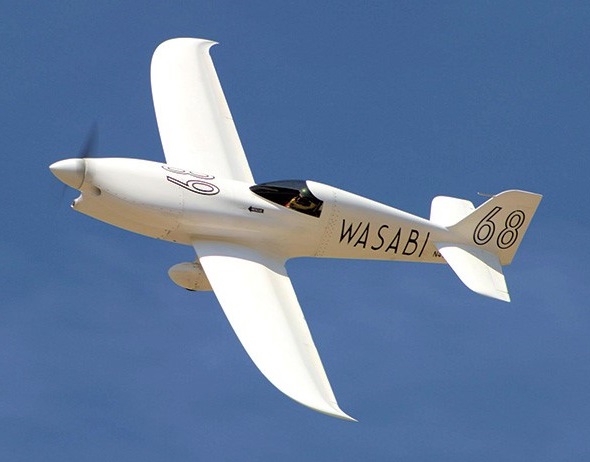
Looking to move into the gold, Elliot Seguin’s Siren Wasabi reflects the move toward high-aspect-ratio elliptical wings for more speed.
The Wasabi Special is a single place, low-wing, conventional landing gear-equipped racing aircraft.
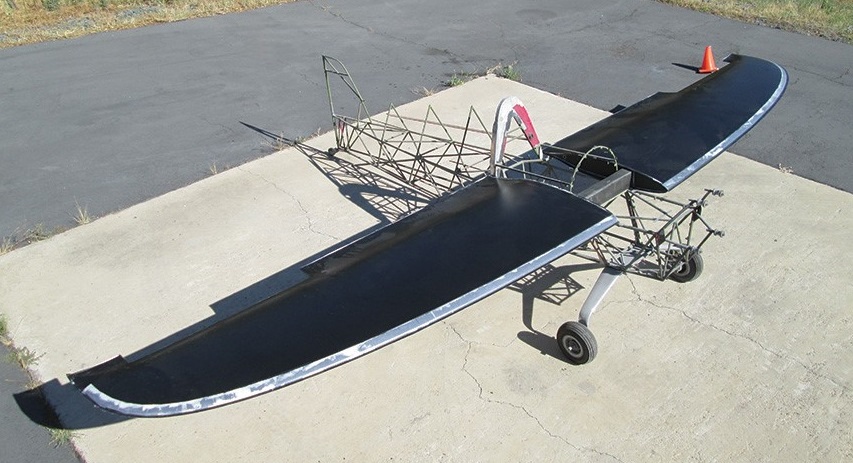
The airplane was designed and built at the Mojave Air and Spaceport by Elliot Seguin for racing and record setting.
At the Reno Air Races in 2013 the Wasabi Special achieved 229 mph.
At EAA Airventure Set C1, set a record for MHV to OSH flying non-stop with 5 other experimental aircraft from Mojave.
At Reno Air Races 2014 achieved 235 mph.
Powerplant: 1 × Continental O-200
Propeller: 2-bladed
Crew: 1
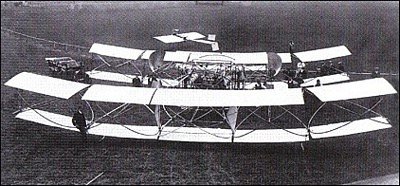
In 1908 Lieutenant John W. Seddon of the Royal Navy was inspired by a flying paper model to design a giant tandem biplane, with which he hoped to win a GBP10,000 prize for the first Manchester to London flight. Convinced that hoops of high-tensile steel tube were much more efficient than conventional wood and wire bracing, he persuaded the Navy to give him leave to work on his project and his mother largely to pay for it. The aircraft, named the ‘Mayfly’, was built in a bicycle factory and used up 610m of steel tubing.
The Seddon “Mayfly” of 1910 was a large and elliptical tube framework tandem biplane flying machine, employing Beedle aluminium sheet propellers, contracted by John W. Seddon to the English engineering company of Accles and Pollock just one year after Blériot’s Cross-Channel flight.

It was intended to take six people aloft – one pilot and five passengers. The aircraft never flew, and achieved nothing more than a high-speed ground-run. On its only high-speed run, a wheel collapsed and the aircraft was damaged. Repairs and modifications were hampered by Seddon’s return to duty and the Mayfly never did fly, eventually being dismantled by souvenir hunters. Often referred to as the Accles and Pollock aeroplane.
A 5-cylinder radial engine.

