SG Aviation Storm

Storm 280

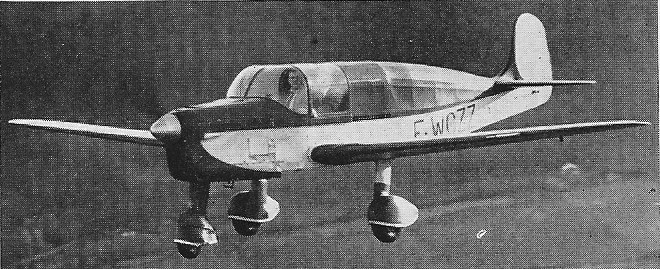
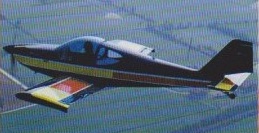
The Storm is derived from the P 220 Pottier, using pop-riveted sheet dural.
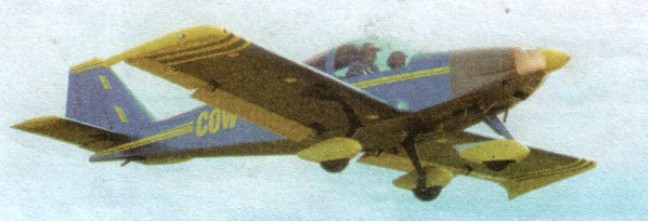
The Storm 400Ti is a three seat version of the Storm 280, designed specifically for the US kitplane market.
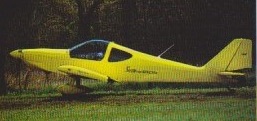
Storm 400Ti

Storm 280
Engine: Rotax 912, 80 hp
Wing span: 8.6 m
Wing area: 11.6 sq.m
MAUW: 450 kg
Empty weight: 262 kg
Fuel capacity: 90 lt
Max speed: 225 kph
Cruise speed: 200 kph
Minimum speed: 65 kph
Climb rate: 5 m/s
Certification: vVZ
Seats: 2
Fuel consumption: 13 lt/hr
Price (1998): 88,328 DM
Kit price (1998): 33,335 DM

Storm 300
Engine: Jabiru, 120hp
Fuel cap: 55 lt main + 2 x 28 lt wing.

Storm 300
Engine: Rotax 912
Fuel cap: 90 lt.

Storm 300
Engine: Midwest 105, 105 hp
HP range: 80-120
Top speed: 200 mph
Cruise: 171 mph
Stall: 35 mph
Range: 650 sm
ROC: 1500 fpm
TO dist: 450 ft
Ldg dist: 360 ft
Service ceiling: 12,000 ft
Fuel cap: 23 USG
Empty wt: 617 lb
Gross wt: 992 lb
Height: 6.4 ft
Length: 20.9 ft
Wing span: 26 ft
Wing area: 119 sq.ft
Seats: 2
Undercarriage: nose or tail.

Storm 300 Special
Engine: Midwest 105, 105 hp
HP range: 80-120
Top speed: 200 mph
Cruise: 171 mph
Stall: 42 mph
Range: 650 sm
ROC: 1500 fpm
TO dist: 450 ft
Ldg dist: 360 ft
Service ceiling: 12,000 ft
Fuel cap: 38 USG
Empty wt: 710 lb
Gross wt: 1155 lb
Height: 6.4 ft
Length: 20.9 ft
Wing span: 26 ft
Wing area: 119 sq.ft
Seats: 2
Undercarriage: nose or tail

Storm 400Ti
Engine: Lycoming O-235, 116 hp
Wing span: 7.20 m
Wing area: 11.06 sq.m
MAUW: 720 kg
Empty weight: 400 kg
Fuel capacity: 90 lt
Max speed: 242 kph
Cruise speed: 220 kph
Minimum speed: 81 kph
Climb rate: 5.5 m/s
Seats: 3
Fuel consumption: 20 lt/hr
Kit price (1998): 65 000 000 L
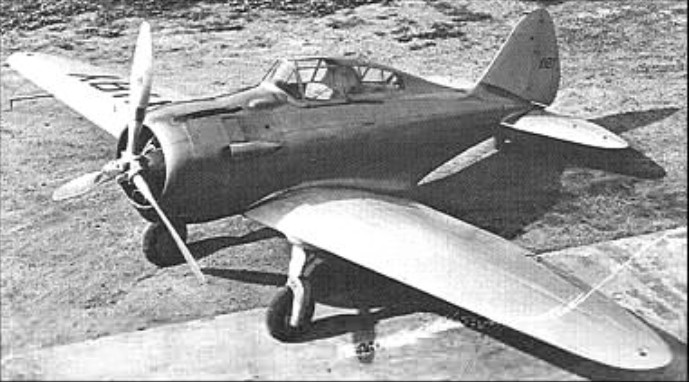
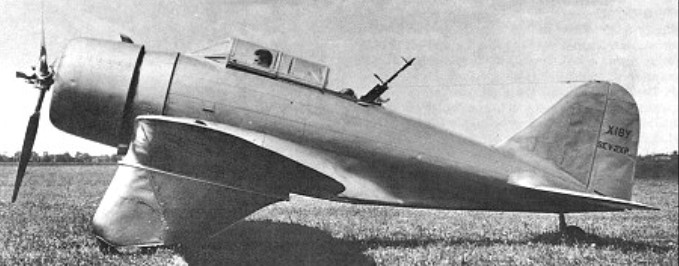
Seversky SEV-1XP / SEV-S-1

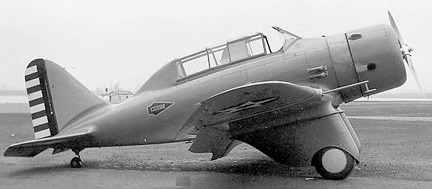
The SEV-2XP with an 800hp Wright XR-1670 engine, was damaged enroute to Wright Field and hurriedly converted into the single-place SEV-1XP with an 850hp Wright R-1820-G4 Cyclone engine

First flying as the NX18Y c/n 2 still, in August 1935 piloted by de Seversky, the SEV-1XP initially retained the R-1670 engine. By now featuring a semi-retractable undercarriage, the prototype was reengined with an ungeared nine-cylinder Wright R-1820 Cyclone. This engine failed to produce its rated power, however, the predicted 483km/h maximum speed proving unobtainable in consequence.

The USAAC Materiel Division’s decision to defer fighter choice pending further evaluation to be held in March 1936 enabled the SEV-1XP to be re-engined once more, this time with an 850hp 14-cylinder Pratt & Whitney R-1830-9 Twin Wasp. This was succeeded, in turn, by a geared R-1820-G5 offering 950hp for take-off, but the Twin Wasp was subsequently re-installed.

With this last engine and an armament of one 7.62mm and one 12.7mm gun, the SEV-1XP was selected on 16 June 1936, approval being given for production of 77 fighters against a contract confirmed early in 1937, with the designation P-35.

Repowered with a P&W R-1830B as the SEV-S1, and with a new tail and cowling, NX18Y raced at the 1935 Nationals, piloted by Frank Sinclair) to fourth place.

It was scrapped in 1937.

Sev-1XP
Engine: 850hp Wright R-1820-G4 Cyclone
Wingspan: 10.97 m / 36 ft 0 in
Length: 7.59 m / 25 ft 11 in
Height: 2.69 m / 9 ft 10 in
Wing area: 20.44 sq.m / 220.01 sq ft
Max take-off weight: 2274 kg / 5013 lb
Empty weight: 1681 kg / 3706 lb
Max. speed: 465 km/h / 289 mph
Range: 1918 km / 1192 miles
Seats: 1

Sev-1XP
Engine: P&W R-1830B

Seversky SEV-2XP

The SEV-2XP (the designation indicating 2-seat experimental Pursuit) designed by Alexander Kartveli was a derivative of the first product of the Seversky Aircraft Corporation, the commercial SEV-3 three-seat monoplane.

An all-metal semi-monocoque aircraft with a fixed spatted undercarriage, the SEV-2XP NX18Y c/n 2 was flown in May 1935 by pioted by de Seversky with the unsatisfactory Wright R-1670 14-cylinder radial offering 735hp for take-off. Provision was made for an armament of two synchronised machine guns, one of 7.62mm and the other of 12.7mm, and one 7.62mm gun on a flexible mount in the rear cockpit.

The USAAC Material Division initiated a contest for a new single-seat fighter. Maj Alexander P de Seversky, believing the SEV-2XP capable of out-performing any single-seat fighter, entered this aircraft as a contender. In the event, the SEV-2XP was damaged in an accident on 18 June while en route to the contest. It was then returned to the manufacturer and reworked as the single-seat SEV-1XP.

Engine: 800hp Wright XR-1670
Max take-off weight: 2404 kg / 5300 lb
Empty weight: 1633 kg / 3600 lb
Wingspan: 10.97 m / 36 ft 0 in
Length: 7.49 m / 25 ft 7 in
Height: 2.62 m / 9 ft 7 in
Wing area: 20.44 sq.m / 220.01 sq ft
Max. speed: 441 km/h / 274 mph
Range: 1529 km / 950 miles
Seats: 2

Seversky SEV-3 / BT-8

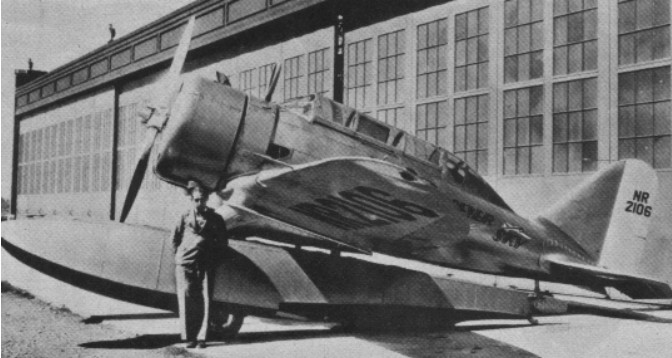
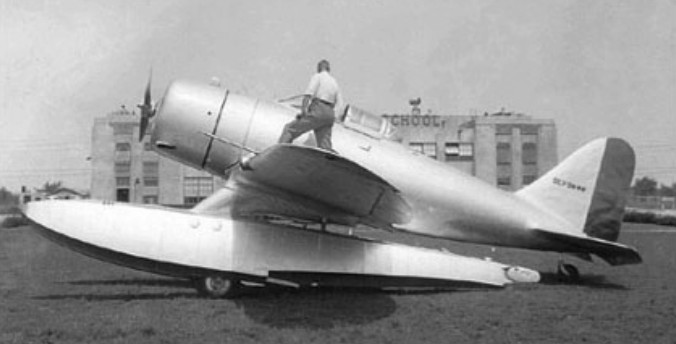
Built by EDO for refugee Russian WWI pilot Alexander de Seversky, the SEV 3 set several speed records in 1933. Seversky and fellow Russkies had formed an American corporation in 1931 but since they didn’t have a factory of their own at the time, the first airplane was built by EDO and given the SEV 3 classification, with the “3” standing for its three seat configuration. Seversky set amphibian speed records in the plane, powered by a 420 hp Wright Whirlwind, and then went after military business.

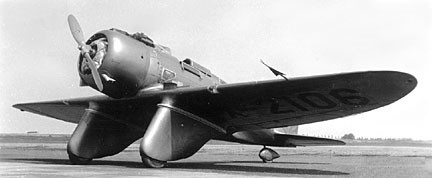
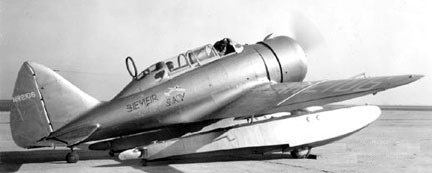
Designed by Michael Gregor and Alexander de Seversky, it was first flown in June 1933 as SEV-3, registered NX/NR2106 c/n 301, first with EDO wheeled floats for 1935 Thompson race, in which Lee Miles managed to place fifth at 196 mph.

The Army tested the Seversky but since it had no need for an amphibian at the time, the builder converted it into a landplane in 1934. Powered by a 350hp Wright R-975E with a faired landing gear it was re-designated SEV-3L

Seversky SEV-3L NX2106

This was the Army’s first monoplane training aircraft and its first all metal trainer built using modern construction techniques.

It became the SEV-3XAR to win the Air Corps’ 1935 BT-8 contract, then back to amphibious SEV-3M in 1935 with a 710hp Wright R-1820, to set a world speed record of 230.4 mph.

Seversky SEV-3XAR NR2106

The design, with wheels, became an Army BT-8 with 450hp P&W R-985. The basic aircraft evolved into the P 43, later, with a stretch of the fuselage and a 2,000 hp Pratt & Whitney R 2800 engine, it became the P 47 Thunderbolt.

Seversky SEV-3M-WW

Seversky went on to build other versions of the plane. Six of the 1934 SEV-3M-WW export version (NX15391, NX15689, NX15928 c/ns 37 to 39, plus three unlicensed).

“In Sever the Sky we find [NX15391, NX15689, NX15928]; US Register shows c/ns as 1, 2, and 3, but were actually c/ns 3, 4, and 5 aircraft by factory.’ This seems logical since [X2106] was c/n 1 and [X18Y] c/n 2. Then came [X189M] as c/n 6, 30 BT-8s as c/ns 7/36, and 3 SEV-3M-WWs for Columbia’s second order as c/ns 37/39.”

The 1937 SEV-DS NX1291 c/n 42 was built for the Shell Oil Co and piloted by James Doolittle.

The 1934 BT-8 Basic trainer was the AAC’s first monoplane trainer and was based on the SEV-3XAR, with faired landing gear. Thirty were built.

Seversky BT-8 at Wright Field

Gallery

SEV-3
Engine: 420hp Wright J-6
Undercarriage: floats

SEV-3L
Engine: 350hp Wright R-975E
Wingspan: 36’0″
Length: 24’4″
Max speed: 210 mph
Cruise: 185 mph
Undercarriage: wheels

SEV-3XAR

SEV-3M
Amphibious
Engine: 710hp Wright R-1820
Max speed: 230.4 mph

BT-8
450hp P&W R-985
Wingspan: 36’0″
Length: 24’4″
Useful load: 1033 lb
Speed: 175 mph
Undercarriage: wheels
Seats: 2

SEV-DS
Engine: 850hp Wright R-1820 Cyclone
Seats: 2
Undercarriage: retractable wheels

Severo Pax

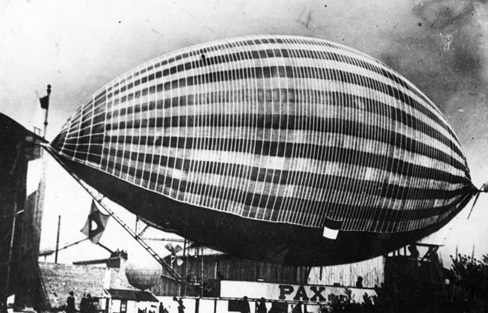
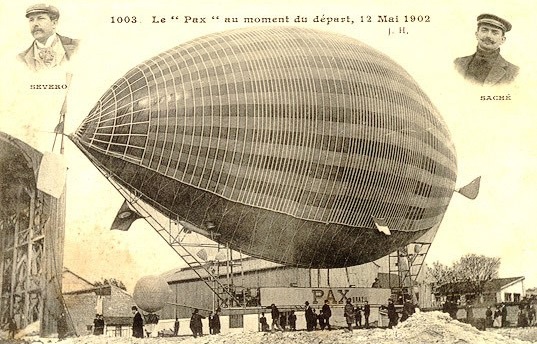
At the end of 1901 Brazilian inventor Augusto Severo de Albuquerque Maranhão travelled to France to build an airship, the semi-rigid “Pax”. It had no directional rudder but seven propellers, one at the stern, one at the bow, another at the nacelle and four at the sides. He had intended to use electric motors, but the lack of resources and time made him opt for two Buchet-type engines, one of 24 hp and the other of 16 hp. The envelope had a capacity of 2,500 cu.m, 30 m long and 12 m at the largest diameter.

Two pusher propellers set at 50 rpm drove the aircraft. The forward and aft propeller diameters were 5 and 6m, respectively. in addition, two other propellers were placed parallel to the machine’s longitudinal axis for lateral control, only. a further propeller was placed below the deck and was employed to control the pitch movement of the 30-m-long aircraft. Maranhão had some insights in designing the Pax, which were not taken into account by his predecessors. one of them was the placement of the traction line coincident with the drag one to better control and handling of the aircraft.

The trials were successfully performed on May 4 and 7, 1902. At 5 am on May 12, 1902, Severo and his mechanic, Georges Saché, set off, intending to fly from Vaugirard in Paris to Issy-les-Moulineaux. It rose quickly, but at about 400 meters’ altitude it exploded, crashing on Avenue du Maine. Both Severo and Saché were killed.

Seux 1907 Monoplane

second version

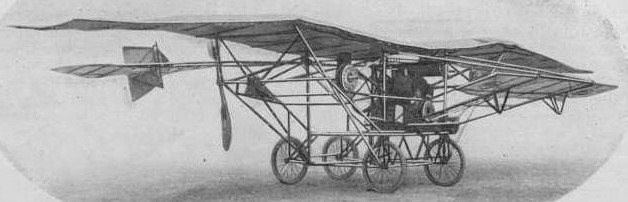
In the spring of 1907 Edmond Seux started development of a monoplane, which was tested on 15 May on a military parade ground. It first bounced on the uneven ground and one of the rear wheels broke. Later one of the two propellers hit the ground when the nose rose and damaged the wings. The plane was repaired and modified with bigger rear wheels and tested again in the end of May, but there are no reports of it flying and it was obviously abandoned. It was equipped with a 35 hp Anzani.

SETCA Milan

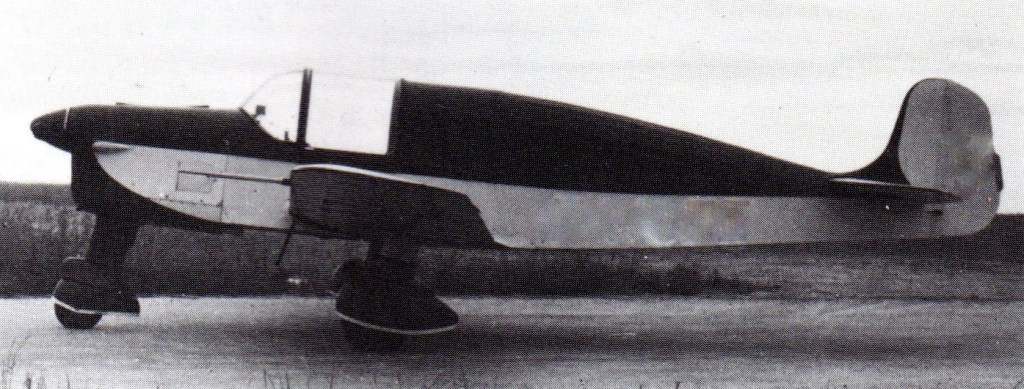
Designed and built by Laboureix and Lagrevol, the SETCA Milan was first flown in 1947, obtained its CNRA in August 1949, and in 1952 received a normal certificate de navigabilite.

A second prototype was built and flown. Of all-wood construction. The cabin seats two side-by-side, with dual controls.

The Milan was shelved since no buyers showed interest.

Engine: 90 hp Regnier 4-EO
Max speed: 122 mph
Cruise: 112 mph
Range: 434 mi
Empty weight: 1210 lb
Loaded weight: 1742 lb
Wingspan: 32 ft 9.5 in
Length: 24 ft 1.75 ln

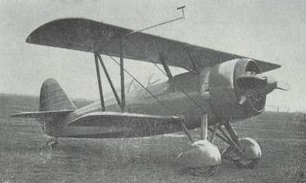
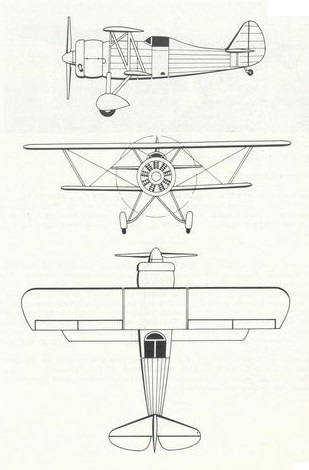
SET XV

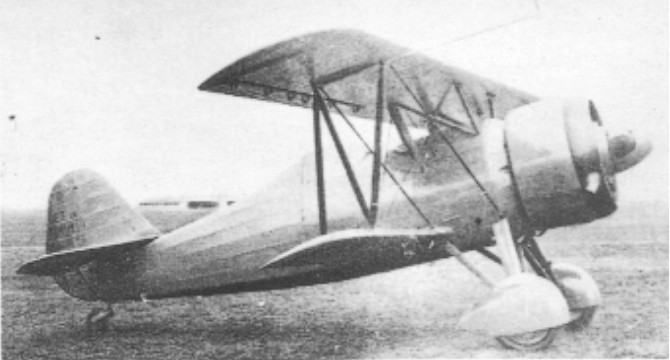
The 1934 S.E.T. XV had a metal frame. /its equipment included oxygen and a complete radio set. The wing was an original S.E.T. profile with flaps.

The armament was two fixed machine guns firing through the propeller. They were under the engine cowling.

Engine: Gnome-hone 9 Krsd, 500 hp
Wingspan: 9.40 m
Length: 7.00 m
Height: 3.05 m
Wing area: 18.65 sq.m
Empty weight: 1150 kg
Max weight: 1550 kg
Max speed: 350 kph
Stall: 113 kph
Max ceiling: 9400 m
Climb to 2000m: 3 min 10 sec
Climb to 7000m: 15 min 30 sec