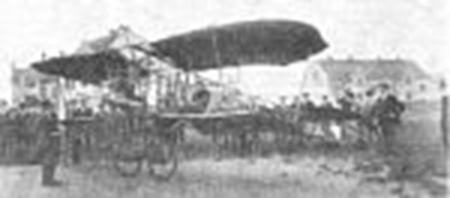
The 1911 Vlach Type III monoplane only small hops but the beginning of successful airplanes. It was designed and built by Metodey Vlach in Czechia
Span: 23′
Weight: 1036 lbs
The 1911 Vlach Type III monoplane only small hops but the beginning of successful airplanes. It was designed and built by Metodey Vlach in Czechia
Span: 23′
Weight: 1036 lbs
In 1935 F C Austin built a single place, open cockpit monoplane, registered N11582, powered by a 35hp Ford engine.
In 1912 Reinhardt Ausmus built a single-place, open cockpit mid-wing monoplane. A Blériot-influenced copy with an uncovered fuselage powered by a 2-cyl rotary, lacking money for plans or materials, Ausmus resorted to laying out the shape on the floor of a vacant building, then sawed pieces out of discarded barn doors and used broken glass as a plane to shape the wood. Covering was starched muslin bedsheets, seal-coated and varnished. Working nights by the light of an oil lamp. The craft first flew on 10 June 1912, which was Ausmus’ solo flight, as well.
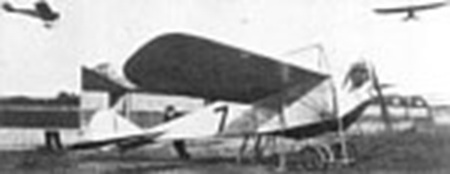
1911 Vickers No. II-V monoplane were various improvements on the Vickers No. I
Span: 38’6″
Length: 28’6″
Weight: 900 lb

The 1911 Vendome gulled-wing monoplane was designed and built by Raoul Vendome in France
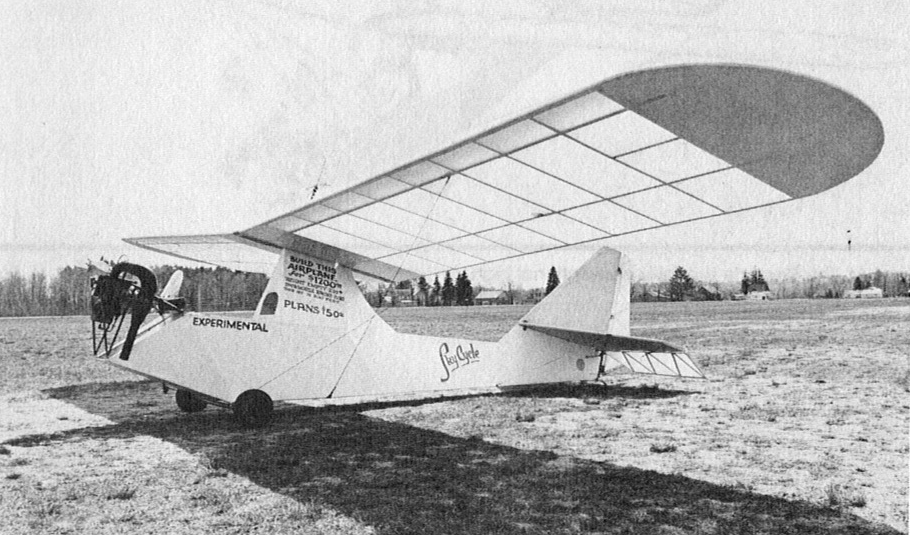
The Dart Skycycle is an American single-seat, high wing, strut-braced, single-engine, conventional landing gear ultralight aircraft that was designed by Robert Dart and produced by Dart Aircraft of Mayville, New York for amateur construction.
Introduced in 1985, the Skycycle is a single-seater designed as an FAR 103 Ultralight Vehicles-compliant aircraft with an empty weight within that category’s 254 lb (115 kg) empty weight limit.
The aircraft has a 4130 steel tube frame fuselage and a wing constructed from spruce, all covered in doped fabric. The landing gear is bungee-suspended. The Skycycle can be built with an open cockpit or fully enclosed, allowing flying in cooler weather. The Skycycle was available as plans only or with some prefabricated components, such as the welded fuselage or assembled wings already completed. The standard engine specified was the 28 hp (21 kW) Rotax 277.
Reviewer Andre Cliche wrote: “The Skycycle is an ultralight-legal aircraft that resembles the average taildraggers of the 40s and 50s. It looks like a ‘real airplane’ and should satisfy the more conservative pilots who hesitate to fly ‘colourful lawn chairs’ as basic ultralights are sometimes called. It is a good all-around ultralight that is easy to fly and cheap to operate.”
Powerplant: 1 × Rotax 277 , 28 hp (21 kW)
Propeller: 2-bladed wooden
Wingspan: 30 ft 0 in (9.14 m)
Wing area: 145 sq ft (13.5 m2)
Length: 20 ft 0 in (6.10 m)
Empty weight: 253 lb (115 kg)
Gross weight: 543 lb (246 kg)
Fuel capacity: 5 US gallons (19 litres)
Cruise speed: 55 mph (89 km/h, 48 kn)
Stall speed: 27 mph (43 km/h, 23 kn)
Wing loading: 3.8 lb/sq ft (19 kg/m2)
Crew: one
The 1930 Algate 1 was a single-place monoplane, powered by an Algate engine, and registered NC434V c/n A-1.
The registration was cancelled on 2 February 1933.
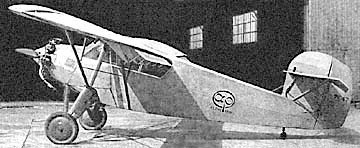
The 1928 Alfaro X-13 NX7647 was an entry in the Guggenheim Safe Aircraft Competition. A two-place powered by a 110hp Warner Scarab, the variable-lift wing featured spoilers, and a trailing-edge flap that contained a shutter to seal the gap between the wing and flap. Did not qualify because of its lack of slow-speed control, and failure to meet the required maximum speed of 110mph.
Also seen as Ingalls Safety Airplane.
In 1930 Alfaro built the Alfaro Autogyro under contract from Pitcairn. The one built, NX759W, was also known as the Pitcairn-Cierva PCA-2-30, and possibly as Pitcairn PA-11.
A two-place, open cockpit autogyro powered with a 110hp Warner engine, it first flew on 18 August 1930.
 All Aero