The 1928 Simmons SP-1 Sport Monoplane built by Herbert H Simmons was registered N7477 c/n 61. A two-place, open cockpit monoplane, the registration was cancelled on 22 July 1930.
Engine: Super LeRhône static
Wingspan: 36’6″
Length: 21’9″
Seats: 2
The 1928 Simmons SP-1 Sport Monoplane built by Herbert H Simmons was registered N7477 c/n 61. A two-place, open cockpit monoplane, the registration was cancelled on 22 July 1930.
Engine: Super LeRhône static
Wingspan: 36’6″
Length: 21’9″
Seats: 2
In 1930 William Simmermon built the FS Special aircraft, registered N774W c/n S-2 and powered by a LeRhône engine.
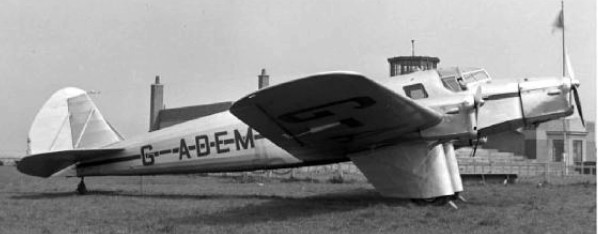
Spartan Cruiser was development of Saro-Percival (later Spartan) Mailplane G-ABLI of 1931. After
Percival sold his interest to Saunders-Roe Ltd, which eventuaally tied up with Spartan, the concept under the Spartan name into the Spartan Cruiser I, powered by three 120 hp de Havilland engines and carrying six passengers and two crew in a metal fuselage.
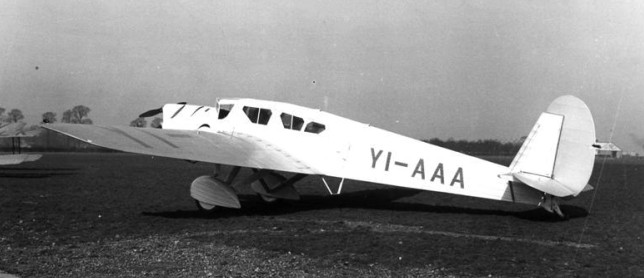
Early production Spartan Cruiser c/n 2 was operated by Airwork (Iraq) Ltd in 1933 on an air route between Baghdad and Mosul as YI-AAA. It returned to the UK in 1934 for British Airways Ltd and reverted to its original registration of G-ACBM. It was scrapped in 1937.
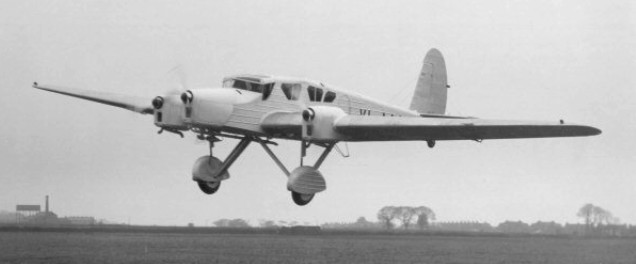
Twelve Spartan Cruiser II were built.
Three Cruiser III were built. The last was G-ADEM in May 1935.
Specifications:
Cruiser I
Engines: 3 x de Havilland, 120 hp
Cruiser II
Cruiser II
Engines: 3 x de Havilland Gipsy Major, 130 hp
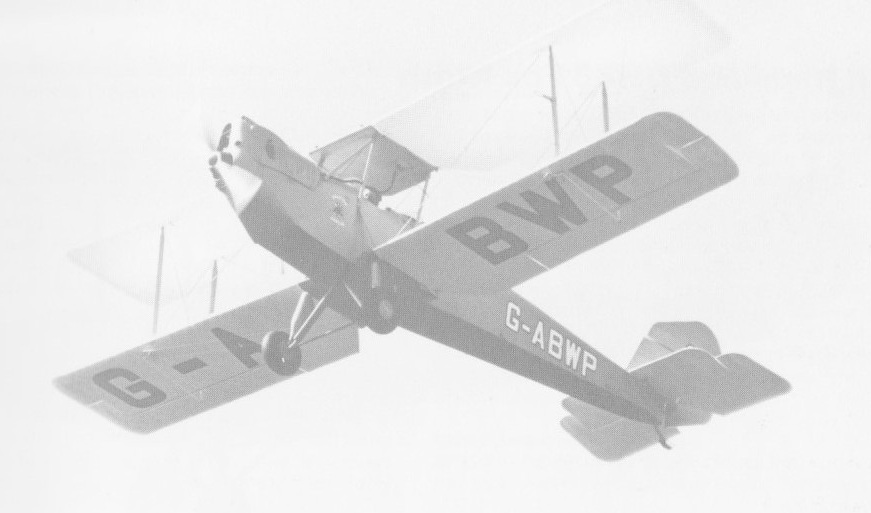
Early in 1930 Spartan Aircraft Ltd. Simmonds altered a version of the Simmonds Spartan into the Spartan Arrow. First flown in May 1930, the prototypes G-AAWY and G-AAWZ were powered by 100 hp Gipsy I engines but the production aircraft that followed had 120 hp Gipsy IIs or 105 hp Hermes II with the exception of Arrow G-ABST which was experimentally fitted with a 160 hp Napier Javelin III.
Simmonds Spartan Arrow Article
Engine: 105 hp Cirrus Hermes II
Wingspan: 30 ft 7 in
Length: 25 ft
AUW: 1850 lb
Max speed: 105 mph
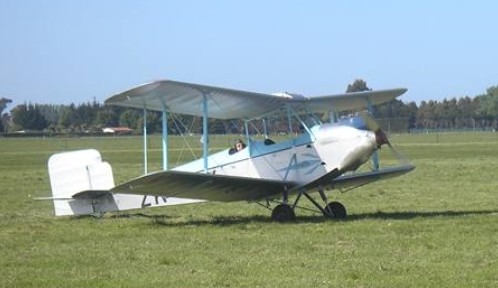
In 1928 O. E. (later Sir Oliver) Simmonds designed and built the Spartan two-seat biplane. Outwardly conventional, but planned for “Spartan” economy (e.g. interchangeable wings and ailerons, and rudder interchangeable with elevator). At Southampton, Hampshire, produced 49 examples, mostly for export, but some for National Flying Services Ltd. One made many Arctic flights.
The first (of seven) Spartan II was completed in September 1932.
Spartan
Engine: ADC Cirrus III, 95 hp
Seats: 2
Spartan Srs II
Engine: Cirrus Hermes IV
Built by Ross Simmes of Dunedin, New Zealand, as a side by side, dual control, training autogyro.
Seats: 2
Engine: Suabue EA81, 108 hp
Gearbox: Rotax C 2.62:1
Blades: 28 ft
Prop: Warp Drive 76 in, 3 blade
Fuel cap: 40 lt
Endurance: 2.5 hr
In 1928 the Silver Wing Aircraft Co built a two-place, open cockpit, high-wing monoplane, designed by H C King. It utilized a Curtiss JN-4 fuselage and gear. Spin-proof, the company claimed, with a heavy, laminated spar that would withstand dives up to 175mph. Only one was built, registered N5268 c/n SWM-100.
First flown on 15 April 1928, piloted by Edward Euler, it was powered by a 90hp Curtiss OX-5, later changed to a 50hp Wright-Hisso engine.
Press releases told of two cabin versions under construction, but were apparently unfinished.
90hp Curtiss OX-5
Wingspan: 41’3″
Length: 26’9″
Useful load: 682 lb
Max speed: 110 mph
Cruise: 90 mph
Stall: 32 mph
Seats: 2
150hp Wright-Hisso
Wingspan: 41’3″
Useful load: 968 lb
Seats: 2
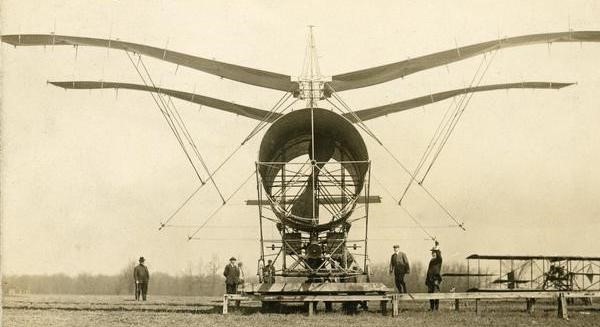
Silverston Vacu-Aerial” Flying Machine No. 2 of 1912 was also known as Dr. Rudolph Silverston’s Milwaukee Flying Machine No. 2. The photo caption reads “Pendulum system 120hp engine.”
According to historical reports, the good doctor had a school of aviation in Milwaukee, and persuaded a number of local investors to support construction of a machine of his devising, which seems to have been an early ducted fan type. The first was a failure; the second (shown) likewise refused to fly, whereupon Dr. Silverston left town with no forwarding address.

The Silent Family Silent Glider M is a German ultralight trike motor glider, designed by Helmut Grossklaus and produced by Silent Family of Westerrade. The aircraft is supplied as a complete ready-to-fly-aircraft.

The 1927 two-place Sikorsky UN-4 (ATC 2-23) were modified Curtiss JN-4D fuselage with a Sikorsky-Gluhareff high-lift wing. A number were built, including C2044 and 5469.
Powered by a 90hp Curtiss OX-5 engine, the wing was adapted for other types, as well—Travel Air, Standard, etc.

