A homebuilt ultralight of all metal construction with a high wing and pusher engine.
Engine: VW 1834cc
A homebuilt ultralight of all metal construction with a high wing and pusher engine.
Engine: VW 1834cc
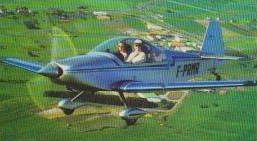
A side by side two-seat monoplane first flown 1992. Construction is of fabric covered wood.
Four sets of plans had been sold by 1998 and two Vega finished.
Engine: Lycoming O-235, 110 hp
Wing span: 7.65 m
Wing area: 10 sq.m
MAUW: 730 kg
Empty weight: 450 kg
Fuel capacity: 120 lt
Max speed: 250 kph
Cruise speed: 220 kph
Minimum speed: 85 kph
Climb rate: 5 m/s
Seats: 2
Fuel consumption: 24 lt/hr
Plan price (1998): $400
In 1934 Rudolph & Anna Stepanich built the single-place, open cockpit, mid-wing monoplane, powered with a 40hp Salmson AD-9 engine, and registered NX14378.
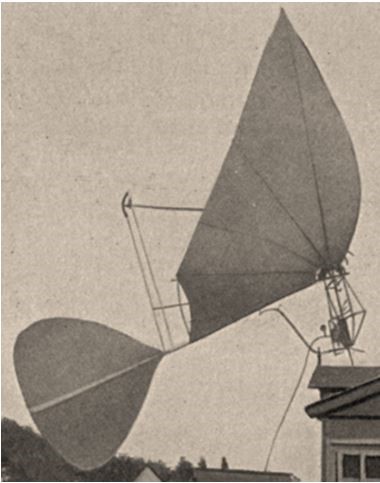
Arthur Stentzel of Hamburg-Altona, Germany, began experimenting with gliders and ornithopters in the early 1890s. In 1896, he demonstrated his flapping wing flying machine at Berlin. The Stentzel machine had cambered bird-like wings of 6.5 m. wingspan and a rounded cruciform tail. It was powered by a carbonic acid engine mounted forward and below the wings. The flying machine ran along a horizontal wire, off which it lifted when in motion. The machine achieved a speed of 4.5 m/s.
The Stellar Astra is an American ultralight trike that was designed by Allistair Wilson and produced by Stellar Aircraft of Bloomfield, Indiana. When it was available the aircraft was supplied as a complete ready-to-fly-aircraft. As of 2013 the company appears to be out of business and production complete.
The Astra was derived from a P&M Aviation trike design and intended to comply with the US light-sport aircraft category.
The Astra features a cable-braced hang glider-style high-wing, weight-shift controls, a two-seats-in-tandem open cockpit with a cockpit fairing, tricycle landing gear with wheel pants and a single engine in pusher configuration.
The aircraft is made from bolted-together aluminum tubing, with its double surface wing covered in Dacron sailcloth. Its 34.4 ft (10.5 m) span wing is supported by a single tube-type kingpost and uses an “A” frame weight-shift control bar. Powerplants that were factory available were the twin cylinder, air-cooled, two-stroke, dual-ignition 50 hp (37 kW) Rotax 503, the four cylinder, air and liquid-cooled, four-stroke, dual-ignition 80 hp (60 kW) Rotax 912UL and 100 hp (75 kW) Rotax 912ULS and the twin cylinder, air-cooled, four-stroke, dual-ignition 60 hp (45 kW) HKS 700E engine.
With the HKS powerplant the aircraft has an empty weight of 485 lb (220 kg) and a gross weight of 960 lb (435 kg), giving a useful load of 475 lb (215 kg).
The aircraft was produced under contract for Stellar Aircraft in India by Albatross Flying Systems, who also marketed the design in Asia as the Cruiser. In 2011, The Astra sold for US$23,495 with the HKS 700E engine.
Astra
Engine: 1 × HKS 700E, 60 hp (45 kW)
Propeller: 3-bladed composite
Wingspan: 34 ft 5 in (10.5 m)
Wing area: 168 sq ft (15.6 sq.m)
Empty weight: 485 lb (220 kg)
Gross weight: 959 lb (435 kg)
Maximum speed: 78 mph; 67 kn (125 km/h)
Cruise speed: 62 mph; 54 kn (100 km/h)
Stall speed: 37 mph; 32 kn (60 km/h)
Rate of climb: 450 ft/min (2.3 m/s)
Wing loading: 5.7 lb/sq ft (27.9 kg/sq.m)
Crew: one
Capacity: one passenger
In 1930 Charles T Stedman of South Bend IN., USA, built a three-place, open cockpit biplane, powered by a 110hp Warner Scarab engine.
In 1929 a two-place cabin biplane was the concept of Capt Charles R Bowers. Design work was done by Harold L Scholl, formerly of McCook Field, and J W Van Cleve. Money was put up by insurance broker Stedman plus Howard and Hugh Woolverton. They bought out (Clyde W) Shockley Flying Service and incorporated as Rainbow Flying Service and Rainbow Aircraft Corp.
Built at South Bend IN., USA, the biplane was registered NX294V c/n 1 and powered by a 75hp Rover engine.
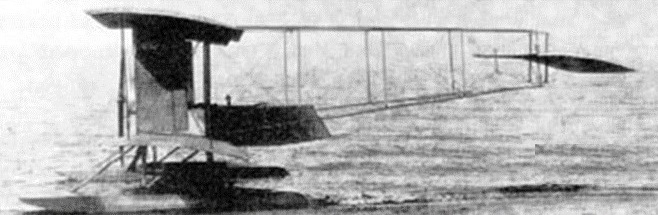
The (James S & Ralph C) Stephens Engineering Co Aerohydroplane of 1911 was designed by James Stephens as an open biplane on wheel or floats. Interplane stabilizer panels were non-controllable—for a right turn, the right panel stayed in place and the left panel swung free, and vice-versa. This prevented the aircraft (wings) from sideslipping or stalling. Turning was accomplished by the empennage flight control steering system (not wing-warp) which gimbaled 360 degrees. These was no elevator, rudder, or ailerons. 1915 US aircraft patent #1,127,105.
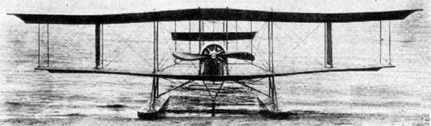
Tricycle gear or all known pictures show two 16′ Burgess pontoons.
Stored in 1914, it was recovered in 1990 to the American Wings Air Museum at Blaine MN, where reassembly began in Feb 2002. It was to be fitted with the tricycle landing gear, which incorporates pneumatic shock absorbers, independent main gear brakes, and has nosewheel steering.
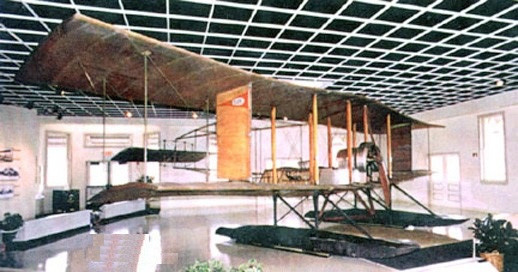
Engine: 50hp Gnôme Omega
Span: (upper) 41’8″
Span: (lower) 36’0″
Length: 31’0″
Speed: 50 mph
Seats: 1
The 1936 PT-35 was entered in military evaluation for a primary trainer, but was beaten out by Stearman.
A two place open cockpit biplane.
Engine: Wright R-760, 225 hp
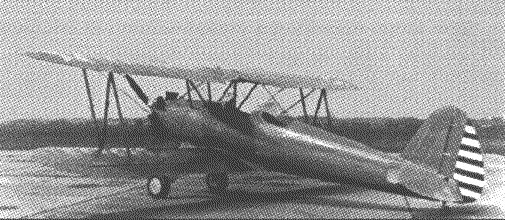
St. Louis Aircraft brought out a biplane primary trainer in 1935, hoping to win an Army production contract. Initially unsuccessful, St. Louis Aircraft continued to develop the airplane and demonstrate it (including a crash at Wright Field in 1936) for the Army, which eventually acquired a trial batch of 14 trainers in 1939. The Army identified these trainers as PT-15. All but one of them ended up being assigned to Parks College (at Cahokia, Illinois) for use in Parks’ Army aviation cadet training program. The hoped-for big production orders were not forthcoming, being won instead by the Boeing/Stearman PT-13/PT-17/N2S Army/Navy primary trainer.
PT-15 / PT-1W
Engine: Wright R-760, 225hp
Wingspan: 33’10”
Length: 25’0″
Useful load: 708 lb
Max speed: 124 mph
Cruise: 105 mph
Stall: 53 mph
Range: 355 mi
Ceiling: 14,500′
Seats: 2
XPT-15
1940
No built: 1 / 39-702
YPT-15
1941
No built: 13 / 40-001-013
 All Aero