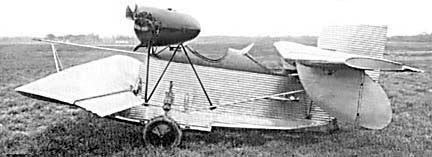
Stratos Aviation Stratos

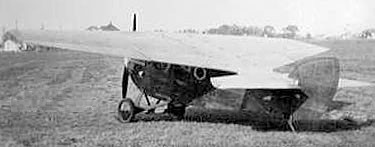
Single seat single engined mid wing monoplane with conventional three axis control. Wing has unswept leading and trailing edges, and constant chord; cruciform tail. Pitch control by elevator on tail; yaw control by fin mounted rudder; roll control by one third span spoilers; control inputs through stick for pitch/roll and pedals for yaw. Wing braced from below by struts; wing profile NACA Series 23000; double surface. Undercarriage has three wheels in tricycle formation; suspension on all wheels (type NC). Push right go right nosewheel steering connected to yaw control. Aluminium tube/fabric/ steel tube framework, with optional pod. Engine mounted at wing height driving pusher propeller.

The prototype Stratos made its first flights during the summer of 1982. It had been designed and built by Larry Burke, an engineer specialised in the study of fatigue problems and the breaking points of materials at Lawrence Livermore National Laboratory.

Commencing design studies on this single seater in December 1981, Larry included in his design target a minimum load factor of +6, 3g at 5001b (227kg) weight. The Stratos was designed to be a low profile fully triangulated strut braced aircraft that places the pilot ahead of the wing, almost giving 360 degrees visibility. The machine is expected to be on sale in ready built form during the summer of 1983 and Stratos Aviation has plans for a two seater which will be classified as an experimental aircraft in the United States.

The Stratos single seater is fitted with a Cuyuna 430R but the manufacturer intends that alternative engines shall be offered eventually as an option.

Engine: Cuyuna 430R, 30 hp at 5500 rpm
Propeller diameter and pitch 50 x 32 inch, 1.27 x 0.81 m
Belt reduction, ratio 2.0/1
Power per unit area 0.18 hp/sq.ft, 1.9hp/sq.m
Fuel capacity 5.0 US gal, 4.2 Imp gal, 18.9 litre
Length overall 19.0ft, 5.79 m
Height overall 4.5ft, 1.37m
Wing span 33.0ft, 10.05m
Constant chord 5.0 ft, 1.52 m
Sweepback 0 degrees
Total win area 166 sq.ft, 15.4 sq.m
Total spoiler area 4.0 sq.ft, 0.36 sq.m
Wing aspect, ratio 6.5/1
Empty weight 250 lb, 113kg
Max take off weight 500 lb, 226kg
Payload 250 lb, 113kg
Max wing loading 3.01 lb/sq.ft, 14.6 kg/sq.m
Max power loading 16.7 lb/hp, 7.5 kg/hp
Load factors +6.0, 3.0 design
Max level speed 63 mph, 101 kph
Never exceed speed 70 mph, 112.5 kph
Cruising speed 63 mph, 101 kph
Stalling speed 27 mph, 43 kph
Max climb rate at sea level 750 ft/min, 3.8 m/s
Min sink rate 250 ft/min at 35 mph, 1.3 m/s at 56 kph
Best glide ratio with power off 8/1 at 35 mph, 56kph
Take off distance 100ft, 30 m
Land¬ing distance 100ft, 30m
Service ceiling 16,500 ft, 5030 m
Range at average cruising speed 150 mile, 241 km
Straith Aeroplane

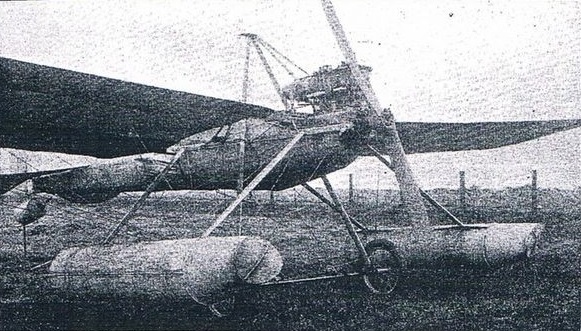
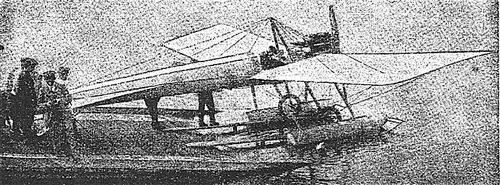
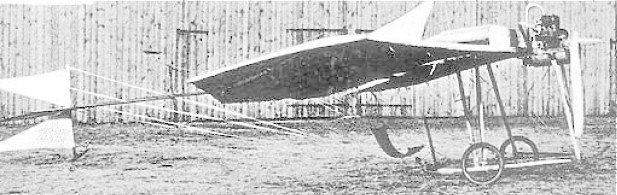
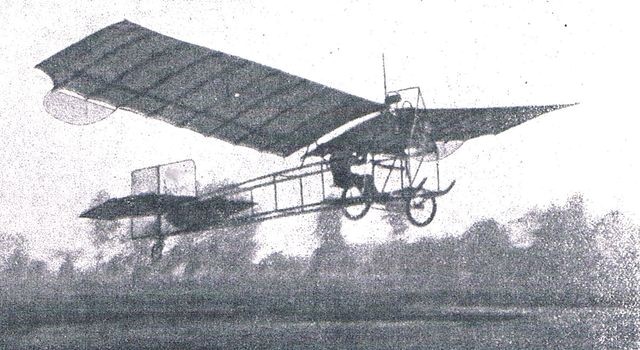
W.P.A. Straith of Norwood (outside Winnipeg, Canada), is said to have dismantled his 1911 Wright Model B, and built a new aircraft from it in 1912. Examining photos in; Canadian Aircraft Since 1909 (pp 437-438), it is clear that this aircraft was either a Williams Model 2, or was built along the lines of the Model 2. A different four-wheel Wright-type undercarriage is fitted (possibly taken from the Model B), as is a different engine, but the airframe is distinctly quite similar to the Model 2, including the radiator type, which was fitted to one Model 2. The engine bearers have been lengthened, apparently due to the use of a smaller (but heavy), 100 hp six-cylinder, two-stroke inline Emerson engine. Straith, used the aircraft until 1915, when it was destroyed in a crash. While it is dubious that the dimensions of the Straith were the same as those of the Williams Model 2, the span is given as 42′, the length is listed as 22′, and the height was 9′ (the figures may have been rounded-off, according to the aforementioned book).

Stout 1-AS Air Sedan / TT

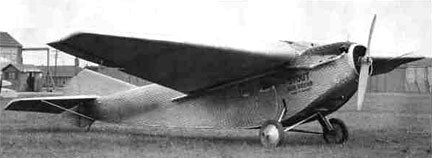
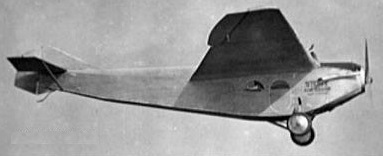
Stout Air Sedan

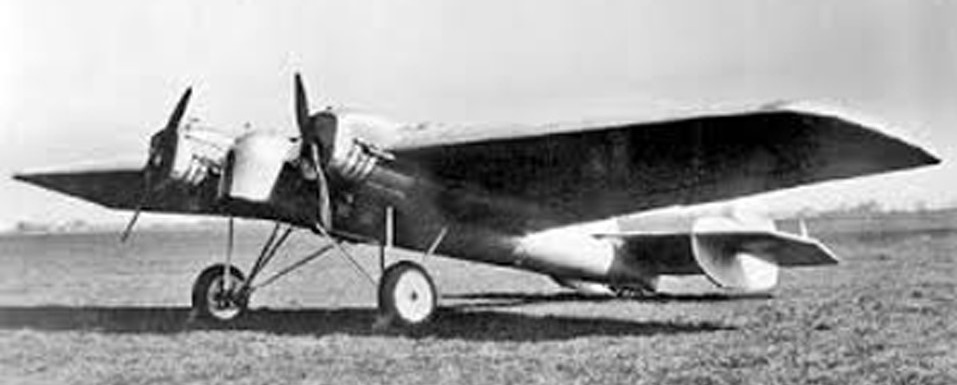
Designed by William Stout and George Prudden, the 1923 1-AS Air Sedan was all-metal construction with corrugated skin. First all-metal commercial airplane in the US and basis for the 2-AT.

Test-flown by Eddie Stinson, it was powered by a 90hp Curtiss OX-5, replaced by a 150hp Hisso when it was apparent only 3 passengers could be carried with the OX-5. With the Hisso engine. Five could be carried.

One 1-AS Air Sedan was built, plus another as 1925 model TT single-place for evaluation by USPO as a “flying mail truck”.

Stout ST-1

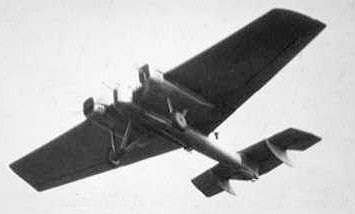
The Stout ST-1 of 1922 was a two-place, open cockpit all-metal monoplane prototype of a projected USN torpedo-bomber; the first all-metal USN plane.

The US Navy Bureau of Aeronautics had a requirement to review several types of torpedo-carrying aircraft. Prototypes of the Curtiss CT, Stout ST, Fokker FT and Blackburn Swift F were evaluated at the Anacostia Naval Yard. William Bushnell Stout approached the Navy with his all-metal torpedo bomber design. He estimated the aircraft would cost $50,000 each to produce. The aircraft was built in Detroit, Michigan over a two-year period. Navy officials visited the facility frequently to inspect the new metal-forming and construction methods.

The aircraft was a twin engine conventional geared mid-winged monoplane. Its primary feature was its corrugated metal construction, a new technique and different from the tube-and-fabric airplanes of the time. In addition, the internally supported cantilever wing developed for the Stout Batwing was employed. The aircraft was test flown successfully, however, the airplane showed signs of inadequate longitudinal stability.

Three were ordered, A5899 to A5901.

The first flight of the prototype, designated ST-1, was at Selfridge Field on 25 April 1922 with Edward Stinson at the controls. The flight was witnessed by William A. Moffett, chief of Navy Aeronautics. Stinson suggested changes to the aircraft, but none were made.

When the $162,000 prototype A6072 crashed after 14 flights, a contract for 2 more, A5902 and 5904, was cancelled.

Engines: two 400hp Packard V-1237
Wingspan: 60’0″
Length: 37’0″
Max speed: 120 mph
Cruise: 110 mph
Stall: 40 mph
Range: 385 mi
Crew: 2

Stout Dragonfly

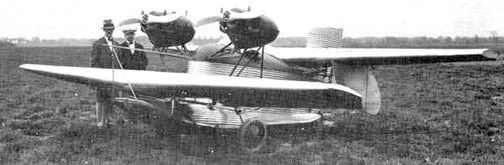
The 1927 Stout Dragonfly was a short-coupled canard design with two tandem wings, one tail-mounted and the other on the nose, triple tails, and truss-mounted motors.

The only all-metal corrugated experimental built was badly damaged in hitting a bump during high-speed taxi tests and was scrapped.

Engine: 2 x Bristol Cherub, 32hp
Seats: 2