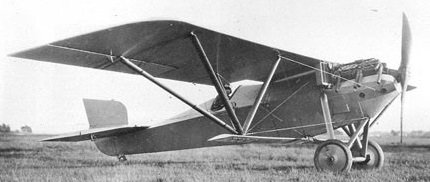
In 1916 one Sturtevant B-2 was built.
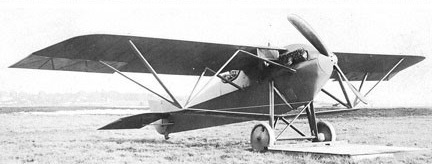
The B-2 Pursuit clipped a tree on landing in March 1917 and crashed.
Wingspan: 30’7″
Length: 23’3″
Seats: 1
In 1916 one Sturtevant B-2 was built.
The B-2 Pursuit clipped a tree on landing in March 1917 and crashed.
Wingspan: 30’7″
Length: 23’3″
Seats: 1
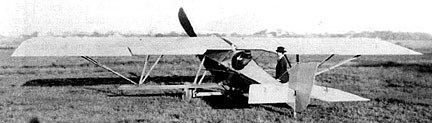
Designed by Grover Loening, the Sturtevant B-1 Speed Scout of 1916 was an Army pursuit.
Four aircraft were ordered by the Army on 8 December 1916, as AS277-280. The first one flew the first time on 20 March 1917, but crashed on that flight; the remaining three were then cancelled.
Engine: Sturtevant A5
Wingspan: 30’7″
Length: 23’3″
Seats: 1
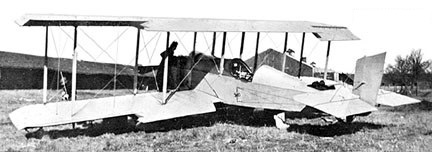
One Sturtevant A-1 Tractor was built in 1915. The wingspan was 47’0″ and length 25’10”.
The A-2 Seaplane was an unbuilt 1915 design.
The one Sturtevant A-3 Battleplane was built in 1915. Only one recorded flight was made, at nearby Readville Trotting Park in December 1915. The wingspan was 47’0″ and length 25’10”.
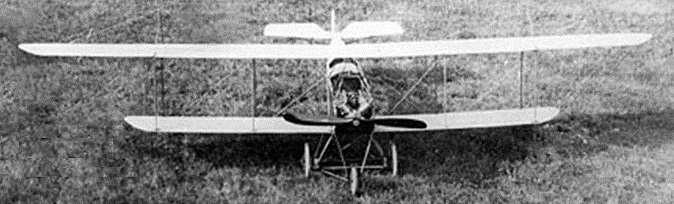
In 1914 Max F Stupar designed and built two single place biplanes as exhibition ships for Earl Daugherty. The first was powered by a 75hp Curtiss OXX-5, and also a 60hp Kirkham 6, the second one with 50hp Gnôme rotary.
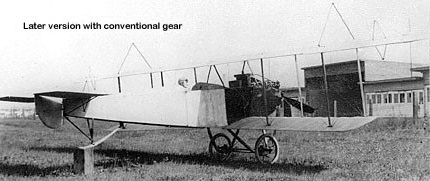
Similar planes were also built for Victor Carlstrom, William Couch, Robert Shank, and other local notables, some likely produced as Chicago Aero’s Star Tractor.
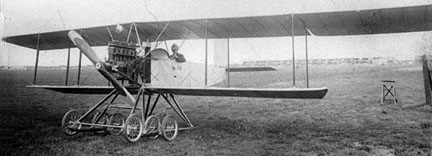
The Stupar 1914 Biplane 1 was Stupar’s first construction while employed by the Aero Works, this one for Hillery Beachy.
The single-place biplane was powered by a Hall-Scott engine, and also a Kirkham 4. A six-wheel undercarriage was fitted.
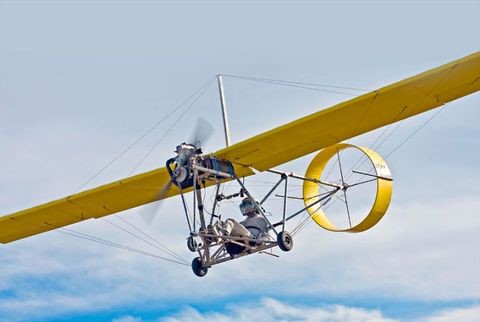
Mark Stull built Lucky Stars with a 4.5-foot-diameter ring tail. It took some clever engineering and some hair-raising test flights to make it work. Stull added a hydraulic damper to ensure that the tail didn’t swing too far to the side, and balanced the tail by adding weights to the ring. He then moved the seat forward to maintain the craft’s centre of gravity.
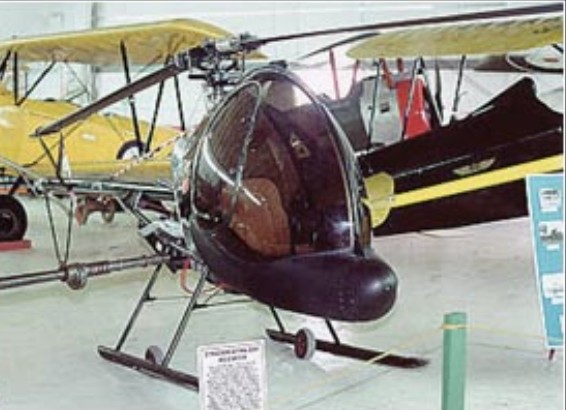
The Struchen (strew-shen) single seat ultralight helicopter was designed and built by Fred Struchen of North Vancouver. He used a combination of helicopter, motorcycle, automobile and hardware store components that were modified as required.
The powerplant is a Honda Civic engine, cooled by a motorcycle radiator. The drive belt came from a Harley Davidson, while the transmission is from a Yamaha and the canopy is created from a residential skylight. Numerous precision parts were machined or modified by the builder.
The Struchen is complete and fully operational, but it is believed that it was never registered or flown by the builder, although it has done low-altitude “hover” tests.
This aircraft was donated to a Canadian museum by its builder in 1996.
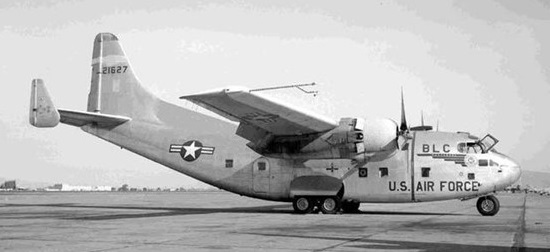
The Stroukoff YC-134, designed in 1956, was based heavily on the Fairchild C-123 Provider. The United States military contracted with Stroukoff Aircraft Corporation to develop an improved version of the aircraft, combining features that the company had developed for the YC-123D and YC-123E.
The product of a US Air Force contract in 1956, a single C-123B from the -CN production block (serial 52-1627) was modified by Stroukoff Aircraft to become the YC-134. This aircraft was heavily modified with the following new features:
New Engines: The YC-134 was equipped with two 3,500 hp (2,600 kW) Wright Turbo Compound R3350-89A radial engines, turning four-blade, thirteen foot Aeroproducts constant-speed fully feathering propellers.
A new thickened wing. In the root of the wing they installed two turbocompressors with 400 hp each
Improved Control Surfaces: The YC-134’s horizontal stabilizers were given endplates to improve directional stability.
Improved landing gear: While the nosewheel from the C-123B was retained, both main gears were given a third wheel to improve weight distribution.
Fuel was no longer housed in the rear of the engine nacelles, but in an expanded center-wing fuel tank. In addition, two plumbed hardpoints for 550-gallon drop tanks were also added to each wing.

Stroukoff’s BLC and Pantobase: the YC-134 was fitted with Stroukoff’s own BLC and all three aircraft had they been delivered were to have been fitted with the Pantobase equipment designed for the YC-123E.
The features gave an empty weight increase over the C-123B from 31,058 lb (14,088 kg) to 37,965 lb (17,221 kg), and a maximum loaded weight increase from 60,000 lb (27,000 kg) to 74,700 lb (33,900 kg). The aircraft’s cruising speed was 219 mph (352 km/h), compared to the C-123B’s 190 mph (310 km/h), and the YC-134 had a 1,600-mile (2,600 km) range with a 24,000 lb (11,000 kg) payload. The BLC allowed the YC-134’s take-off distance to decrease from 1,850 feet (560 m) to 750 feet (230 m), very similar to that of the YC-123D.
The aircraft for the first time rose into air on 19 December, 1956, on the tests were obtained good results, and servicemen ordered two additional machines. On them they installed the modernized boundary-layer control system with one more powerful compressor and “pantobase”. The YC-134 gained the designation “Pantobase” after hydro-skis were added. The YC-134 demonstrated following: takeoff on the earth – 244 m, on the snow and the water – 458 m; path on the earth – 320 m, on the snow – 305 m, on the water – 228 m. In the beginning of 1958 all three YC-134 were transferred to the Air Force.
One conversion to a YC-134 (YC-123D) was made in 1956 (53-8068), powered by two 3500hp Wright R-3350, with similar dimensions to the Fairchild C-123B. Fitted with a boundary layer control system, tailplane endplates, and tandem mainwheels.
The 1958 YC-134A had a sealed and strengthened fuselage and “Pantobase” multi-purpose landing gear fitted with land/water skis and wingtip floats. Began as Chase C-123B 52-1627 rebuild then was modified by Fairchild as YC-123B with wingtip J44 jets, and later reputedly converted by Stroukoff as YC-134A “Pantobase” with R-3350-89A engines and boundary layer control.
The U.S. Air Force, however, deemed that the YC-134 did not offer substantial improvement over the C-123, nor did it have a requirement for a piston-engined amphibious assault transport, and decided to purchase the Lockheed C-130 Hercules.
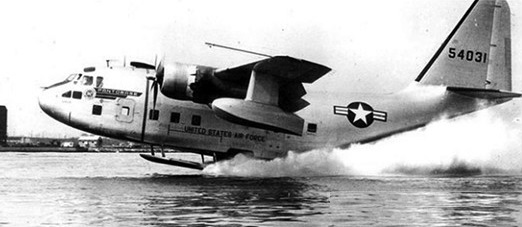
YC-134-SA
Engine: 2 × Wright R-3350-89A, 3,500 hp
Payload: 24,000 lb
Empty weight: 37,965 lb (17,221 kg)
Max. takeoff weight: 74,700 (33,900 kg)
Cruise speed: 219 mph (352 km/h)
Range: 1,600 miles (2,600 km) with 24,000 lb (11,000 kg) payload
Take-off distance: 750 feet (230 m)
Built by Robert C Stroop at Rome GA circa 1927, Stroop SP-4 was a convertible biplane-to-triplane arrangement.
A single-place powered by a 90hp Curtiss OX-5 it was registered N4197.
It is likely not completed or did not exist long enough to be recorded.
Built by Robert C Stroop at Jacksonville in 1932, the Scout was a major conversion of a Thomas-Morse Scout into a parasol monoplane to test Stroop’s arcuate aileron system. A single-place powered by an 80hp LeRhône rotary engine, only one was built.
 All Aero