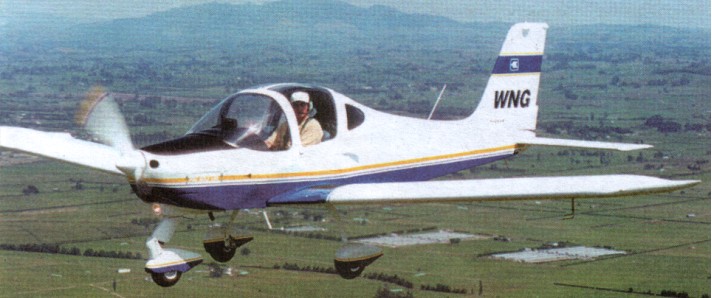
A four seat, fixed or retractable undercarriage aircraft with a tapered wing, laminar aerofoil and slotted flaps. The Tecnam P2002 Sierra has two models in the Class 2 microlight group, and the “JF” model, while almost identical, is certified to JAR/VLA standards, meaning it is approved for PPL and CPL training. Certification is to European Aviation Safety Agency EASA A.006.
The Sierra looks very similar to the P96 Golf but is, in fact, entirely different. The cabin area is a steel truss frame, the fuselage is now rounded, all structural parts are of aluminium alloy, the flaps of the laminar flow wing are slotted and larger, and it has a redesigned interior with a larger instrument panel. Power is provided by the Rotax 912 ULS.
The Tecnam P96 Golf ultralight wing structure features a single spar torque box connected to fuselage via three pin attachments to each half wing. Fuselage structure is a steel tubing framework for cabin area high protection and semi-monococque light alloy tail to support empennage. Ease of inspection; immediate access for servicing that is efficient and inexpensive at the same time. Particular attention is devoted to fuselage aerodynamics with the adoption of a composite fairing that elegantly and efficiently joins the cabin with the vertical tail. Wheel fairing are mounted on each wheel to reduce parasite drag. Landing light is located inside engine cowling in correspondence of nose wheel strut. Engine cowling is made up two parts and allows for quick and complete opening. Fuel tanks are integral part of the wing structure and feature 35 litre capacity per each half wing. Fuel feed is via an engine driven pump and is backed-up for emergency by an electric pump. The wide cabin (1,10 m) features two side by side seats that can be adjusted via sliding rail stops, a large baggage compartment is located behind seats.
P-96 Golf
Cabin access is through a canopy that slides towards rear of aircraft overlapping tail fairing consequently allowing unrestricted opening even with aircraft in flight. The wide windshield offers a complete view unhindered by structural elements, while large side windows allow for excellent visibility. The entirely moving tailplane permits superior control and a high degree of stick free stability, moving surfaces feature mass balancing.
Landing gear components have been thoroughly tested and feature a clear record of safety and efficiency. The main landing gear consists of special steel springs with 5.00-5 size tires and hydraulically actuated disc brakes, while nose gear features a steerable wheel with rubber shock. Instrument panel meets General Aviation standards both in size and quality allowing for installation of a wide variety of flight instrumentation inclusive of IFR, engine controls and com/nav apparatus. Flight controls are traditional type with dual stick, dual rudder pedals and dual throttle knobs on dashboard. Longitudinal trim and electrical flap controls with position indicators are also located on dashboard. Cabin ventilation is via adjustable air vents fed via buried scoops.
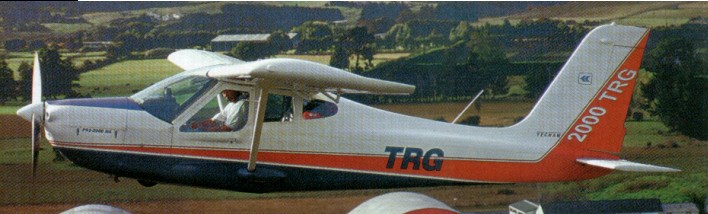
The P-92 originated with a 60 hp engine. The original certified model in P92 series was the P-92J This model was upgraded as the P92-JS. The P92-JS features all the improvements of P92-Echo S ultralight which contained the Rotax 912S engine of 100 hp, shorter span wing and a number of external fuselage fairings and cleanups. The P92-JS model is a fully certified, to JAR-VLA, two seat training aircraft. All P92-J and P92-JS are certified under Registro Aeronautico Italiano / Ente Nazional per L’Aviazione Civile – ENAC RAI A-340.
The P-92-200RG features a retractable undercarriage. A simple pneumatic operation with the gear mechanism supported by a carbon fibre transverse arm beneath the cockpit floor. The gear leg is sim¬ply a hollow tube. No oleo is fitted as the under floor arm provides a firm yet flexible ride. For the actuation mechanism, every com-ponent is available commercially. The system is charged by a separate-from-engine electric compressor – a Mercedes unit. System pressure is maintained at 7.0 bar. A cycle of the landing gear sees a pres¬sure drop of 2.0 bar and the compressor recharges the system in 10 – 15 seconds. Two high compressed air bottles are located behind the cabin bulkhead. Normal operation is from one bottle with the other fully charged as a back up and fitted with a non return valve. Operation of a panel switch will charge the primary bottle if there is a compressor failure. Two full cycles are avail¬able from the bottle contents. If problems still persist for any reason the gear can be manually lowered by reducing speed to 50 kts and a slight pitch up of 0.5g will allow the gear to free fall and lock down until the fault is rectified. It’s a light easily- maintained high-speed system with a significant amount of plumbing. The owner’s manual offers good clear maintenance guidelines and procedures.
Tecnam P92 Echo Super
Other systems on the aircraft include electrically operated flap and trim, plus a hydraulic braking system and vacuum system for associated instrumentation. The cabin is wide at 1.1m. Increased cruise performance comes not only from the retractable gear. Other features such as better aerodynamic performance with the rounded belly and the shorter span wing than its fixed gear high wing siblings assist. There are slotted flaps too on this model which allows for a steeper approach.
The concept is suited best to long distance cruising. Tanks hold 95 litres usable and the Rotax 912S of 100 hp fairly sips fuel at a 65 per cent throttle opening. The propeller is of relatively coarse pitch which allows for a cruise of 120 kts at 75 per cent and consequently take-off speed builds a little slower than expected.
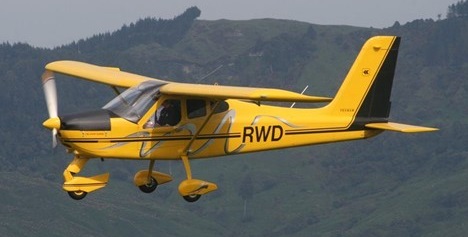
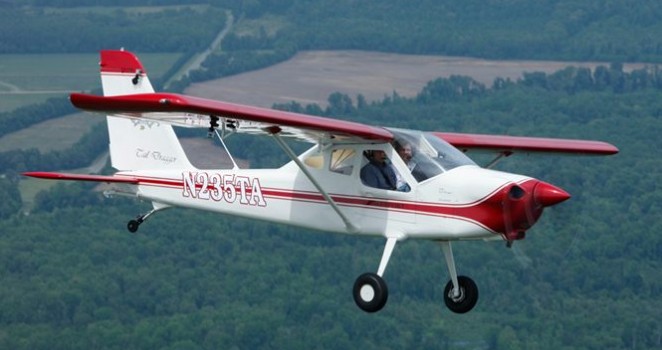
Tecnam P92 Tail Dragger
Tecnam had a plan to help pilots circumvent the cost of LSA ownership: a five-year lease program for its P92 Echo Light that debuted in 2012. Terms for the $74,000 S-LSA: $499/month, with a “Time Building” starting at $59/hour.
Tecnam’s 2012 fleet of LSA includes the P92 TD taildragger, P92 SeaSky float plane, P92 Eaglet trainer. Engine choices: Rotax 912 ULS, 912iS (Eaglet) and 914 Turbo (P92 TD).
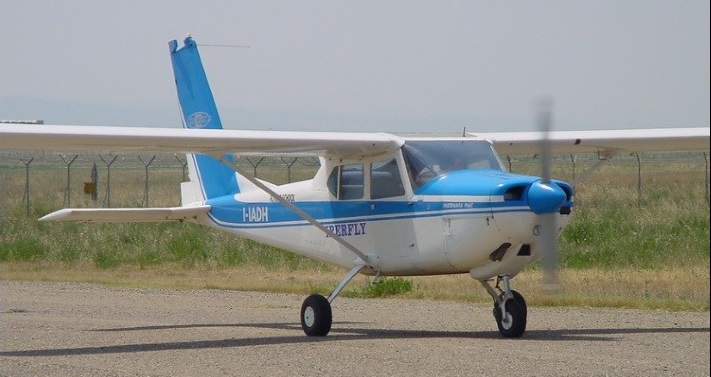
The Partenavia-developed P.86 Mosquito two-seat lightplane (first flown 1986).
In 2008, Partenavia, an Aeritalia division, announced a decision to transfer manufacturing of single engined aircraft, including the Mosquito, to fellow Aeritalia subsidiary Aviolight, which was floated at the end of February 2008.
Partenavia developed a “lightweight” Oscar, the P.66B Oscar 100, by the simple expedient cutting out a slice of the cockpit and only fitting it with two seats, reducing length by 14 centimeters (5.5 inches) and empty weight by 110 kilograms (242 pounds). It was powered by an O-235 engine with only 75 kW (100 HP); 80 were built. The “P.66B Oscar 150” had the same spliced-out fuselage as the P.66B Oscar 100, but with a third seat crammed in, and a 112 kW (150 HP) Lycoming engine; 50 were built.
The “P.66C Charlie” was an update of the original full-length P.64 Oscar series, with four seats. It was fully aerobatic, though it was powered by a 120 kW (160 HP) Lycoming engine, giving it less pep than the Oscar 180. However, its empty weight was 70 kilograms less than that of the Oscar 180, meaning it could get by with a less powerful engine. 96 were built.
P.66 Oscar Engine: Lycomimg O-235-C1B, 115 hp Seats: 2
P.66B Oscar-100
P.66B Oscar-150 Engine: Lycomimg O-320-E2A, 150 hp Seats: 3
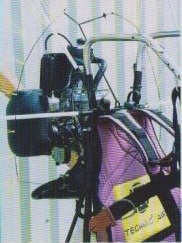
The F 60 has a fixed nosewheel and an identical power unit to the foot-launched versions. The structure is of 25 CD 4S grade steel and the JPX 320 and Simonini Tango 2 engines means it can be flown as a two seater.
Empty weight: 50 kg Engine: Simonini Tango 2, 36 hp Seats: 2 Price (1998): 36 750 Fttc
Built circa 1913 as a twin-prop “direct-lift canard”. According to an article, this did fly, and at 70mph with help from two rotorlike contraptions behind the propeller blades, the idea of which was supposed to eliminate the danger of side wind effects and to increase lift.




 All Aero