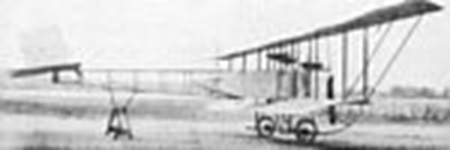
The 1913 Parsons biplane was designed and built by J. G. Parsons and P. M. Muller in the UK
Span: top 39’6″ bottom 25′
Length: 26’4″
The 1913 Parsons biplane was designed and built by J. G. Parsons and P. M. Muller in the UK
Span: top 39’6″ bottom 25′
Length: 26’4″
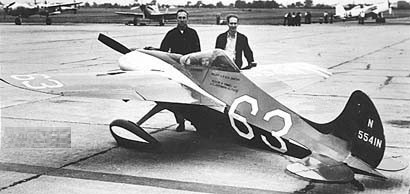
The 1948 Anderson Special was a single-place low wing 85hp Continental C-85 powered midget racer with a diamond-shaped fuselage cross-section. Raced by Bruce Raymond as Ace of Diamonds and Beetle Bomb, registered N5541N, it was modified as mid-wing in 1949.
The Special crashed in racing in 1950 and the wings were salvaged for use on the 1953 Pitt Yellow Jacket.
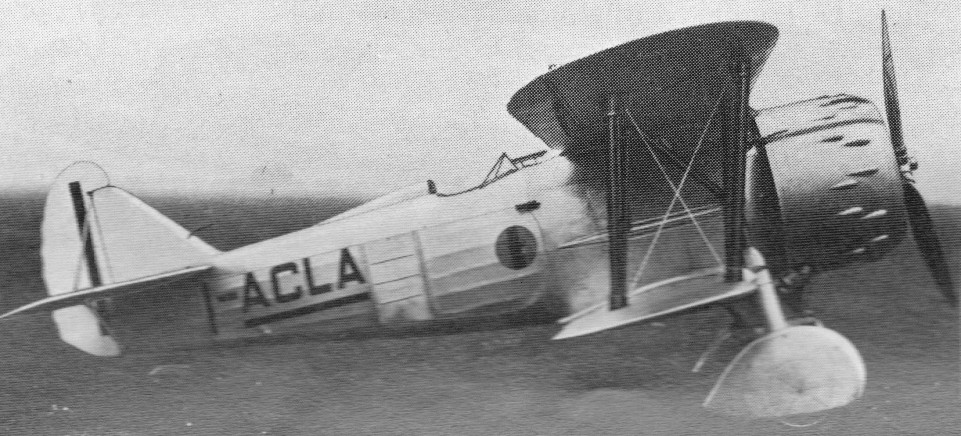
Retaining the gull-wing upper mainplane centre section or the CR.30, but possessing larger overall dimensions, a heavier armament and a more powerful engine, the CR.41 was first flown on 30 March 1935 with a 730 hp Gnome-Rhone 14Kfs Mistral Major 14-cylinder air cooled radial. Armament comprised two fuselage-mounted 12.7mm and two wing-mounted 7.7mm guns, and various two- and three-blade variable-pith propellers were ested on the sole prototype during a protracted flight test programme, and in the course of which alternative armament installations were evaluated, including one comprising two 20 mm cannon and another consisting of four 12.7mm machine guns.
Further development was discontinued in favour of the CR.42
Engine: 730 hp Gnome-Rhone 14Kfs Mistral Major
Max speed: 252 mph / 405 kph
Endurance: 1 hr 45 min
Empty weight: 2888 lb / 1310 kg
Loaded weight: 4156 lb / 1885 kg
Wingspan: 31 ft 8 in / 9.65 m
Length: 24 ft 4 in / 7.42 m
Height: 8 ft 8 in / 2.64 m
Wing area: 243.59 sq.ft / 22.63 sq.m

Evolved in parallel with the CR.33 but completed and flown earlier owing to engine availability, the CR.40 was powered by a radial air-cooled engine, unlike the preceding Fiat fighters.
The prototype CR.40 was flown in March 1934 with a 550 hp Alfa Romeo-built Bristol Mercury I engine. Provision was made for two synchronised 12.7mm machine guns and the structure was of steel and light alloy with fabric skinning.
The CR.40 attained a maximum speed of 234 mph / 377 kph and reached an altitude of 9840 ft / 3000 m in 6.83 minutes, but climbing qualities and stability proved inferior to those of the CR.32.

A second prototype, the CR.40bis, also tested in 1934, differed only in having a Fiat A 59 R (a licence-built P&W Hornet) engine rated at 690 hp at 6560 ft / 2000 m and driving a flight-variable two-pitch propeller.
The CR.40 indirectly led to the production CR.42.
CR.40bis
Engine: Fiat A 59 R, 690 hp
Wingspan: 30 ft 6 in / 9.30 m
Length: 22 ft 10 in / 6.96 m
Height: 8 ft 6 in / 2.60 m
Wing area: 224.97 sq.ft / 20.90 sq.m
Empty weight: 2645 lb / 1200 kg
Loaded weight: 3748 lb / 1700 kg
Max speed: 241 mph / 388 kph at 6560 ft / 2000 m
Endurance: 1.83 hr
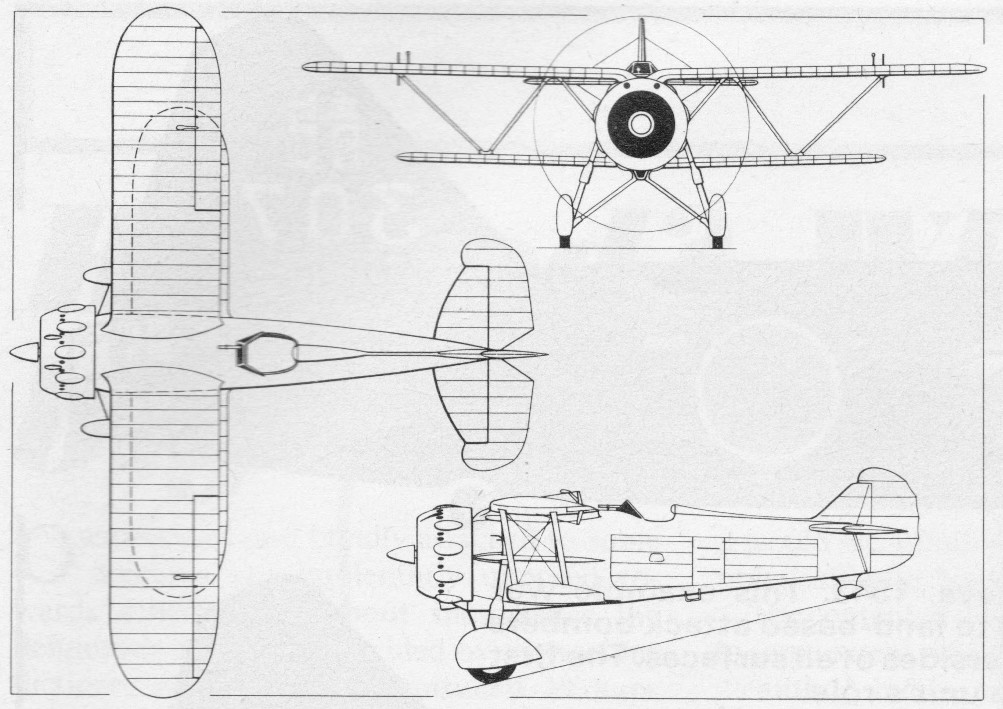

A derivative of the CR.32 designed to take the 690 hp A 33 RC 35 supercharged engine, the CR.33 differed little externally from its predecessor but had marginally larger overall dimensions and was fitted with a ground-adjustable three-blade propeller. Armament comprised two fuselage-mounted 12.7mm guns and two wing-mounted 7.7mm weapons, and an internal bay could accommodate either 12 x 4.4 lb / 3 kg anti-personnel bombs or camera equipment. Although the Fiat A 33 RC 35 engine was completed in 1935, difficulties with this engine delayed prototype trials of the CR.33 until 1937, by which time the air-cooled radial engines were officially favoured for fighter installation, and the development programme was restricted to three prototypes.
Engine: 690 hp A 33 RC 35
Span: 32 ft 2 in / 9.80 m
Length: 24 ft 9.5 in / 7.56 m
Height: 8 ft 6 in / 2.60 m
Wing area: 241.11 sq.ft / 22.40 sq.m
Empty weight: 2998 lb / 1360 kg
Loaded weight: 4211 lb / 1910 kg
Max speed: 262 mph / 422 kph
Max range: 435 mi / 700 km
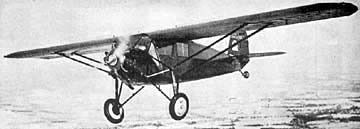
The American Eagle D-430 (ATC 301) was priced at $7,395 in 1930, and $6,395 in 1931. The prototype was NX/NC578H.
One or two were built, with NC200N being converted to E-430.
Engine: 165hp Wright J-6
Seats: 4

The 1913 Prodam-III 2 seater military monoplane – designed and built by Guido Prodam in Hungary during 1913 but first flight early 1914.
Span: 36’1″
Length: 27’11”
Weight empty: 793 lbs
Speed: 62 mph
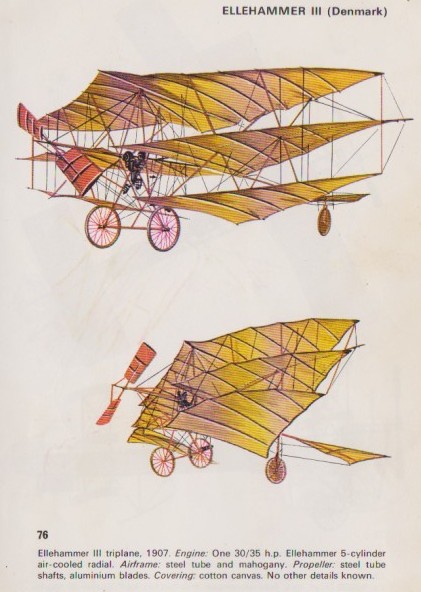
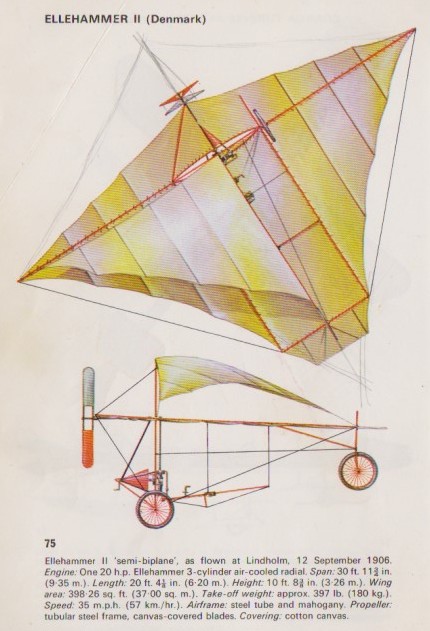

The Sharp Nemesis NXT with “NXT” standing for “Neoteric experimental Technology,” is a kit-built sport-class aircraft designed specifically for air racing. It serves as a successor to the previous model, the Sharp Nemesis, and was created by Jon Sharp, the president of Nemesis Air Racing. The Nemesis NXT is a single-engine, low-wing aircraft with retractable gear and seating for two individuals. The original design of the aircraft incorporates a Lycoming TIO-540-NXT Thunderbolt six-cylinder engine for propulsion.
The prototype Nemesis NXT, bearing the race number 3X (N333XT) and piloted by Jon Sharp, achieved a significant victory by winning the 2008 Reno Air Races Sport Class championship. During this competition, the aircraft established a new record speed for the race, reaching an impressive 392 mph (631 km/h). Throughout the ten-day event, Sharp set a heat record of 393 mph (632 km/h) and, during the qualification stage, achieved a record-breaking speed of 409.297 mph (658.700 km/h). This marked the first time a racer in this particular class had surpassed the 400 mph (640 km/h) speed barrier, a feat typically associated with Unlimited Class racing aircraft. Additionally, a second Nemesis NXT, designated as race number 42 and fielded by Relentless Racing, secured a respectable fifth-place finish, achieving an average speed of 336.526 mph (541.586 km/h) during the gold race.
Jon Sharp, having accumulated the highest number of wins in the history of racing, announced his retirement from Pylon Racing in August 2011. In 2015, he received an invitation to donate his prototype Nemesis NXT to the National Air and Space Museum. The aircraft was subsequently delivered in 2018 by Crew Chief Steve Hill and race pilot Justin Phillipson. Initially, museum directors intended to exhibit the aircraft in the Nation of Speed gallery at the museum’s central location. However, due to its size, it was determined that the aircraft could not fit through the access door of that particular building. Consequently, the Nemesis NXT was relocated to the Steven F. Udvar-Hazy Center in Fairfax County, Virginia. It is currently on permanent display (as of 2022) in the Boeing Aviation Hangar, where it stands alongside its older counterpart, the Nemesis. The livery of the aircraft on display at the Smithsonian National Air and Space Museum in Washington, which won the Super Sport category in 2009, was designed by renowned Italian designer Mirco Pecorari.

Records
On 30 July 2008, Sharp set an FAI class C1b world record for speed over a straight 3 km (1.9 mi) course at 573.46 km/h (356.33 mph).
On 20 September 2009, Sharp won the Super Sport Gold race at Reno with a speed of 407.061 mph (655.101 km/h).
On 16 September 2009, Sharp qualified first with a speed of 412.554 mph (663.941 km/h) for the top spot in the Super Sport class at Reno.
On 17 September 2009, Sharp set a Super Sport race record of 383.292 mph (616.849 km/h).
On 18 September 2009, Sharp beat the previous day’s record with a speed of 399.336 mph (642.669 km/h).
On 19 September 2009, the aircraft reached 406.051 mph (653.476 km/h), the first homebuilt aircraft to exceed 400 mph (640 km/h) average race speed on the Reno course.
On 20 September 2009, Sharp won the Super Sport Gold race at a record speed of 407.061 mph (655.101 km/h). He earned his 15th National Championship (another record) completing the “Record a Day and Two on Sunday” Reno campaign of 2009.
In September–October 2015 Sharp set five FAI records for piston aircraft at Moriarty, New Mexico; all are current in 2022:
In the under-1000 kg weight class C1b, average 393 miles/hour for four 3-km runs at low altitude; and 406 miles/hour for two 15 km runs at unrestricted altitude
In the under-1750 kg weight class C1c, average 415 miles/hr on the 3-km course, 407 miles/hr on the 15 km, and 397 miles/hr for a 100 km circuit.

Powerplant: 1 × Lycoming TIO-540-NXT, 350 hp (260 kW)
Wingspan: 24 ft (7.3 m)
Wing area: 70 sq ft (6.5 m2)
Airfoil: Modified NASA NLF (Natural Laminar Flow)
Length: 23 ft (7.0 m)
Empty weight: 1,600 lb (726 kg)
Max takeoff weight: 2,600 lb (1,179 kg)
Fuel capacity: 90 US gal (340 L; 75 imp gal)
Cruise speed: 325 mph (523 km/h, 282 kn) IAS
Stall speed: 90 mph (140 km/h, 78 kn) IAS
Rate of climb: 3,000 ft/min (15 m/s)
Fuel consumption: 0.369 lb/mi (0.104 kg/km)
Fuel consumption: 20 US gal (76 L)/h in cruise, 35 US gal (130 L)/h at full power
Take Off: 2,500 ft (760 m) @ sea level
Landing: 3,500 ft (1,100 m) @ sea level
Crew: 1
Capacity: 2
 All Aero