The Armitage S-8 of 1938 was a single-place open cockpit mid-wing monoplane all-metal racer. Featuring retractable undercarriage, it was built for George Nelson, registered NX2585, and wore race number 50, but it is unknown if it ever flew.
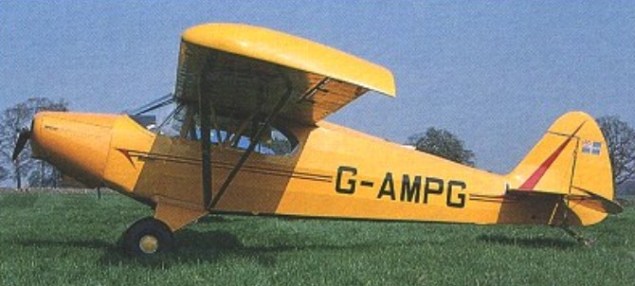
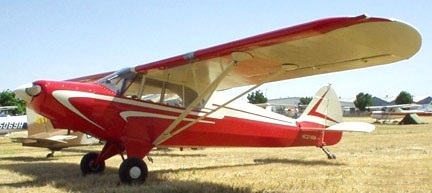
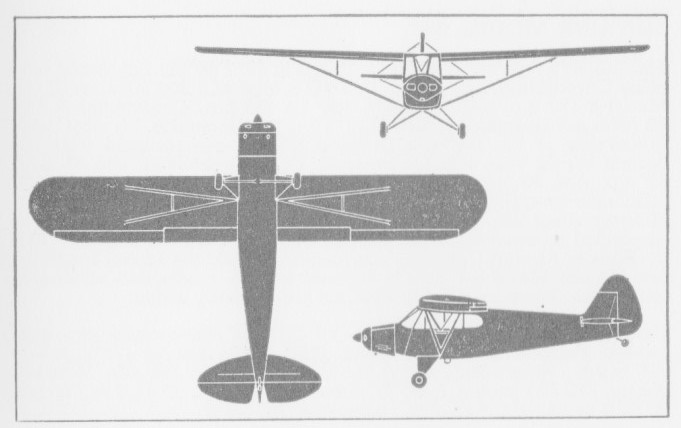
Although technically a three-seat aircraft, the Piper PA-12 Super Cruiser (ATC 780) was more usually used and regarded as a deluxe two-seater, and differed from the J-5C only in a number of cosmetic refinements including two wing tanks.
Dimensionally little had changed from the J-5C, and having the same 100 or 108 hp Lycoming O-235-C engine, the PA-12 had a maximum speed of 183km/h at sea level.
The prototype was flown in December 1945 and attracted so much attention that the company soon had an enormous backlog of orders at $2,995 in 1945, and $3,205 in 1947 (both less radio, starter and generator).
After the J-5, the type re-entered production in 1946 in refined form as the PA-12.
When production of this version ended in 1948 3,758 had been built. Lock Haven more than 3,500, Ponca City more than 250.
First around-the-world lightplane flights by City of Washington (p: Clifford Evans) NX2365M, and City of Los Angeles (p: George Truman) in 1947 NX3671M.
Piper PA-12-125 Super Cruiser
Engine: Lycoming O-235, 100 hp @ 2600 rpm Prop diameter: 76 in Wingspan: 35 ft 6 in Wing area: 179.3 sq.ft Length: 22.8 ft Height: 82 in Gross weight Normal: 1750 lb Gross weight utility: 1500 lb Empty weight: 950 lb Fuel capacity: 38 USG Power loading: 17.5 lb/hp Wing loading: 9.8 lb/sq.ft Baggage capacity: 41 lb Tire pressure: 18 lb/sq.in Max speed: 114 mph Cruise: 105 mph Stall: 42 mph Rate of climb: 600 fpm Service ceiling: 12,600 ft Absolute ceiling: 15,500 ft Cruise range: 600 sm Fuel burn: 6.5 USG/hr Seats: 3
 All Aero