VR 80
Cycle: 2 stroke
No cylinders: 1
Bore: 47.5 mm
Stroke: 44 mm
Compression: 10
Displacement: 79 cc
Cooling: Liquid
Ignition: Electronic
Reduction: Mechanical amortisseur + embrayage 4:1
Weight: 10 kg
Max pwr: 14.5 hp at 9800 rpm
Max torque: 0.98 kgm
Fuel consumption: 2 lt/hr
Price 1998: 2 956 000 L
Piston
Vittorazi Flywheel

Flywheel 100
Empty weight: 21 kg
Engine: Vitorazi 79, 14.5 hp
Reduction: 1:4
Prop diameter: 100 cm
Fuel capacity: 6 lt
Price (1998): 7200 DM
Flywheel 160
Empty weight: 15 kg
Engine: Vitorazi 160, 30 hp
Reduction: 1:4
Prop diameter: 125 cm
Fuel capacity: 6 lt
Price (1998): 7 900 000 L
Flywheel 125
Empty weight: 18 kg
Engine: Vitorazi 67, 14.5 hp
Certification: DULF i.a.
Reduction: 1:4
Prop diameter: 125 cm
Fuel capacity: 6 lt
Price (1998): 7780 DM
Vittorazi Moster 185

The Moster 185Paramotor is for solo flying or tandem. The structure of the engine Moster 185 is simple, streamlined and compact. The complete weight of the engine is 12.9 kgs in pull starter version. The thermic group is cooled with the air generated by the extraction flow of the propeller, with direct drive.
The motor develops 25 hp at 7800 rpm and is particularly suitable for pilot + paramotor or trike between weights 100 and 160 Kgs (200 to 350 pounds). The engine has not been tested for tandem use or for a take off weight over 160 kgs. The thrust is regular, smooth, gentle up to 75 kgs (165 pounds) with a 130 cms (51 inches) propeller or 70 kgs (155 pounds) with 122 cms (48 inches) propeller.
2010 Price: US $1,700 – 1,890
Vittorazi Moster 185, 25 hp at 7800 rpm
Reduction drive: ratio 1/2.7 – PolyV belt.
Ignition coil: Inductive IDI
Spark-plug: NGK BR9ES
Temperatures max: EGT 550° – CHT 230°
Exhaust pipe: Hand-made with silencer – Optional silencer in carbon fiber
Propeller rotation: Counter-clock
Fuel: Unleaded gasoline – Synthetic oil 2.5 %
Consumption: 3.0-3.5 liters/hour at 30kg of trust, propeller 125 cms
Weight: 12.9 kg; pull starter version
Virginia I
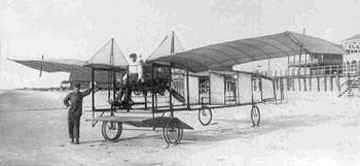
The Virginia I monoplane was built in 1910 at Virginia Beach, Virginia, VA.
Vinot et Deguinand Type D
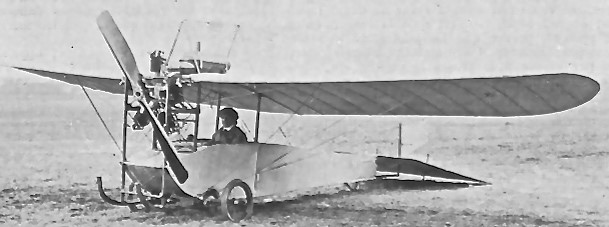
G. Vinet, an automobile and automobile-body builder of Courbevoie, northwest of Paris, started his aviation activities by building the first glider of Archdeacon. He then built several one-off monoplanes in 1910-1913. The type D was designed by P. James and completed in June 1911. It was tested at Chateaufort, but was found unsatisfactory.
Span: 28’4″
Length: 21’4″
Weight: 550 lb empty
Vinot et Deguinand Type B
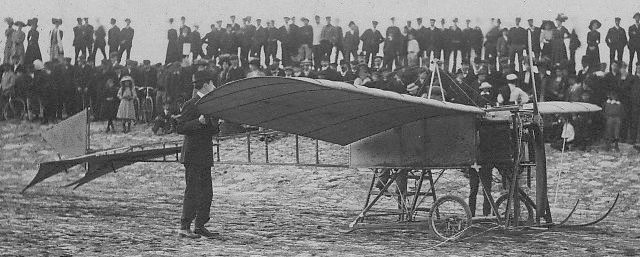
A Blériot-like monoplane with Hanriot-like undercarriage, powered by a 40 hp Gyp inline four built in 1911.
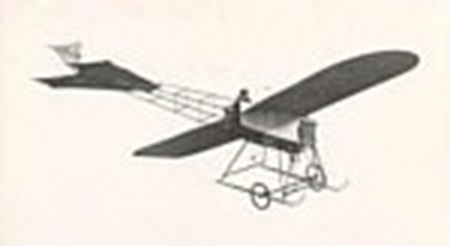
Span: 29’6″
Length: 25’7″
Weight: 462 lb empty
Speed: 56 mph
Vinot et Deguinand A
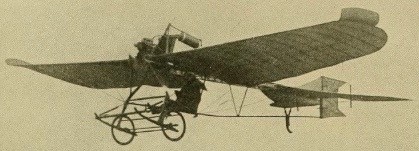
Gaston Vinet was a well-known French car manufacturer and coachwork builder in the 1900s, who became interested in airplanes around 1904. He started with the construction of gliders, then built a series of monoplanes between 1910 and 1913. The first Vinet monoplane (the 1910 type A) was designed after extensive research on the curvature of the wings, resulting in the characteristic upturned tips, and it was extensively tested with different centres of gravity to achieve maximum stability. The pilot was seated in a gondola under the wings. This arrangement lowered the center of gravity and provided good longitudinal and transverse stability.
Vincent 2 place Biplane
In the 1920s Guy O Vincent built a two-place open cockpit biplane. Registered N3686, it was powered by a 90 hp Curtiss OX-5.
Vincent 1925 Biplane
In 1925 Guy O Vincent built a three-place open cockpit biplane. Registered N3659, it was powered by a Hisso or OX-5.
Wingspan: 29’0″
Length: 18’0″
Max speed: 95 mph
Stall: 25 mph
Seats: 3
VULA J3 Jnr

Engine: 2si, 30 hp
HP range: 30-35
Length: 16.5 ft
Wing span: 32 ft
Wing area: 120 sq.ft
Cruise: 45 mph
Stall: 25 mph
Rate of climb: 650 fpm
Takeoff dist: 150 ft
Landing dist: 75 ft
Fuel capacity: 5 USG
Empty weight: 254 lb
Gross weight: 550 lb
Seats: 1
Landing gear: tailwheel
LSA: yes

