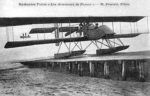
Voisin Triplane / E.28

1915 version

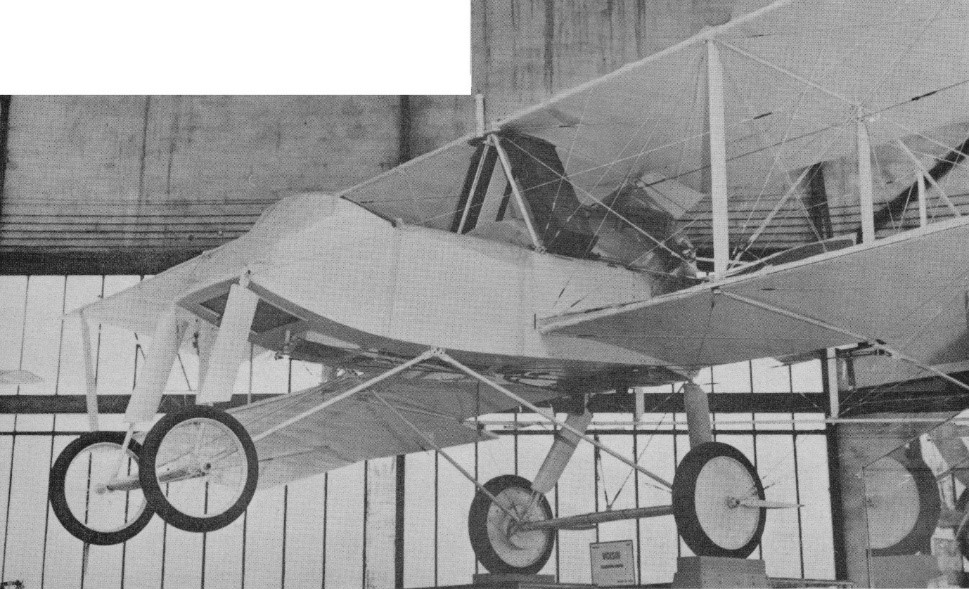
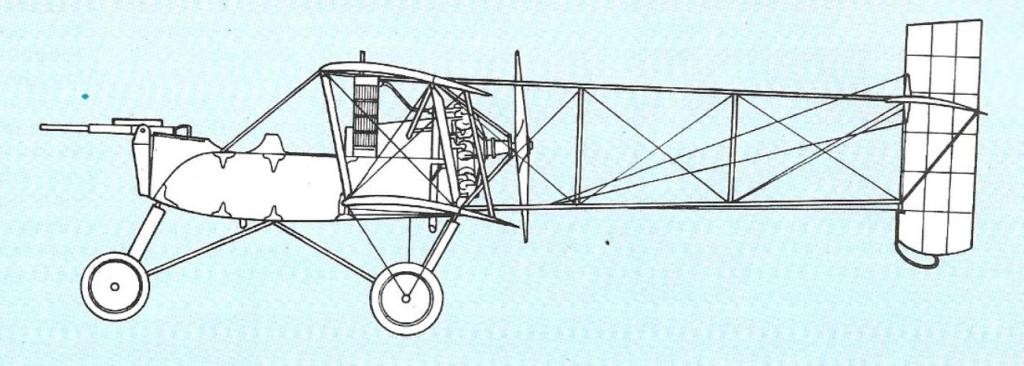
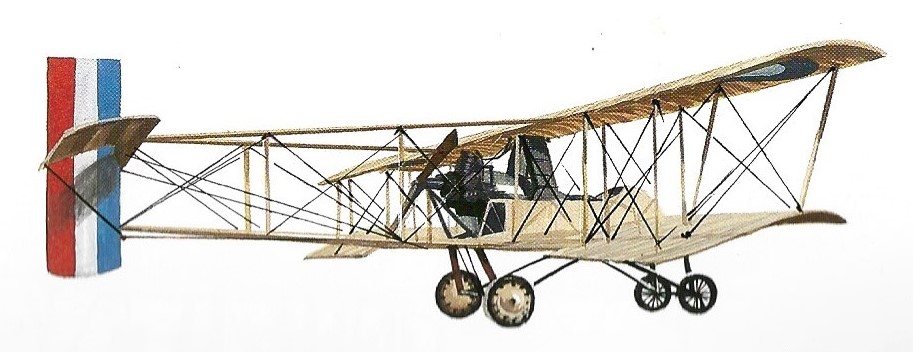
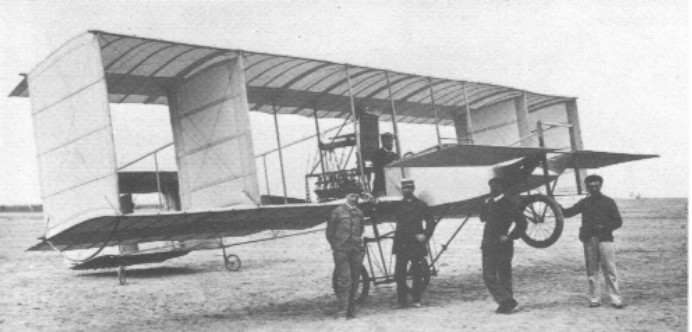
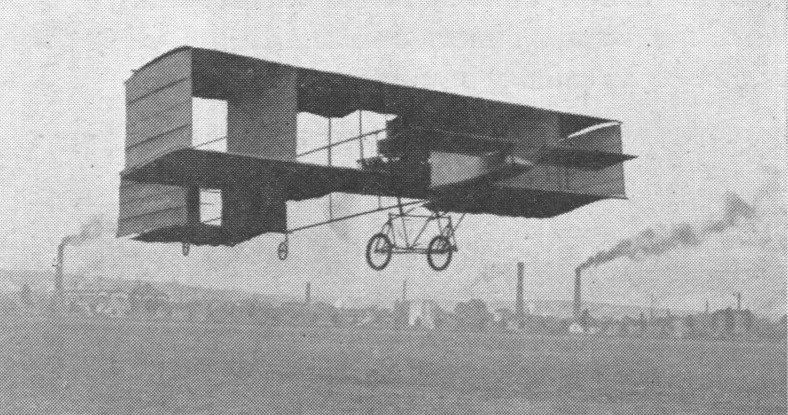
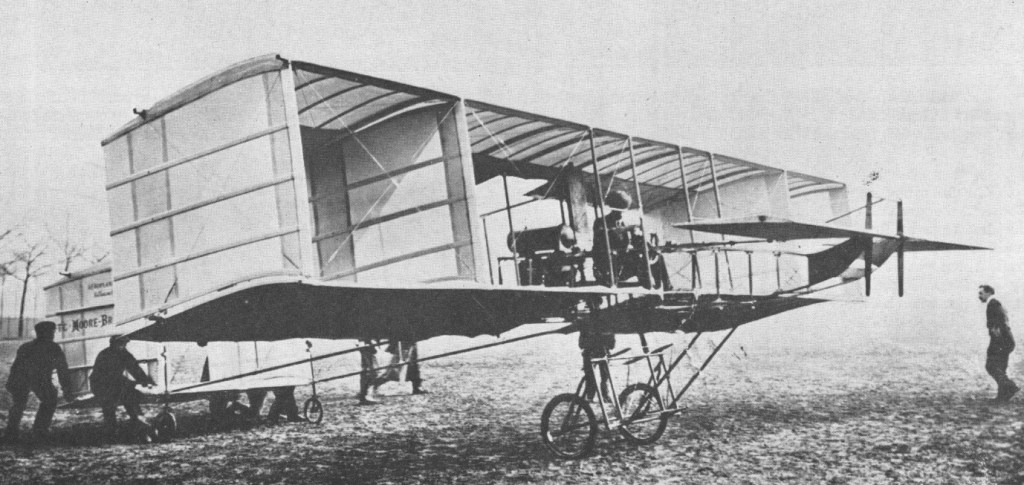
The Voisin Triplane was a large experimental bomber built by Voisin. The first model was designing and produced in 39 days, presentation in August 1915 before the French high military, and was fitted with four Salmson radial engines of 150 hp / 110 kW each. The four engines were mounted in tandem pairs in two nacelles on the centre wing. Not only did it have three wings, but also two fuselages, the upper one affording an air gunner a near 360-degree field of fire. Two gun positions were provided, one the nose and second behind the trailing edge of the wings, firing downwards through an aperture in the fuselage. The tail surfaces being supported between the fuselage and an upper boom attached to the centre section of the upper wing.
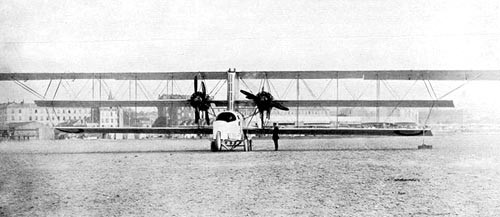
1915

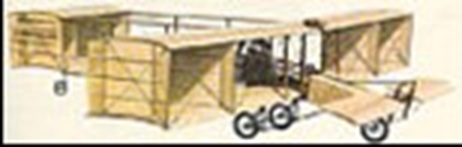
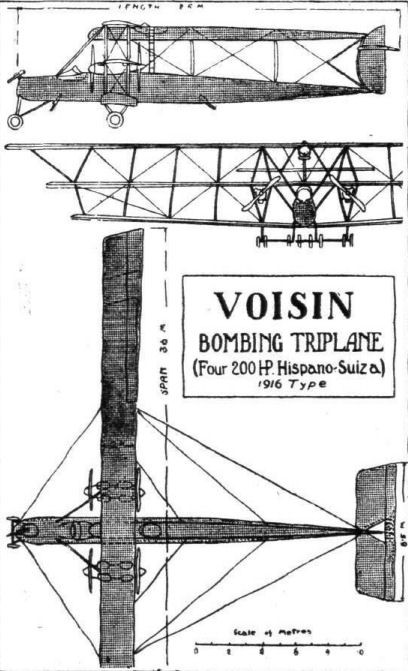
As this first machine did not come up to expectations on its trials, another machine was constructed in 1916, similar in general design, but embodying many modifications. This Triplane No.2 got the design study identification E.28. The 1916 version switched to four 200 hp (150 kW) Hispano Suiza engines, and a redesigned circular section fuselage. In both models the lower fuselage forms the main body, the upper fuselage being of much lighter construction and serving as an outrigger for the tail. The four Hispano-Suiza engines (220 h.p. each) are mounted in pairs in tandem, just below the middle plane in the 1916 model, on tubular V frames, extending from top to bottom planes. The engine mounting is additionally braced by diagonal struts from both upper and lower fuselages.
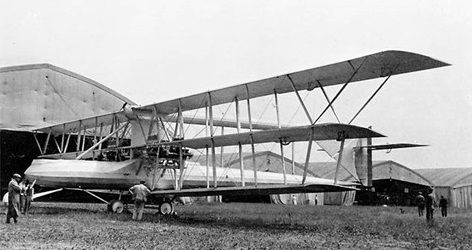
1916 version

This time construction proceeded far slower as the machine was finished in 1919 and first flown in 1920. The design obviously came too late for the war and was not ordered in production.

1916 version – E.28

1916 version
Engines: 4 × Hispano-Suiza V-8, 150 kW (200 hp)
Upper wingspan: 36 m (118 ft)
Wing area: 200 m2 (2,150 sq ft)
Chord: 6 ft. 6 in
Empty weight: 4,990 kg (11,000 lb)
Gross weight: 6,985 kg (15,400 lb)
Maximum speed: 127 km/h; 69 kn (79 mph) at 1981 metres (6500 ft)
Service ceiling: 3,505 m (11,500 ft)
Time to altitude: 27 minutes to 1981 m (6,500 ft)
Wing loading: 35 kg/m2 (7.1 lb/sq ft)
Crew: 3
Voisin L.A.5 / 8 / 10 / Avion Canon / Avion de Bombardement

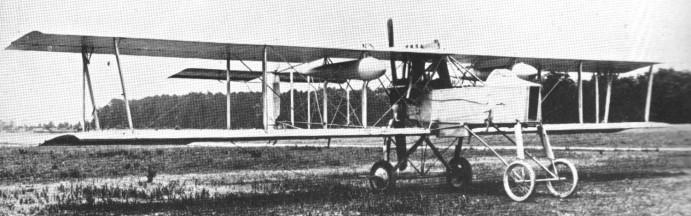
The 1915 Type L.A.5 B2 two-place observation-bomber was powered by a 140 hp Salmson Canton-Unne pusher engine. After 1917 the 5 B2 was relegated to training.

Voisin L.A.5 Type V First Aerial Dogfight

L.A.5 B2

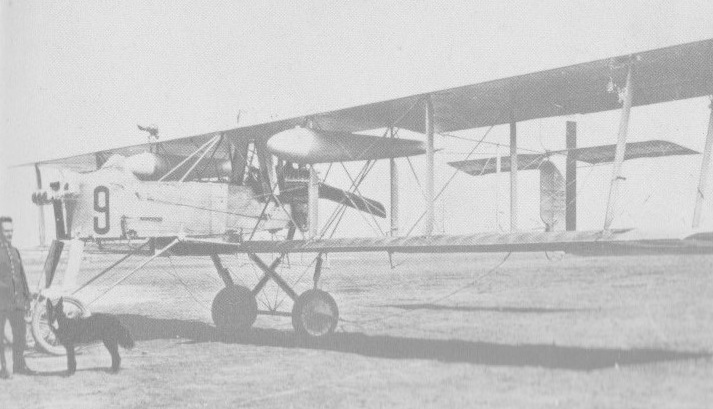
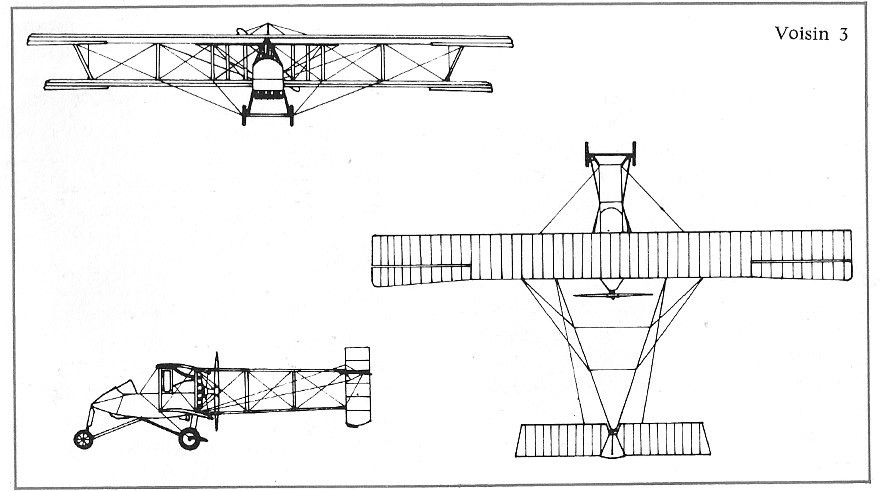
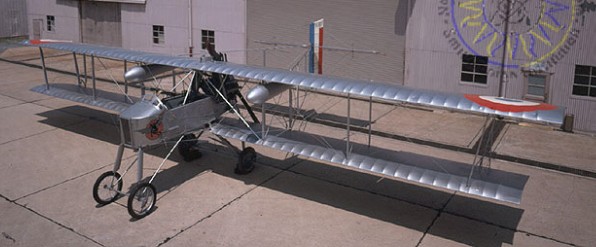
The Voisin Type 8 was specifically designed as a bomber and manufactured 1916-1918. A three bay biplane, the wings are of mixed steel and wood construction, with fabric covering, and four wheel undercarriage. The cockpit nacelle is steel framed. Ailerons are on all four wings and the tail unit, consisting of rudder and elevators only, are carried on open steel booms.

The Peugeot engine drives a two blade pusher propeller. Fuel is held in streamlined tanks under the top wing. One or two machine-guns are mounted in the front cockpit and up to 396 lb of bombs.

Voisin 8

When manufactured in February 1916, it was equipped as a night bomber, with internal bomb racks, cockpit lights, and provision for landing lights.

Continuous development, and the use of increasingly powerful engines, enabled it to remain in service throughout the war. The original version, the Type L, had a 70 hp Gnome engine and was unarmed.

The Voisin Type 8 entered service with French night bombing squadrons in November 1916.

Development was directed along two lines, producing night bomber and ‘Avion Canon’ versions. The latter mounting a 37mm or 47mm gun for use against ground targets.

Avion de Bombardement

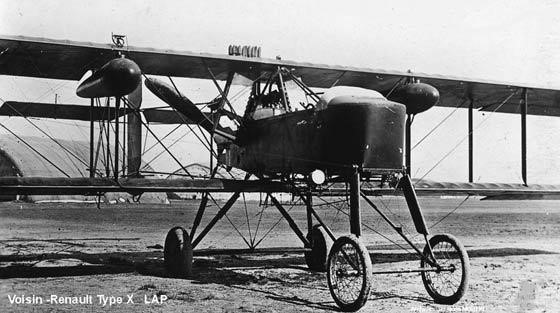
The final version was the Type 10, with a 300 hp Renault engine and bombload of 600 lb.

A total of 1100 were built, mainly for us as bombers.

Gallery

Type L
Engine: Gnome, 70 hp
Span: 55’9″

Voisin 5
Engine: Canton-Unne, 150 hp
Wingspan: 52 ft 4.5 in
Length: 31 ft 6.5 in
MTOW: 3240 lb
Speed: 74 mph
Ceiling: 1500 ft
Endurance: 3 hr 30 min
Crew: 2
Armament: 1 x mg
Bombload: 130 lb

LA.5 B2
Engine: 140 hp Salmson Canton-Unne
Wingspan: 48.35 ft
Length: 31.16 ft
Gross weight: 3080 lb
Speed: 62 mph

Voisin 5 LAS Canon
Engine: Salmson R9, 138 hp
Length: 31.824 ft / 9.7 m
Height: 9.514 ft / 2.9 m
Wingspan: 44.291 ft / 13.5 m
Wing area: 339.819 sqft / 31.570 sq.m
Max take off weight: 2513.7 lb / 1140.0 kg
Weight empty: 1719.9 lb / 780.0 kg
Payload: 793.8 lb / 360.0 kg
Max. speed: 65 kts / 120 km/h
Initial climb rate: 285.43 ft/min / 1.45 m/s
Service ceiling: 13123 ft / 4000 m
Wing load: 7.38 lbs/sq.ft / 36.00 kg/sq.m
Range: 216 nm / 400 km
Endurance: 4 h
Crew: 2

Voisin 8
Engine: Peugeot 8Aa, 220 hp
Wingspan: 18.0 m (59 ft)
Length: 10.4 m (34 ft)
Height: 4.0 m (13 ft)
Weight: Empty, 1,310 kg (2,888 lb)
Gross, 1860 kg (4,101 lb)
Airframe: Wood
Covering: Fabric
Seats: 2

Voisin 8
Engine: Peugeot 8Aa, 220 hp
Wingspan: 61 ft 8 in
Length: 36 ft 2 in
Height: 11 ft 6 in
Empty weight: 2893 lb
MTOW: 4103 lb
Max speed: 75 mph at 6000 ft
Service ceiling: 14,100 ft
Endurance: 4 hr

Type 10
Engine: 300 hp Renault
Bombload: 600 lb

Voisin 1912 Type / Type 1

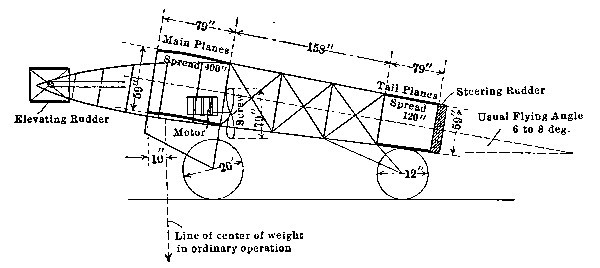
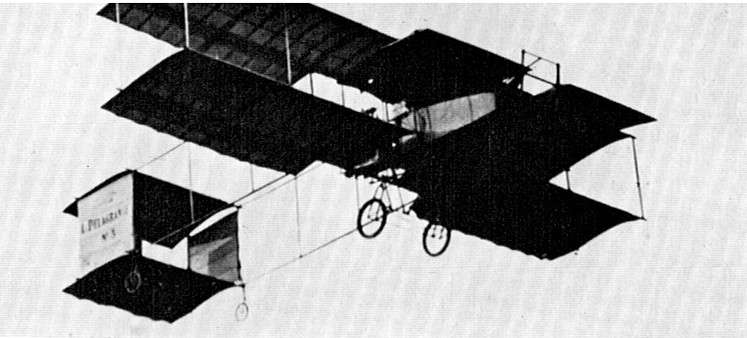
Two identical pusher biplane machines, with Antoinette engines, had been built by the Voisin brothers for two early aviation pioneers, one for Léon Delagrange in March 1907, and the second for his friend and rival the Anglo-French pioneer Henry Farman (1874-1958) in October 1907.

Gabriel and Charles Voisin were among Europe’s leading pioneer aviators. Their classic 1907 pusher biplane was one of the most significant aircraft of the pre-World War I era. In 1912, they developed a military version. Thereafter they built aircraft almost exclusively for military contracts.

The Voisin 1912 Type, as it was referred to by the French military, also called the Type 1, launched the standard configuration of almost all Voisin aircraft throughout the war. The Voisin design philosophy was conservative. There were only slight, incremental design changes in the airframes during the war. Improvements principally consisted of installing more powerful engines, usually necessitating wings of greater span.

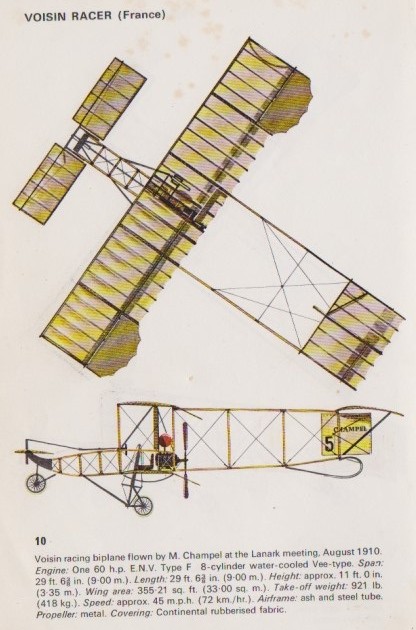
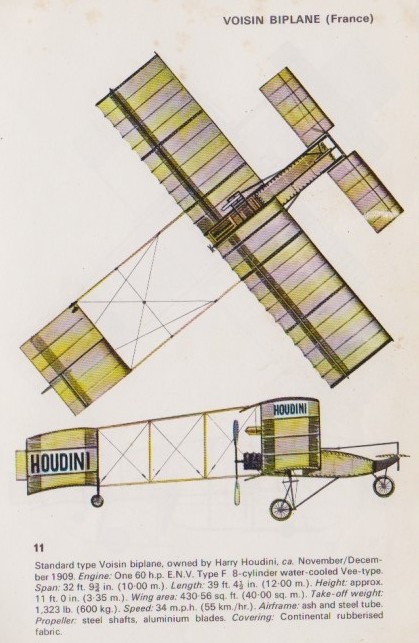
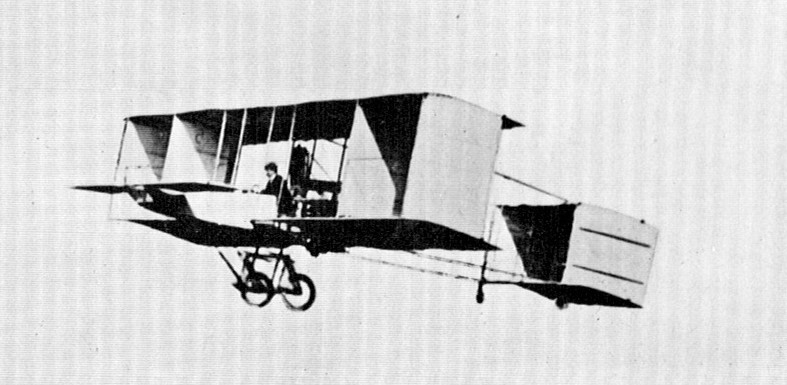
Voisin 1909 Biplane

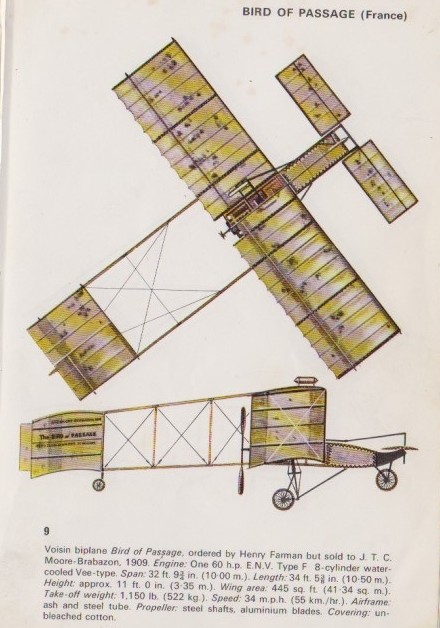
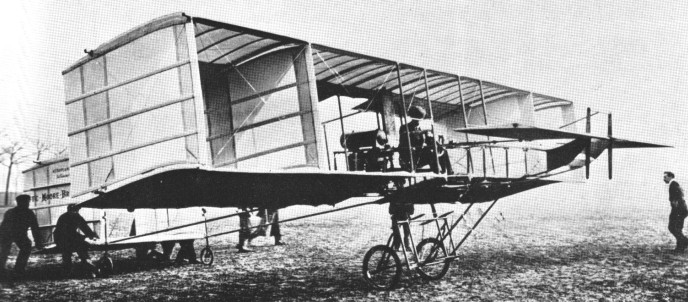
Voisin of the type used for the first officially recognised flight by a British pilot in Britain, which was made in April 1909 by J. T. C. Moore-Brabazon (later Lord Brabazon of Tara), flying his own Voisin named Bird of Passage.

J. T. C. Moore-Brabazon personal Voisin – ‘Bird of Paradise’ which on 2 May 1909 made him the first British pilot in Britain.

Gallery

Engine: One 50 h.p. Antoinette
Length 39 ft (12m)
Wing span 33 ft (10m)
Weight empty 1,100 lb (500 kg.)
Seats: 1.
Speed: 34 mph (55 kph)

Voisin 1907 Biplane / Voisin-50 Antoinette / HF 1

Gabriel and Charles Voisin were among Europe’s leading pioneer aviators. Their classic 1907 pusher biplane was one of the most significant aircraft of the pre-World War I era. In 1912, they developed a military version. Thereafter they built aircraft almost exclusively for military contracts.

In September 1907 it hopped but in October it managed some flights.

Henry Farman made the first circular flight of one kilometer, and attained a speed of about a mile a minute, in 1908. In 1909 he accomplished a trip of nearly 150 miles, remaining four hours in the air. Farman was probably the first man to ascend with two passengers.

Voisin-50 Antoinette of Henri Farman
September 30, 1907- Starting with a Voisin-50 Antoinette similar to that built for Delagrange, Farman was successful in flying 30-80m. at Issy, his first flight.
October 15, 1907 – 285m., unofficially beating the Santos Dumont record of 220m. Subsequent principal pioneer flights were made as follows;
October 19, 1907 – 100m.
October 23, 1907 – 185m. in 15.4 secs., winning the first of the 150m. prizes of the A.C.F. Five others, longest 150m.
October 24, 1907 – Three flights 100m. or more.
October 25, 1907 – Six flights up to 190m.
October 26, 1907 – 770m. in 52.6 secs., a new OFFICIAL WORLD RECORD FOR DURATION AND DISTANCE, winning the Archdeacon Cup held by Santos Dumont and money prize of the A.C.F. for the first official flights of 300 and 500m. Seven other flights up to 400m. Other flights up to 400m. made following days. He also established speed record of 52.7 k.p.h.
November 9, 1907 – Twice beat previous record by flying 800 and 400m. and beginning to circle.
November 10, 1907 – 1,036m. in 1:14, complete circle and some short flights, continuing on eleventh. THIRD MAN TO FLY A KILOMETER, and first in Europe.
November 11, 1907-January 11, 1908 – Flights with circles continued almost daily, up to 700m. On January 11, 1908, he covered 1,800m. in 1:45. In January 1908 Henry Farman made the first circular flight of 1 km in Europe, to win a prize of 50,000 francs. On 30 October 1908 he made the first cross-country flight, from Chalons to Rheims, a distance of 16½ miles.

The improved HF1bis flew 16 miles in 20 minutes

Span: 35’5″
Length: 44’2″
Take-off weight: 1200 lb

HF1bis
Span: 35’5″
Length: 44’2″
Take-off weight: 1200 lb
Speed: 38 mph

Voisin – Delagrange biplane

The 1907 Voisin – Delagrange No. 1 biplane France was designed and built by Les Freres Voisin.

The first machine built for Delagrange by the Voisins was a failure. The Voisin-Delagrange II first flew tentatively in 1908.

Voisin-Delagrange II

It was not until further modifications were made, in April 1908, now the Voisin-Delagrange III, began flying productively.

Voisin-Delagrange III

Gallery

Span: 36’2″
Length: 36’2″
Weight: 990 lb empty

Voisin 1905 Glider / Archdeacon

Gabriel Voisin began his formal aviation career in 1903 when he was engaged by a prominent French aeronautical promoter, Ernest Archdeacon, to build gliders for him.

June 8, 1905, over the Seine, Gabriel Voisin succeeds on a glider built with Ernest Archdeacon to fly 15 meters high and 150 m.

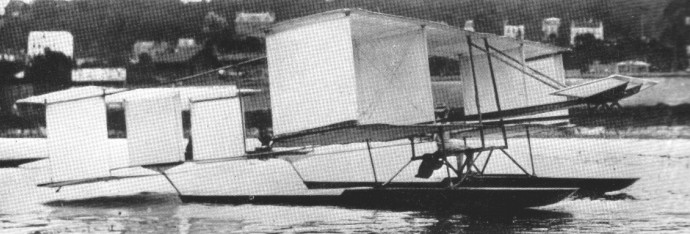
One of the gliders built by Gabriel Voisin in 1905 for towed flights behind a motor boat on the River Seine.

The Voisin-built Archdeacon glider was acquired and motorized as the Bellamy Hydroavion by French inventor Emile Bellamy in 1906.

Bellamy Hydroavion

Voilerie Soubeyrat Sylphe Bi

The Sylphe Bi is a two seat version of the Sylphe. The Bi can be used as a single seater without any modification. Flying controls are the same as a normal paraglider.

Empty weight: 100 kg
Wingspan: 11.75 m
Wing area: 40 sq.m
Fuel capacity: 30 lt
Engine: Rotax 503, 52 hp
Seats: 2
Max speed: 55 kph
Cruise speed: 40 kph
Min speed: 25 kph
ROC: 2.5 m/sec
Fuel burn: 15 lt/hr
Price (1998): 78 000 Fttc