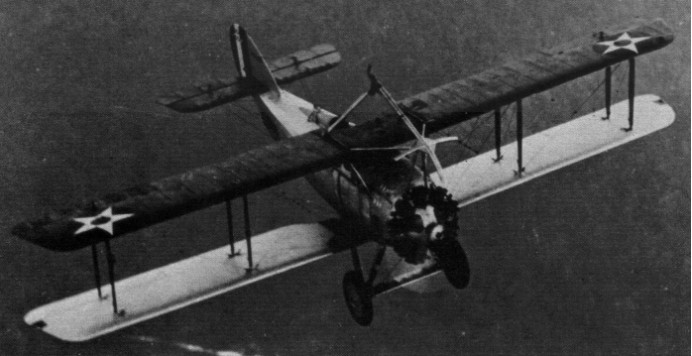
Vought UO Aztec

UO-1

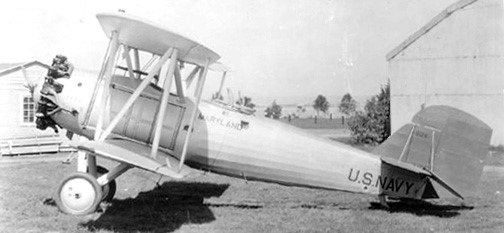
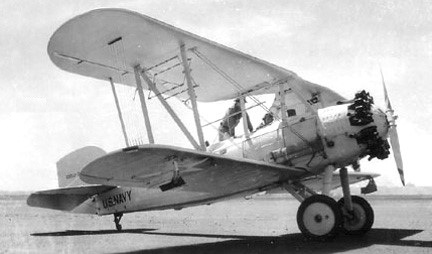
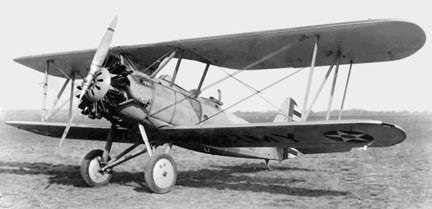
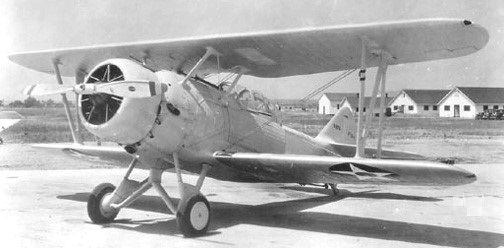
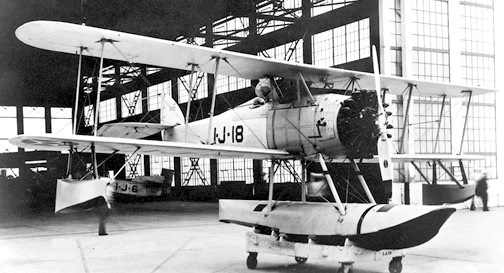
In 1922 the USN received eighteen UF-1 two-place scout-observation aircraft, A6482-6499, all re-designated to UO-1. One hundred and forty Vought UO-1 Aztec two seat biplane, were built from 1922, powered by 200hp Lawrance J-1 engines, as landplanes and seaplanes: A6482-6499 (converted from UF-1), A6546-6551, A6603-6615, A6706-6729, A6858-6877, A6984-7023, A7031-7050, of which one was converted by NAF to racer UO-2, and 13 to UO-5.
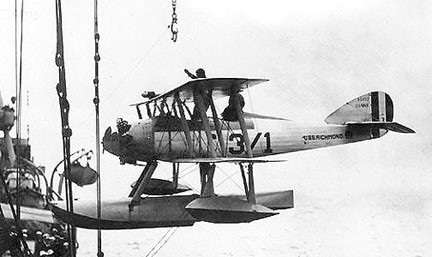
Vought UO-1 A-6493 hoisting aboard USS Richmond

The UO-1 model was used in trials as hook-on scout/fighters with airships.
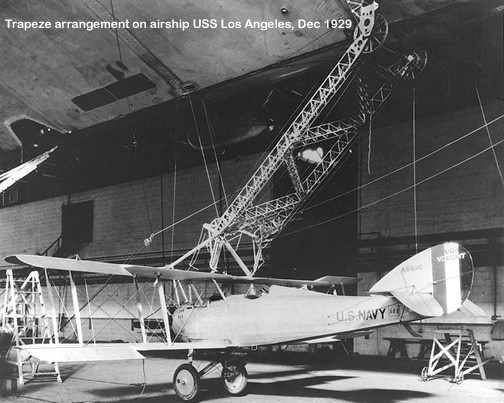
Vought UO-1 ‘Skyhook’ A-6615

The two 1928 UO-1C (A7007 and one other) were a wheeled trainer version for USN Reserve. Possibly other conversions as the designation was also used for planes modified for catapult launching, regardless of floats or wheels.
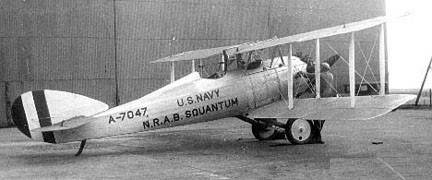
Vought UO-1 A-7047
Vought UO-1 Cockpit

In 1922 NAF modified, wheeled UO-1 A6546 for 1922 Curtiss Marine Trophy competition. It was damaged in ground handling and did not race.

The UO-3 was re-designated as FU-1.

Two UO-4 were built in 1935 for the USCG with a single float; 404=V104, 405=V105.
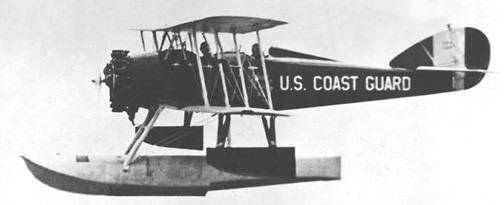
Vought UO-4

The UO-5 were modification of UO-1 with 220hp Wright R-790 engines. Thirteen were built; A6729, A6860, A6866, A6988, A6997, A6999, A7005, A7010-7012, A7016, A7035, and A7038.

UF-1
Engine: 220hp Lawrance J-1
Wingspan: 26’0″
Length: 20’1″
Speed: 132 mph
Ceiling: 21,700′
Seats: 2

UO-1
Engine: 200hp Lawrance J-1
Wingspan: 34’1″ length: (landplane) 22’1″ (seaplane) 28’6″
Speed: 122 mph
Ceiling: (landplane) 18,200′ (seaplane) 16,550′

UO-5
Engine: 220hp Wright R-790.
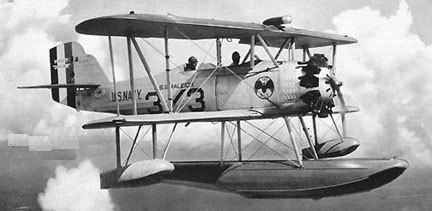
Vought O2U Corsair / XO-28 / O24-2 / Talleres Nacionales De Construcciones Aeronauticas Corsarios Azcarate O2U­-2M

Vought O2U-1 A-7536

A carrier-borne reconnaissance seaplane of circa 1930. The O2U Corsair USN scout was on a single-float or wheels.

Vought O2U-1 Corsair Article

One-hundred and thirty-two of the 1927 O2U-1 were built (A7221-7222, A7567-7586, A7796-7831, and A7900-7940).

The 1927 O2U-2 was priced at $12,890 and thirty-seven were built (A8091-8127) of which six went to the USMC.

Vought O2U-2

Eighty of the 1929 O2U-3 were built (A8193-8272), including one to the Army as XO-28.

Vought O2U-3

Forty-two of the 1930 O2U-4 were built (A8315-8356) priced at $17,203-18,065.

Vought O2U-4 A-8338

Corsarios Azcarate were Mexican licence built Vought O2U¬-2M.

One USN O2U was used for evaluation by the Army in 1929, 29-323, as the O-28 Corsair.

Vought XO-28 29-232

The O24-2 was a civil version of the O2U-1 Corsair. In 1928 one was civil licensed for F B Rentschler, pres of Pratt & Whitney Corp, NX7014. Some other ex-military noted were N61E, N111N, N367H, and N833H.

Gallery

O2U Corsair
Engine: 450hp P&W R-1340B
Wing span: 34’6″ Length: 24’6″
Speed: (float) 147 (wheels) 150
Ceiling: (float) 17,750′ (wheels) 18,700′
Seats: 2

O24-2
Engine: 450hp P&W Wasp
Wingspan: 36’0″
Length: 29’8″
Speed: 137 mph
Seats: 2

Vought FU-1 / FU-2

Vought FU-1 A-7372 Floatplane

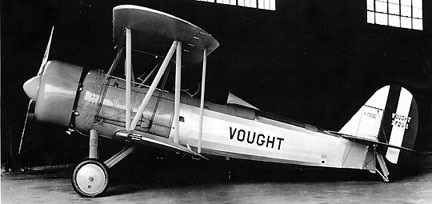
In January 1927 the Chance Vought company produced a single seat fighter version of its mass produced VO 1 shipboard observation aircraft. A two bay biplane, the VO 1 was not entirely suitable as the basis for a competitive fighter, and with only the same engine as before, the 200 hp Wright R 1790 Whirlwind, performance was inadequate. Nevertheless, 20 FU 1 fighters were converted from UO-3 for the US Navy, most of them being central float seaplanes (at least two were fitted with wheels for airfield use).

Despite being pleasant to fly, the FU was really only suitable for training. In their first year, ending in the winter 1928 29, the FU 1s equipped fighter squadron VF 2B aboard the carrier Langley. Thereafter the 18 that survived were converted into FU 2 trainers, still with a fixed Marlin machine gun. They remained in use as trainers and general-purpose aircraft into the 1930s.

Equipped for catapult launch, they were the last fighter so equipped.

FU
Engine: 220hp Wright J-5 (supercharged R-1790)
Span: 10.46 m (34 ft 4 in)
Length: 7.44 m (24 ft 5 in)
Gross weight: 1093 kg (2400 lb)
Useful load: 694 lb
Maximum speed: 236 km/h (147 mph)
Stall: 53 mph
Range: 430 mi
Seats: 1-2

Vought VO-1

In January 1927 the Chance Vought company produced a single seat fighter version of its mass produced VO 1 shipboard observation aircraft. A two bay biplane, the VO 1 was not entirely suitable as the basis for a competitive fighter, and with only the same engine as before, the 200 hp Wright R 1790 Whirlwind, performance was inadequate. Nevertheless, 20 FU 1 fighters were built for the US Navy.

Vortech CW-105F

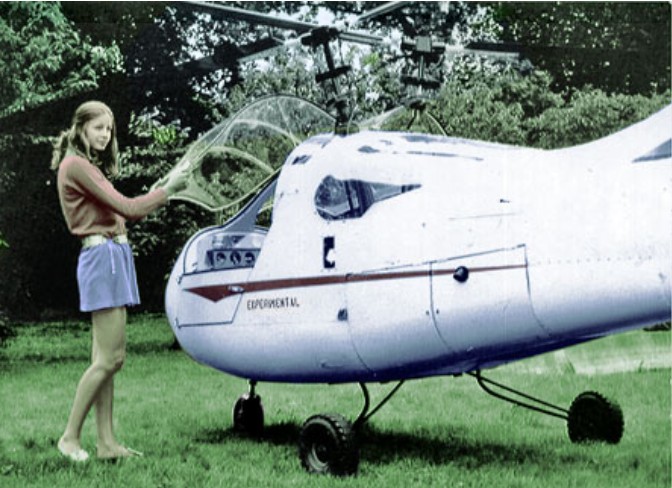
The CW-105F was designed, built and first flown in Europe. The prototype used a Continental C90-12F engine.
It has Lamborghini-style doors and an intermeshing twin-rotor system. The CW-105F is a true helicopter and will take off and land vertically, hover and fly forward, backward and sideward. It’s counterrotating dual rotor system cancels torque, eliminating the need for a tail rotor. The rotor system provides both cyclic and collective control. The CW-105F has been designed to carry 2 people.
The package consists of the huge set of blueprints, with 76 separate “Plans” (construction drawings), a complete Parts List, and photos. Every aspect of the CW-105F’s construction is detailed, including the rotor head and hub, the aluminum rotor blades, the control system, the airframe, engine mount, pilot/passenger compartment, exterior skin, and so on.

CW-105
Length: 16 ft 6 in
Height: 7 ft
Width: 4 ft
Empty Weigh: 520 lbs
Gross Weight: 1,100 lbs
Useful Payload: 580 lbs
Rotor Diameter: 23 ft (per set)
Chord: 6 in
Engine: Lycoming O-235 to O-360
Maximum Speed: 75 mph
Cruise Speed: 60 mph
Rate of Climb: 900 fpm
Range: 225 miles
Service Ceiling: 11,000 ft

Vortech Kestrel

The Kestrel is a single-seat ultralight helicopter powered by small jet engines mounted on the tips of the rotorblades. This form of power eliminates the need for a tail rotor, simplifying and reducing the cost of construction.
If ordered separately, the jet-helicopter construction package is available for $23.95 (+$3 postage US, $8 foreign). This package includes the Vortech Catalog. The Kestrel was available as a kit, in 2001.

Length: 12 ft
Height: 7 ft
Empty wt: 180 lbs
Gross wt: 440 lbs
Payload (max) 260 lbs
Engines (2): G8-2-20 jets
Fuel: propane
Fuel consump: 12+ USgal/hr
Rotor dia: 25 ft
Speed (max): 95 mph (63 as ultralight)
Altitude (max): 12,500 ft