Waco 6

The Waco team continued to assemble airplanes from parts salvaged from surplus World War I Curtiss Jennys, continuously tinkering with their designs and making improvements.

Used many Curtiss JN-4 parts with new interchangeable wing panels and powered by a 90 hp (67 kW) Curtiss OX-5.

The first Troy-built model, the WACO 6, was soon being marketed and four were built
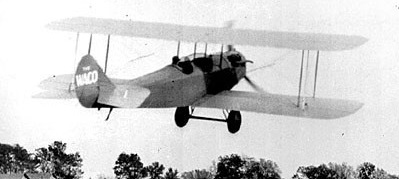
Engine: 90hp Curtiss OX-5
Wingspan: 30’0″
Length: 24’0″
Useful load: 750 lb
Max speed: 88 mph
Stall: 32 mph
Seats: 3
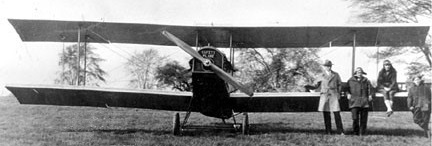
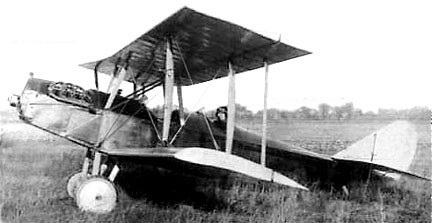
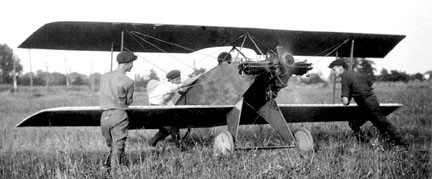
Waco 5

The Waco team continued to assemble airplanes from parts salvaged from surplus World War I Curtiss Jennys, continuously tinkering with their designs and making improvements.

The 1921 Weaver 5 three place open cockpit biplane used many Curtiss JN-4 parts with new interchangeable wing panels and powered by a 90 hp (67 kW) Curtiss OX-5.

Eventually, they sold two WACO 5 biplanes, conversions of JN-4C Canucks, two with 150hp Hisso A engines. Selling for $1,500-2,000, the final one was built at Advance Co in 1923.

Engine: 90h Curtiss OX-5
Wingspan: 37’0″ / 33’0″
Length: 25’3″ / 23’0″
Useul load: 750 lb
Max speed: 80 mph
Stall: 30 mph
Seats: 3

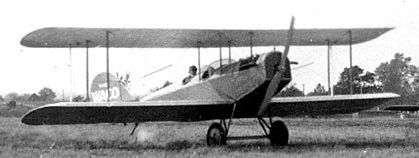
Waco 4 / Weaver 4

The WACO partners persevered, designing a practical three-seat biplane, the WACO 4, and building it out of parts left over from the Cootie and other biplane efforts. The team continued to assemble airplanes from parts salvaged from surplus World War I Curtiss Jennys, continuously tinkering with their designs and making improvements.

The 1921 Weaver 4 used many Curtiss JN-4 parts with new interchangeable wing panels and powered by a 90 hp (67 kW) Curtiss OX-5.

Selling for $4,000, the model 4 was the company’s first public sale and the last of the all-wood Wacos.

One appearing in early registers as Waco 4 (NABCW) was actually a modified Hisso-Curtiss JN-4 Canuck with Brukner “high-lift” wings.

Engine: 90hp Curtiss OX-5
Wingspan: 28’0″
Length: 23’0″
Useful load: 890 lb
Max speed: 84 mph
Stall: 33 mph
Seats: 3-4

Waco 2 Cootie Biplane

The Weaver 2 Cootie Biplane of 1920 was a single place open cockpit biplane rebuild of the Cootie #1 with a larger tail area and a beefed-up landing gear.

First flown on 14 June 1920, piloted by G Weaver, it eventually crashed in April 1923 having cost $1,500.

A 30hp hydroplane version was begun, but never completed because of funding problems.

Empty weight: approx 340 lb
Speed: 62 mph

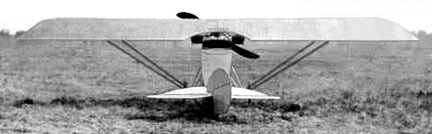
Waco Cootie

Bruckner and Junkin actually began designing aircraft in 1919 with a flawed plan for a floating airplane that never flew. Meyers, too, had already designed an aircraft with Weaver and the pair approached Bruckner and Junkin, asking them to join their construction efforts on a parasol wing, plywood fuselage, single-seat monoplane named the “Cootie.”

Costing $1,200, unfortunately, Weaver crash-landed the Cootie during its first flight attempt in 1920 and suffered extensive injuries in the crash. It was rebuilt.

Engine: 28hp Lawrance
Wingspan: 22’0″
Length: 16’0″
Useful load: 200 lb
Max speed: 65 mph
Stall: 35 mph
Seats: 1

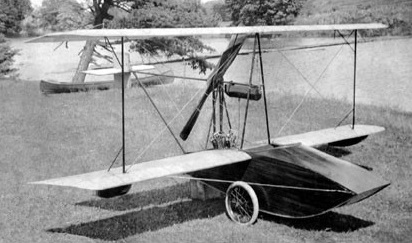
Waco 1 / Baby Flying Boat / DJB Air Boat

The “Model 1” designation was more symbolic as the ship was built before there was a Waco Company. Designed by Elwood J Junkin and Clayton J Brukner, the 1919 Baby Flying Boat had a mahogany veneer hull, demountable wheels for beaching, and a 6′ propeller.

Notably underpowered, with motor vibrations shaking the craft to an alarming degree, it would not unstick from the Lake Erie, so was retired to its room above a dance hall in Lorain OH, and none of the principals recalls its ultimate fate.

This effort led to the formation of DJB Aeroplane Co which was basis for Weaver Co the following year.

Engine: 15hp Hendee
Wingspan: 18’0″
Seats: 1

Wabash WA-250X

A 1928 five place low wing cabin monoplane powered by a 260hp Salmson “superposed radial”. First flown on 20 April 1928 as NC5246 c/n 51-C, the aircraft was put into storage in Oct 1920 at (Frank) O’Neal Aircraft Co, Vincennes IN, USA.

It was then acquired by O’Neal in a court sale on 2 October 1933 to satisfy a storage bill. It was sold on 15 October 1934 to Peter Soderling Jr, of Petersburg IN, who installed a 360hp Salmson and converted it to three place. The CAA cancelled the registration on 15 November 1937.

Only the one was ever built.

Wing span: 39’0″
Length: 27’5″

Vultee V-76

The 1941 Vultee-Stinson V-76 NX27772 was a modified Stinson 105 with a 185hp Lycoming O-435 engine. Designed by A P Fontaine, it was first flown on 28 June 1941, piloted by Al Schramm, it was equipped with full-span slots, which created a problem during testing with near-fatal results.

With modification to half-span slots and enlarged tail surfaces it became final prototype for the Stinson L-5.