AEG ZK.9 / C.I

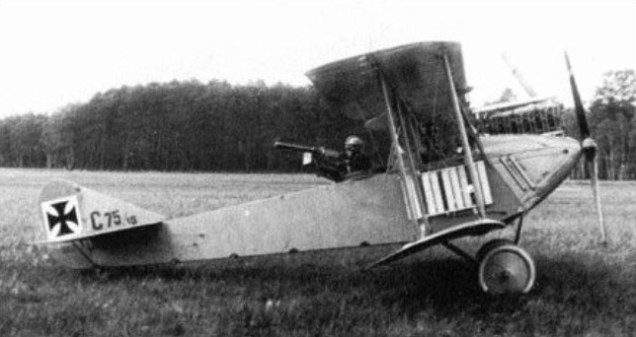
Introduced in March 1915, as the AEG C.1, the ZK.9 designed by Georg König was a minor development of the B.II with a more powerful Benz Bz.III engine and the observer relocated to the rear cockpit. The rear cockpit being fitted with a Schneider Drehring gun mount and a 0.312in (7.92mm) MG 14 Parabellum trainable machine gun for defence of the rear and sides.

Engine: 1 x Benz Bz.III, 150hp
Wingspan: 15.00 m / 49 ft 3 in
Length: 9.00 m / 30 ft 6 in
Height: 3.50 m / 12 ft 6 in
Wing area: 41.50 sq.m / 446.70 sq ft
Empty weight: 650 kg / 1433 lb
Max. speed: 140 km/h / 87 mph
Cruise speed: 120 km/h / 75 mph
Ceiling: 4800 m / 15750 ft
Range: 480 km / 298 miles
Armament: 1 x 7.92mm

AEG Z.9 / B.II

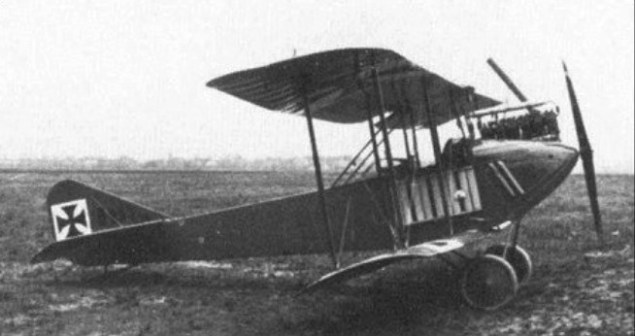
Designed by Georg König the 1914 Z.9 (military B.II) of 1914 was an improved version of the Z.6 (military B.1). A two bay biplane of smaller wingspan, the Z.9 was powered by the Mercedes D.II engine of 120 hp and saw limited war service.

Engine: 1 x Mercedes D.II, 120hp
Wingspan: 15.50 m / 51 ft 10 in
Length: 10.50 m / 34 ft 5 in
Height: 3.15 m / 10 ft 4 in
Wing area: 40.12 sq.m / 431.85 sq ft
Empty weight: 723 kg / 1594 lb
Max. speed: 110 km/h / 68 mph
Cruise speed: 96 km/h / 60 mph
Ceiling: 3000 m / 9850 ft
Range: 1130 km / 702 miles
Crew: 2

AEG Z.6 / B.I

Designed by Georg König, the Z.6 three-bay biplane of unequal span became the company’s first mass production type, serving with the military from 1914 as the B.1, an unarmed two-seat reconnaissance aircraft.
Almost the entire structure was of welded steel tube, the wings each having two tubular steel spars with wooden ribs covered in fabric. The tailskid featured a nosewheel unit mounted beneath the engine to protect the propeller if the aircraft nosed over. Large radiators for the engine were mounted on each side of the fuselage.

Type: Reconnaissance biplane.
Engine: Mercedes D.I inline, 100 hp.
Wingspan: 50 ft 10.25 in / 15.5 m
Length: 34 ft 5 3/8 in / 10.5 m
Wing area: 473.6 sq.ft / 44 sq.m
Empty wt: 1433 lb / 650 kg
Max speed: 62 mph / 100 kph
Seats: 2

AEG Wright Type

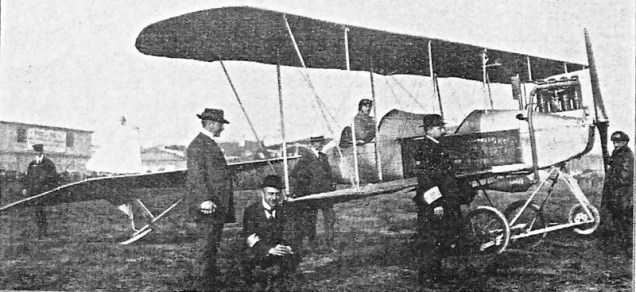
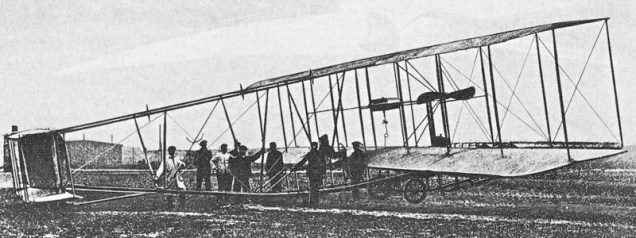
The first aircraft in 1912 was of wooden construction and modeled after the biplane of the Wright brothers. It had a wingspan of 17.5 m, powered by an eight-cylinder engine producing 75 hp; unladen weight was 850 kg and could attain a speed of 65 km / h.

Engine: 1 x 8-cylinder, 75 hp
Wingspan: 17.5 m
Empty weight: 850 kg
Max speed: 65 km / h.

AEG Z.1

The Allgemeine Elektrizitäts-Gesellschaft decided in 1910 to start an aeroplane department (Abteilung Flugzeugbau) at Berlin-Hennigsdorf. At the beginning they had no knowledge of design and production methods for aircraft, so as other firms they started with analyzing a proven machine. They chose a Wright biplane. After analyzing it they realized the limitations of building aircraft in wood. To gain experience in designing and building metal machines they decided in 1910 to start with a research machine which was the responsibility of chief designer Oberingenieur Paul Stumpf. The design was an open-fuselage all-metal tube construction of large dimensions, with a span of 17.5 m. It was a single-seater, with the pilot placed in the open aft of the wings. In front of the wings a small platform construction held the 75 hp Körting engine, which drove a tractor propeller mounted in the middle of the wings via a chain. The factory identification was Z. 1, with Z for Zweidecker (Biplane).

Span: 57’5″
Weight empty: 1870 lbs
Speed: 40 mph

Adventure Air Adventurer

The Adventurer 333 first flew in 1996.

An Adventurer amphibian crashed on the way home from Oshkosh. The wing and tail had separated in flight and the FAA stated they would not permit the aircraft to fly and Avemco Insurance refused to insure the airplane until there had been a structural analysis done. Most of the kit owners put up $500 each, and Martin Hollmann was commissioned to do the finite stress and flutter element analysis. The final result was that Hollmann recommended a number of changes to the basic design and since that time no further accidents occured.

Adventurer 2+2
Engine: Lycoming IO-360, 200 hp.
HP range: 150-235.
Speed max: 150 mph.
Cruise: 127 mph.
Range: 850 sm.
Stall: 57 mph.
ROC: 763 fpm.
Take-off dist: 700 ft (1000 ft water).
Landing dist: 600 ft (600 ft water).
Service ceiling: 15,000 ft.
Fuel cap: 60 USG.
Weight empty: 1750 lb.
Gross: 3000 lb.
Height: 8.5 ft.
Length: 24 ft.
Wing span: 35.85 ft.
Wing area: 179 sq.ft.
Seats: 4.
Landing gear: retractable tail or nose wheel.
Optional Ford V6 3.8 lt engine, 220 hp

Adventurer 4 place
Engine: Lycoming IO-360, 200 hp.
HP range: 200-235.
Speed max: 150 mph.
Cruise: 127 mph.
Range: 850 sm.
Stall: 57 mph.
ROC: 763 fpm.
Take-off dist: 700 ft (1000 ft wter).
Landing dist: 600 ft (600 ft water).
Service ceiling: 15,000 ft.
Fuel cap: 60 USG.
Weight empty: 1750 lb.
Gross: 3000 lb .
Height: 8.5 ft.
Length: 24 ft.
Wing span: 35.85 ft.
Wing area: 179 sq.ft.
Seats: 4.
Landing gear: retractable tail or nose wheel.
Optional Ford V6 3.8 lt engine, 220 hp.

Adventurer 333
Engine: Chev 5.7 lt, 333 hp.
Speed max: 158 mph.
Cruise: 140 mph.
Range: 2700 sm.
Stall: 61 mph.
ROC: 1200 fpm.
Take-off dist: 600 ft (800 ft water).
Landing dist: 700 ft (800 ft water).
Service ceiling: 18,000 ft.
Fuel cap: 60-120 USG.
Weight empty: 2000 lb.
Gross: 3300 lb.
Height: 8.5 ft.
Length: 24.5 ft.
Wing span: 35.83 ft.
Wing area: 179 sq.ft.
Landing gear: retractable tail or nose wheel.
Seats: 4.

Super Adventurer
Engine: Continental IO-360, 210 hp.
HP range: 200-235.
Speed max: 150 mph.
Cruise: 130 mph.
Range: 1200 sm.
Stall: 57 mph.
ROC: 870 fpm.
Take-off dist: 700 ft (1000 ft water).
Landing dist: 600 ft (600 ft water).
Service ceiling: 15,000 ft.
Fuel cap: 60 USG.
Weight empty: 1800 lb.
Gross: 3000 lb.
Height: 8.5 ft.
Length: 24 ft.
Wing span: 35.85 ft.
Wing area: 179 sq.ft.
Seats: 2/4.
Landing gear: retractable nose or tail wheel.