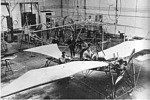
The Macchi M.5 was Italy’s first flying-boat fighter and first single-seat aircraft. A total of 244 M.5s were built, equipping five Italian maritime patrol squadrons from early 1918 until after the Armistice. The M.5mod was equipped with a 250hp engine.
Replica: Petroelje Macchi M.5
Macchi M.5mod Engine: 1 x 250hp Isotta-Fraschini V6B liquid-cooled Take-off weight: 1080 kg / 2381 lb Wingspan: 9.95 m / 32 ft 8 in Length: 8.10 m / 26 ft 7 in Height: 2.95 m / 9 ft 8 in Max. speed: 209 km/h / 130 mph Ceiling: 5000 m / 16400 ft Climb to 4000m: 20 min Armament: 2 x 7.7mm mg Crew: 1
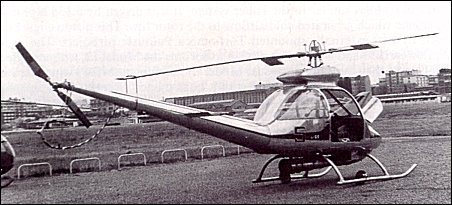
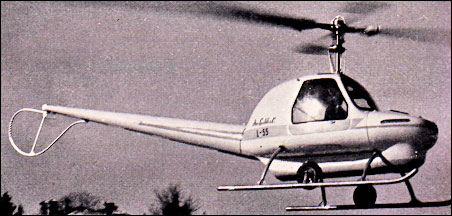
The L.57 flight testing has proved so satisfactory that it forms the basis for the fully-developed L.59, with more powerful engine and metal rotor blades. The L-59 had more extensive cockpit transparencies and a 260hp Continental IO-470-D engine. A four-seat light general-purpose helicopter with a two-blade main rotor of metal construction, built by Parsons and of the type fitted to the Hiller UH-12C helicopter. Cyclic pitch control is of Hiller “Rotor-Matic” type with Lualdi gyro-stabilizer. The L.59 has a two-blade reinforced plastic tail rotor. The all-metal fuselage has four seats in two pairs, with dual controls for the front pair, and car-type door on each side. The undercarriage was of two tubular metal skids with upturned forward ends and wheels for ground handling (stored under the boom, forward of the tail rotor).
The nose mounted engine exhausted through a central exhaust under the fuselage, between the skids. Fuel was in a pair of tanks mounted side-by-side above the cabin on each side of the rotor pylon on pylons. Provision was made for the addition of a rescue hoist and carriage of two litters.
Two L.59 prototypes were constructed by Macchi at Varese with technical assistance from Sud Aviation. A test flight programme was flown from 1960 and the commercial type certificate was issued in August 1961 but the programme was terminated as more capable helicopters had become available. The first prototype (I-GOGO – later MM576) was bought by the Italian army’s air corps for evaluation as an observation platform and was later transferred to a museum.
L-59 Engine: Continental IO-470-D, 260 hp Main rotor dia: 34 ft 9.5 in / 10.6m Fuselage length: 29 ft 9.5 in / 9.08 m Height: 9 ft 10 in / 3m Main rotor disc area: 949.92 sq.ft / 88.25 sq.m Tail rotor dia: 1.70m Payload: 380kg Empty weight: 1631 lb / 740 kg MTOW: 2646 lb / 1200 kg Max speed: 99 mph / 160 kph Cruise speed: 86 mph / 139 kph Initial ROC: 820 fpm / 250 m/min Absolute ceiling: 19,355 ft / 5900 m HIGE: 9515 ft / 2900 m HOGE: 5575 ft / 1700 m Endurance: 3 hr 30 min Fuel capacity: 110kg Seats: 4 Skid track: 2.40m.
Following on from the L.55, Lualdi developed the L.57 with a larger diameter main rotor, glass-reinforced tail rotor, and operational improvements including provision of an autopilot. Flight testing proved so satisfactory that it forms the basis for the fully-developed L.59.
Aer Lualdi were appointed agents and licencees for Hiller in Italy, and the rotor system pioneered with the ES 53 became a feature of each of their subsequent designs. The first of these was the all-metal L.55, which introduced a fully-streamlined fuselage with stressed-skin tailboom and was powered by a 180hp Lycoming engine mounted in the nose and driving a rotor pylon which was carried in a housing in the centre of the cabin. Experience with the L.55 prototype led to construction of an improved model, designated the L.57.
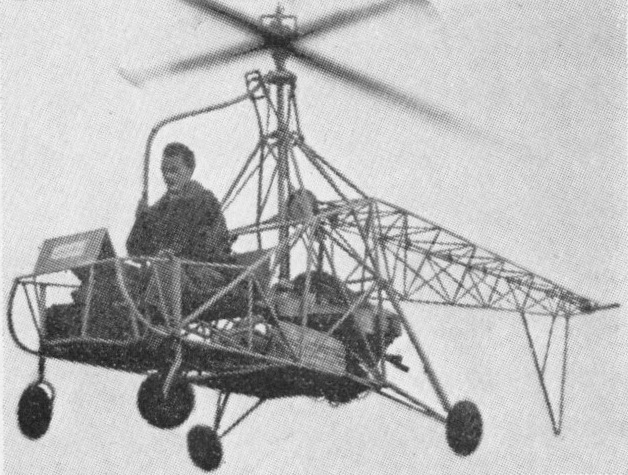
Aer Lualdi flew its first experimental helicopter, designated the ES 53, at Campoformido in September 1953, powered by an 85hp Continental engine. The ES 53 incorporated the “Rotor-Matic” rotor system designed by Hiller Aircraft Corp. supplemented by a Lualdi gyroscopic system which was claimed to ensure smoother flight and easier handling qualities. Subsequently, Lualdi were appointed agents and licencees for Hiller in Italy, and the rotor system pioneered with the ES 53 has been a feature of each of their subsequent designs. The first of these was the L.55.
Engine: Continental, 85 hp Rotors: 2 x 2-blade co-axial Rotor diameter: 24 ft Cruising speed: 75 mph Seats: 1
This dedicated battlefield surveillance and forward air control aircraft was developed in the late 1960s as a joint venture by Aerfer (later Aeritalia) and Aermacchi. Developed with a new, narrower, low drag fuselage and the wings of the Lockheed AL.60, for which Aermacchi held a produc¬tion licence, the AM.3 featured a new fin. Two prototypes were built (I-AEAN and I-RAIC), designated MB-335As and the first (assembled by Aermacchi) flew on 12 May 1967, the Aerfer assembled second prototype flying on 12 August 1968. Evaluated by the Italian army, but no orders were received. An improved AM.3 was developed. The prototype (I-TAAA) powered by a Continental GTSIO-520-C of 340 hp but later fitted with a 340 hp Piaggio built Lycoming GSO-480-Bl B6 piston engine and seating two in tandem. This production standard was designated AM.3C and first flew in May 1967.
One of the AM.3 prototypes was briefly evaluated by the USAF, Army and USM, as part of their Pave-COIN requirement. The AM.3C featured lengthened outer wing panels (by 3 ft 2.5 in / 0.98m) raising the wing area by 14.21 sq.ft / 1.32 sq.m. The AM-3 wing is NACA 23016 at the root and NACA 4412 at the tip. The nose was lengthened and refined aerodynamically, fairing incorporated under the fuselage for attachment points for the wing struts and main undercarriage legs. The plexiglass windows were bulged for increased visibility. A third seat in the rear was removable to accommodate a stretcher or freight. Provision of a single NATO M-4A stores attachment rack under each wing assisted contracts being obtained from the South African Air Force for a total of 40 AM.3Cs, which were given the name Bosbok, and three for Rawanda. The South African aircraft were delivered between May 1972 and December 1974. Defence cuts forced their retirement by September 1992. Two were preserved and the remainder sold to civilian operators.
AM3C
AM.3C Engine: Lycoming GSO-480-B1B6, 340 hp Wing span: 41 ft 8 in (12.7m). Length: 28 ft 7.75in / 8.73m Height: 8 ft 11 in / 2.72m Wing area: 219.2 sq.ft / 20.26 sq.m Empty wt: 2381 lb / 1080 kg MTOW: 3748 lb / 1700 kg Max external bomb load: 750 lb / 340 kg Max speed: 173 mph / 278 khp @8000ft Max speed SL: 162 mph / 260 kph / 141 kt Cruise 75%:153 mph / 246 kph @ 8000 ft Stall: 48 mph / 77 kph Max ROC: 1378 fpm / 420 m/min Climb to 9850 ft: 7 min 30 sec Service ceiling: 27,560 ft / 8400m TO run: 279 ft / 85 m Range with res: 615 sm / 990 km Hard points: 2 Seats: 3. Cabin length: 8 ft 2 in / 2.50m Cabin max width: 2 ft 8 in / 0.81m Cabin max height: 5 ft 3 in / 1.60m
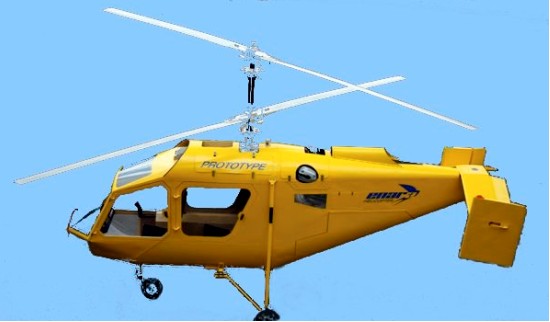
A two seater, piston engine helicopter with a fully articulated coaxial rotor system. First introduced on 1/1/2011, the price (2012) was US$130000.
Engine: Lycoming IO 233 LSA, 115 hp Rotor Diameter: 22.9 ft Number of rotor blades: 4 Number of tail rotor blades: 0 Length: 17.3 ft Height: 11.3 ft Fuselage width: 2.6 ft Gross Weight: 1320 lb Empty Weight: 860 lb Useful Load : 460 lb Max. Range: 466 mi Cruise Speed: 93 mph Maximum Speed: 105 mph Service Ceiling: 15000 ft Seats: 2