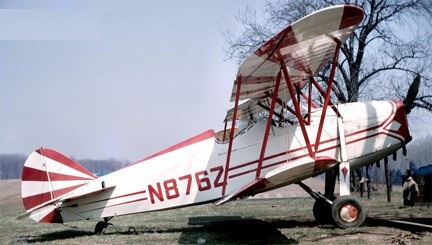
Wadsworth Flying Fish

In 1911, Detroit industrialist and boat tycoon Frederick Elliott Wadsworth built a hydro-aeroplane named the Flying Fish which debuted at the New York Boat Show. The vehicle was designed to skim on top of the water at speeds of up to 65 mph, with the ‘skipper-pilot’ seated in a wicker chair at the rear of its canoe-like hull. The Flying Fish was successfully tested on the ice of Lake St. Clair but no further development occurred.

Wacyk-Tyrala WT-1

Stanisław Wacyk and Tadeuz Tyrala designed the high performance sports WT-1 aircraft during 1930 and they largely financed the construction of its fuselage at the Aviation Circle of the Industrial School at Kraków and wings in the workshops of the Kraków Air Regiment. It was completed in the summer of 1931.

The aircraft was an aerodynamically clean cantilever wing monoplane. Its high-mounted, one piece wing was built around two spars, with a plywood covered leading edge and fabric covering. Narrow chord ailerons occupied the whole of the trailing edges.

The WT-1’s borrowed 67–73 kW (90–98 hp) de Havilland Gipsy I four cylinder upright inline engine was mounted largely exposed, though with a fairing behind it. The ply-covered fuselage had rounded decking; the fuel tank was in the forward fuselage and its two seat, side-by-side cockpit was behind the wing trailing edge. The fuselage tapered rearwards, with the tailplane mounted on top. A tall triangular fin carried a rounded rudder, which reached down to the keel. Its fixed landing gear was conventional, though details are not known.

An initial first flight was abandoned due to a fuel supply problem. The system was modified and a new fuel pump fitted, after which Stanisław Szubka piloted its first flight, finding the WT-1 hard to fly because of a misplaced centre of gravity (c.g.), and damaging it on landing. After accident repair and c.g. adjustment the WT-1 was flown by Jerzy Bajan. The take-off run was short and performance high, but Bajan found its handling dangerous. At this point the loaned Gipsy engine had to be returned to the Kraków Air Regiment and the development of the WT-1 was abandoned.

Engine: 1 × de Havilland Gipsy I, 67–73 kW (90–98 hp)
Propeller: 2-bladed Schwartz
Wingspan: 8.5 m (27 ft 11 in)
Wing area: 10 sq.m (110 sq ft)
Length: 6.2 m (20 ft 4 in)
Height: 2.0 m (6 ft 7 in)
Empty weight: 260 kg (573 lb)
Gross weight: 410 kg (904 lb)
Maximum speed: 210 km/h (130 mph; 113 kn)
Cruise speed: 180 km/h (112 mph; 97 kn)
Stall speed: 90 km/h (56 mph; 49 kn) minimum speed
Range: 700 km (435 mi; 378 nmi)
Service ceiling: 3,000 m (9,800 ft)
Rate of climb: 2.5 m/s (490 ft/min)
Crew: One
Capacity: One passenger

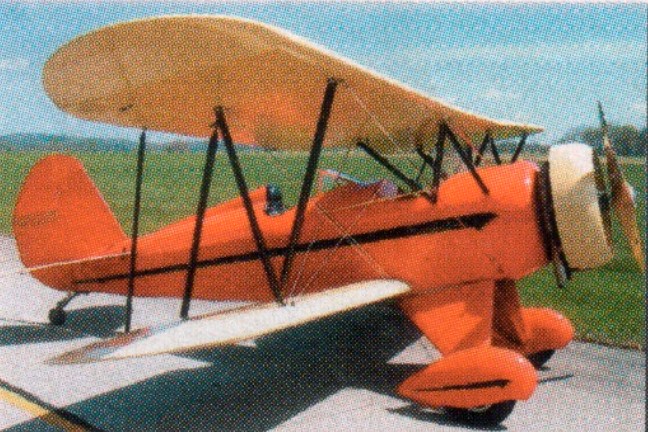
Waco Aircraft Company Ohio M-F

The Waco Aircraft Company Ohio produced the Waco M-F as a kit. The cost was US$79,500.

Engine: Jacobs R755, 275 hp
HP range: 220-340
Length: 22.6 ft
Wing span: 30 ft
Empty weight: 1600 lb
Gross weight: 2500 lb
Fuel capacity: 50 USG
Cruise: 120 mph
Stall: 48 mph
Range: 460 sm
Rate of climb: 1500 fpm
Takeoff dist: 350 ft
Landing dist: 500 ft
Seats: 3
Cockpit width: 26.5 in in
Landing gear: tailwheel

Waco Classic Aircraft YMF

Waco Classic Aircraft YMF-5D

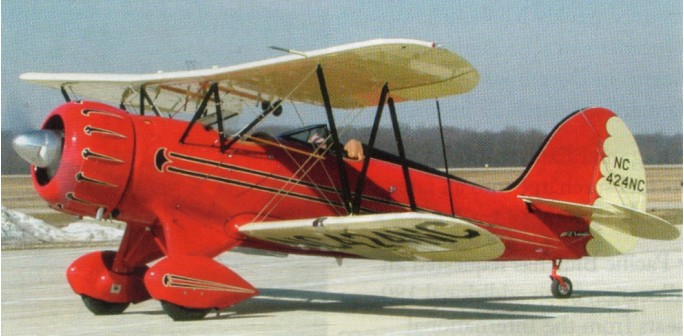
The 1934 model YMF was substantially redesigned with a longer and wider fuselage, larger rudder and other structural changes, and put into production in March 1986 by WACO Classic Aircraft of Lansing, Michigan as the YMF-5.

The YMF-5 new design was roughly based on the YMF, built by WACO Classic Aircraft. Waco Classic Aircraft revealed the YMF-5D model new build which introduced a more powerful Jacobs R755-A2 300 hp (225kW) engine in June 2009. A smaller 275 hp (205 kW) engine was an option. The aircraft is fitted with a new Garmin G600 glass avionics package.

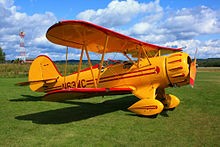
1997 YMF-5C at Hancock County-Bar Harbor Airport, Maine

Deliveries were to be from October 2009, pending FAA certification.

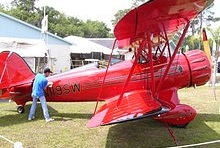
2006 WACO Classic Aircraft YMF-F5C at Sun ‘n Fun 2006

Over 100 YMF-5s were completed as of 2012 with new examples being built to specific orders.

1998 Waco F-5C
Base Price: US$245,000
Engine: Jacobs R-755-B2, 275 hp @ 2200 rpm
TBO: 1200 hr
Fuel type: 92 octane
Propeller: Sensenich fixed pitch
Max ramp weight: 3218 lb
Gross weight: 3218 lb
Landing weight: 3218 lb
Empty weight: 2250 lb
Useful load (lbs.): 968
Payload, full fuel: 680 lb
Usable fuel: 48 USgal
Optional fuel: 73 USgal
Wingspan: 30 ft
Overall length: 23 ft. 10 in
Height: 8 ft. 6 in
Power loading: 11.7 lbs./hp
Seating capacity: 3
Cabin width (in.): 46 in
Baggage capacity (s.):75 + 200 lb
Cruise speed 75% power @ 7,000 ft.: 92 kt
Max range (w/ reserve) 75% power: 200 nm
Fuel consumption 75% power: 15 US gph
Estimated endurance (65% power w/1 hr reserve): 3.2 hr
Stall speed (flaps up): 52 kt

Waco SFB / SQC / TBF / UCF / UDC / UGC / VGC

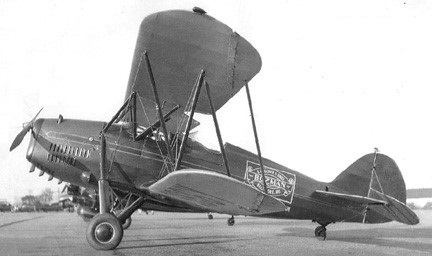
The Waco SFB cabin biplane powered by a 300hp P&W Wasp Jr was planned for mail or passenger use but no actual production.

The 1936 four place cabin, sesqui-wing biplane Waco SQC-6 qas to be powered by a 300hp P&W Wasp Jr but there is no record of actual production.

Waco historians claim the 1932 three place open cockpit TBF 160hp Kinner R-5 model never was in company records. No proof of actual production.

The Waco UCF open cockpit biplane was only a planned project and was produced as UBF.

The UGC-7 and VGC-7 4-5 place cabin, sesqui-wing biplane were planned with a 210hp Continental R-670 powering the UGC-7 and a 240hp W-670 powering the VGC-7, but there is no record of actual production.

UCF
Engine: 210hp Continental R-670
Wingspan: 29’7″
Length: 20’6″
Useful load: 924 lb
Max speed: 132 mph
Cruise speed: 116 mph
Stall: 42 mph
Price: $5,025
Seats: 3

A Waco UDC three place open cockpit biplane was priced at $5,885-5,995 but there is no record of actual production.

UDC
Engine: 210hp Continental R-670
Wingspan: 33’0″
Length: 24’10”
Useful load: 1038 b
Max speed: 130 mph
Cruise speed: 116 mph
Stall: 49 mph

Waco C-62 / 2-FBH

The 1942 Waco C-62 (Waco designation Model 2-FBH) was a short- to medium-range troop transport/cargo carrier made of non-strategic wood, similar in size and capacity to Douglas C-47.

253 planes were ordered in Oct 1941 and Jan 1942, powered two P&W R-1830-92, they were assigned AAF s/ns—13 YC-62 (42-12554/12566), 240 C-62 (42-35584/35823), but the orders were cancelled in September 1943 after none were built because of production problems.